
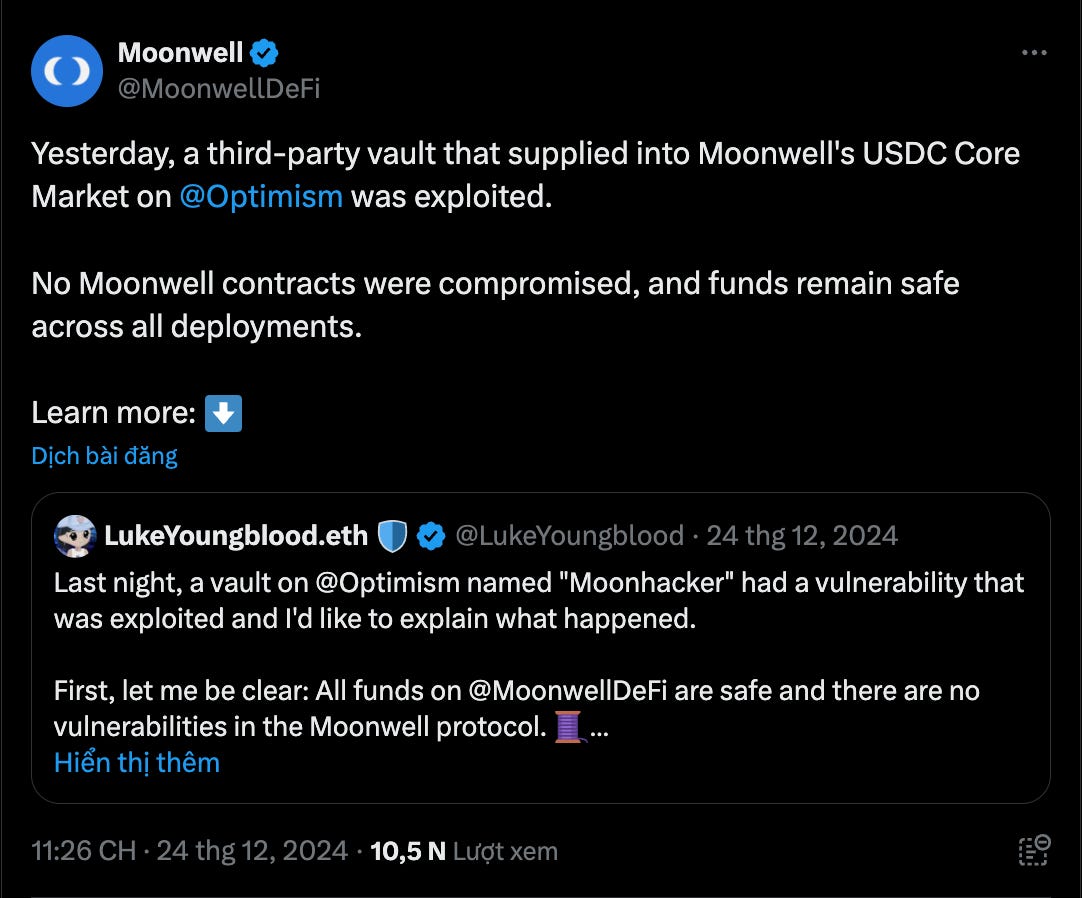
On December 23, 2024, the MoonHacker Vault suffered a devastating exploit, resulting in the loss of approximately $320,000 USDC. This blog delves into the technical details of the attack, analyzing the vulnerable contracts, attack methodology, and the lessons learned.
Key Information
Total Loss: $320,000 USDC
Attacker Address: 0x36491840ebcf040413003df9fb65b6bc9a181f52
Attack Contracts:
Vulnerable Contract: MoonHacker Vault
Attack Transaction: 0xd12016b25d7aef681ade3dc3c9d1a1cc12f35b2c99953ff0e0ee23a59454c4fe
Exploit Overview
The exploit targeted MoonHacker vault contracts interacting with the Moonwell DeFi protocol on Optimism. Improper input validation in the executeOperation function allowed the attacker to manipulate the system, resulting in unauthorized withdrawals.
Vulnerability Details
The root cause of the exploit was improper handling of inputs and lack of access control in the executeOperation function. This allowed the attacker to:
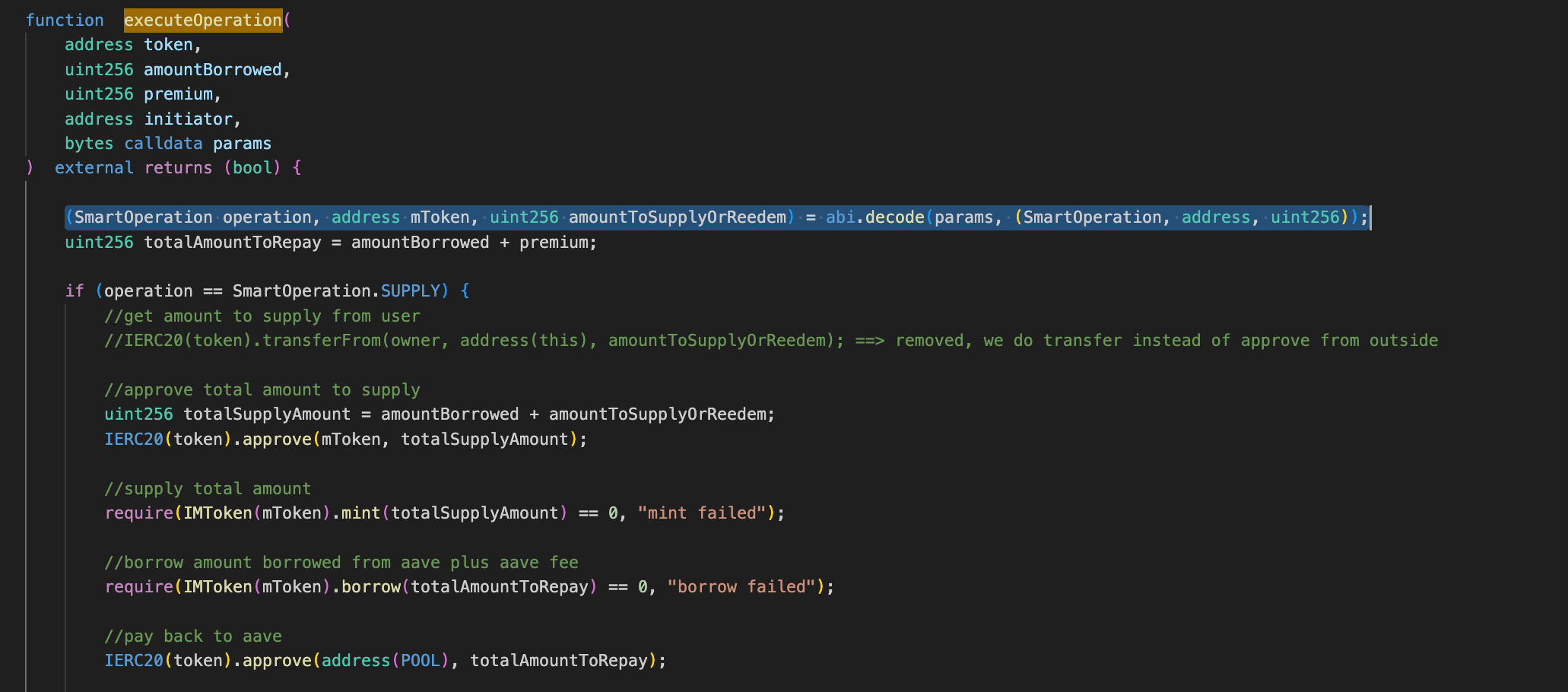
Pass a malicious contract as the
mTokenaddress.Gain unauthorized token approvals and manipulate contract logic.
Steps of the Attack
Preparation: The attacker deployed two contracts to facilitate the exploit.
Execution: By exploiting the lack of validation in the
executeOperationfunction, the attacker manipulated the logic governing token approvals.Profit Extraction: The stolen funds were transferred to the attacker’s address.
Mitigation and Best Practices
To prevent similar exploits, the following measures are recommended:
Input Validation: Validate the
mTokenaddress against a whitelist.Access Control: Implement role-based access control (RBAC) to restrict critical operations.
Function Modifiers: Use specific modifiers or checks to ensure only trusted entities can interact with critical functions.
Lessons Learned
Comprehensive Audits: Ensure every contract is thoroughly reviewed for edge cases.
Validation Checks: Implement robust validation mechanisms to prevent manipulation.
Community Vigilance: Foster transparency and encourage community-driven security reviews.
Conclusion
The MoonHacker Vault exploit highlights the critical need for meticulous smart contract security practices. By learning from incidents like these, the DeFi community can build more resilient systems and safeguard user funds.
For further insights, follow our updates on Twitter and subscribe to our newsletter.