What kind of journey has Solayer gone through, from re-staking to hardware-accelerated public chains?
Author: Pzai, Foresight News
Amidst the crypto wave, there are always those who discover the magic of crypto in the ups and downs, and then choose to plunge into the rabbit hole. Among them are also post-00s who are in their prime. From choosing to drop out of top global universities to start a business, it seems to be a kind of "rebellion" against a certain predetermined path of life. From Sushi to Solayer, Rachel's entrepreneurial journey has been full of twists and turns. Now, the project she leads, Solayer (the leading re-staking platform in the Solana ecosystem, and the leader in the InfiniSVM hardware-accelerated public chain), is becoming the focus of market attention, and has received over $530 million in SOL staking from more than 300,000 stakers. In terms of product lines, from re-staking to hardware-accelerated public chains, what kind of journey has Solayer gone through? Foresight News, together with the Solayer Chinese community, conducted an in-depth interview with Rachel Chu, the co-founder of Solayer, to delve into her story.
The Beginning
The early crypto pioneers emerged, hoping to break the shackles of traditional finance with disruptive innovation and bold actions. The birth of Bitcoin, imbued with the crypto-punk tide, opened the curtain of decentralization, and Rachel saw the potential for change in the world order behind it, and began to delve into the rabbit hole. "Crypto is built on the basis of having a distributed network, where people distribute on-chain things to the world and run this internet that no one can manipulate, which belongs entirely to the people."
In 2020, as a dropout from the UC Berkeley electrical engineering program, Rachel received a Peter Thiel dropout scholarship, and with her passion for the crypto world and her belief in crypto-punk, she became a core contributor to SushiSwap. Regarding the reason for dropping out, Rachel said she "didn't specifically want to drop out, it's just that the work was too much fun and she forgot to go to school", and she had tried to return to her studies several times, but the gravitational pull of the crypto field was huge for Rachel, and after SushiSwap, she returned to school again, only to drop out again to start building Solayer.
Regarding her interests, Rachel's academic prowess is also highlighted again, and her interests are somewhat niche. In addition to her love for crypto, she also loves learning and has strong self-motivation and self-learning ability. Weekends are Rachel's study time, and she even has a study interest group, laughing that "I've been learning deep learning recently, and I find it very interesting."

From the long history of crypto, we can see that the real application revolution on the chain happened in 2020, with the rise of DeFi fundamentally changing the landscape of the on-chain financial ecosystem. "At the time, I saw the article on SushiSwap and felt it was a project that could truly change the financial landscape. Although it was just a fork initially, I believed it could go further with the power of the community." In this revolution, SushiSwap, with its unique community-driven model and innovative token economic model, quickly attracted a large amount of liquidity and gradually became an important participant in the DeFi ecosystem.
As a completely community-driven protocol, the experience brought by Sushi also left a deep impression on Rachel: "The contribution process is basically a very decentralized one, you just need to enter Discord, and then almost everyone is directly chatting online and starting to contribute. I found it a very interesting experience to feel how decentralized governance works." In this process, Rachel's deep involvement made her one of the more than ten core contributors to SushiSwap, and she has played a driving role in various aspects of the team's development.
After Sushi, more and more users flocked to the crypto field, and how to accommodate these users to participate in the increasingly prosperous on-chain economy has become an issue that developers and projects need to pay attention to. "Even if only one company is executing 1TB of data on the internet, you need a different solution to scale the entire network. I think the 2025 roadmap is not just about software scaling, nor is it just about making nominal changes to our codebase or SVM/EVM. What lies before us is the life cycle of blockchains, and how to allocate the load lifecycle on programmable chips or hardware, which in itself requires considerable effort, and I think it's basically the next big leap towards the true scaling of cryptocurrencies."
So, under the influence of her love for crypto-punk and first principles thinking, she co-founded Solayer Labs with her college friend Jason, who had previously co-founded the multi-signature wallet protocol MPCVault, to expand the Solana network through endougeois AVS, and to provide scaling solutions for Solana and the entire crypto ecosystem through the hardware-accelerated InfiniSVM solution.
Solayer
"The future will have more on-chain economy, and users are moving towards a decentralized world," and Solana's voice and value in this round of crypto ecosystem are also constantly increasing, with hot money in the market rushing into the ecosystem. But beyond the hype, Solana's capacity seems unable to continue to meet the load of a large number of real-world use cases, and software scaling seems to have reached its limit. The Solayer team decided to innovate on their own, using hardware to scale SVM, and to achieve infinite scaling of single-state blockchains by distributing workloads between dedicated hardware and clusters while maintaining global atomic state. They are also exploring multi-faceted cooperation with Firedancer.
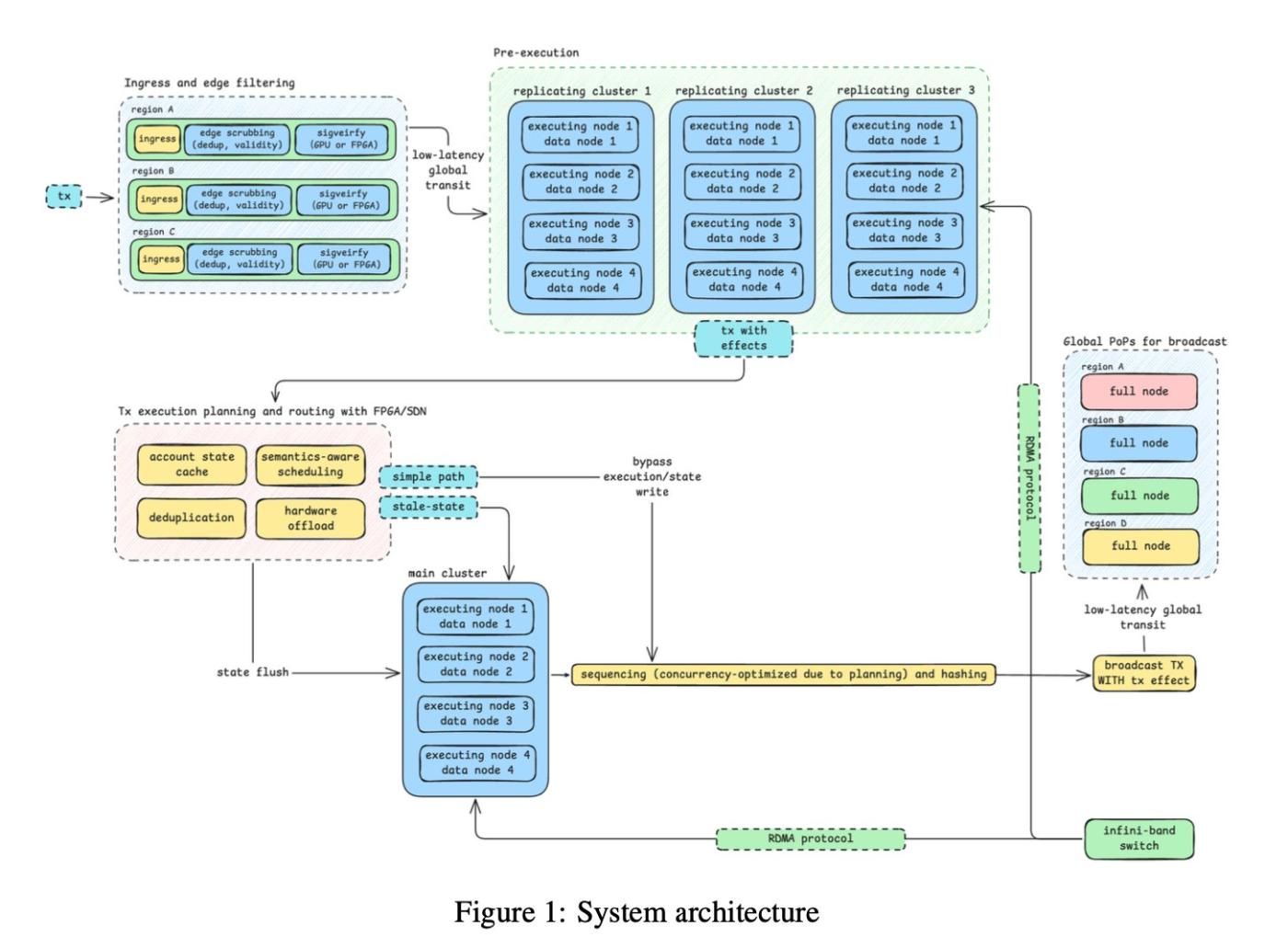
Compared to EVM scaling solutions, Solayer has built the InfiniSVM hardware-accelerated scaling public chain based on the performance-advantaged SVM, which has completed network development and is about to be released. The TPS of this public chain can reach over 100 million, and it supports a variety of real-world scenarios such as on-chain streaming and PS4: "In SVM, we always assume we know nothing about the next transaction, so for the submitted transactions, InfiniSVM needs to use pre-declared state, equivalent to a cashier knowing the next million transactions, rather than the optimistic assumption of state root submission in Optimistic Rollup, where errors would require rollback. Therefore, achieving much higher concurrency in the SVM environment is much easier than in the EVM environment, which also allows us to reach the billion-level TPS through hardware scaling."
Behind the construction of a fast and efficient network, professional team security is indispensable. In the 15-person team, most have previously engaged in security and distributed system research, and the other co-founder Jason has even invented a distributed computing patent. "The team has both system engineers who design systems and security engineers who hack into systems. Engineers must understand the system, and must reverse-attack the system to ensure security. Therefore, in many ways, security engineers are actually the best engineers we've found for the system."
As one of the youngest members of the team, Rachel also talked about the differences between Sushi and Solayer in terms of team: "Unlike Sushi, which was purely community-driven, Solayer itself is an integrated team, but this team is also very flat." Additionally, in terms of team building, "we have three principles: one is to have wisdom, two is to have autonomy to think about problems and respond to market changes, and three is to be constantly busy in this 24/7 industry."
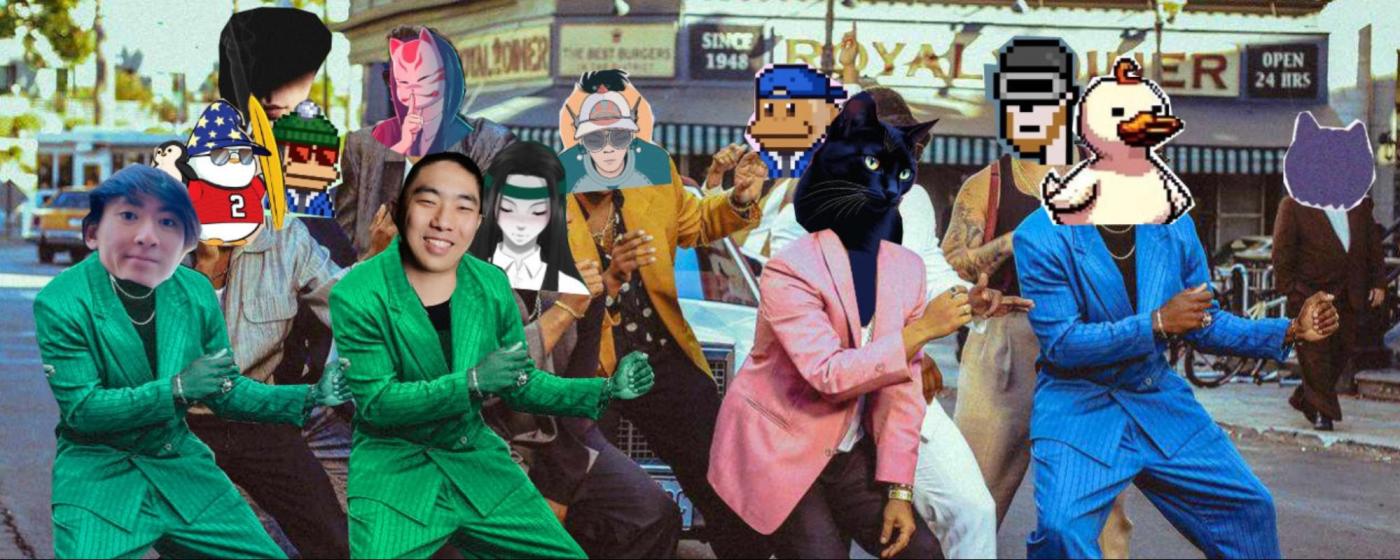
In community operations, Rachel's previous experience has naturally influenced Solayer. "The essence of community operations is actually how to bring early adopters and early supporters into a place where they can actually participate," and community operations cannot be separated from the support of real products. In the previous community cycle, the "Emerald Card" became one of the main carriers, which built a fully on-chain self-hosted payment experience for users, and realized seamless real-world spending through Solayer's native sSOL and sUSD (a stable coin of government bond yield developed in cooperation with OpenEden) products, while obtaining on-chain returns. "We hope that the Emerald Card can bring users a fast and efficient on-chain experience, just as we have always built."

Future
For future development, Rachel hopes that Solayer is not born to reinvent the wheel, but rather to explore different unique use cases. "The number of projects is not the key. We don't want to deploy the same projects over and over again. I think new use cases require extremely high TPS, and require real-time data processing or real-time training. So far, we have many ideas in incubation, and we will deliver brand new types of products, and when we launch them, it will be very, very interesting for people to try."
In recent years, Solana has attracted a large number of Asian users, contributing 70% of the liquidity and 15% of the new developers. As a Chinese-American born and raised in the United States, Rachel also expressed her concern for the Chinese market: "I will learn Chinese as soon as possible, which may be the first thing I need to do before talking about the emerging Asian market. We really care about the Asian community, because I am Chinese, and I think I will never forget my roots." In terms of market development, Rachel believes that the crypto market is essentially asset innovation, and "AI Agent is another form of life living on the chain. Our view is that there are a billion people in this world, and we will have a quadrillion agents on the web and the internet. At that point, you need more computing power to support the startup of the agent economy, so I think we will see a lot of interesting use cases in this area, such as how they trade or interact with each other."
Beyond these matters, Rachel expressed to us her vision of reviving the crypto punk culture. "People are more or less concerned about the basic principles that crypto technology has brought us. In fact, the culture we want to build is for a single vision: peer-to-peer electronic cash. This is to decentralize the Internet in the future, which I think is true innovation. And we are still trying to figure out this cycle, but we have invested more liquidity and more volume, so I think there is still a long way to go."
Finally, as a post-00s crypto pioneer, Rachel had a message for her peers in the Chinese community: "The Chinese community also has a lot of innovation, and for people of my age, I think they just need to find and seize some opportunities, and then realize themselves from them. I see a lot of people dropping out of school just to drop out, and I don't recommend doing that. But I think the world is prepared for those who are creative, and they can really unleash their creativity fearlessly, and not be afraid to do so." We also hope that Solayer, as one of the bridgeheads of Solana's expansion, can bring new blood to the crypto field.