


Key Indicators: (January 27, 4 PM -> February 3, 4 PM Hong Kong Time)
BTC against USD fell 3.8% (98.8K USD -> 95.1K USD), ETH against USD fell 16.0% (3.07K USD -> 2.58K USD)
Overview of BTC against USD Spot Technical Indicators:
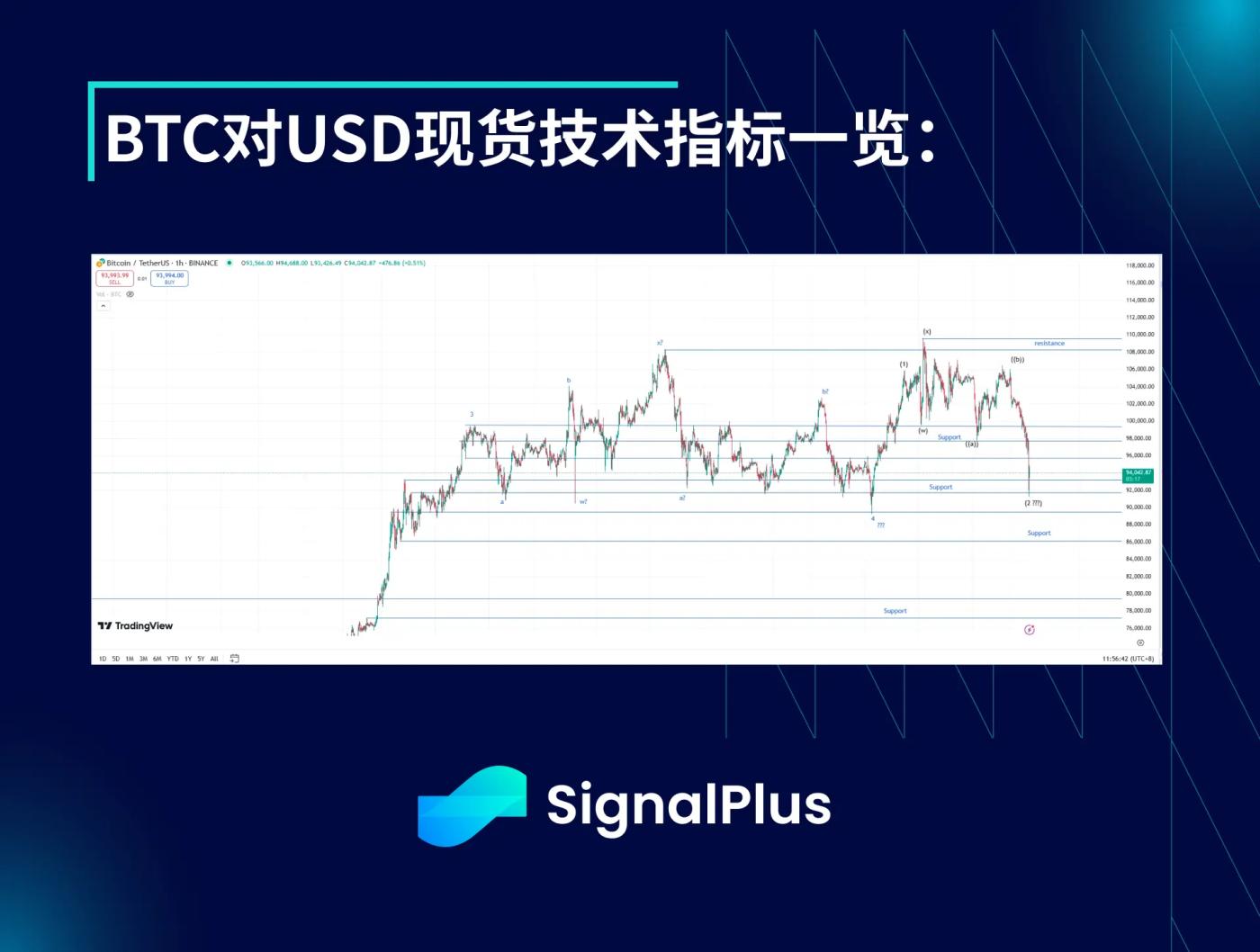
BTC against USD successfully rebounded from the key support level of 98K USD earlier last week, and attempted to test 106K USD several times in the following week, but ultimately failed to gain enough momentum to form a new upward trend. By the weekend, due to Trump's tariff news and the market's weak bullish position above 102K USD, it triggered a strong liquidation, causing the price to drop all the way down to 98K USD, and then further down to briefly touch 91K USD.
At this point, the short-term judgment is quite tricky. If the price falls below 90K USD, it will eliminate the previous 4th wave of the uptrend (as shown in the chart), and trigger doubts about the longer-term trajectory of the spot market. The stronger support level will be between 89-86K USD, and if it breaks through, we will be exposed to the support level of 75K USD or even lower.
Market Themes:
For most of last week, the market seemed to have digested the impact of DeepSeek's release of the R1 model. Although there was indeed necessary portfolio adjustment on stocks like NVDA, overall, US tech/AI stocks gradually regained their losses this week, also due to Powell's slightly dovish statement at the FOMC meeting on Wednesday. However, the market started to be turbulent again over the weekend, as Trump fulfilled his promise and began to increase tariffs on Mexico, Canada and China, shattering the hope that the recent easing of tensions might lead to a pause in tariff hikes.
From now on, the key narrative in the market may be how to respond to this global trade war. There is still quite a large divergence in the market, with some players believing that the reaction will only be temporary, considering the market's "expectation" of increased tariffs. But others emphasize that the Trump administration is seriously considering withdrawing from global affairs, and may retaliate with even higher tariffs. Given this divergence, it appears we are about to enter a period of localized turbulence until the market regains its balance and reasonably prices in this risk.
As digital currencies are the only tradable assets when the weekend tariff news was released, the BTC market has come under tremendous pressure, falling to 96K USD even before the traditional financial markets opened on Monday. Accompanied by the pressure after the traditional financial markets opened, the cryptocurrency market also triggered another round of liquidation, with BTC plummeting to 91K USD. At the same time, ETH once again demonstrated its "small coin" characteristics, plunging nearly 20% after breaking through the key 3K USD support level, and falling to as low as 2.5K USD.
BTC Implied Volatility
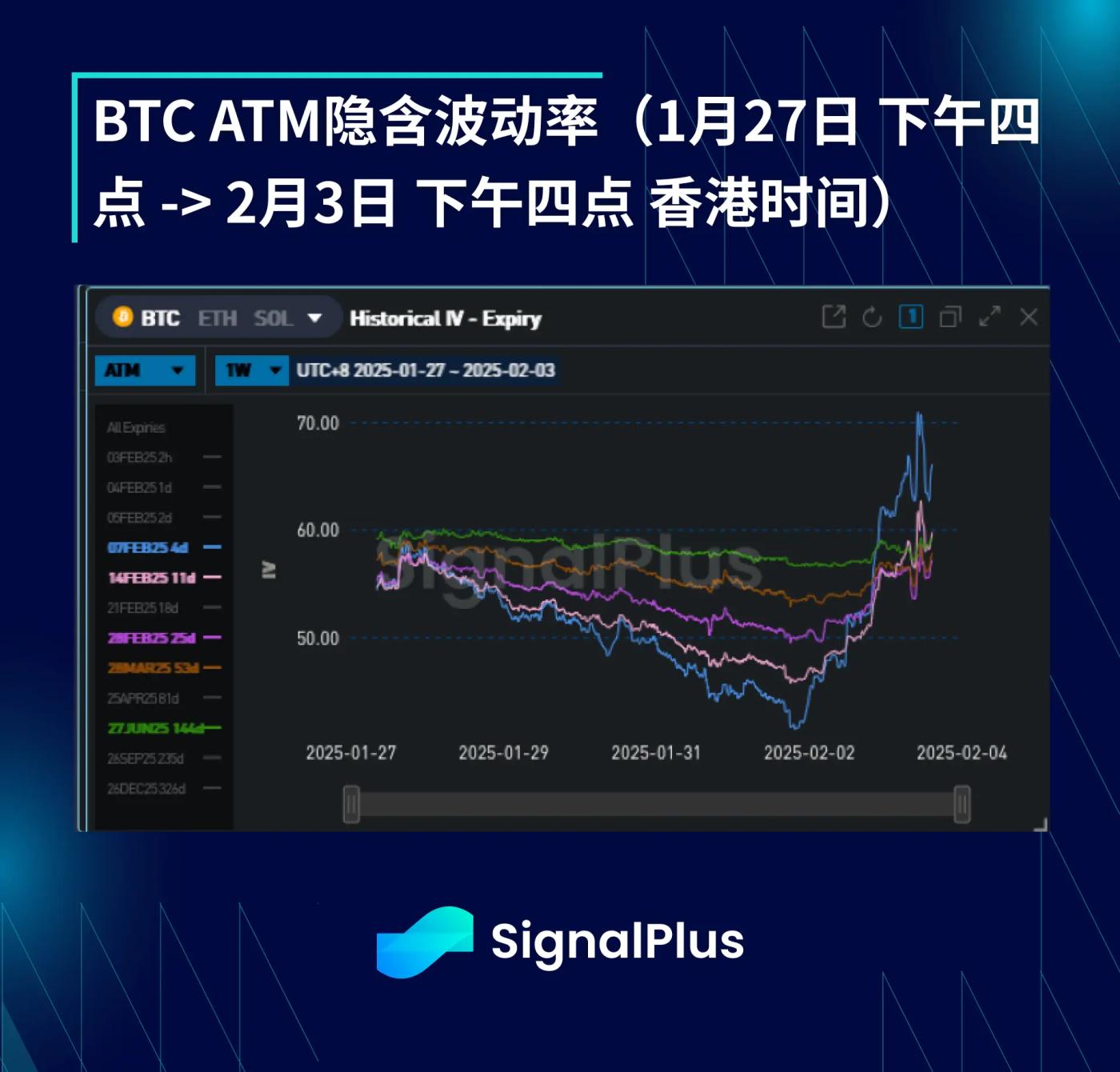
Despite a series of fluctuations surrounding US stocks (due to the revaluation of AI stocks after the DeepSeek release) and the Fed's statement in the middle of the week, BTC's actual volatility this week remained low and fluctuated around 40-45, compared to the implied volatility reaching over 50 at the beginning of the week. Part of the reason may be that Wednesday to Friday was the Chinese New Year (causing reduced volatility in the Asian time zone), and the price remained in the comfortable range of 98K USD-106K USD for most of the week, naturally suppressing the actual volatility. But the tariff news on the weekend triggered a violent price breakthrough and triggered a round of liquidation, pushing both actual and implied volatility higher. The implied volatility of the February 7 expiration date briefly rose from a low of 42 to 71 on the weekend, and then fell back to around 65.
In the far-end of the volatility surface, the implied volatility has generally continued to decline. Due to the lack of momentum in the spot price to break through above 105K USD, the bets on the price direction have been withdrawn, and we have seen a large amount of unwinding in the March expiration and beyond. At the same time, as the Trump administration's working group may push for plans to promote crypto savings as early as the second half of this year, the tail risk of an explosive price increase in the short term has been eliminated. Nevertheless, these far-end implied volatilities were still pulled up by the rise in actual volatility on Monday, also preparing for the localized price fluctuations in the macroeconomic backdrop of the trade war.
BTC Kurtosis/Skewness
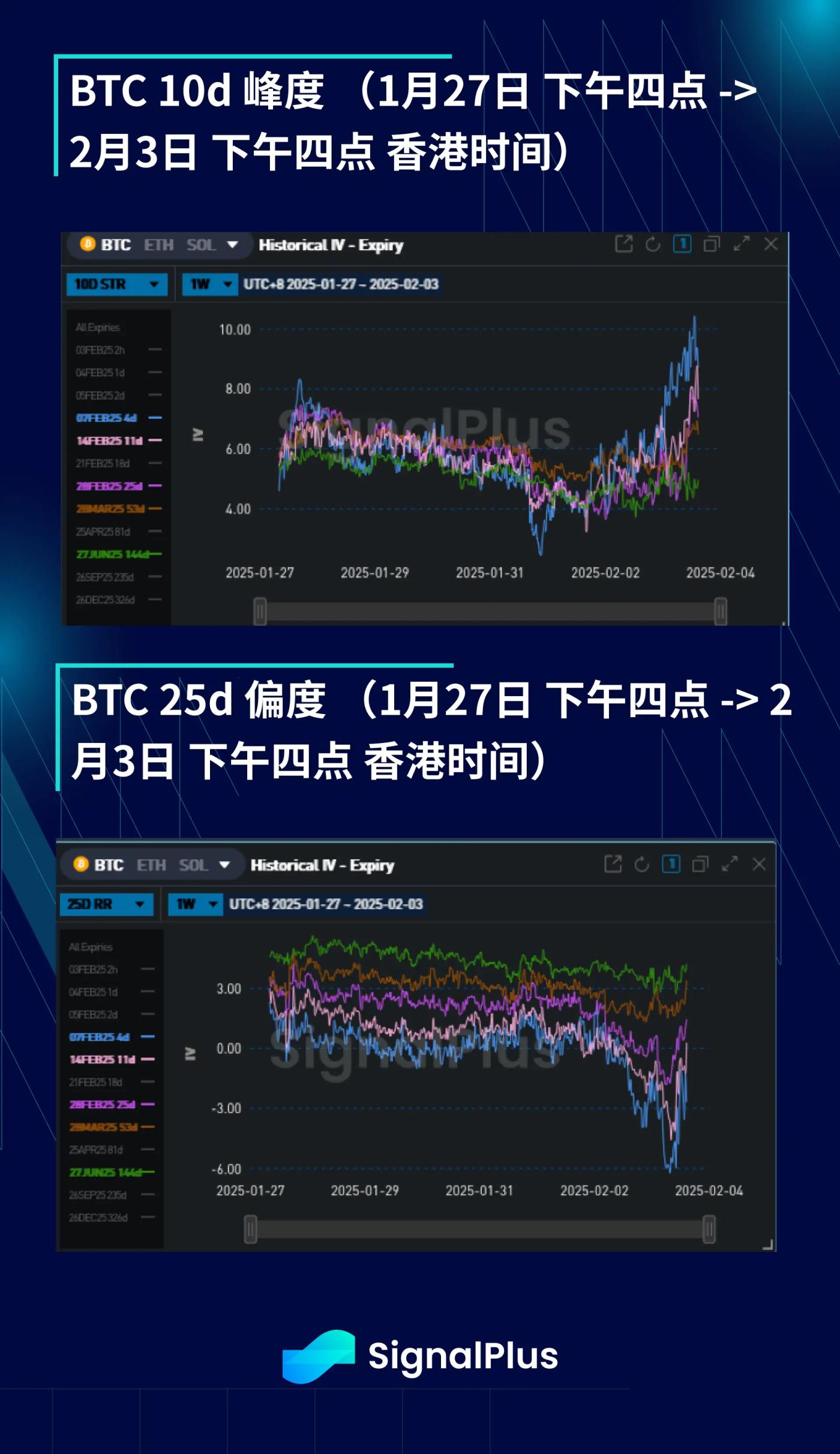
Due to the threat to the spot price and the breakthrough of the local 98-100K USD support level, triggering liquidation and causing high actual volatility, the short-term skewness has shifted sharply downward over the weekend. However, after the short-term position liquidation and the spot price rebounding to 94K USD, the skewness price quickly rebounded from the low point. In the far-end of the term structure, although the implied volatility did rise when the price fell, the skewness price remained relatively stable.
The kurtosis price is quite stable outside the short-term term. In the short term, it is due to the increased demand for the downside wing after the price breakthrough, leading to a sharp rise in kurtosis in the short term.
Wishing everyone good luck in their trading this week/month!







