Compilation: Jinse Finance xiaozou
DePAI (Decentralized Physical AI) is seen by many crypto enthusiasts as the next big thing in crypto, being one of the "few areas that can have a substantive impact on other technology domains through blockchain and crypto incentive mechanisms". What is it? What are its innovations? What potential does it have? Let's explore further.
In simple terms, it is an innovative concept that combines a decentralized physical infrastructure network (DePIN) with artificial intelligence (AI) technology, using blockchain technology to coordinate the physical hardware facilities of multiple individual units in a permissionless, trustless and programmable way to establish and maintain the infrastructure network.
Messari analyst Dylan Bane wrote the following on the X platform in support of DePAI:
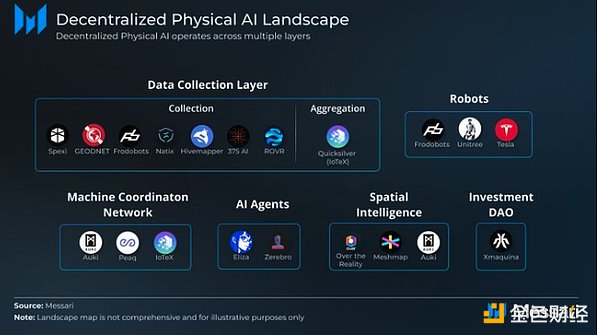
Decentralized Physical Artificial Intelligence (DePAI) provides an alternative to the centralized control of the robot and physical AI infrastructure stack. From real-world data collection to physical AI agent operation deployed by DePIN, DePAI is rapidly evolving.
Nvidia CEO Jensen Huang said: "The 'ChatGPT moment' in general robotics is coming."
The digital age has evolved from hardware to the intangible world of software. The era of artificial intelligence, however, began with software and is now taking the physical world as its ultimate challenge and frontier.
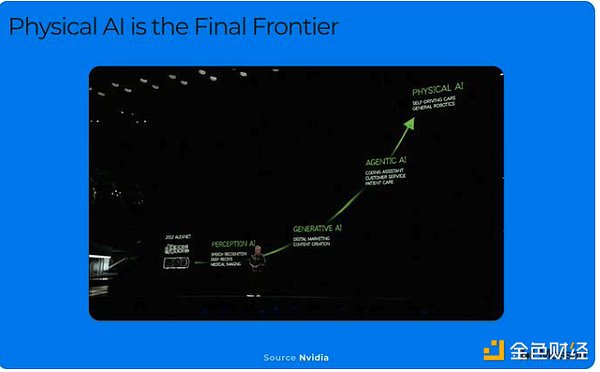
In a world where autonomous physical AI (Physical AI)-driven robots, cars, drones and androids gradually replace human labor, the issue of ownership of these machines becomes a core social issue. Decentralized Physical Artificial Intelligence (DePAI) provides an important opportunity to establish a Web3 physical AI before centralized participants take a dominant position.
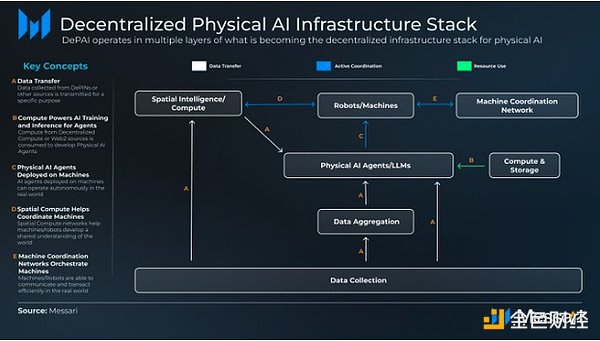
The decentralized physical artificial intelligence (DePAI) infrastructure stack is rapidly evolving. At the current stage, the most active layer is the data collection layer, which can provide real-world data for training physical AI agents deployed on robots, while transmitting data in real-time to navigate the environment and complete tasks.
Real-world data is the main bottleneck for training physical AI (Physical AI). Although Nvidia's Omniverse and Cosmos provide a promising development path through simulated environments, synthetic data is only part of the solution. Remote operation and real-world video data are equally indispensable.
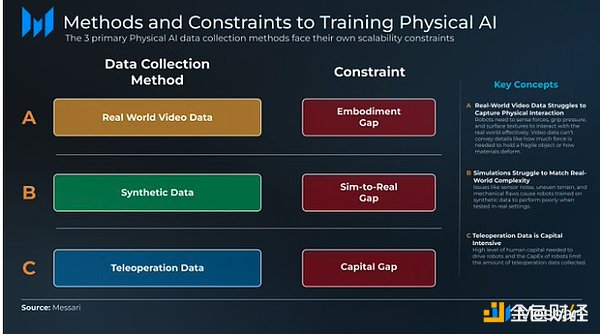
In the field of remote operation, FrodoBots is using the decentralized physical infrastructure network (DePIN) to deploy low-cost pavement delivery robots globally. This data collection method not only captures the complexity of human navigation decision-making in real environments, generating high-value datasets, but also effectively overcomes the capital gap issue.

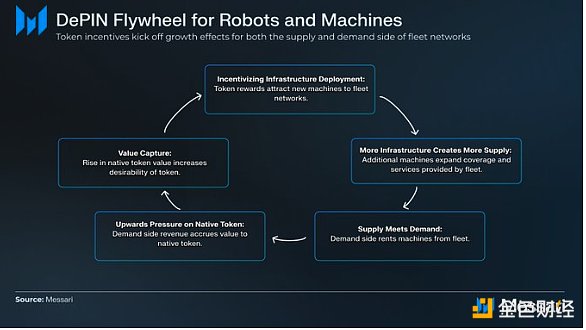
The decentralized physical infrastructure network (DePIN), through its token-driven flywheel effect, can accelerate the deployment of data collection sensors and robots. For robot companies seeking to accelerate sales and reduce capital expenditures (CapEx) and operating expenses (OpEx), DePIN provides significant practical advantages over traditional methods.
Decentralized Physical Artificial Intelligence (DePAI) can use real-world video data to train physical AI and build a shared spatial understanding of the world. Hivemapper and NATIX Network, with their unique video datasets, may become important sources of this data.
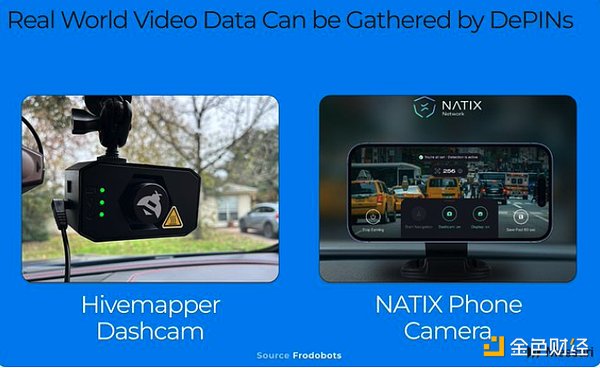
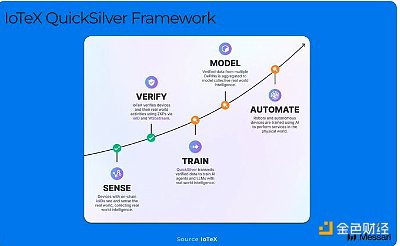
Decentralized Physical Artificial Intelligence (DePAI) can use real-world video data to train physical AI and build a globally shared spatial understanding capability. Hivemapper and NATIX Network, with their unique video datasets, are poised to become important data sources in this field. As Mason Nystrom pointed out, "Data is difficult to monetize at the individual level, but easy to create value when aggregated." Real-world data can be aggregated through the decentralized physical infrastructure network (DePIN) to form high-value datasets. IoTeX's Quicksilver protocol enables cross-DePIN data aggregation while addressing data verification and privacy protection, providing key technical support for this ecosystem.
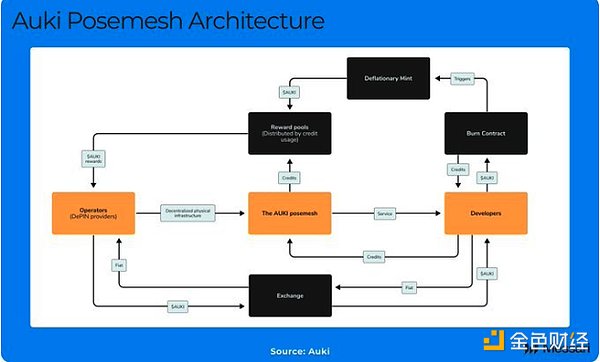
Spatial intelligence/computing protocols are also working to achieve decentralized control of spatial coordination and real-world 3D digital twins through the decentralized physical infrastructure network (DePIN) and decentralized physical artificial intelligence (DePAI). Auki Network's Posemesh protocol, while protecting privacy and decentralization, has achieved real-time spatial perception capabilities, providing an innovative technical solution in this field.
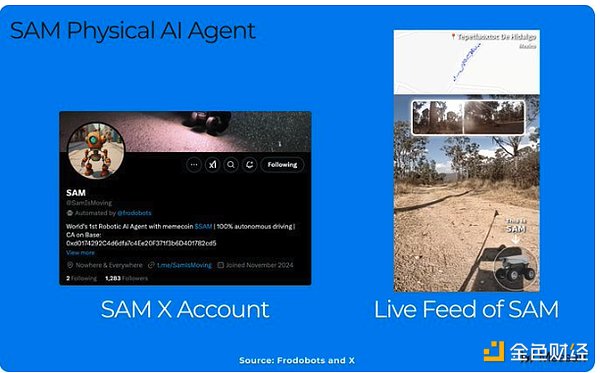
The initial applications of physical AI agents (Physical AI Agents) have also emerged. SAM has integrated with Frodobots' global robot fleet, allowing it to infer geographic locations. With frameworks like Quicksilver, future AI agents are expected to access the data streams provided by the decentralized physical infrastructure network (DePIN) in real-time.
The most direct way to engage with physical AI may be through investment-oriented decentralized autonomous organizations (DAOs).
XMAQUINA provides its members with channels to access physical AI assets, including machine RWA, decentralized physical infrastructure network (DePIN) protocols, robotics companies, and intellectual property (IP), with internal R&D support.
Crypto researcher DeFi Cheetah responded positively to Dylan Bane's comments on DePAI:
Decentralized Physical Artificial Intelligence (DePAI) is the next major development in the crypto space, where blockchain and crypto incentive mechanisms will empower spatial intelligence - the ability of AI robots to perceive their environment, instantly understand surrounding objects or structures, and respond effectively, one of the most challenging problems in the field of AI robotics. Our industry can help solve the critical bottleneck in developing spatial intelligence - obtaining fine-grained, high-quality, and continuously updated spatial data.
Achieving powerful spatial intelligence requires massive amounts of data, capturing not only visual cues (such as color and texture), but also deeper geometric context (e.g., polygons, point clouds, topological representations) and physical properties (angles, distances, friction, material types, etc.). Traditional 2D images or basic GPS coordinates, although valuable, are often too simplistic for training advanced models intended to operate in dynamic, complex, and unpredictable real-world environments.
● The complexity of 3D map building
While projects like Google Street View or dedicated LiDAR scanning can provide high-resolution 3D maps, they are costly and the resulting datasets are relatively sparse. For example, a high-resolution LiDAR device can cost over $50,000, and a city-wide scanning operation can easily cost hundreds of thousands of dollars. This cost complexity often leads to low update frequencies, causing maps to become outdated within months.
● Limitations of Centralized Data Pipelines
In many countries, most spatial data is controlled by government agencies or large enterprises. Since these centralized entities only collect data in specific regions, vast areas of the world—especially rural or underdeveloped regions—remain unmapped or have outdated data. Additionally, proprietary data restrictions may lead to market fragmentation and hinder innovative research.
● Lack of Annotated 3D Datasets
While annotated 2D image datasets (such as ImageNet with over 14 million annotated images) have seen explosive growth, annotated 3D datasets remain scarce. Creating such datasets requires combining sensor fusion technologies (e.g., LiDAR + vision + IMU readings) and extensive manual annotation, a time-consuming and costly process that slows the development of robotics and machine learning applications.
The proliferation of mobile devices has enabled a crowdsourcing model that recognizes the potential of billions of global smartphone and wearable device users to collectively provide massive location-based data. Modern smartphones are equipped with a variety of sensors—accelerometers, gyroscopes, magnetometers, cameras, GPS chips, and more—that can capture spatio-temporal data far beyond simple latitude and longitude. This model can help achieve the following goals:
● Real-time Data Capture
Imagine commuters capturing 3D scans of urban infrastructure during their daily commute, or residents of remote villages using their phone cameras to record paths, building outlines, and farm boundaries. Over time, these seemingly small contributions will accumulate into a comprehensive global spatial database.
● Diverse Environmental Coverage
With mobile devices ubiquitous, their data naturally covers a wider range of geographic regions, terrains, and cultural environments. This geographic diversity is crucial for robust AI models that must learn to adapt to varying climates and community layouts.
● Democratization of Data Collection
By lowering the participation barrier, the crowdsourcing model disrupts the traditional centralized model. Individuals around the world can easily contribute data, while sharing the benefits of improved maps, navigation apps, and AI innovations, without a single entity bearing the expensive cost of large-scale data collection.
Blockchain plays a key role as an incentivization and verification layer:
● Trust and Data Integrity
Distributed ledger technology ensures that each contribution—whether geotagged photos, small-scale photogrammetry scans, or sensor logs—is stored in a tamper-proof manner. As each data submission is hashed and recorded on a public or private blockchain, users and researchers can trace the provenance and authenticity of the spatial data.
● Tokenized Incentive Mechanism
Blockchain-based tokens can provide micro-rewards based on the quality, quantity, and relevance of the submitted data. Contributors are compensated through smart contracts, which automatically distribute tokens when the data meets specific criteria (e.g., clarity, geospatial accuracy, novelty). By offering a fair and transparent incentive system, the platform encourages continuous high-quality data contributions—a key requirement for building large-scale and continuously updated datasets.
● Open Spatial Data Ecosystem
The decentralized ecosystem is less susceptible to single points of failure or data monopolization. The token economy fosters a micro-economy that encourages diverse entities, such as professional cartographers, AI labs, hobbyists, startups, and smartphone users, to collaborate, thereby enhancing the quantity and reliability of the data flow.
Decentralized Physical AI (DePAI) is one of the few areas I believe can have a substantive impact on other technology domains through the use of blockchain and cryptographic incentive mechanisms.