From February 18 to 20, the Consensus Hong Kong 2025 conference was successfully held at the Hong Kong Convention and Exhibition Centre, attracting widespread attention from the global Web3 and fintech industries. During Consensus 2025, the innovative fintech company Interlace was invited to appear at the PayFi Summit 2025, where it gathered with industry leaders and innovative companies such as the Solana Foundation, Huma Finance, and DePHY to discuss the innovative applications of PayFi, as well as forward-looking explorations of industry trends and market opportunities.

(Interlace CEO Michael Wu)
According to reports, PayFi, or Payment Finance, refers to an innovative technology and application model that combines payment functions with financial services in the blockchain and cryptocurrency field. Lily Liu, the chairman of the Solana Foundation, stated that PayFi is using blockchain technology to revolutionize the payment system, achieving more efficient and low-cost transactions, providing a new financial experience, creating more complex financial products and application scenarios, and forming a new financial cluster by creating an integrated value chain.
Innovating financial experiences is the focus of Interlace's efforts. As a leading financial infrastructure service provider, Interlace is committed to bridging the Web3 and Web2 ecosystems, seamlessly integrating modern financial channels and emerging markets through innovative technologies. As a core pillar of stablecoin applications in the cross-border payment field, Interlace provides global users with efficient and scalable financial transaction solutions, including CaaS (Card as a Service), BaaS (Banking as a Service), WaaS (Wallet as a Service), and other services, helping enterprises conveniently embed financial functions into their existing platforms in a flexible and adaptable API form. It also covers global account management, global acquiring, and the issuance of virtual/physical cards as core products.
At the summit, Interlace CEO Michael Wu further shared the "end-to-end" CaaS solution, covering the entire process from wallet management to card issuance, with core functions including multi-BIN card issuance, wallet deposit address generation, cryptocurrency deposit KYT (transaction compliance review), cardholder KYC verification (supporting API and custodial modes), and a secure custodial infrastructure that meets regulatory requirements to ensure transparent and controllable fund flows. In addition, Interlace supports on-chain transfers and multi-account fund allocation, allowing customers to efficiently coordinate recharging, transfers, and card issuance operations to meet diverse scenario requirements.
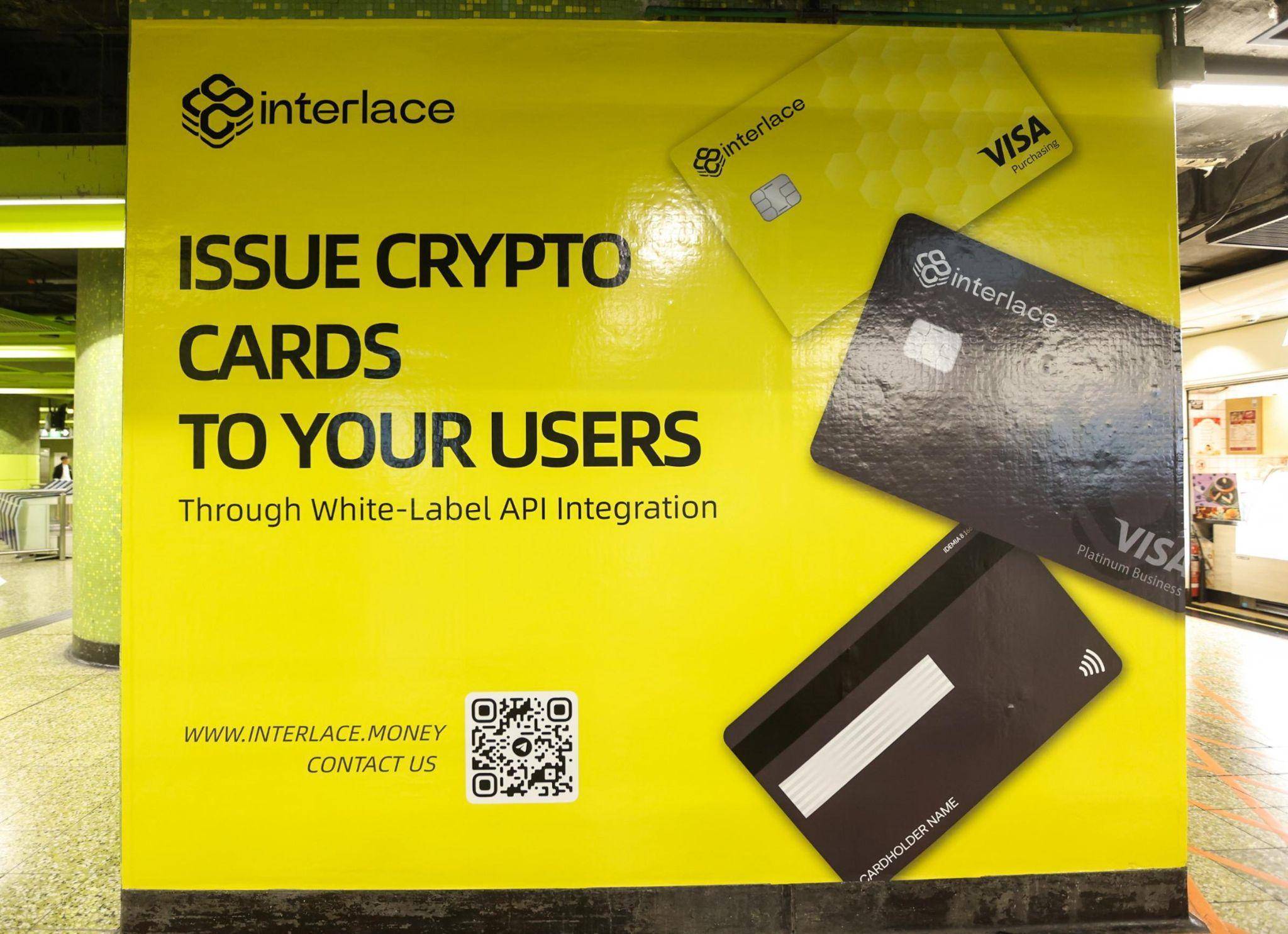
In the card issuance process, Interlace supports multi-BIN configuration to meet customers' global card issuance needs. Through a smart risk control and anti-fraud system, it can monitor transaction risks in real-time to ensure fund security. Furthermore, Interlace provides a white-label card solution, supporting customized card design, to help enterprises quickly build brand differentiation.
Interlace CEO Michael Wu stated that stablecoins are playing an increasingly important role in the global cross-border payment field, and Interlace, driven by technological innovation, provides the underlying infrastructure for efficient and secure fund flows through industry-leading solutions, helping institutions and customers seize opportunities in the wave of cryptocurrency and traditional payment integration.
Interlace was founded in 2019 and has currently obtained the highest security certification in the international card payment industry, PCI-DSS Level 1, as well as licenses such as Hong Kong TCSP, US MSB, and Lithuanian VASP. To date, Interlace has issued over 4.5 million cards, serving more than 7,500 enterprises, and processing over 60 million transactions annually.