Interview: Mensh, ChainCatcher
Guest: Armani Ferrante, Backpack CEO
Armani gives a very friendly impression, and on the way to the interview venue, he politely chats with every enthusiastic person who greets him. However, he then becomes pensive or responds to messages, without a moment of downtime.
The Backpack team's hotel is in the same complex as the Consensus venue, which Armani explains is a way to reduce commute time. In Japan, his residence is also close to the office - on days without social engagements, he is a workaholic who goes straight from point A to point B.
During the conversation, perhaps due to his engineer's rigorous nature, he will briefly ponder, define and break down each question before answering. Where he does not have specific evidence, he will add "you can look it up yourself".
Armani was previously an engineer at Apple. In 2017, he was introduced to Ethereum and became fascinated by the concept of the "world computer". He almost immediately resigned from his job at Apple and has since been immersed in blockchain technology development.
Backpack Wallet was founded in April 2022, and after the FTX collapse later that year, the company lost 88% of its treasury funds. But in the crisis, Armani also saw an opportunity for a compliant exchange. Backpack Exchange was founded in March 2023.
In April 2023, Backpack launched the first xNFT series "Mad Lads" on Solana, which was a great success, with trading volume ranking first on the network, even surpassing established Ethereum blue-chip NFTs like BAYC. During the bear market, Backpack could only rely on the $1.4 million raised through Mad Lads NFT sales to carefully maintain operations.
In February 2024, Backpack completed a $17 million funding round, led by Placeholder, with participation from Wintermute, Robot Ventures, Selini Capital, Amber Group and others.
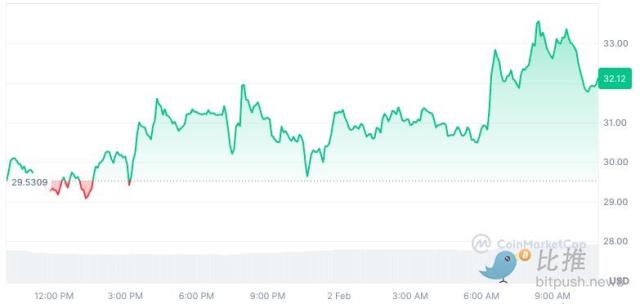
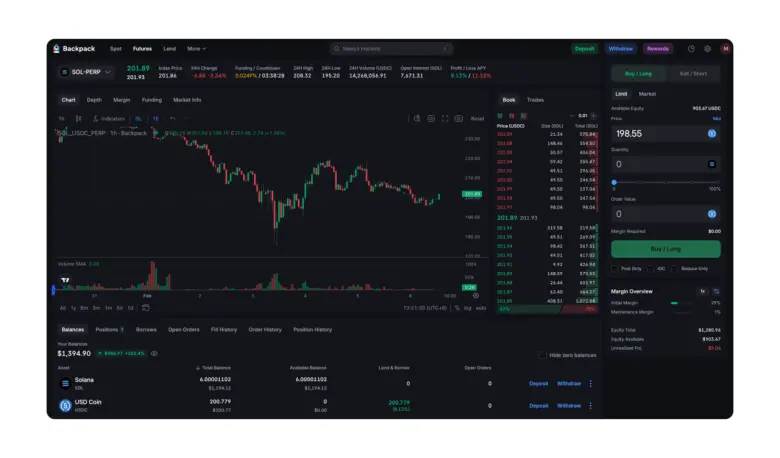
Currently, Backpack has 57 spot trading pairs, 15 perpetual contracts and 5 collateralized lending liquidity pools. According to Coinmarketcap data, Backpack's total assets are $34.12 million, of which about 54% is USDC and 26.22% is SOL. As of the time of writing, the trading volume is $6,194,018.
Also due to the FTX warning, Backpack places great emphasis on compliance in various regions and actively obtains licenses. In October 2023, Backpack obtained a Virtual Asset Service Provider (VASP) license from the Dubai Virtual Assets Regulatory Authority (VARA). On December 10, 2024, Backpack officially registered as a Category 2 member of the Japan Virtual Currency and Crypto-Asset Exchange Association (JVCEA). On January 7th this year, Backpack acquired the bankrupt European branch of FTX, FTX EU, for $32.7 million. FTX EU previously held a MiFID II license issued by the Cyprus Securities and Exchange Commission (CySEC). Armani stated that the company plans to become the only regulated perpetual contract provider in Europe and has already submitted a MiCA notification, with plans to launch in the first quarter of 2025.
In this interview, we talked to Armani about Backpack's positioning in the market as a young exchange, its future product plans, and his personal entrepreneurial journey.
From Apple Engineer to Founding an Exchange: A Tumultuous Journey of Faith
ChainCatcher: You were previously an engineer at Apple, so why did you decide to enter the crypto world?
Armani:
After graduating from university, you go to work for a big company, just like any other ordinary engineer, you are a cog in the huge machine. In 2017, the prices of Bitcoin and Ethereum were constantly rising, and that moment was very magical. I remember very clearly, at that time I was sitting in a cafe on Market Street in San Francisco, reading the Ethereum whitepaper on my laptop, and it felt like the coolest thing. I was completely captivated, I didn't know what I should do, I didn't know how to make money, I didn't know who to work for, but I knew I wanted to be a part of it. So I quit my job at Apple, even though I didn't know what I was doing, but I decided to give it a try, because everything was so motivating to me at the time.
ChainCatcher: Can you share your entrepreneurial journey from xNFT to Mad Labs, and then to Backpack Wallet?
Armani:
I joined the Solana ecosystem in September 2020, when there was almost nothing. I joined the ecosystem, did a lot of things, including DeFi-related work, early wallet infrastructure, developer tools, and so on. These works later became very successful, and the network also started to grow rapidly in the early stage. It was precisely because of the growth of the network that I decided to start a business, Solana made me feel for the first time that the infrastructure problem was basically solved, so I started to think about what problems to solve next to drive the development of the network and the industry. At that time, I felt that many people knew the importance of mobile, and they also knew that building mobile applications in the crypto field was very challenging, because the iOS and Android app stores had almost formed a monopoly. So, my team and I thought about how to build a decentralized app store. This was the origin of xNFT, we wanted to tokenize applications like we tokenized images, and build a new distribution channel to establish a decentralized application. This was the initial concept, although we did make some changes later.
ChainCatcher: Why did you choose NFT as your starting point?
Armani:
NFT is actually a universal form, representing some kind of collectible. We usually associate it with things like 10K avatar series, funny JPEGs, or crypto punks, but it is actually a universal way to own anything. At the same time, those NFT series, especially the 10K style avatar series, have created very good communities, and examples like CryptoPunks have been very successful. These communities have attracted widespread attention in the industry and have become one of the most exciting social events in the crypto field. Therefore, this also paved the way for the story of Mad Labs.
We ultimately decided to build our own NFT series. There are two main reasons: first, if we want to build our own NFT platform and NFT protocol, then we should build our own NFT series and become our own users. Secondly, the community enthusiasm was very strong at that time, which felt very exciting.
The Origin of Backpack: Opportunities in Regional Compliance
ChainCatcher: You mentioned that when FTX collapsed, you saw a void in the exchange market. What was this void?
Armani:
As the industry matures, especially when the situation regarding rules and regulations becomes clearer, exchanges should not be classified as decentralized or centralized. A more appropriate classification is: one type is censorship-resistant systems that are widely distributed globally and do not have specific regional application rules, like the internet, including decentralized exchanges like Uniswap. The other type is compliant entities, which are centralized and can enforce rules and tools in any region they serve users.
As the industry matures, people are forced to fall into one of these two categories. But the challenge is, there are many people who are very good at products, they can build great exchanges, but they are not good at building all the operational infrastructure required to construct a compliant financial institution. At the same time, there are also some people who are very good at compliance and operations, perhaps from a traditional finance background, but they are not very good at product building and do not understand the characteristics of the crypto industry. You will see many people struggling in these two categories, and the real big opportunity is to take the middle ground, to build a financial institution that is very adapted to this industry, that can build things on-chain, we also have wallets, and can also solve the bridging problem between the traditional financial system and the crypto world.
Here is the English translation of the text, with the specified terms preserved and not translated:You can see this happening in many places, just like a couple of weeks ago in Japan, where many unregulated exchange apps were kicked out of the app market because they did not comply with Japan's rules. And in Europe, all the largest derivatives exchanges have also been forced to withdraw because they do not comply with European rules. For example, 5 derivatives exchanges, financial derivatives exchanges, OKX derivatives, etc., there are almost no derivatives exchanges left in Europe now, because no one is compliant. So the opportunity is here - to become a compliant, trustworthy participant, to solve the dilemma between traditional finance and the crypto world, and to bring all the value of traditional finance into the Blockchain.
ChainCatcher: What products is Backpack currently focusing on to connect traditional finance and the crypto industry?
Armani:
There are many different layers of products. You can't just say, I'm going to go build a competitor to Robinhood or a competitor to Uniswap. We have two parts, two businesses. One is the wallet, and the other is the exchange.
On the exchange side, the primary goal is to establish liquidity. Because as a product, the most important thing is liquidity. So the first product we're focusing on is building a very attractive trading product. About two and a half weeks ago, we launched our public beta version to test the new product, which we call "yield futures" or "yield professional futures", different from regular perpetual futures. In our futures product, users can earn yield on their collateral. We have a native cross-chain money market where you can lend out your assets and use those lent assets to trade. In the past two and a half weeks, we've achieved over $2.4 billion in trading volume just during the testing period. So we plan to officially launch in early March, at which point we will come out of beta and open up fully, ready for global users to use. This is the first product we're building, providing a very attractive trading experience, including spot, margin, lending, perpetual futures, all of which can earn interest. We've put a lot of effort into building a truly excellent and differentiated product that solves the problems that decentralized exchanges can't solve. This is our first step.
The second is on the wallet side. You can think of the Backpack wallet as a self-custodial key management system. Now we support Solana, Ethereum, Base, Eclipse, Arbitrum, Optimism, Polygon and other chains, and we hope to support every chain, like MetaMask-type wallets. But there is indeed a very important problem to be solved in the wallet space right now. If you open Solflare (a Solana wallet) today, they will tell you a shocking statistic: $2.4 billion in funds are lost every year because people lose access to their crypto wallets, at least that was the case last year. Although I forget the exact statistics, this is a huge failure for the entire industry. This number even exceeds the annual losses of all centralized exchanges.
Self-custody is one solution. If we don't have self-custody, then you can question a lot of what we're doing. This is also another important part of our product, building around the wallet, thinking about how to solve these self-custody issues, so that I can confidently tell my parents or relatives and friends, you can use crypto, and there will be no risk. You don't have to worry about self-custody, you don't have to worry about losing your keys, and you don't have to worry about how to use passwords. This is one of the most important problems that need to be solved today. So this is where we're starting.
ChainCatcher: Pump.fun, Moonshot, etc. are very popular, and GMGN is loved by everyone. How do you view the current competitive trend between centralized exchanges (CEXs) and decentralized exchanges (DEXs) in the market?
Armani:
The very important point I made earlier applies equally here: this is not a competition between decentralized exchanges and centralized exchanges, but a competition between censorship resistance and compliance. Depending on which path you choose, you will get very different products and features.
One lesson we've learned in this cycle is that there is nothing more advantageous for decentralized exchanges than issuing long-tail assets. Pump.fun may be absurd, but it is an example of something that cannot be built in the same way on a centralized exchange. And this is where decentralized exchanges truly outperform centralized exchanges. As for the other parts of the product, margin trading, futures, spot margin, stocks, US Treasuries, fiat in/out channels, these are the strengths of centralized exchanges. There are subtle reasons behind each aspect, after all, it's all about compliance, about direct connection with banks, if you want in/out channels, only regulated exchanges can do it best. So this is the advantage of centralized exchanges, they will continue to play a role in deeply regulated products. The US stock market, for example, may be the best example, and this is where the appeal of centralized exchanges lies. But look at examples like Robinhood, if they tokenize stocks, they have the ability to do better than anyone. This is the advantage of centralized exchanges.
When it comes to margin trading, it's not just about custody. When you do margin trading, you don't have the concept of self-custody. Whether it's futures or spot margin trading, or options, you don't own your assets. The system owns your assets, the liquidator owns your assets. So it's all about the rules of the system, especially risk management. Therefore, the boundaries are very blurred when it comes to margin trading. There are pros and cons to the examples of margin trading. For example, if you have decentralized risk management, transparent risk management, projects like Aave have done very well. But if you're talking about high leverage and highly volatile assets, that's usually an area for the few, and this is the limitation of decentralization. Whether in CEX or DEX, this issue is almost irrelevant. The question is, who is making these decisions? Who is providing funding support for the brand? Who is doing risk modeling? These are the really important questions.
ChainCatcher: What are the biggest challenges you face in building on-chain systems and building self-custodial wallets?
Armani:
These two worlds will continue to converge. So we've very intentionally combined centralized exchanges and decentralized exchanges in one application. If you have an exchange, you can build the best wallet; if you have a wallet, you can build the best exchange. There are a lot of synergies between the two.
Take a simple example, you can completely solve the problem of asset recovery. You remember that shocking statistic I mentioned earlier - the money lost every year due to self-custody. If you apply modern technology, like account abstraction, you may solve all the user experience issues that currently exist in self-custody. So I think the two will continue to converge. I think the key is to leverage the strengths of each, they are not a zero-sum game.
Focus and Perseverance: A Workaholic with a Singular Focus
ChainCatcher: How do you allocate your time? How do you spend a typical day?
Armani:
My time is mainly spent on two major categories, and maybe a third. One is recruiting and building the company, and the other is product - you have to have a great product and innovate in this field, and I'm proud to say we've done that. The third category is the coordination between compliance, product and engineering, so that we can truly solve all the problems and build a high-trust, high-integrity market. So far, we've basically climbed these "mountains".
The next "mountain" we need to climb is how to go to market. Now everything comes down to liquidity. No matter how great your product is, no matter how many healthy regions you can serve, if you don't have deep liquidity, it's all meaningless. So this is the next "mountain" we need to climb.
So far we've done extremely well, whether it's on the product side, or in building a great spot and derivatives product, and even on the compliance side, one of our biggest advantages is our market credibility. We can confidently say that we will be one of the most regulated exchanges in the market, you can go to any major institution and they can trust what they're trading. This is why the US capital markets are so special, they are the deepest, most liquid, and most regulated capital markets in the world, with trillions of dollars traded here, because people trust it. Bringing that level of maturity into the crypto currency market, this is also the "mountain" we need to climb next, and it will be our focus for the next few months.
ChainCatcher: I heard you're very busy, even without time to take a shower for a whole week, is that right?
Armani: Unfortunately, that's true.
ChainCatcher: As the CEO of an exchange, do you think it's better to be an excellent trader, or to not be too familiar with trading?
Armani:
You must understand your users. If you don't understand your users, you can't build a great product. Your job is to build products and solve user problems. If you're not a user at the start, you'd better become a user. Not just a trader. When you talk about futures, you're talking about traders; when you talk about the mass consumer finance market, talking about a "universal" application that covers all funds, you'll be talking about different market segments. Whether you're using on-chain applications, DeFi, or wallets, DApps, you need to know your user needs.
ChainCatcher: Do you trade yourself?
Armani:
Yes and no. I do trade, but I see investing as a way like Buffett, with your punch card, 20 investment opportunities, punch a hole each time you invest, you only have 20 chances, then you just buy those assets and never sell them, that's your lifetime investment strategy. That's my approach to investing. I think everyone has different methods, but this is not financial advice. But that's my view of the market.
Advantages and Strategies: Bite the Hardest Bone First
ChainCatcher: What are Backpack's competitive advantages over other exchanges?
Armani:
The opportunity we see is that very few exchanges are truly able to penetrate and bring Bit into the mainstream mass consumer finance market. The reason is that only a few exchanges are doing the hard work to integrate it into the framework of society. This comes down to compliance. Going back to our earlier discussion, look at some of the largest markets in the world, look at Japan, the US and Europe, who can operate in these markets and who can't. And there is a huge gap and opportunity to ultimately bring these products to these regions, which are the largest markets in the world.
This is also why we chose to take this difficult path, even though we could have set up and launched the exchange a year ago, but we didn't. We took the time to solve the problems and obtain licenses globally to build. Our company has only 16 engineers on one product, and everything is done by these 16 engineers, but our company has about 90 people in total, the rest are compliance, legal, operations, customer support, and not just one language, but all languages, to meet the requirements to establish a trusted financial market where you can have the deepest liquidity, because you have market integrity and regulatory oversight, and all the participants, the traditional regulated market players, can enter the Bit market. That's the huge opportunity. What we need to do is to build this thing right, help the industry mature, bring the value that exists in the traditional markets into the Bit market, so that Bit is no longer some kind of unregulated fringe thing, but to bring Bit into the framework of society. That's a huge opportunity that very few people see.
ChainCatcher: Why did Backpack choose to headquarter in Japan?
Armani:
Japan is one of the largest markets in the world, and also one of the most difficult markets to enter, because it has very strict compliance requirements. You can't just go and serve Japanese users, many companies have tried, but those companies have recently been kicked out of the app stores. So we believe we have the capability and the technology to solve these problems and do the right thing in a way that very few native Bit exchanges can. Japan is also a very livable place.
ChainCatcher: But the Japanese don't seem to be too enthusiastic about trading, the Japanese market may be more conservative.
Armani:
Every place in the world has different cultures, but I think many people overlook the fact that Japan used to be a Bit hub. For example, Binance originally started in Tokyo. Due to a lot of exchange hacking incidents, regulations have become very strict, forcing many people to drop out. But now, Japan is full of progressive policies, attitudes and spirits towards Bit, which are very exciting. We've recently seen that Japan's Bit tax rate will drop from 55% to 20% or 25%. This is a huge change that will bring a lot of capital inflow to Japan's Bit market. So I think the tide is turning in Japan, and the future opportunities are here.
ChainCatcher: Do you have any updated data you'd like to share with us? Such as trading volume, user numbers, or financial data.
Armani:
We did 60 billion in trading volume when we started the exchange. We call it the pre-season, because the exchange wasn't fully built out yet, at that time we only offered spot trading on Solana, Bit and ETH. That was particularly exciting in the Chinese-speaking market, as everyone was excited to see a new exchange, and after the FTX event, we've done a lot of work from then to now, and are finally ready to start from several major markets and be able to access the global largest capital market liquidity. The real opportunity is that Bit is a global, internet-native capital market, not just in China, but also in Japan, the US, Europe and Africa, everywhere. That's the essence of Bit, it's borderless.
March is when we really started. Now we have a full beta testing plan, we've launched the new yield futures product, the margin system is also online, and all the compliance infrastructure is in place. In the last two and a half weeks, just in the beta testing phase, we've done about 2.4 billion in trading volume, and as the trading season comes, we expect activity to grow significantly.
ChainCatcher: How did Backpack decide to list Memecoins?
Armani:
There are a few questions to ask yourself. The most basic question is: do users want this? Users are never wrong. So there are a lot of key performance indicators (KPIs) to reference, but from a qualitative perspective, do users really have a need for it?
The next, and more important question, is the integrity of the market. This is much harder to solve, which is whether this market is safe? It's not just exciting, but decentralized, so that it doesn't become a market manipulated by insiders. I think this is a huge criticism that meme coins currently face.
On centralized exchanges it's like this, and on decentralized exchanges it's like this too. So this is one of the most important things. Is this market going to become an asymmetric information market, where some will harm others. A huge benefit of centralized exchanges is that we are a filter, and this can be both good and bad. I think a lot of people are now dissatisfied with centralized exchanges, because they feel there is a lot of value extraction, whether it's everyone fighting for the next listing opportunity, everyone wants to list on the first day and list as quickly as possible, they don't really know or care what the project is, they just see their competitors doing the same thing. So they also want to list as soon as possible. Typically, the market chart usually goes like this: first up, then down. This is a very fair criticism, and a point we want to refute.
Everyone gets caught in this prisoner's dilemma, they're looking at their competitors, and asking themselves, will they list? If they list, do I have a choice not to list? I take pride in our judgment, always doing the right thing, but these are also the thoughts that every exchange is having. That's the dilemma behind it.
ChainCatcher: The last round of funding for Backpack was completed last year. What was the main use of the funds from the previous round?
Armani:
The last round of funding was mainly used to build the team, hire personnel, ensure we can obtain the necessary licenses globally, and ultimately enter the market. Whether it's engineers, compliance personnel, customer support, operations, legal, etc. Building an exchange is a huge engineering effort, and unlike traditional tech companies, where you just need to hire a bunch of very smart engineers and product people to get started. Our team has a very diverse skill set background, from different countries, we are an international team.