As decentralized technology continues to evolve, the Roam project, with its unique global Wi-Fi roaming solution, is becoming a new star in the crypto ecosystem. Roam will be launched on well-known trading platforms such as Bitget, Bybit, and Gate tomorrow, and as an important part of the Solana ecosystem, its launch is highly anticipated. For Bybit, the choice of Roam as the first listing project after the security incident is of great significance. After experiencing a crisis of market trust, Bybit urgently needs to inject new vitality, and Roam, with its over 2.3 million registered users worldwide, is expected to be a key component in Bybit's efforts to regain its footing and attract new users and capital inflows.
At the same time, Solana is facing multiple challenges: the massive unlocking of tokens in March caused price volatility, and more seriously, its "meme casino" image needs to be transformed. As a project with real use cases and data support, the appearance of Roam not only demonstrates the practical value of the Solana ecosystem, but also provides Solana with an opportunity to reshape its technology-driven image. By supporting innovative applications like Roam, Solana can prove to the market that its blockchain technology can support truly meaningful decentralized projects, thereby regaining its "value" positioning.
The launch of Roam not only marks a milestone in its own development, but also brings new possibilities to Bybit and the Solana ecosystem. This article will delve into the technical highlights of Roam, its economic mechanism, and its important impact on the two platforms, providing you with a comprehensive understanding of this highly anticipated project.
What is Roam?
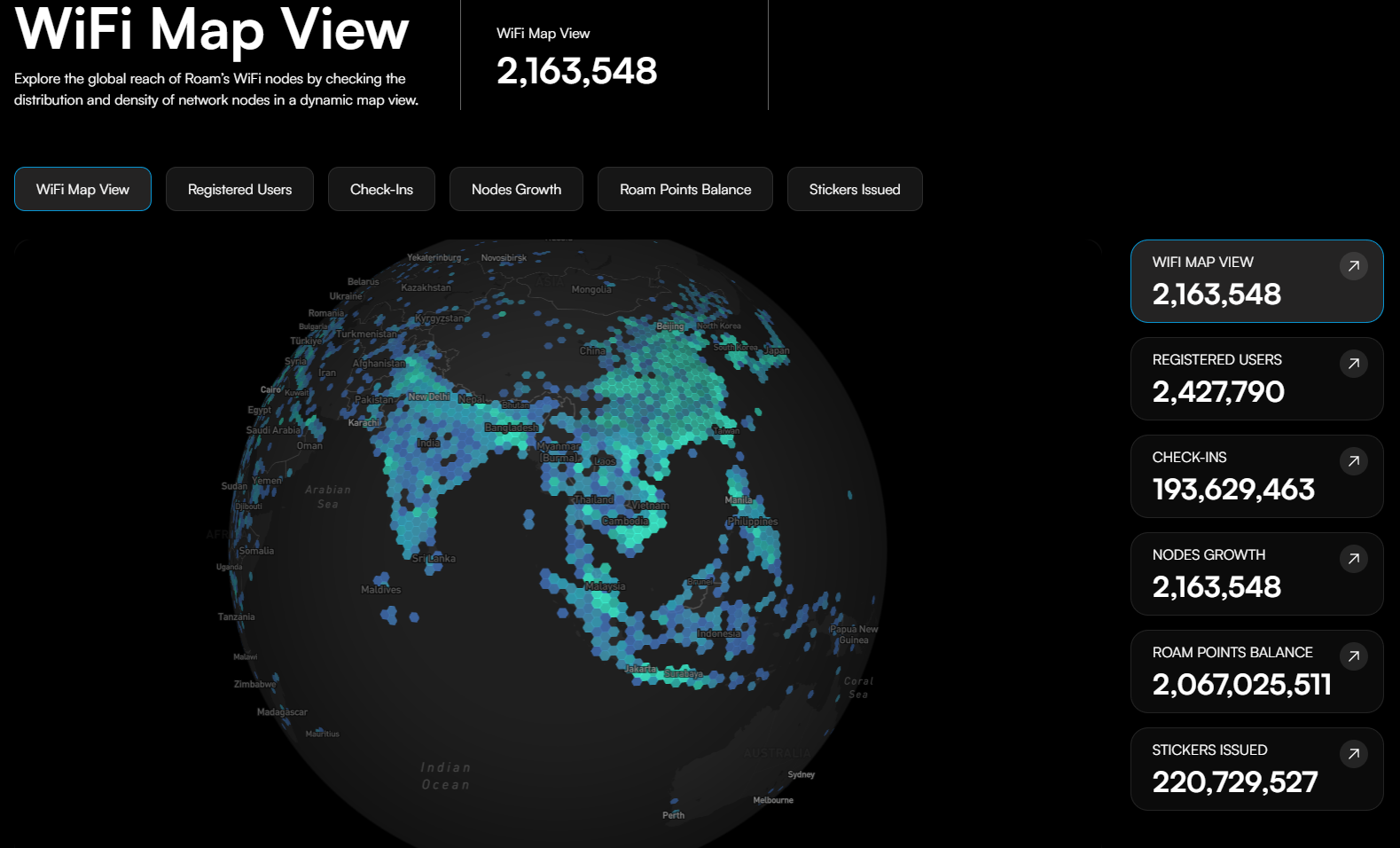
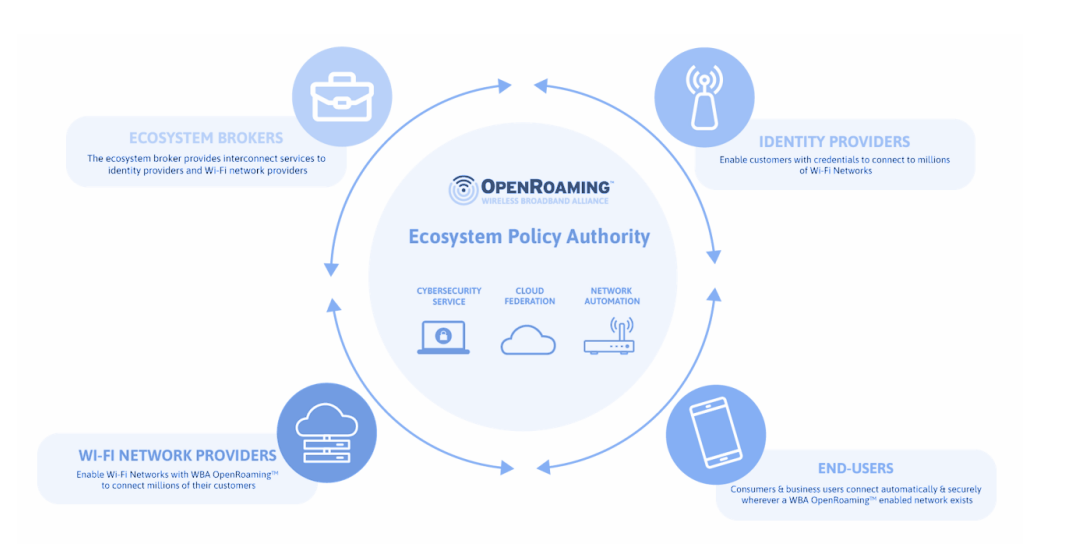
Roam is a decentralized wireless network (DeWi) project developed by MetaBlox Labs, aiming to reconstruct the global communication infrastructure through blockchain technology. As the only Web3 identity provider (IDP) in the Wireless Broadband Alliance (WBA) OpenRoaming program, Roam has built an open wireless network covering the globe by integrating decentralized identifiers (DID), verifiable credentials (VC), and OpenRoaming security certificates. As of March 2025, Roam has over 2 million registered users and 1.2 million self-built WiFi nodes, covering 160 countries, ranking first in the DePINscan hardware node ranking, and becoming a benchmark case in the DePIN (Decentralized Physical Infrastructure Network) track.
Solving the pain points of the traditional telecommunications industry
High costs and data silo issues
Traditional telecom operators rely on a capital-intensive model, with high network deployment costs and fragmented data. For example, operators' private domain data is difficult to interconnect due to privacy and business barriers, forming a "data blue ocean" that cannot be effectively utilized by AI. Roam, through a decentralized model, integrates the scattered WiFi hotspots into a unified network, allowing users to roam seamlessly through DID identity authentication, without the need for repeated logins or paying high roaming fees. According to estimates, users' international communication costs can be reduced by 30%-80%.

Privacy and security challenges
Public WiFi often requires users to provide private information such as mobile numbers, posing a risk of data leakage. Roam introduces DID and zero-knowledge proof technology, allowing users to generate a decentralized identity only once, and subsequent connections are completed automatically through verifiable credentials (VC), achieving "seamless login" and protecting privacy.
Business model innovation
Roam adopts a "Free to Use" model, incentivizing users to share network resources through token rewards. For example, users who deploy routers as nodes can earn Roam Points, which can be exchanged for tokens, air miles, or mobile phone credits. This "contribution equals benefit" mechanism overturns the traditional telecom pay-to-use model.
Technological innovation: deep integration of Web3 and telecom standards
Technical architecture and standard compatibility
Roam integrates multiple telecom industry standards and Web3 protocols:
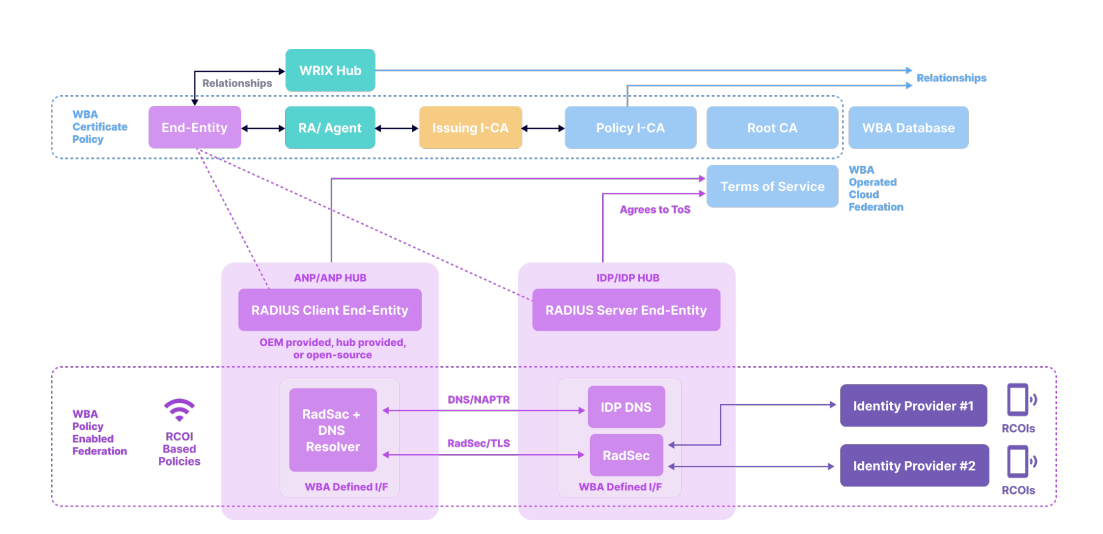
• IEEE 802.11u and Hotspot 2.0: Supports automatic device discovery and connection to the OpenRoaming network, providing a roaming experience similar to cellular networks.
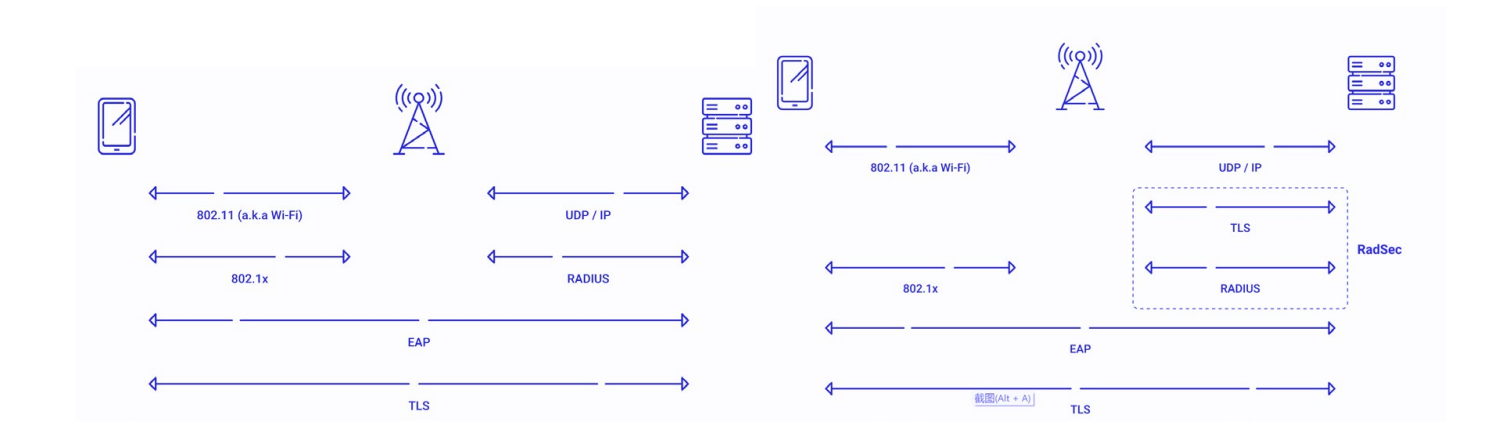
• EAP-TLS/RADIUS protocols: Provides enterprise-level secure authentication, preventing man-in-the-middle attacks.
• Blockchain layer: DID-based identity system and smart contract-automated verification, ensuring transparent and traceable node contributions.
Hardware devices and network expansion
Roam's enterprise-level routers (such as Rainier MAX60) support WiFi 6 technology, with a maximum speed of 9.6 Gbps and the ability to connect 200+ devices, with built-in storage expansion and dApp running capabilities. Node miners receive rewards through the "Proof-of-Service" mechanism, incentivizing the expansion of network coverage.
eSIM and global data layer
Roam has launched a global eSIM service, allowing users to receive free data packages or purchase low-cost roaming packages in 160 countries, enabling seamless switching between WiFi and cellular networks. Furthermore, Roam is building a "Telecom Data Layer" to facilitate the flow of data between people, devices, and AI, providing fundamental infrastructure for the DePIN ecosystem.
Team and background: a solid foundation of technology and collaboration
Roam is driven by MetaBlox Labs, an institution with deep experience in the integration of blockchain and physical networks. The project's rapid growth and extensive collaborations reflect the team's technical capabilities and execution skills. As of December 3, 2024, Roam has deployed over 1.1 million self-built Wi-Fi nodes globally, covering nearly 200 countries and regions, with over 1.8 million registered users and a total of 1.55 million nodes, making it a leading project in the DePIN ecosystem.
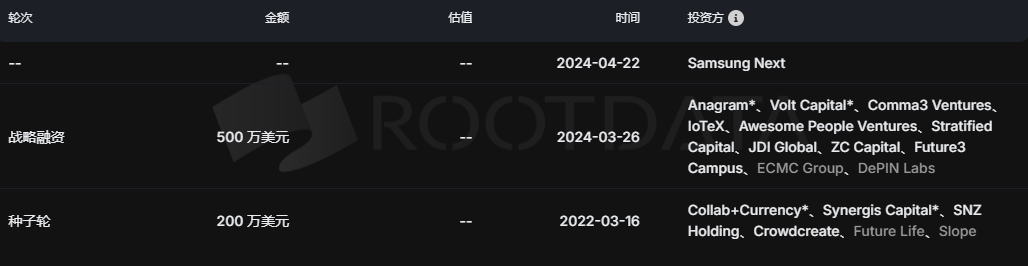
Roam has received strategic investment from Samsung. In April 2024, Samsung Next invested in Roam, the only DePIN project investment that year, providing Roam with financial and technical endorsement. Additionally, Roam completed a $5 million strategic financing led by Anagram and Volt Capital at the end of 2023. Solana's official social media has also voiced support for Roam, releasing a 3-minute promotional video, highlighting its important position in the Solana ecosystem. As a member of the Wireless Broadband Alliance (WBA), Roam is the only Web3 project in the OpenRoaming™ program, collaborating with industry giants such as Cisco and Boingo.
Furthermore, Solana's high throughput and low-cost characteristics have provided technical support for Roam's node count to expand from tens of thousands to 1.2 million. Roam is also a certified partner of the WBA, promoting the global adoption of OpenRoaming™. The WBA's 2025 industry report shows that 81% of respondents plan to deploy OpenRoaming™, an 18.9% increase from 2024, with Roam's dynamic incentive system and innovative hardware playing a crucial role.
$ROAM token economic model
$ROAM is Roam's native token, with a total supply cap of 1 billion. 400 million tokens were generated during the Token Generation Event (TGE), and the remaining 600 million will be gradually released through mining or staking. Its functions include:
- Rewarding network contributors: Users receive mining rewards for sharing hotspots or verifying services.
- Staking: Participating in governance or obtaining priority access.
- Service payments: Used to purchase services within the network.
Users who purchased Rainier MAX60, Baker MAX30 routers, or hold MetaBlox NFTs before the TGE can participate in a 20 million $ROAM token airdrop.
Roam Points: a flexible points system
Roam Points have no upper limit and are complementary to $ROAM. Users can earn them through the following methods:
- Adding hotspots: 100 Roam Points per hotspot.
- Checking in: 10 Roam Points per check-in, no limit.
- Referring friends: 30 Roam Points each for both parties, daily limit of 300 Roam Points.
- Deploying miners: Rainier MAX60 and Baker MAX30 WiFi 6 routers offer up to 3000 Roam Points as a welcome bonus, 60 Roam Points per day, and an additional 150 Roam Points when others check in.
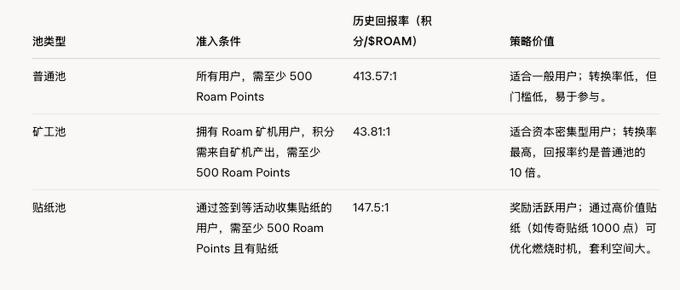
Users can convert a minimum of 500 Roam Points to $ROAM through the "Burning" Pool, with the conversion rate dynamically adjusted across the General Pool, Miner Pool, and Sticker Pool, allowing users to optimize their earnings.
NFTs and lending program
Roam introduces Non-Fungible Tokens (NFTs), where holders can bind high-traffic area mining equipment and enjoy all the rewards. The Roam Loan Program, in collaboration with Huma Finance, provides financing solutions: users pay a 30% down payment (stablecoin), and the remaining 70% is financed by Huma; mining rewards and early airdrops can be used for repayment; or users can use SOL as collateral for full financing, and the SOL can be withdrawn after repayment.
Participation Methods
I. Basic Participation: Earn Points by Sharing WiFi
Add Household WiFi Nodes
Users can add their home WiFi through the App (password required), and receive a fixed reward of 100 Roam Points for the first-time addition. Completing the daily "Check-in" can earn an additional 10 points and 1 sticker, with higher rewards for Private WiFi check-ins.
Dynamic Earnings Strategy
• Unlimited Check-ins: Users can repeatedly earn points by checking in to the added WiFi multiple times per day, suitable for high-frequency users.
• Mark OpenRoaming Locations: Discover and mark WiFi hotspots not included in the Roam map to receive additional rewards.
Source: 0xDragon888.sol
II. Advanced Participation: Deploy Hardware Miners
Roam Router (Rainier MAX60)
• Performance and Earnings: Priced at $499, supporting WiFi 6 (9.6Gbps speed), 150㎡ coverage, and 200+ device connections. As a Depin device, the first-time activation reward is 3,000 points, and the daily mining earnings are 5 times that of regular users (up to 60 points per day), with a check-in reward cap of 150 points per day (3 times that of regular users).
• Payback Period: Based on the burning pool parameters, the official website estimates a payback period of 1-2 months, but the actual results may vary with market fluctuations.
Miner-Exclusive Benefits
• Miner Burning Pool: Designed specifically for router holders, with a higher conversion rate for exchanging $ROAM tokens compared to the general pool.
• Staking and Validation: Becoming a RADIUS provider or validator requires staking $ROAM, which can earn additional rewards.
III. Optimization Strategies and Additional Paths
Timing for Dynamic Conversion Rates
The burning pool generates a fixed amount of $ROAM per hour, and if the burning of points is lower during that time, the conversion rate per point will be higher (e.g., in 100 tokens/hour, 2 points can be exchanged for 50 $ROAM/point). It is recommended to observe the burning pool data and choose low-peak periods for operations.
Community and Airdrop Activities
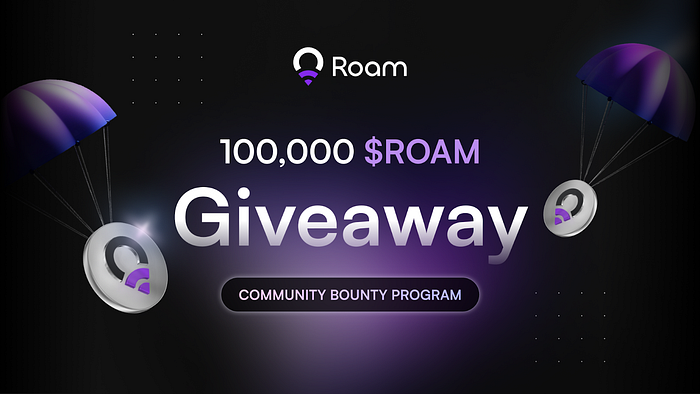
• Bounty Program: Participate in content creation, social interactions, and other tasks to share a $ROAM reward pool of 100,000.
• Referral Mechanism: Both the referrer and the new user receive 30 points when a new user successfully registers and adds at least 1 WiFi.
Future Outlook: From WiFi to AI Infrastructure
Roam's vision goes beyond WiFi roaming, aiming to build a global Telecom Data Layer as the physical layer 1 of the DePIN ecosystem. Its plans include:
- Breaking Data Barriers: The Roam Discovery Program, to be launched by the end of 2024, will collaborate with DePIN partners to enrich AI training data sets.
- Privacy and Security: Utilizing DID, VC, and zero-knowledge proof technologies to ensure data security.
- Empowering AI Agents: Supporting seamless integration of AI agents into IoT devices, driving the transition of AI to the Internet of Things.
The Telecom Data Layer consists of four main modules: Roam Network, Roam Growth, Roam Discovery, and Roam Community. The Roam Growth platform will provide sustainable revenue streams, simplify device operations, and integrate market and financial tools.
Roam has already established a solid foundation globally, leveraging innovative technologies, strong partnerships, and a well-designed economic model. It not only solves the pain points of WiFi roaming but also sets a benchmark for the decentralized infrastructure of the Web3 era. In the future, Roam will continue to connect people and devices, leading industry transformations, and is worth looking forward to.