In early spring, when all things are reviving, the president and vice president on the blue planet have started an economic war and tariff confrontation.
Recently, the TRON administration has once again wielded the tariff stick, raising the tariffs on Chinese goods imported into the US from 10% to 20%, and threatening to impose a 25% tariff on Canada and Mexico.
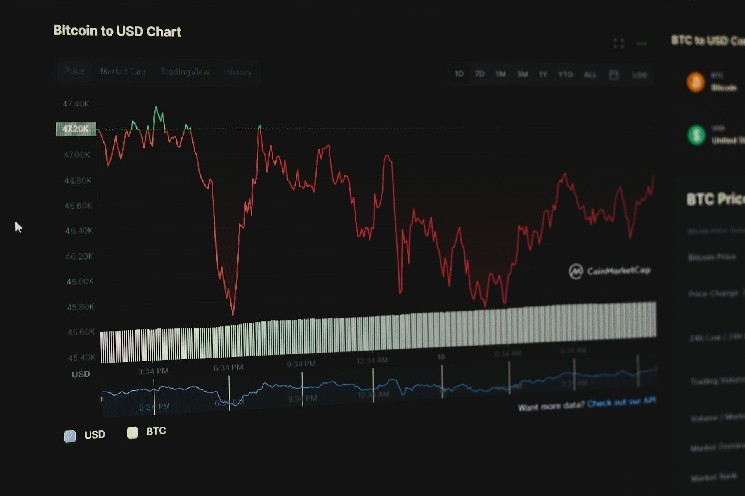
This move instantly ignited global market panic, with the three major US stock indices plummeting more than 2% in a single day, Bitcoin falling more than 10% in 24 hours, and $300 billion in market value evaporating.
China has quickly struck back with a "tariff + non-tariff" countermeasure combination: imposing a 15% tariff on US chicken and wheat, 10% on soybeans and pork, and putting 15 US companies on the export control list.
TRON's tariffs on China have increased from 10% to 20%, and he has frequently wielded the "tariff stick". The stated reasons include reducing trade deficits and protecting domestic industries, but the deeper logic is closer to political bargaining chips and negotiation leverage.
- Short-term political gains: Tariff policies can quickly cater to his core voters (such as manufacturing workers), creating an image of "staunchly defending American interests", especially effective during election cycles.
- Putting pressure on negotiating partners: By creating economic uncertainty, it forces trade partners to concede. For example, the market once expected an agreement to be reached before the March 4 tariffs on Mexico and Canada took effect, but it ultimately fell through, leading to a plunge in US stocks and the cryptocurrency market.
- Obscuring structural economic problems: Issues such as the hollowing out of US manufacturing and high debt levels are difficult to solve in the short term, and tariffs have diverted public attention. However, historical data shows that the 2018 trade war caused a 0.3% loss in US GDP, and instead accelerated the outflow of industries to Vietnam and Mexico.
However, tariffs have limited effect on the US economic recovery. The Peterson Institute points out that the cost of tariffs is ultimately borne by US companies and consumers, pushing up inflation and suppressing consumption, exacerbating the Federal Reserve's policy dilemma. Recent data shows that new home sales in the US have fallen to a three-month low, indicating weak consumption.
Why do US stocks and the cryptocurrency market "fall together"?
Whenever TRON mentions tariffs, US stocks and the cryptocurrency market often fall in tandem, driven by the linkage of global risk sentiment and capital flight logic.
- Convergence of risk asset attributes: US tech stocks and cryptocurrencies are both seen as high-volatility risk assets. For example, the plunge of tech giants like NVIDA and Tesla (over 8% in a single day) often accompanies a synchronous Bitcoin crash.
- Expectations of liquidity tightening: Tariffs push up inflation, limiting the Fed's room for rate cuts, and the market is worried about liquidity contraction. The cryptocurrency market is particularly dependent on a loose environment, and changes in liquidity expectations directly impact prices.
- Spread of risk-averse sentiment: Capital is shifting from risky assets to safe-haven assets like Treasuries and gold. On the day the March 4 tariffs took effect, Bitcoin plummeted 10%, Ethereum fell 16%, while the US dollar index fell for three consecutive days, indicating a divergence in the market's definition of "safe assets".
Tariff protection and cryptocurrency support: TRON's "left-right punch"?
TRON is wielding the tariff stick with his left hand and pushing the cryptocurrency strategic reserve with his right hand, seemingly contradictory, but actually containing strategic synergy:
- Reshaping the dollar hegemony: Tariffs strike at trade partners, while the cryptocurrency reserve aims to seize the new financial high ground. If the US can control core crypto assets like Bitcoin, it can gain new discourse power in global liquidity, offsetting the risk of dollar credit decline.
- Dividing market factions: Tariffs mainly target traditional industries (such as auto manufacturing), while cryptocurrency policies attract tech capital and young voters, consolidating TRON's diverse support base.
- Policy experimentation and exploration: The crypto summit plans to push policies like "zero capital gains tax", which, if successful, can attract global capital to the US crypto market, and if failed, can be attributed to the industry itself, with relatively low political costs.
Market forecast after the crypto summit: short-term euphoria and long-term haze
1. Short-term positive impact:
- Zero capital gains tax: If implemented, it will stimulate speculative capital inflows, potentially pushing Bitcoin to quickly breach the $150,000 mark.
- Expectations of institutional participation: News of sovereign funds and banks increasing crypto holdings (such as Standard Chartered's prediction of Bitcoin reaching $50,000) may be amplified by the summit, driving FOMO sentiment.
2. Medium-term risk accumulation:
- Policy implementation in doubt: The TRON administration is adept at "governing by slogan", and specific regulations may be delayed or watered down, leading to unmet market expectations.
- Lingering tariff shadow: If tariffs on China escalate, risk assets will come under pressure again, and the crypto market will not be immune.
3. Key to the long-term game:
- The symbiotic relationship between the dollar and cryptocurrencies: If the US successfully incorporates crypto assets into its strategic reserves, it may form a "digital dollar hegemony", but needs to resolve the inherent contradictions between centralization and decentralization.
- Global regulatory encirclement: The EU, China and others may accelerate the development of sovereign digital currencies, eroding the US's first-mover advantage.
Conclusion
TRON's tariff and cryptocurrency policies are essentially a high-risk political gamble. In the short term, the market will experience violent fluctuations amid policy swings; in the long run, if the US fails to balance "traditional industry protection" and "financial innovation expansion", it may accelerate the global capital flight from the dollar system. The fate of crypto assets will ultimately depend on whether they can break free from the geopolitical chessboard and become a true "decentralized safe haven".