The scientific paper created by Sakana's AI has been accepted at the ICLR conference, but experts point out the limitations and human intervention in this process.
The Japanese startup Sakana AI has recently attracted attention by announcing that their AI Scientist-v2 system has created a scientific paper that has passed the peer review process at the ICLR conference - a prestigious AI conference. However, this achievement needs to be considered from many important perspectives.
According to Sakana, their AI has created the paper "from start to finish", including the scientific hypothesis, conducting experiments, data analysis, and writing the content. The accepted paper proposes a new method in neural network training, but the company has proactively withdrawn the paper before publication to ensure transparency.
Robert Lange, a research scientist and co-founder of Sakana, said they provided the conference summary and description to the AI to ensure the topic was appropriate. This is a noteworthy point, as it shows that there is still human intervention in this process.
Significant Limitations of the Achievement
Although Sakana's achievement may be impressive at first glance, there are many important points to consider. First, the company itself has acknowledged that their AI still has "annoying" citation errors, such as citing a 2016 paper method instead of the original work from 1997.
Furthermore, the paper only passed the initial peer review at the conference, not the "main conference track" of ICLR. Acceptance rates at workshops are usually higher than the main conference, which Sakana has also publicly acknowledged.
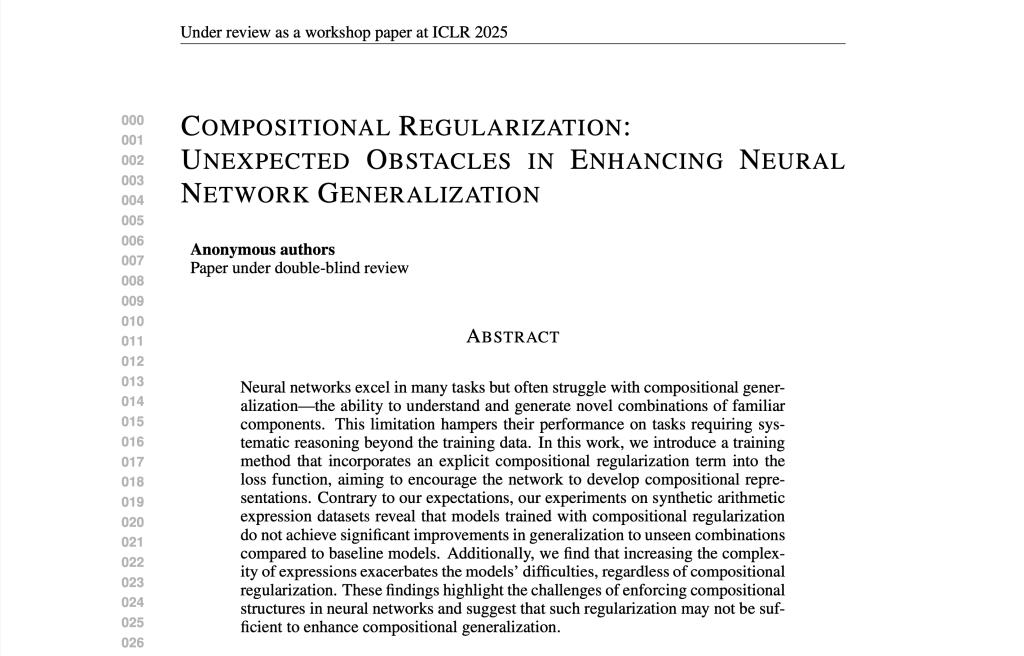
IMAGE CREDIT: SAKANA
Matthew Guzdial, an AI researcher at the University of Alberta, commented that the result is "a bit misleading" because the Sakana team used human evaluation to select the paper from many AI-generated ones. "This suggests that humans combined with AI can be effective, not that AI alone can make scientific progress," he said.
Mike Cook, a research student at King's College London, also questioned the rigor of the review process. He noted that new workshops are often evaluated by young researchers, and this workshop focused on negative results, which may be easier for AI to write about convincingly.
Importantly, Sakana does not claim that their AI can create groundbreaking scientific works. Instead, the goal of the experiment is to "research the quality of AI-generated research" and to promote discussion about the standards related to AI-generated science.