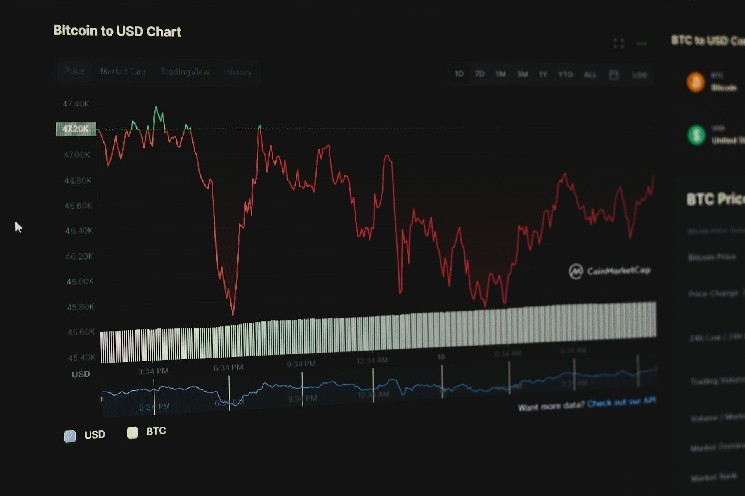
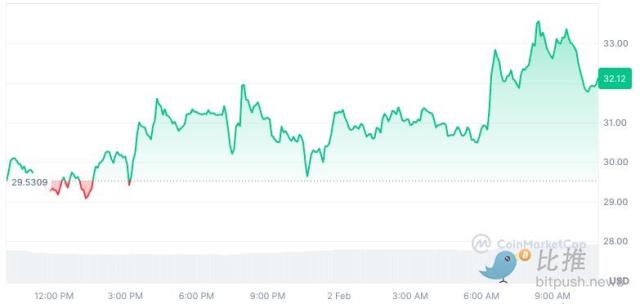
Although Bitcoin has shown relatively stronger performance than the US stock market and has been the first to rebound in the past two days, especially in terms of technical indicators (such as the 200-day moving average) and the improvement in market sentiment.
VX: TZ7971
However, it is still recommended to adopt a cautious strategy: in the short term, you can reduce your risk exposure and wait for the market to stabilize before gradually building positions, closely monitoring the support around $75,000 and changes in macroeconomic factors (such as inflation, interest rate cuts, etc.).
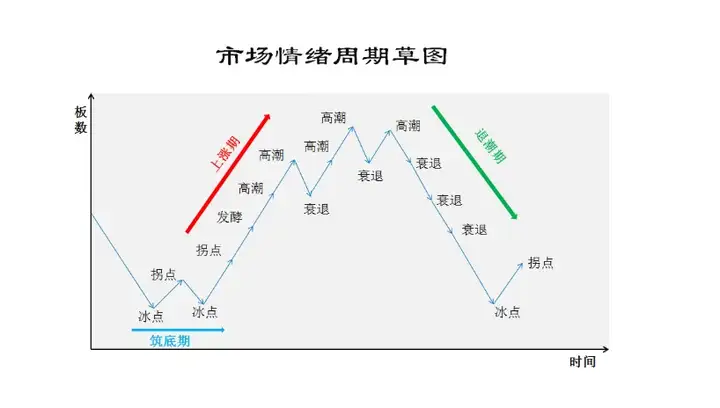
If you have sufficient funds or psychological endurance, you can try to buy the dips in small amounts.
Followin' observation list, if you encounter extreme market conditions, you can select targets from the list to buy the dips, for reference only:
Large MC memecoin: SOL, BNB, Doge, XRP
Blockchains: HYPE, TAO, S, AVAX, Sui, STX
Applications: Aave, UNI, SSV
Sectors: TRUMP, ACT, Pepe, TST
The most core thing is: lower expectations
Whether it's secondary, primary, or airdrop-like farming, one should recognize that the crypto industry has entered a bear market in terms of valuation. In a sluggish market, excessive emotional premiums will be deflated for a return to value. If you can lower your expectations and not be too greedy, that will be the foundation for being able to persevere and continue farming in the bear market.

Before farming, the most important thing to understand is: what is the essence of farming?
Farming is a secondary market participation channel, with certain similarities to primary investment.
Airdrops are currently a marketing tool used by projects to acquire users and boost data, serving a listing purpose.
Farming is not a guaranteed return activity, it is also a form of investment, and there is no confirmed promise of return from the project.
Based on the above three points, you will find one thing: the main group of this round of primary investment - the vast majority of VCs actually don't make money, and the rule of primary investment is to invest in the bear market and harvest in the bull market.
All the simple big farming rewards in the history of airdrops have almost come from the bear market, such as Aptos and Arb, which came out when the secondary market conditions were not so good, and the cost of capital and time for retail investors was not as high, especially the Aptos airdrop, which was even at the A8 level of the testnet.
However, the second half of last year was basically a bull market, and if you do primary investment during a bull market, the possibility of being reversed is necessarily high. If you can understand that the essence of farming is an unlicensed primary investment, you will find that being reversed may just be the norm.
Let's review the timeline of Nillion, this project raised funds in Q3 last year and launched the main retail participation activity, which was during the two most active quarters of the secondary market last year, and now the TGE is at the worst point of the secondary environment... Essentially, this is a problem of timing.
So what should we do now?
Watch more, do less
Even in a bear market, there are often unexpected opportunities, like the $COCORO which was a large MC memecoin a few days ago, and with a slower pace, there are still opportunities to make money, it just depends on how to judge the level of the narrative;
On the basis of watching more and doing less, don't be too greedy, being able to make a few tens of thousands of dollars is already very good.
Farming can still be done, just don't expand and increase capital investment.
If necessary, you can do more daily farming tasks. If you can lower your expectations, there are still quite a few easy daily farming tasks in crypto, such as the Binance wallet's IDO tasks that pay a few hundred dollars per task, the OKX Cryptopedia activities, the Bybit Solayer & Launchpool activities, these are basically confirmed airdrops, it's just that people usually don't care about this small amount of money, which is an issue of expectations;
And when farming, think more and review more, which can also improve your industry knowledge, rather than just doing it like ringing a bell. For example, how to find ways to improve your efficiency? The process of programmatically collecting information? How to organize and plan the project and knowledge base? These are all ways that can be optimized.
Try to find places where there are still dividends, rather than just following what others are doing.