Cyber Capital founder Justin Bons publicly criticizes Pi Network, calling it a "scam" and bringing the network back into the spotlight.
Bons raised concerns about the project's technology, business model, and tokenomics, claiming they are seriously flawed and potentially harmful to investors.
"Core Technology Copied from Stellar (XLM)... No Virtual Machine"
On X (formerly Twitter), Bons pointed out several issues with the network. He suggested that while Pi Network claims decentralization, it remains highly centralized.
"PI is completely permissioned (centralized), and everything requires customer identification (KYC). Even simple transactions! PI is an investment scam; it's that bad," he wrote.
Bons also criticized the five-year delayed mainnet launch, saying the network's promises of innovation and decentralization are misleading. Specifically, he claimed that Pi Network's core technology was copied from Stellar (XLM).
Nevertheless, he argued that the absence of a Turing-complete virtual machine (VM) limits Pi Network's DeFi potential, calling it a "hollow dream". He also explained that this makes the network neither scalable nor programmable.
Bons further criticized the network's referral program, comparing it to a multi-level marketing (MLM) system. He claimed this system provides no real benefit to users and creates unnecessary costs for the network.
Exacerbating his concerns, Bons highlighted Ponzi-like mechanisms within Pi Network's "mining" process. He noted that lock-up periods benefit insiders, inflating token prices and allowing early investors to profit and exit.
Transparency, or its lack, was another critical issue Bons highlighted. He criticized Pi Network for implementing KYC procedures while not disclosing insider token allocations. He pointed out that insiders could control up to 20% of the network's supply, contradicting the project's claims of fairness.
"PI entering the top 20 is a disgrace to our industry," Bons concluded.
Previously, Bybit CEO Ben Zhou shared similar concerns, calling PI a scam and "more dangerous than a meme coin".
Will Pi Coin (PI) be Listed on Binance?
Meanwhile, these criticisms emerged amid growing pioneer frustrations with Binance. On March 19, the exchange revealed its first voting list project, which included meme coins related to the former CEO's dog and Mubarak (MUBARAK) token.
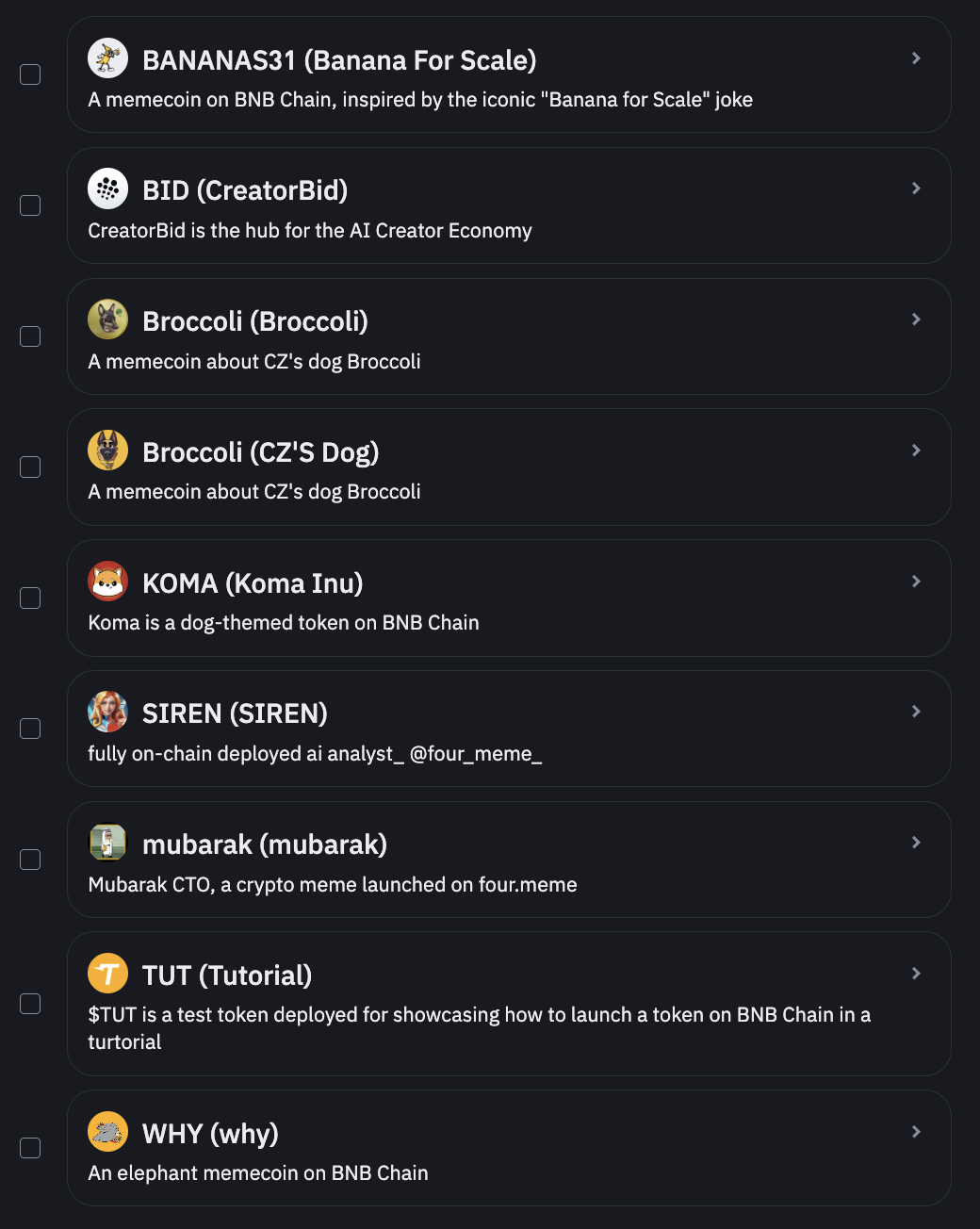
Despite Pi Coin (PI) receiving 86% of votes, the community expressed dissatisfaction with Binance's failure to list it.
"Do not act like a third-rate garbage exchange before starting the next vote without fulfilling your promise. If CZ were still at Binance, he would not have acted like this. He would not be proud of your actions," a user wrote on X.
The community even went as far as giving Binance a 1-star rating on the Google Play Store. However, this may have worsened PI's prospects.
"Do not spread FUD or negative comments about Binance to pressure the coin's listing, or you will be blacklisted," Binance mentioned.
Bons' criticism and Binance's dismissal coincided with a market crash for PI. The token's price dropped below $1.0 for the first time since late February.
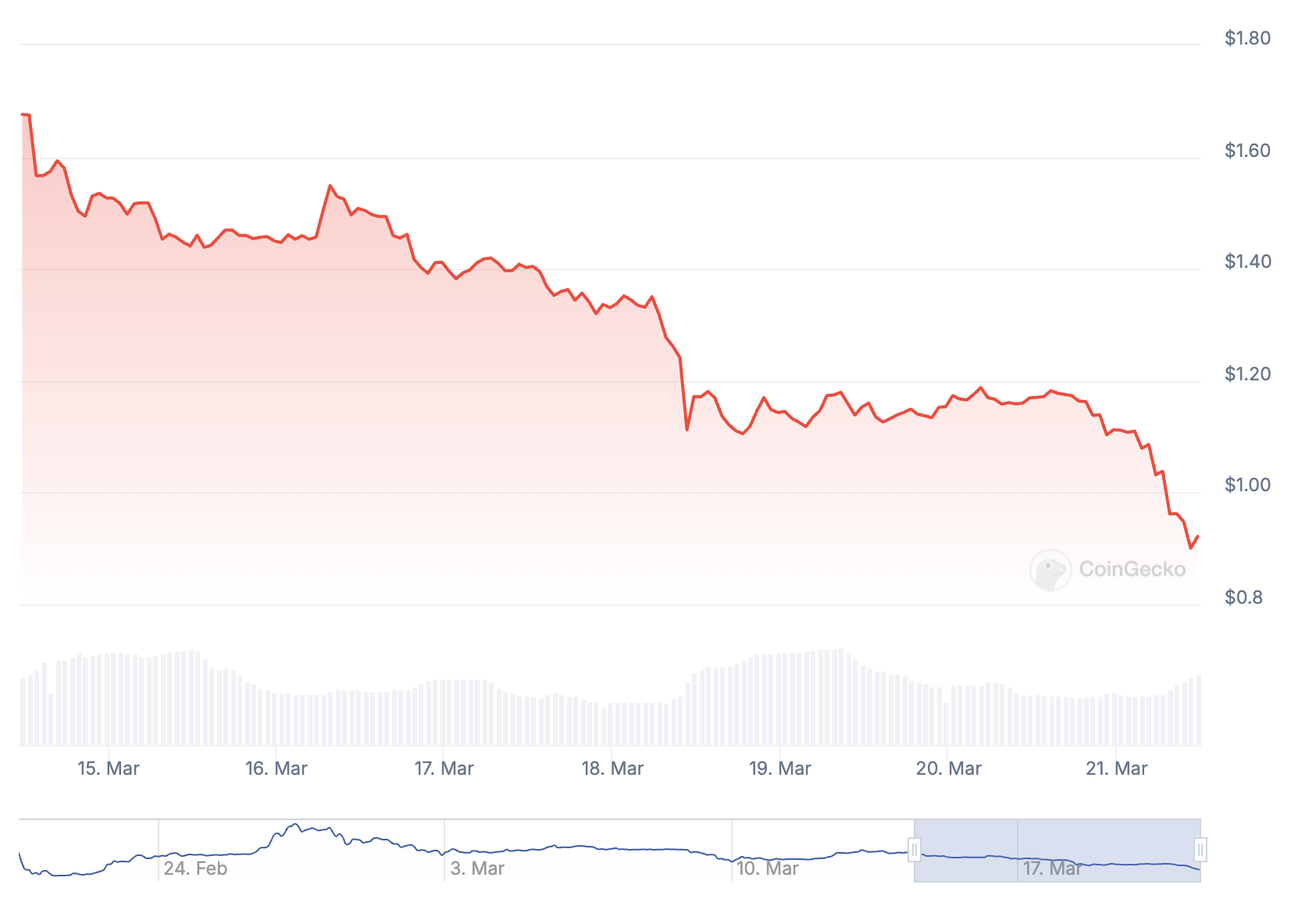
In the past 24 hours, PI has fallen 20.1%. Weekly losses expanded to 48.7%. At the time of reporting, Pi Coin was trading at $0.91. Its ranking was also impacted, dropping significantly to 27th on CoinGecko from its previous position.