


Author: David C, Bankless; Translated by: AIMan@ Jinse Finance
Ethereum continues to make steady progress behind the scenes. Amid the ongoing debate over the “correct” roadmap for the world computer, developers have been forging ahead, steadily preparing for two major upgrades: Pectra (scheduled for May 2025) and Fusaka (scheduled for late 2025).
Each technology has its own nuances, such as improving validator efficiency, increasing data capacity for Layer 2 Rollups, and improving wallet functionality — all with the goal of making Ethereum more scalable and accessible.
In this article, we’ll take a closer look at both upgrades, giving you insight into how these upgrades fit into Ethereum’s broader efforts to stay ahead of user demands, maintain security, and build a more user-friendly network. Let’s dive in!
What Pectra brings to Ethereum
After multiple delays and testnet incidents, Pectra is now scheduled to be launched on the mainnet around May 2025, bringing improvements to staking, blobs, and account abstraction . The following are its core upgrades:
Staking and Validator Upgrades
Perhaps the biggest code change since Ethereum introduced validator withdrawals during Shapella will come via an upgrade commonly referred to as “MaxEB.”
Under current rules, each validator can only receive 32 ETH (maximum effective balance MaxEB) in staking rewards, which means that large staking providers like Lido or Coinbase will launch multiple validator nodes to stake more than 32 ETH. While a large validator set sounds good for decentralization, it may be more superficial because they usually operate under one umbrella, and it also slows down the network and increases overhead for everyone.
Pectra will change this by increasing MaxEB from 32 ETH to 2048 ETH , a major leap proposed by EIP-7251. As a result, large-scale stakers and operators can consolidate their existing validators, freeing up bandwidth for the entire network and making it run more smoothly. At the same time, it will not affect the minimum required to run a validator, which is still 32 ETH, but now individual stakers can also stake more, and their staking rewards will automatically increase.
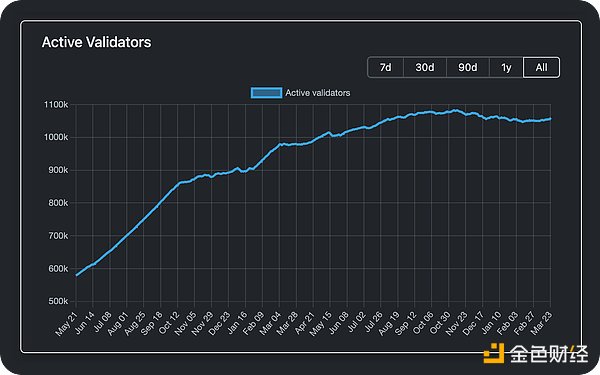
https://www.validatorqueue.com/
While this sounds centralized, keep in mind that it also increases penalties for bad behavior. For example, slashing penalties (the amount of money that is forfeited when a validator behaves maliciously) are proportional to the amount of ETH they hold. If something goes wrong, any validator with 2,048 ETH will face an extremely high initial slashing penalty.
Increased Blob data capacity
In terms of scalability, Pectra builds on the Dencun hard fork (EIP-4844). The Dencun fork introduced “blobs” as a cheaper way for L2 to publish data on Ethereum.
But as usage on the chain grew, blob fees also rose as they continued to exceed the target amount per block. Pectra solves this problem by increasing the minimum blob capacity from 3 to 6, and increasing the maximum average blob per block from 6 to 9 (via EIP-7691). In other words, it increases the current capacity so L2 can keep fees low and continue to call Ethereum home.
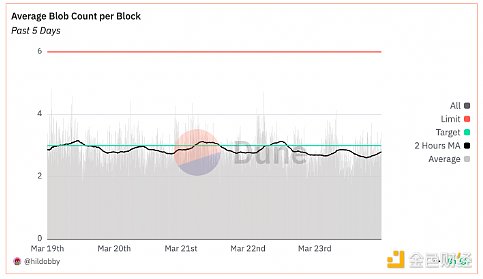
Source: Dune @hildobby
This seems to be just the beginning, Vitalik said his ideal goal is to reach 48/72 blobs , which is a huge leap, but considering the relatively modest growth expected by Pectra, it may still be some way off. The entire debate remains one of the most controversial topics in the Ethereum community, with researchers and ETH holders divided over whether to prioritize supporting ordinary L2 users or preserving the economic value of ETH, with some arguing that blob space is being weakened.
It’s a delicate balancing act that forces Ethereum to make difficult decisions about who to optimize for in the end. Time will tell which tradeoff leads to a stronger long-term future.
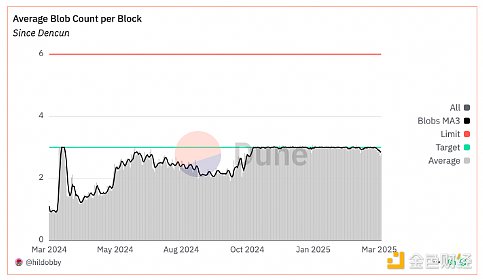
Source: Dune @hildobby
Adding Account Abstraction
One of Ethereum’s long-standing buzzwords is account abstraction: letting regular wallets add “smart” features like social recovery or automatically approved transactions.
The end result? A more user-friendly wallet without complicated setup and security steps. EIP-7702 in Pectra improves upon the original EIP-4337 for account abstraction, which will allow standard Ethereum addresses to bundle transactions, sponsor gas fees, and use advanced authentication methods like keys . Users can also set spending limits or use social recovery to regain control if they lose their keys. In short, fewer pop-ups, less hassle, and a smoother overall experience that is more friendly to newbies while allowing OGs to personalize more.
Ethereum Fusaka Upgrade
Once Pectra is over, attention will turn to the next upgrade, Fusaka. Vitalik wants to have the upgrade live on the testnet as soon as Pectra goes live. The current target is the end of 2025. While this may change, the scope of the upgrade will likely remain the same, centering around a few core updates:
By 2025 we need Fusaka with PeerDAS on L1, ideally with blob targets/limits of 48/72
Our goal is to run the Fusaka testnet with these blob parameters the day after Pectra goes live.
— vitalik.eth (@VitalikButerin) March 1, 2025
Pure Data Availability Sampling (PeerDAS)
One of Fusaka's main goals is to use PeerDAS to improve data availability. Currently, every Ethereum node must download all the data in each block, which not only slows down the process but also increases the barrier to entry for running a node.
PeerDAS turns this model on its head - each node downloads only a small portion of the data and uses cryptographic checks to confirm that the full dataset still exists. Imagine a group of people at a concert, each recording a segment of the performance; no one has the entire video, but together they can prove that the entire event occurred.
The PeerDAS model reduces the amount of data nodes need to store and share, making their jobs easier, which should help ethereum handle more activity. But there’s a catch: Validators still need to check certain data to make sure everything is running smoothly. Currently, the system for providing this data depends on how many validators are active, and if that number changes quickly — if a group of validators leave or merge — it can cause problems. Don’t worry, though: Since PeerDAS is a priority before other upgrades, it’s already being tested, and ethereum core developers have been told to prioritize it before other upgrades. If successful, it will improve ethereum’s scalability, make it easier to run a node, and keep the network decentralized as usage grows.
Ethereum Object Format (EOF)
Another core feature of Fusaka is a complete overhaul of the Ethereum Virtual Machine (EVM) through a feature called Ethereum Object Format (EOF).
The upgrade modernizes the structure of smart contracts by clearly separating contract code from data, improving security and making the entire system more organized.
As the largest developer environment, consolidating the EVM through EOF will go a long way toward making smart contracts easier and safer to write, helping developers avoid common mistakes and vulnerabilities. In addition, by targeting the core structure of Ethereum contracts, EOF lays the foundation for faster and more reliable development in the future.
Minimalist approach
Overall, Fusaka is designed with a “less is more” philosophy in mind. The developers want to focus the upgrade on a few key changes — namely PeerDAS and EOF — so they can be tested and released more quickly without introducing too much complexity all at once.
Still, a number of other proposals are under consideration. One of them is EIP-7688, which builds on an earlier upgrade (EIP-4788) and allows smart contracts to check important network information (such as who the current validators are or what the latest block was) so that they can make decisions based on that.
If the team decides to fully focus on PeerDAS first, EIP-7688 may be postponed to a later upgrade. But for now, Fusaka is still interested in keeping it lean and focused on the most important changes.
Ethereum development continues to move forward. While it may seem like progress is slow and there are delays, the value that relies on its stability (billions of dollars, to be exact) means that extensive testing must be a priority, not a luxury.
Therefore, Pectra and Fusaka will continue in this role and undergo the necessary tests to ensure that they do achieve their goals.
Additionally, while Layer 1 execution scaling remains an ongoing priority, it is not the immediate primary focus of these upcoming upgrades, which are more focused on expanding Layer 2 functionality and improving network accessibility for users and developers. However, testing to scale Layer 1 by increasing the block limit is already underway!
Overall, between Pectra and Fusaka, Ethereum is poised to significantly expand its foundation, making life easier for L2 and its users, while solidifying its core with MaxEB and the Ethereum Object Format. Together, these upgrades make the blockchain a secure, scalable network that is equally welcoming to newcomers and veterans alike.






