


After U.S. President Donald Trump announced comprehensive tariffs on nearly 200 trading partners, global financial markets experienced severe volatility in overnight trading, with the cryptocurrency market suffering a significant downturn. Trump's decision raised market concerns about escalating global trade tensions, causing investors to withdraw from risky assets and shift towards traditional safe-haven assets like gold.
Trump Announces New Trade Policy
Trump's executive order declared that starting from April 5, 2025, all imported products will be subject to a 10% baseline tariff, except for goods complying with the USMCA (United States-Mexico-Canada Agreement). Tariffs for certain countries will be raised to 49%. Notably, all foreign-manufactured automobiles will face a 25% tariff. This policy will take effect on April 9, 2025, significantly impacting U.S. trading partners. Trump stated in his declaration: "Trade relations between the United States and its trading partners have become extremely unbalanced, especially in recent years."
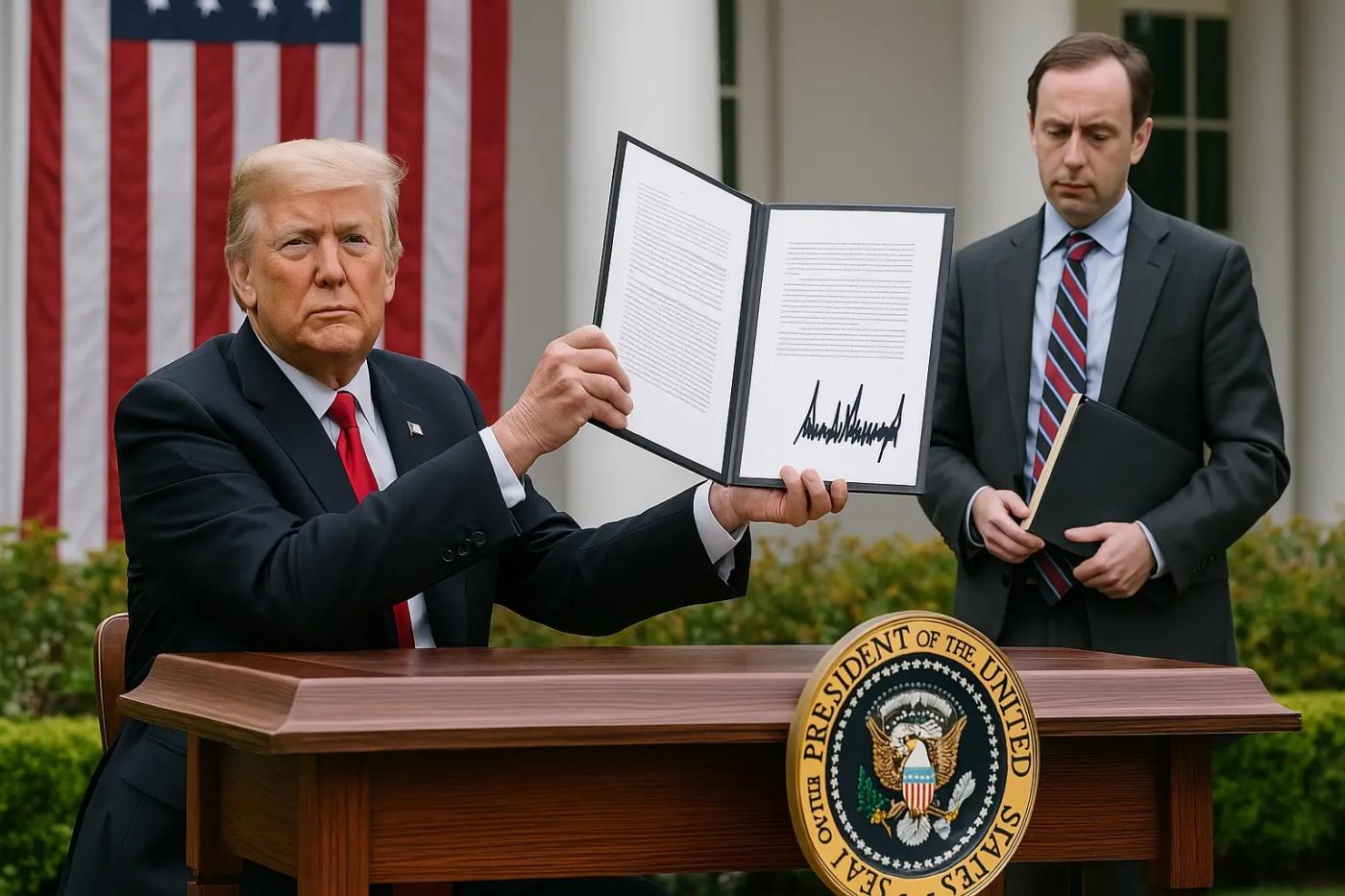
Additionally, Trump announced reciprocal tariffs targeting specific countries deemed to have erected significant barriers to U.S. products. For instance, China will face a comprehensive tariff of 54%, with a particularly notable additional 34% fee. Other countries such as Japan, the EU, India, and Vietnam will also face tariffs up to 46%.
Cryptocurrency Market Reacts Intensely
Following Trump's tariff policy announcement, the global cryptocurrency market quickly declined. Within the past 24 hours, the overall market dropped by 3.6%. At the time of writing, the GMCI 30 index fell by 4.6%. According to the BTCC trading platform, Bitcoin dropped 3% from near $88,000 in the early morning to $82,300.
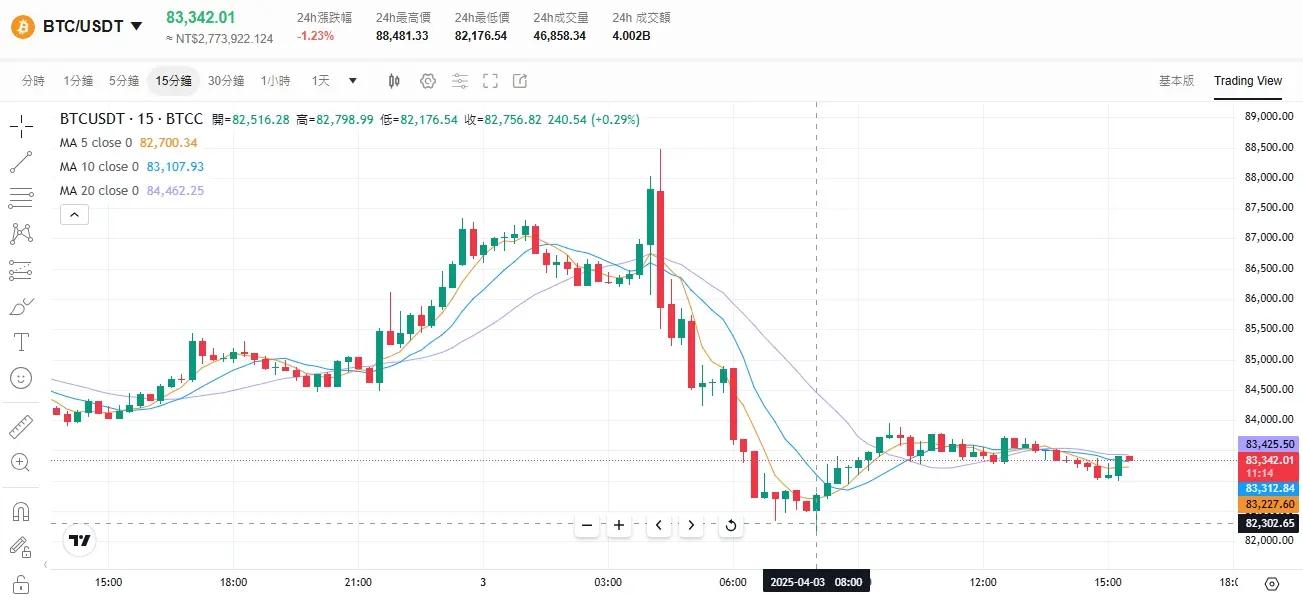
Within hours of Trump's announcement, Altcoins experienced an even greater impact. Ethereum dropped over 6%, falling below $1,800, while Solana (SOL) declined 6.5% to around $118. Among the top 10 cryptocurrencies by market cap, Dogecoin (down 6.2%), XRP (down 5.5%), BNB (down 3.7%), Cardano (down 5.8%), and TRON (down 2%) all experienced varying degrees of decline.
Traditional Stock and Gold Market Reactions
Global stock markets reacted similarly, with Dow Jones, Nasdaq, and S&P 500 futures falling 2%-4% in after-hours trading. Market leaders in the U.S. stock market, such as Apple (down 7%), Amazon (down 6%), and Nvidia (down 5%), were also severely hit in this market sell-off.
In stark contrast, gold prices reached a historic high during Asian trading hours. Although Bitcoin and other cryptocurrencies are often viewed as "digital gold," recent market volatility demonstrates that cryptocurrencies remain closely tied to global risk appetite changes. In this environment, investors have shifted towards traditional safe-haven assets like gold, driving up gold prices.
Conclusion
Trump's announced tariff policy has intensified global market uncertainty and triggered investor concerns about a potential global trade war, further increasing downward pressure on cryptocurrencies. This policy has profound implications for global financial markets, particularly in cryptocurrency and stock markets. Although Bitcoin was once considered a safe-haven asset during economic uncertainty, its recent performance indicates that cryptocurrencies remain closely linked to broader risk preferences. As global markets remain unstable, investors may tend to move funds to more traditional safe-haven assets like gold to prepare for future uncertainties.






