The blockchain industry has long sought a stable and reliable bridge between digital assets and real-world value. With the introduction of Qi, a stablecoin pegged to electricity, Quai Network is taking a unique approach to merging energy markets with decentralized finance (DeFi). This innovation has the potential to reshape financial and mining incentives, offering both advantages and challenges.
What is Qi?
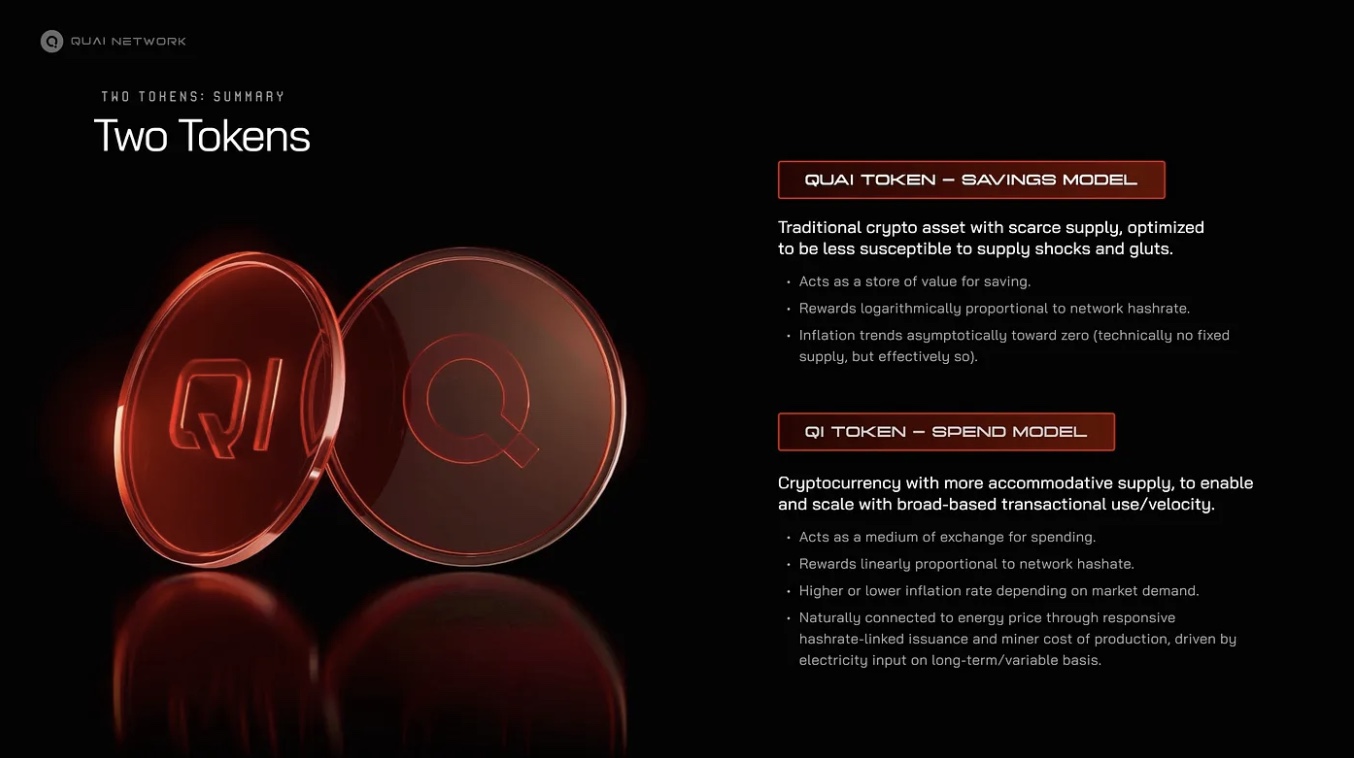
Qi is an energy-backed stablecoin designed to maintain its value based on electricity costs rather than traditional fiat currencies like the U.S. dollar. Unlike algorithmic or fiat-backed stablecoins, Qi represents a fundamental resource — energy — which is essential for blockchain networks, data centers, and global industries. By anchoring its value to electricity, Qi could provide a more tangible and stable economic foundation, particularly in the Proof-of-Work (PoW) ecosystem.
Qi Activation Details
Qi will be activated at Prime block height 211,680, expected around April 2, 2025. This aligns with Quai Network’s mainnet launch on January 29, 2025, which introduces a dual-token system comprising QUAI and Qi tokens. Unlike traditional stablecoins, Qi will be generated solely through mining, with no significant Qi genesis allocation on the market.
Potential Impacts of Qi
- Enhancing Stability in DeFi
Stablecoins are essential to DeFi, allowing users to store value without exposure to crypto market volatility. However, most stablecoins are either fiat-backed (centralized and reliant on banks) or algorithmic (prone to de-pegging risks). Qi introduces a new model where stability is derived from a commodity with real utility: electricity. This could make Qi a more resilient stablecoin, less susceptible to traditional financial market fluctuations.
2. Energy as a Financial Asset
Qi could enable electricity to become a fully tradable, on-chain financial instrument. This means energy producers, miners, and investors can use Qi to hedge energy costs, create new financial products, and optimize energy consumption. It also opens doors for broader tokenization of real-world assets tied to energy, such as renewable energy credits and power contracts.
3. Greater Incentives for Miners
For PoW miners, energy costs are the largest operational expense. Qi could introduce new mechanisms where miners are paid directly in an asset tied to their primary cost, reducing financial inefficiencies. This could make mining more sustainable, particularly for those with access to low-cost or renewable energy sources.
4. Geopolitical and Economic Shifts
Energy-backed assets could change global financial dynamics, especially in regions where electricity prices vary significantly. Countries with cheaper electricity may gain a competitive advantage in mining and using Qi as a financial instrument. Additionally, governments and regulators may view Qi differently than traditional cryptocurrencies, possibly leading to unique regulatory considerations.
Advantages and Disadvantages of Qi for Miners
✅ Advantages:
✔ Cost Efficiency — Since Qi is pegged to electricity, miners can use it directly to cover operational costs without needing to convert to fiat or other cryptocurrencies.
✔ More Predictable Rewards — Unlike traditional mining rewards, which fluctuate with market volatility, Qi could offer a more stable store of value.
✔ Incentive for Renewable Energy Adoption — Miners using renewable energy sources could benefit from a more sustainable, cost-effective model, potentially receiving Qi at favorable rates.
❌ Disadvantages:
✖ Liquidity & Adoption Risks — Qi’s success depends on adoption. If exchanges, businesses, or energy providers do not widely accept it, its utility could be limited.
✖ Regulatory Uncertainty — Governments may impose restrictions on energy-backed digital assets, particularly if they view Qi as a direct competitor to national currencies.
✖ Market Peg Stability — While electricity is a fundamental resource, its price can fluctuate due to geopolitical and economic factors, potentially impacting Qi’s stability.
Pros and Cons of a Stablecoin Pegged to Electricity
✅ Pros:
✔ Real-World Utility — Unlike fiat-backed stablecoins that rely on traditional banking systems, Qi derives its value from an essential resource.
✔ Inflation Resistance — While fiat currencies are subject to inflation, electricity prices fluctuate based on supply and demand, offering a different kind of stability.
✔ Encourages Energy Innovation — By linking financial incentives to energy, Qi could drive investment in more efficient energy production and distribution.
❌ Cons:
✖ Energy Price Volatility — While Qi aims to provide stability, regional energy price fluctuations could impact its effectiveness.
✖ Regulatory & Compliance Issues — Governments may impose restrictions on energy-backed financial instruments, leading to uncertainty for users and businesses.
✖ Adoption Barriers — For Qi to succeed, widespread adoption across exchanges, miners, and energy providers is necessary, which may take time.
Conclusion
Qi introduces a novel approach to stablecoins by tying value to electricity, an asset with universal demand. If successfully implemented, it could revolutionize financial markets, DeFi, and mining economics. However, its impact will largely depend on adoption, regulatory acceptance, and how effectively it maintains stability amid energy market fluctuations.
As the world explores new ways to merge blockchain and real-world assets, Qi represents a bold step toward a future where energy itself becomes a digital financial instrument. Whether it will reshape mining incentives and institutional DeFi remains to be seen, but it undoubtedly opens up new possibilities for the crypto economy.For more guides & updates: 🔹 Hive OS Guide: https://oula-faq.gitbook.io/zh/en/mining-tutorial/quai-hiveos 🔹 GitHub Repository: https://github.com/oula-network/quai 🔹 Website: http://oula.network/zh/register?invitation=MBW1O9 🔹 Discord Community: discord.gg/tPz6CXKM2W 🔹 Follow us on Twitter: https://x.com/oula_network 🔹 Telegram: https://t.me/oulacommunity🔗 All necessary links & commands are in the description box! 💡 Happy mining!#CryptoMining #QuaiNetwork #OulaPool #Web3 #Blockchain #Mining