Cryptocurrency’s shift toward stability
Initially, Bitcoin was seen as an alternative to traditional currencies, a decentralized, borderless, and censorship-resistant form of money. However, due to its high volatility (violent price swings), its gradual evolution into a speculative asset and a means of storing value, and the high transaction costs of blockchains, it is no longer suitable as an everyday payment tool or a stable means of storing value.
This limitation has led to the rise of stablecoins. Stablecoins are designed to maintain a fixed value, usually pegged to the U.S. dollar, providing transaction stability and efficiency that cannot be achieved with Bitcoin.
The development of the crypto ecosystem reflects a pragmatic shift. Although Bitcoin was originally conceived as an alternative to traditional currencies, the need for stability has led to the widespread use of stablecoins (often backed by traditional assets) as the backbone of the entire ecosystem.
These stablecoins act as a bridge between the real-world traditional financial markets and the crypto ecosystem. On the one hand, they promote the popularization and application of cryptocurrencies, while on the other hand, they also raise questions about the decentralized ideals of cryptocurrencies. For example, stablecoins such as Tether (USDT) and USD Coin (USDC) are issued by centralized institutions and their reserve assets are stored in traditional banks, which is considered to be a compromise between philosophy and reality.
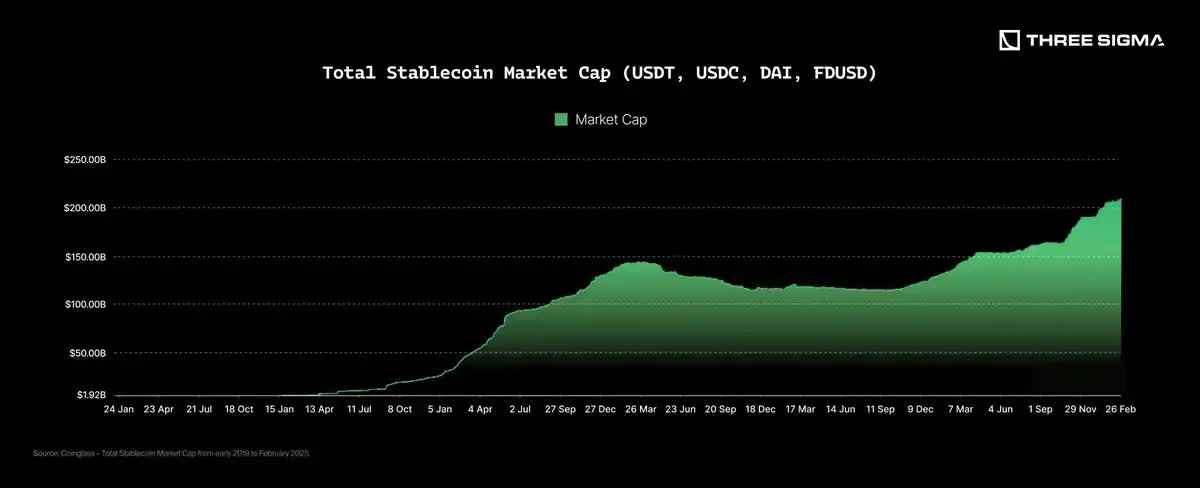
Stablecoin adoption has grown significantly over the years. In 2017, their combined market capitalization was less than $3 billion, but by March 2025, it had grown to approximately $228 billion. Stablecoins now account for approximately 8.57% of the entire crypto market and are an important tool for transactions, cross-border payments, and hedging during market turmoil.
This growing trend highlights the role of stablecoins as a key bridge between traditional financial markets and the crypto world. A chart from Coinglass clearly shows the trend of steady and substantial growth in the total market value of major stablecoins from the beginning of 2019 to date.
What are stablecoins?
A stablecoin is a cryptocurrency that is designed to keep its value stable by pegging its price to some external asset, such as a fiat currency or commodity. For example, Tether (USDT) and USD Coin (USDC) are both stablecoins pegged 1:1 to the U.S. dollar. The goal of stablecoins is to provide the advantages of digital currencies (such as fast, borderless transactions on the blockchain) without the wild price fluctuations of Bitcoin.
Stablecoins strive to maintain price stability by holding reserve assets or adopting other mechanisms, making them more suitable as daily transaction tools or as a means of storing value in the crypto market. In fact, most mainstream stablecoins achieve price stability through a collateral mechanism, that is, every time a stablecoin is issued, it must be supported by an equal value of reserve assets.
Clear regulation is needed to ensure the stability and credibility of stablecoins. At present, the United States has not yet introduced comprehensive federal legislation, relying mainly on state-level rules and some proposals under review; the European Union has implemented strict reserve and audit requirements through the MiCA framework; Asia has presented a variety of regulatory strategies: Singapore and Hong Kong have strict reserve requirements, Japan allows banks to issue stablecoins, and China basically completely bans stablecoin-related activities. These differences reflect the trade-offs between "innovation" and "stability" in different regions.
Despite the lack of a globally unified regulatory framework, the use and popularity of stablecoins continues to grow steadily year by year.
Why are they issued?
As mentioned earlier, the original purpose of stablecoins was to provide users with a reliable digital asset for payment or as a store of value pegged to major global currencies, especially the US dollar. But their issuance was not for the public good, but rather a highly profitable business opportunity, and Tether was the first to discover and exploit it.
Tether launched USDT in 2014, becoming the first stablecoin and creating an extremely profitable business model, especially from the perspective of "profit per capita", making it one of the most successful projects in history. Its business logic is very simple: Tether issues 1 USDT for every USD 1 it receives, and destroys the corresponding number of USDT when the user redeems the USD. The dollars received are invested in safe, short-term financial instruments (such as U.S. Treasuries), and the resulting profits belong to Tether.
Understanding how stablecoins make money is the key to grasping the economic logic behind them.
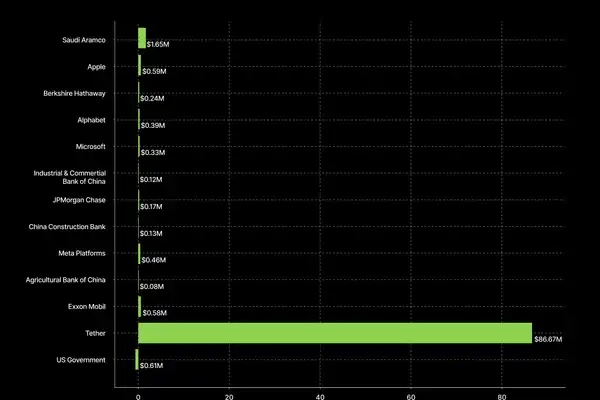
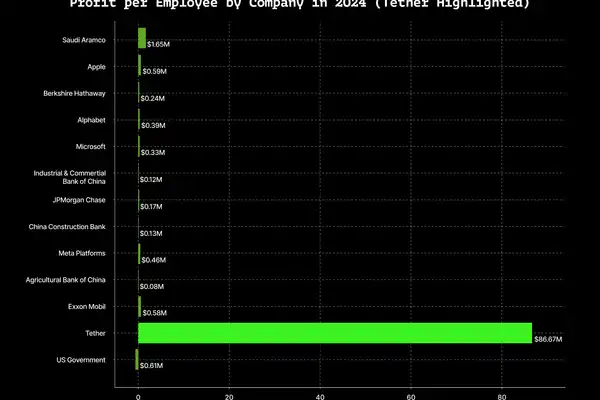
Although the stablecoin business model seems very simple, Tether has no control over its main source of revenue - the interest rates set by central banks, especially the US Federal Reserve. When interest rates are high, Tether can earn substantial profits; but when interest rates are low, profitability drops significantly.
Currently, the high interest rate environment is very favorable for Tether. But what happens if interest rates fall again in the future, even close to zero? Are algorithmic stablecoins also affected by interest rate fluctuations? Which type of stablecoin is likely to perform better in such an economic environment? This article will further explore these issues and analyze how the stablecoin business model adapts to the changing macroeconomic environment.
2. Types of Stablecoins
Before analyzing the performance of stablecoins under different economic conditions, it is crucial to understand the operating mechanisms of different types of stablecoins. While all stablecoins share the common goal of maintaining a stable value pegged to a real-world asset, each responds differently to changes in interest rates and overall market conditions. Below we will introduce several major types of stablecoins, their mechanisms, and their responses to different economic changes.
Fiat-backed Stablecoins
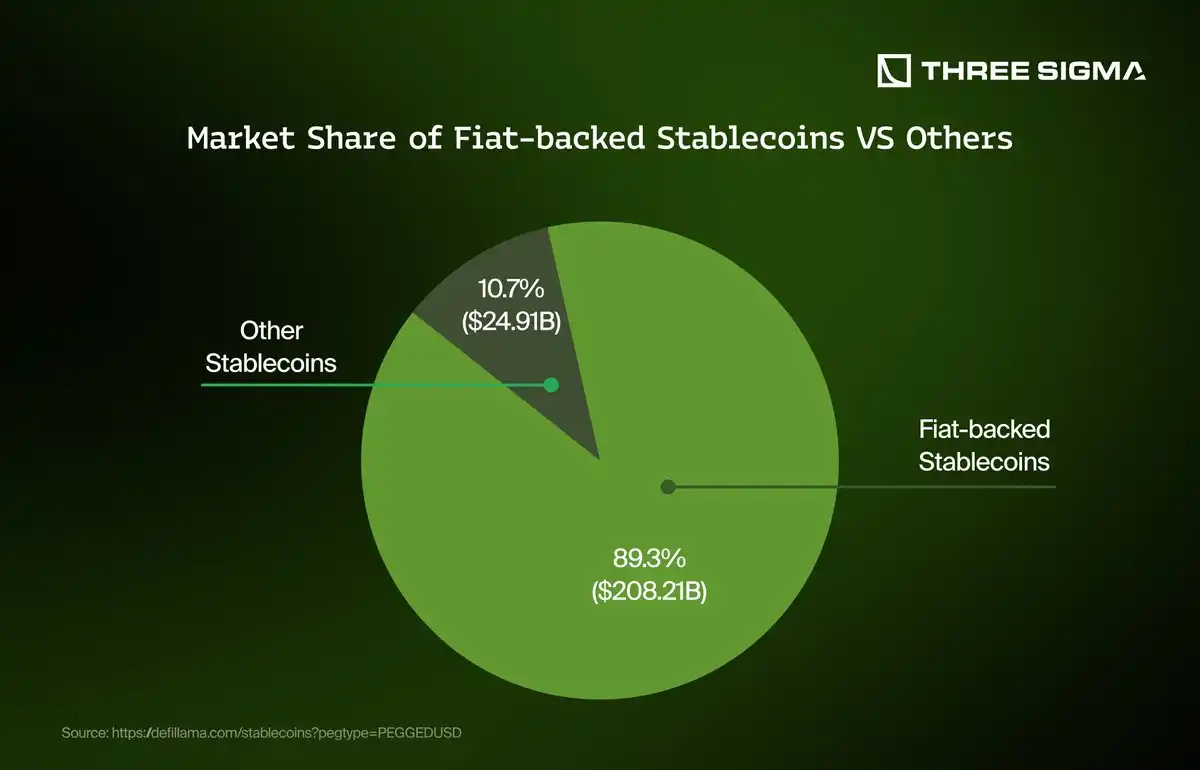
Fiat-backed stablecoins are currently the most well-known and widely used type of stablecoins. In essence, they are the “tokenization” of the U.S. dollar in a centralized manner.
Their operating mechanism is very simple: every time a user deposits $1, the issuer will mint a corresponding stablecoin; when the user redeems the dollars, the issuer destroys the corresponding tokens and returns the same amount of dollars.
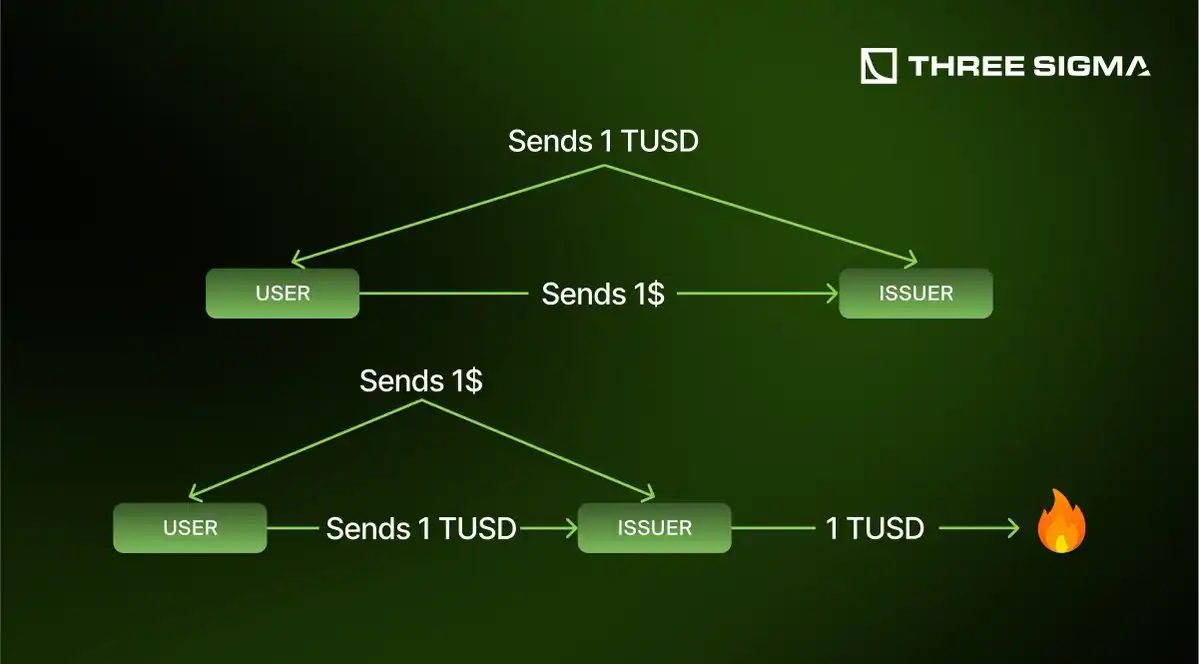
The profit model of fiat-backed stablecoins is largely hidden behind the scenes. Issuers invest users' deposits in a variety of short-term and safe financial instruments, such as government bonds, secured loans, cash equivalents, and sometimes more volatile assets, such as cryptocurrencies (such as Bitcoin) or precious metals. The income generated from these investments constitutes the main source of income for the issuer.
However, high returns also come with considerable risks. One of the main challenges that continues to exist is compliance. Governments in many countries have put fiat-backed stablecoins under close scrutiny on the grounds that they are essentially equivalent to issuing "digital currencies" and therefore must comply with strict financial regulations.
Although most stablecoin issuers have successfully responded to regulatory pressure without experiencing serious business disruptions, major challenges still occur from time to time. A notable example is Europe’s MiCA (Markets in Crypto-Assets) regulation, which recently banned USDT (Tether) from circulating in certain markets due to non-compliance with its strict regulatory requirements.
Another major risk is "depeg risk". Stablecoin issuers typically invest a large amount of reserve assets in various investment vehicles. If a large number of users apply to redeem tokens at the same time, the issuer may have to sell these assets quickly, which may result in huge losses. This situation could trigger a chain reaction similar to a "bank run", making it difficult for the issuer to maintain the peg of the token to the US dollar and could even lead to bankruptcy.
The most prominent case occurred in March 2023 and involved USDC (issued by Circle). When Silicon Valley Bank (SVB) collapsed, rumors quickly spread in the market that Circle had a large amount of reserves stored in SVB, causing the market to worry about Circle's liquidity and whether USDC could maintain its peg. These panics caused USDC to briefly decouple. The incident highlights the risks when stablecoin reserves are held in centralized banks. Fortunately, Circle resolved the issue within a few days, restored market confidence, and re-stabilized USDC’s peg.
The two main fiat-backed stablecoins on the market are USDT (Tether) and USDC (Circle).
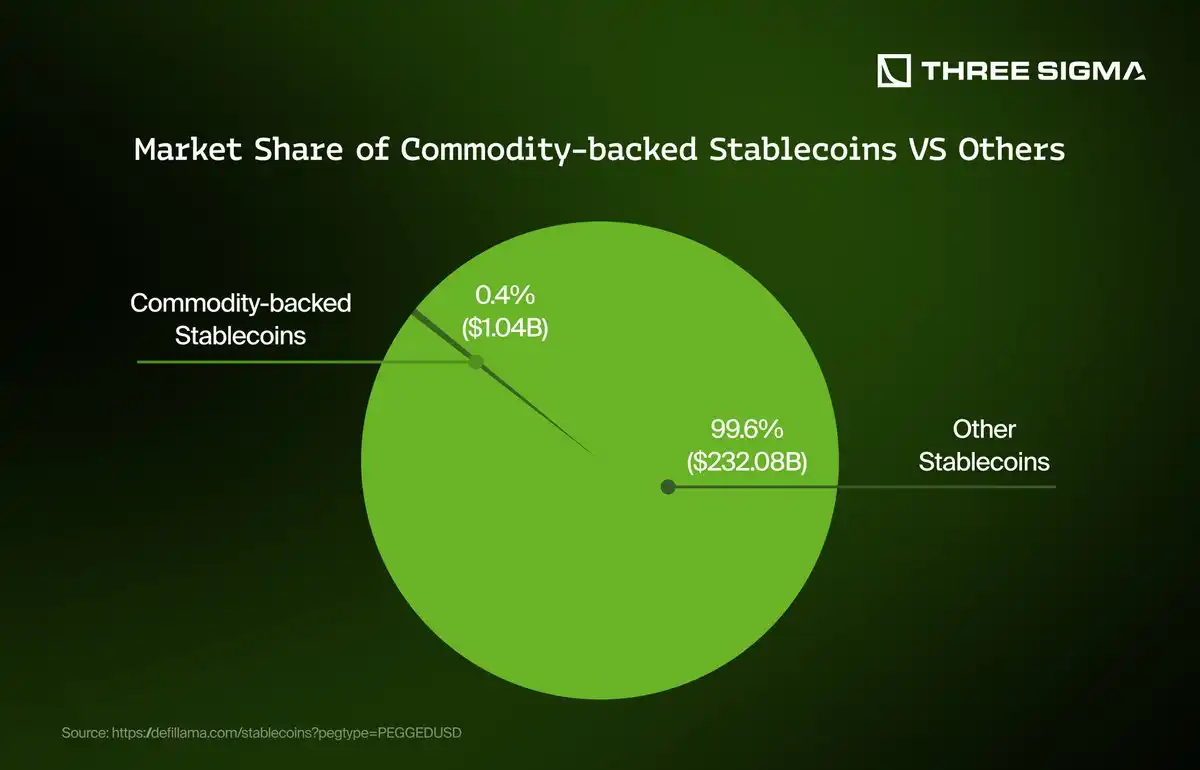
Commodity-backed stablecoins are an innovative category in the stablecoin ecosystem. They are backed by tangible physical assets (usually precious metals such as gold and silver, or commodities such as oil and real estate) to issue corresponding digital tokens.
The operating mechanism of this type of stablecoin is similar to that of fiat-backed stablecoins: for every unit of physical goods deposited, the issuer will mint a token of equal value. Users can typically redeem these tokens for the physical good itself, or the cash equivalent, at which point the corresponding tokens are destroyed.
The issuer's income mainly comes from the minting (creation) and redemption (destruction) fees of tokens. For example, Pax Gold (PAXG) charges a small fee for processing the creation and destruction of tokens, although Paxos does not currently charge storage fees for the gold it holds. In addition, issuers may also make profits by providing services for trading and exchanging tokens for US dollars or physical commodities.
Likewise, Tether Gold (XAUT) generates revenue from fees associated with redemptions and deliveries. Users will be charged fees when they redeem XAUT tokens for physical gold bars or exchange gold for cash through Tether. For example, during the redemption process, a fee of 25 basis points (0.25%) will be charged based on the gold price, and if physical delivery is chosen, shipping costs will also be required. If the user chooses to sell the redeemed gold bars in the Swiss market, an additional fee of 25 basis points will be charged.
However, such stablecoins are also subject to risks, especially the volatility of commodity prices themselves, which may affect the stability of the token’s peg. Additionally, compliance issues are a major challenge. Commodity-backed stablecoins are typically subject to strict regulatory requirements and must have transparent and secure custody arrangements.
The more successful commodity-backed stablecoins on the market currently include Paxos' Pax Gold (PAXG) and Tether's Tether Gold (XAUT), both of which are backed by gold reserves and provide investors with convenient digital commodity positions.
In summary, commodity-backed stablecoins connect traditional commodity investments with digital finance, providing investors with stability and physical asset positions while also emphasizing regulatory compliance and transparency.
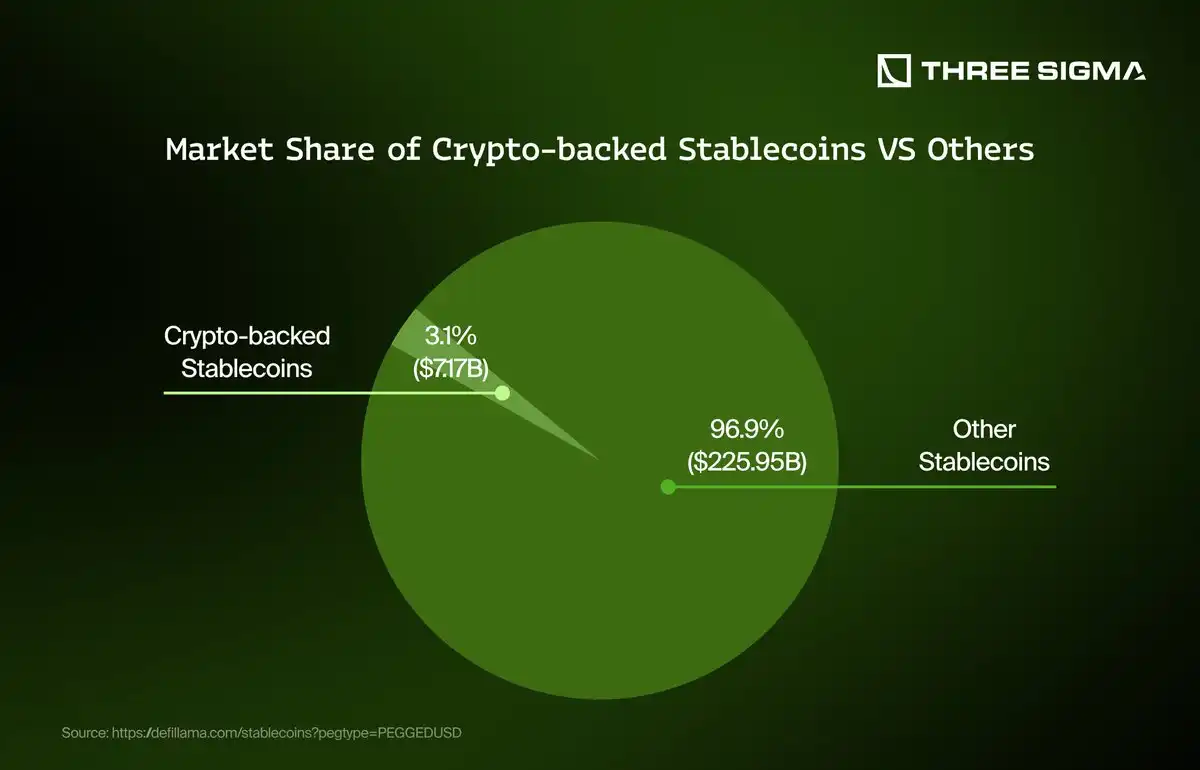
Crypto-asset-backed stablecoins are an important category in the stablecoin system. They use cryptocurrencies as collateral to maintain a stable value pegged to fiat currency (usually the US dollar). Unlike fiat or commodity-backed stablecoins, these tokens rely on smart contract technology to build a transparent and automated system.
The basic mechanism is that users lock crypto assets (usually over-collateralized) in smart contracts to mint stablecoins. The over-collateralization design can buffer the price fluctuations of crypto assets and ensure that stablecoins can maintain their set anchor value. When users redeem stablecoins, they return stablecoins of equal value, and the system destroys the tokens, releasing the originally pledged crypto assets.
The profit model of crypto-backed stablecoins mainly includes:
- Charge interest to users who lend stablecoins;
- Liquidation fees are charged to users whose collateral assets are below the liquidation line;
- The governance mechanism rewards set within the protocol are used to incentivize coin holders and liquidity providers.
Represented by DAI (now called USDs), it is issued by MakerDAO (now renamed SKY), and it is mainly collateralized by crypto assets in the Ethereum ecosystem. MakerDAO's revenue sources include charging stability fees (interest) to users who lend USDs, as well as penalties when liquidation is triggered. These fees jointly support the stable implementation and sustainable development of the agreement.
Another example is the HONEY stablecoin issued by Berachain, which currently uses USDC and pYUSD as collateral assets. HONEY's revenue sources include redemption fees: when a user redeems HONEY and retrieves its collateral assets (USDC or pYUSD), Berachain will charge a 0.05% fee.
Although these stablecoins are classified as “crypto-backed,” in reality most of them are like wrapped stablecoins of fiat-backed stablecoins, such as USDC. Although the original goal was to rely entirely on native crypto assets as collateral to maintain stability, in practice it is still very difficult to achieve true stability without relying on fiat stablecoins.
Of course, there are inherent risks with this type of asset. For example, price volatility of the underlying crypto assets could pose significant challenges - such as triggering large-scale liquidations when prices fall sharply, potentially breaking the stablecoin's anchoring mechanism. In addition, smart contract vulnerabilities or protocol attacks can also seriously threaten the stability of the entire system.
In summary, crypto-backed stablecoins like USDs and HONEY play an important role in providing decentralized, transparent and innovative financial solutions. However, despite being crypto-collateralized in name only, they are often heavily dependent on fiat stablecoins in reality, which requires more sophisticated risk management mechanisms to maintain their resilience and credibility.
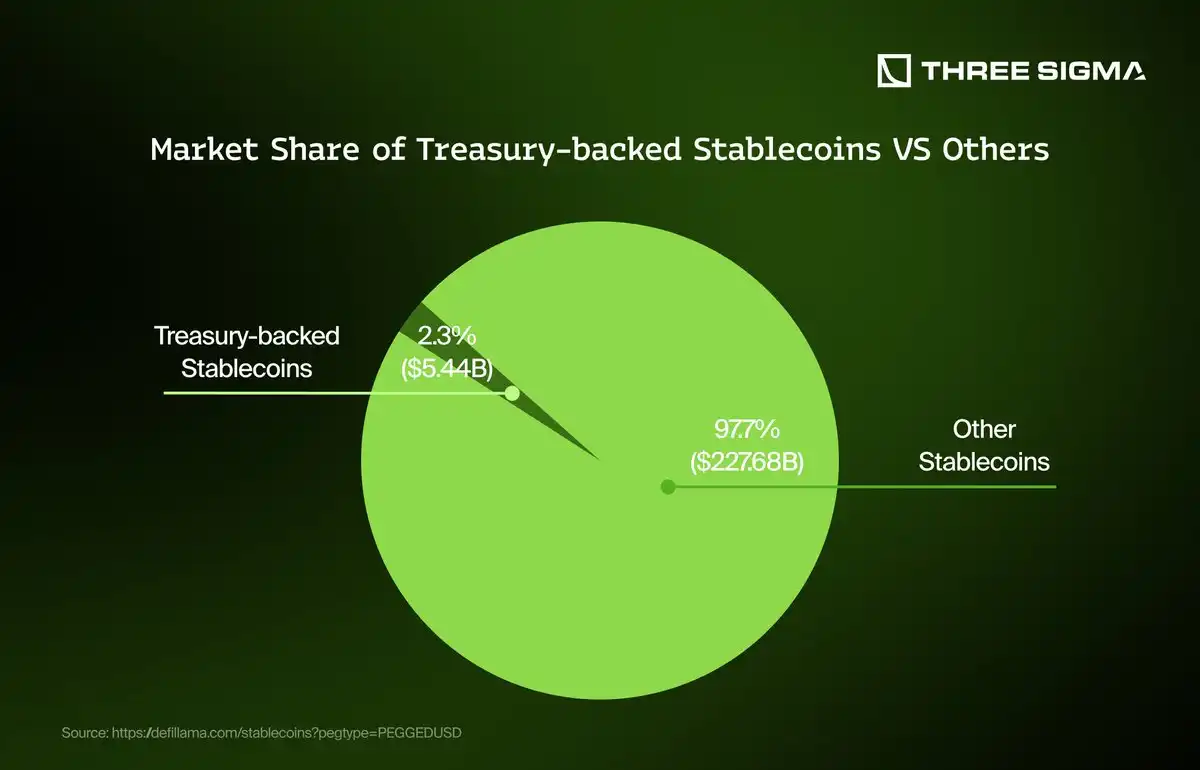
Treasury-backed stablecoins are a type of stablecoin that is backed by government bonds (especially U.S. Treasuries) as collateral. These stablecoins are usually pegged to the U.S. dollar. While providing value stability, they can also provide holders with passive income through interest income from underlying government bonds. Therefore, they are more like a yield-bearing investment token that combines the stability and financial management properties of traditional stablecoins.
For example, Ondo’s USDY (Dollar Yield Token) is described as a tokenized note backed by short-term U.S. Treasury bonds and bank demand deposits. Its goal is to provide non-U.S. individual and institutional investors with the convenience of stablecoins while providing high-quality returns denominated in U.S. dollars. After investors purchase USDY, the funds are used to purchase U.S. Treasury bonds and part of them are deposited in the bank. The interest generated will be distributed proportionally to the token holders. USDY is a “bearing asset”, which means that it will passively appreciate as interest is generated on the underlying assets, and the value of the token will increase over time.
Another example is Hashnote’s USYC (US Dollar Yield Coin), which is the on-chain representation of Hashnote’s Short-Term Yield Fund (SDYF), investing in short-term US Treasuries and participating in the repo and reverse repo markets. USYC's return level is linked to the short-term "risk-free rate", combining the speed, transparency and combination advantages of blockchain while minimizing protocol, custody, regulatory and credit risks. Users can redeem USYC for USDC or PYUSD on the same day (T+0) or the next day (T+1). The minting is done directly on the chain, and the process is atomic and instant. Like USDY, USYC is also a “yield asset” that passively accumulates returns through the interest generated by the underlying assets.
Although these stablecoins have the dual advantages of stability and profitability, they also have some risks:
- Regulatory risk: Since such assets are usually targeted at non-U.S. users, they are often used to avoid U.S.
- Regulatory requirements and future policy changes may bring uncertainty;
- Custody risk: The issuer needs to properly manage and hold the underlying assets;
- Liquidity risk: When the market fluctuates drastically, users’ redemption requests may be restricted;
- Counterparty risk: Especially in repurchase agreements, losses may result if the counterparty defaults;
- Macroeconomic risks: such as changes in interest rates, may affect the overall level of returns.
This type of token is often classified into a rapidly growing new category: "Treasury-backed crypto assets."
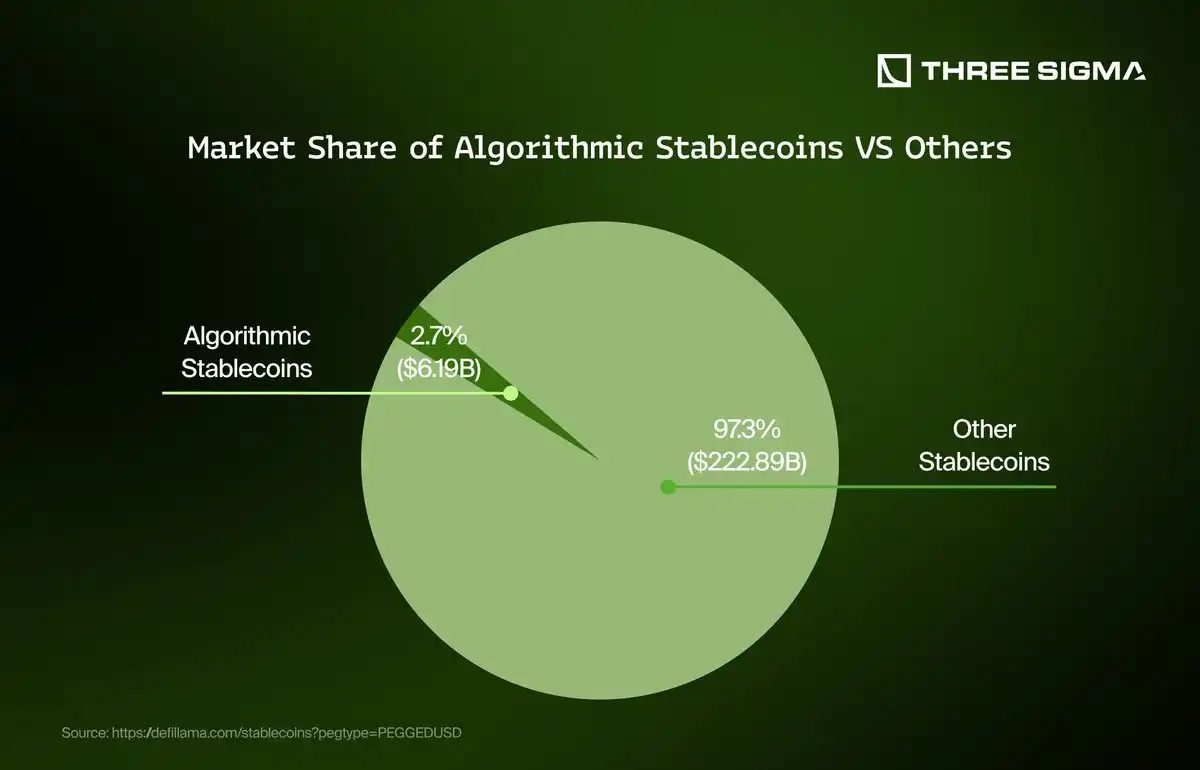
Algorithmic stablecoins are a type of stablecoin that relies on economic mechanisms and market incentives rather than being completely collateralized by traditional assets such as fiat currency or government bonds to maintain stable value. Such models typically maintain a peg (such as to the U.S. dollar) through supply and demand adjustments, but often face challenges in extreme market environments. The fundamental problem is that it relies heavily on continued market confidence and effective incentive structures, which are prone to failure during periods of severe stress.
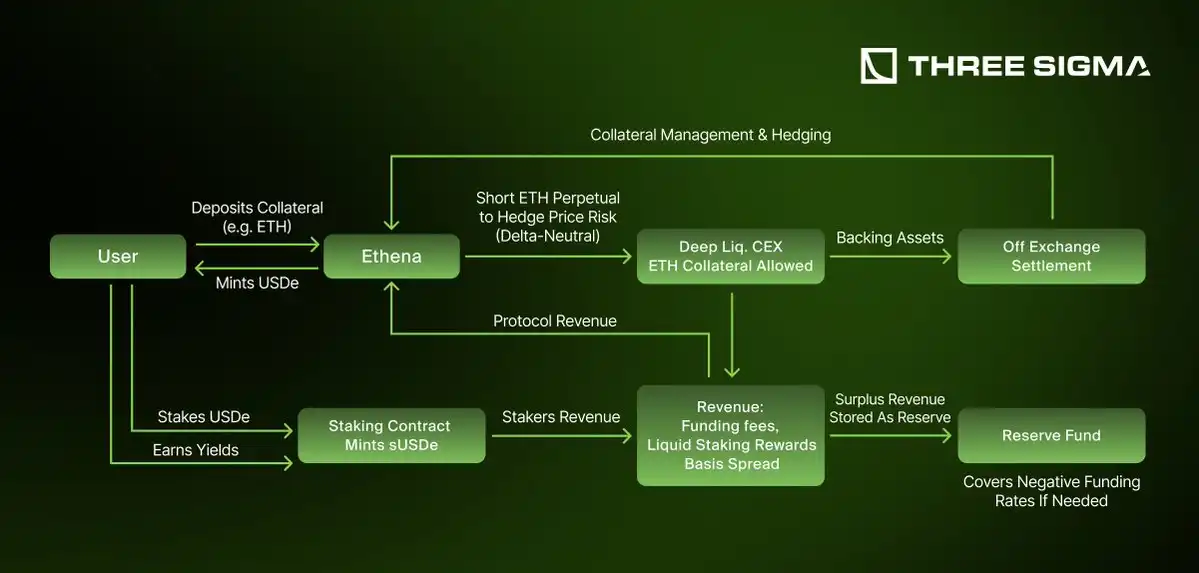
USDe issued by Ethena is a new type of "quasi-algorithmic" stablecoin that adopts a hybrid model. It maintains stability through a "Delta neutral hedging mechanism", which is to hold crypto assets such as BTC and ETH as collateral, while establishing an equal amount of short positions in the derivatives market to hedge against price fluctuations of the underlying assets, thereby maintaining a stable anchor with the US dollar. USDe achieves 1:1 full collateralization, which is more capital efficient than over-collateralized models. In addition, Ethena has also included highly liquid stablecoins such as USDC and USDT into its reserves to enhance liquidity and the efficiency of hedging strategies.
Despite their various innovations, algorithmic stablecoins still face significant risks: market instability, extreme volatility, or liquidity crises could disrupt the mechanisms that maintain their pegs. Moreover, reliance on derivatives introduces counterparty and execution risks, making the system vulnerable to external shocks.
While new models like the USDe attempt to mitigate these issues through structured hedging and diversified reserves, their long-term stability still depends on overall liquidity conditions and the ability to maintain effective operations in adverse market conditions.
3. Current mainstream stablecoins
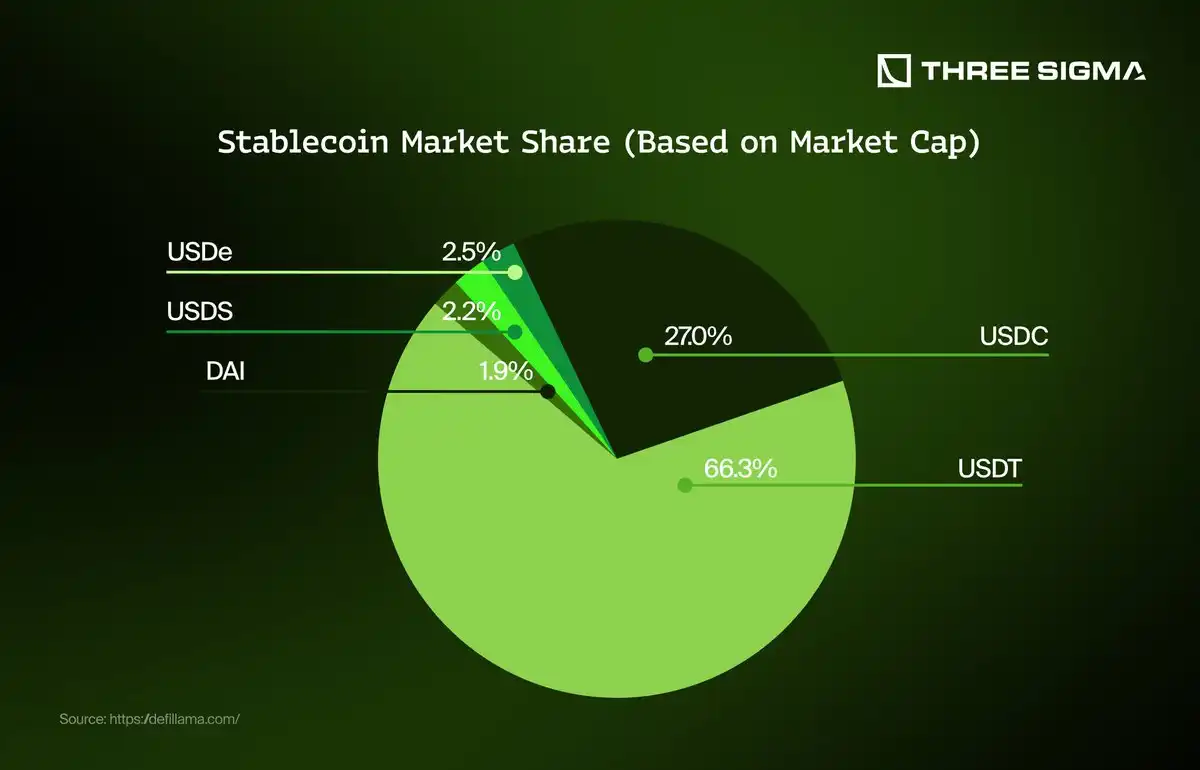
When it comes to stablecoins, USDT and USDC are undoubtedly the dominant forces in the market. As centralized liquidity pillars, they occupy a core position in the crypto market. They have similar structures: they are all issued by centralized entities, fully backed by fiat currency reserves, and widely integrated into major exchanges and financial platforms.
USDT is issued by Tether and has the largest market share. It is known for its deep liquidity and wide adoption, especially in high-frequency trading environments. USDC is issued by Circle and is positioned as a more compliant and transparent option, and is more preferred by institutions and companies seeking a regulatory-friendly environment. Although the two differ slightly in details, their core functions are the same: to provide a stable, trusted digital dollar that supports the operation of the entire crypto ecosystem.
In contrast, there are USDS, DAI, and USDe, which represent decentralized forces corresponding to fiat-backed stablecoins, although their degree of decentralization varies. DAI and USDS essentially come from the same system - MakerDAO (now renamed Sky). Among them, USDS is the evolved version of DAI and a key part of Sky's long-term plan.
DAI has historically been more decentralized, relying on excess crypto asset collateral to maintain its peg; USDS, on the other hand, reflects Maker's trend towards a more structured and strategic direction, focusing on efficiency first rather than pure decentralization.
Meanwhile, USDe is also an important decentralized stablecoin competitor, but has taken a completely different path. Different from the over-collateralization and governance mechanism of the Maker model, USDe introduces a revenue-generating structure that uses its collateral assets to generate additional returns for coin holders.
USDT
When discussing stablecoins, USDT naturally becomes the dominant force, playing an important role as a centralized liquidity pillar in the crypto market. USDT, issued by Tether, has the largest market share and is known for its deep liquidity and widespread adoption, especially in high-frequency trading environments. It provides a stable and trusted digital dollar that underpins the operation of the crypto ecosystem and serves as the primary medium for trading pairs, arbitrage opportunities, and cross-exchange liquidity provision. Its widespread acceptance has solidified its role in both the centralized and decentralized financial sectors.
Tether's revenue mainly comes from the management of its huge reserve assets, which guarantee every USDT token issued. These reserve assets primarily consist of cash equivalents such as U.S. Treasury bonds, commercial paper, short-term deposits, money market instruments, and corporate bonds. By strategically allocating these reserves, Tether is able to accumulate interest and investment income, making an important contribution to its revenue.
Additionally, Tether occasionally engages in short-term lending and other financial instruments, further diversifying and enhancing its revenue streams. Tether also earns additional revenue through token issuance, redemption process, and transaction fees on various blockchain platforms.
Below is its most recent reserve report, which clearly shows that over 80% of its reserves consist of cash, cash equivalents, and other short-term deposits, of which about 80% is invested exclusively in Treasury securities.
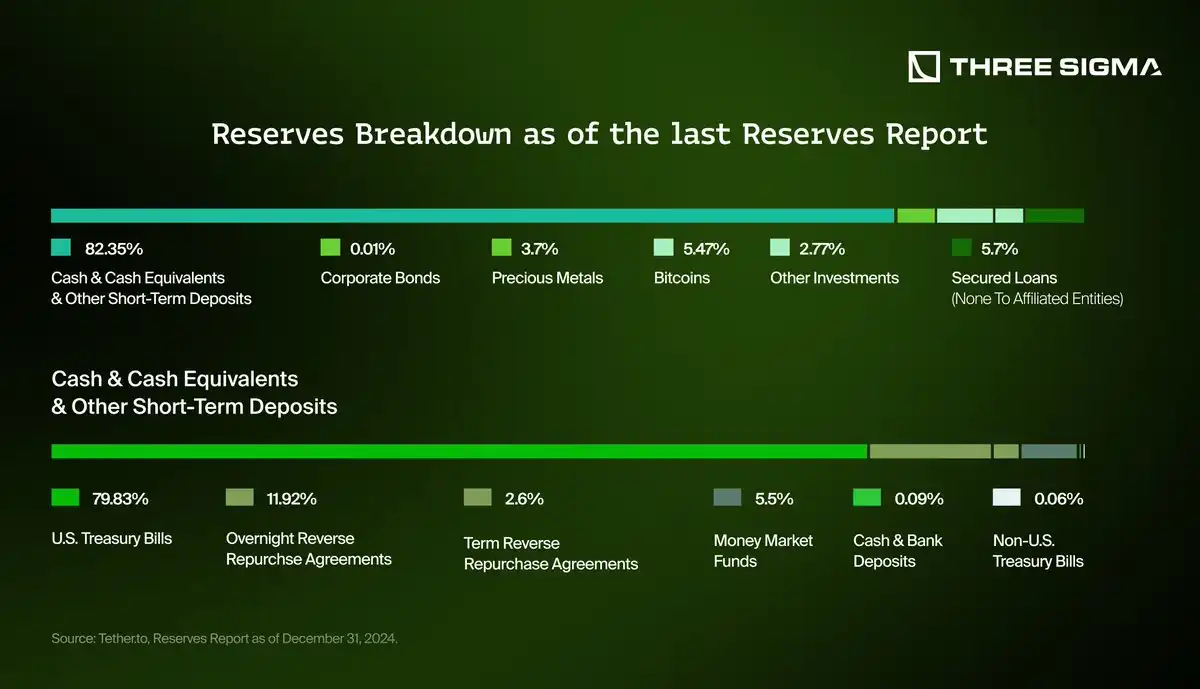
Essentially, Tether’s revenue is primarily dependent on interest rates set by central banks, especially those of the U.S. Federal Reserve System, as the appreciation of the majority of its reserve assets is directly tied to these rates. Higher rates could significantly increase the returns Tether earns on its reserves, while lower rates would significantly reduce its income potential.
Importantly, unlike some other stablecoins, all revenue generated by Tether is retained by the issuer itself and is not distributed to USDT token holders. This differs from yield-based stablecoins, which distribute returns directly to holders, highlighting a key difference in the stablecoin business model.
Historical revenue trends
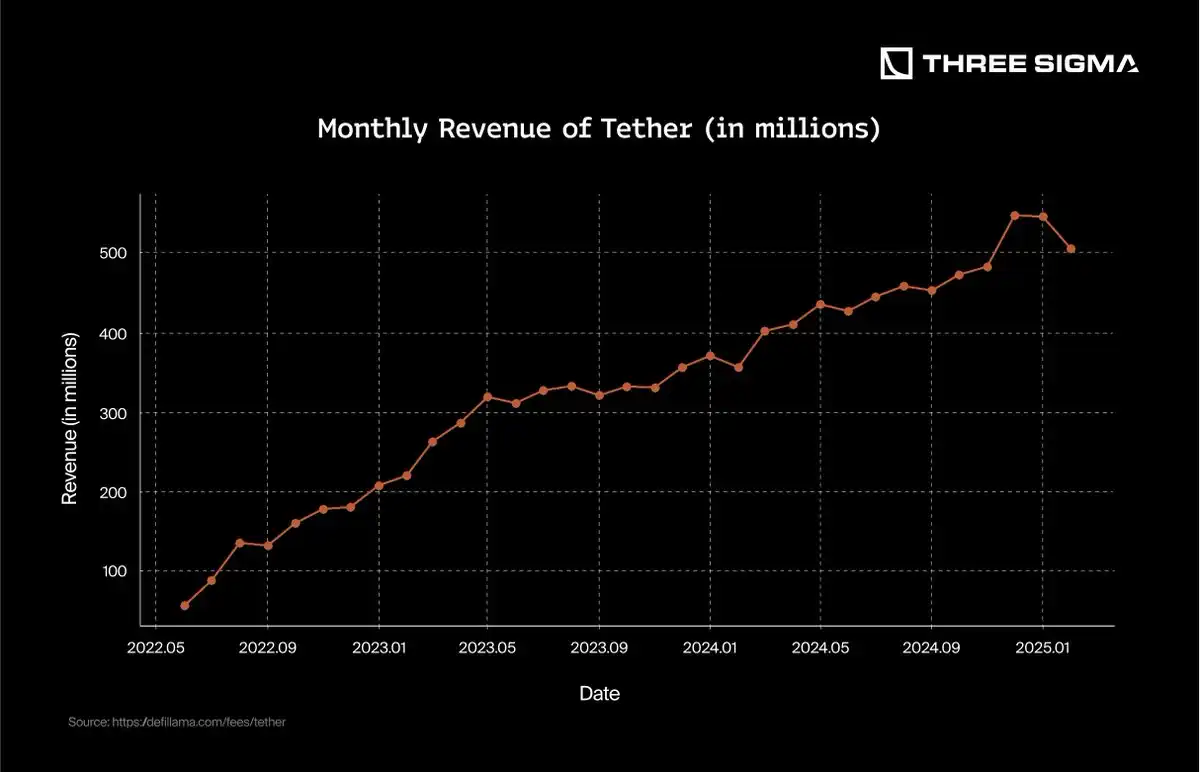
Historically, Tether’s revenue trajectory has been closely aligned with global interest rate trends. During the period of low interest rates from 2019 to early 2022, Tether's revenue growth was relatively modest, mainly due to its reliance on conservative investment strategies with limited returns.
However, starting in mid-2022, Tether's revenue grew significantly as major central banks aggressively raised interest rates to combat inflation. From June 2022 to early 2025, monthly revenue increased almost tenfold, highlighting the high sensitivity of Tether's revenue streams to macroeconomic changes and monetary policy decisions. This trend demonstrates the effectiveness of Tether’s revenue model in a rising interest rate environment.
Still, income is not entirely dependent on interest rates. Even in the event of falling interest rates, Tether could still achieve revenue growth as long as the supply of USDT increases significantly. A larger supply means more assets under management, which can make up for lower yields, thereby maintaining or even increasing overall revenue.
USDC
USDC, issued by Circle, is one of the most trusted centralized stablecoins on the market. Well-known for its compliance and transparency, it is widely used in decentralized finance, institutional payments, and cross-chain applications. Its presence on multiple blockchains enhances its composability and ecosystem reach.
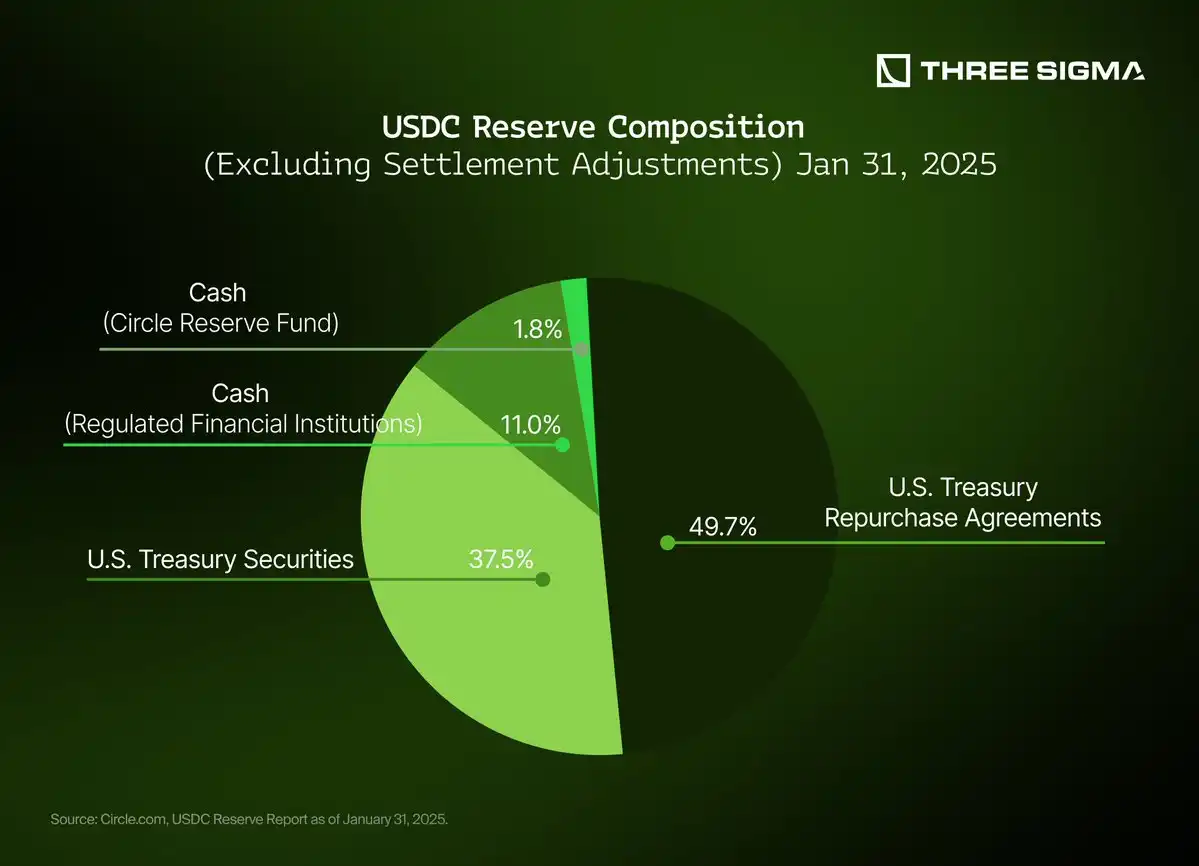
A key feature of USDC is Circle’s strict reserve structure and public disclosure. As of January 31, 2025, USDC has over $53.2 billion in circulation and is fully backed by $53.28 billion in reserves, which are certified by an independent accounting firm. These reserve funds are divided into the following parts:
Circle Reserve Fund: A government money market fund that holds $47.26 billion in U.S. Treasuries and repurchase agreements.
Segregated Bank Accounts: Holds an additional $6.02 billion in deposits with regulated financial institutions.
Circle earns revenue by managing these reserve assets, primarily through interest income from U.S. Treasuries and overnight lending arrangements. While structurally similar to Tether’s model, Circle differentiates itself through its funding structure, with USDC holders owning 100% of the reserve fund interest. Not only does this provide clearer regulatory separation, it may also allow for greater flexibility in future product integrations.
Unlike decentralized alternatives, USDC does not distribute revenue directly to users. Instead, the income accrues to the issuer, which prioritizes simplicity, compliance, and capital preservation.
Historical revenue trends
Circle's revenue trajectory is closely tied to the overall interest rate environment, as its conservative investment strategy focuses primarily on short-term government debt.
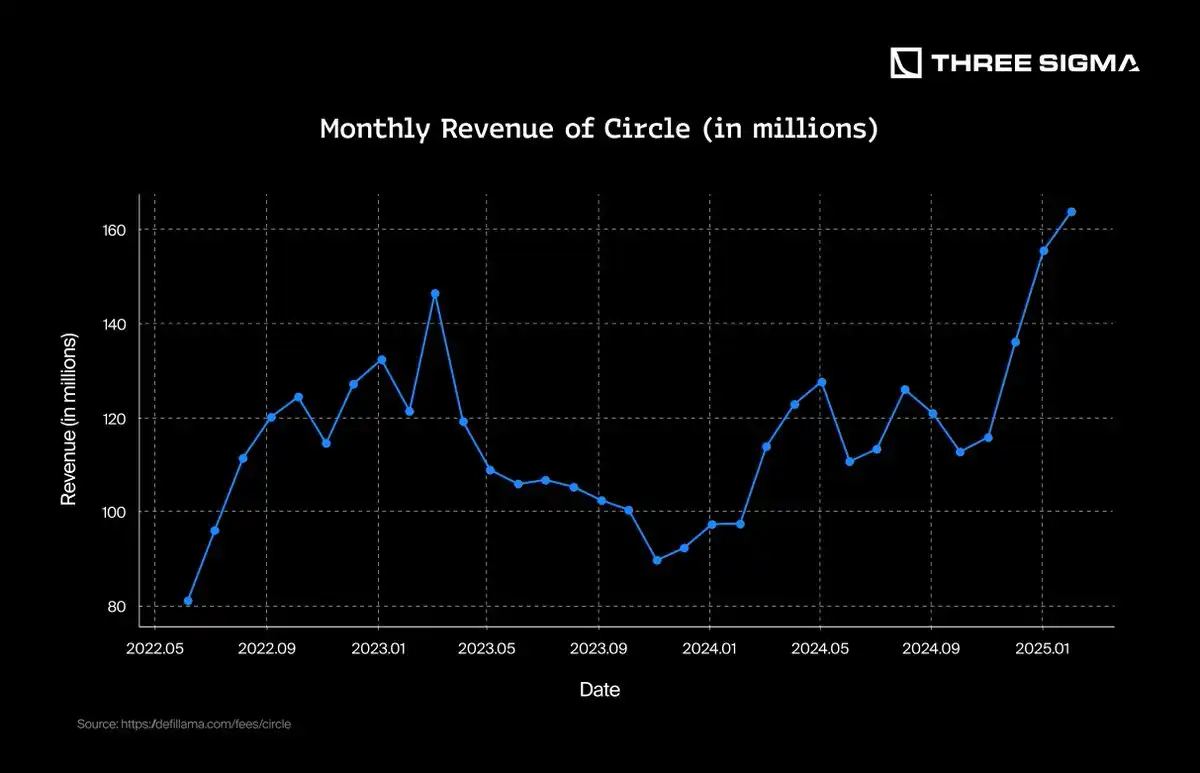
In 2022, Circle's revenue grew steadily as the U.S. Federal Reserve raised interest rates, reaching a peak of $146.5 million in March 2023. However, later that year, pressure from competing stablecoins, blockchain reliability issues (particularly on Solana), and reputational fluctuations associated with banking partners led to a gradual decline in revenue. By the end of 2023, monthly revenue had fallen to less than $90 million.
In 2024, Circle's revenue began to recover as redemption volumes decreased, cryptocurrency activity rebounded, and the high interest rate environment continued, with revenue rebounding to $126 million in August and ending the year with strong momentum. In February 2025, Circle set a record for its highest monthly revenue, reaching $163.7 million.
This trend highlights the resilience of USDC and the close relationship between stablecoin revenue models and monetary policy. Circle’s continued recovery underscores its ability to maintain user trust and liquidity dominance through market cycles.
USDS/DAI (SKY)
USDS is the current evolution of DAI, the first major decentralized stablecoin issued by MakerDAO, which aims to provide a censorship-resistant alternative to traditional fiat-backed assets. While they both belong to the Maker ecosystem, there are structural differences in their collateral models and targeted use cases.
DAI is an over-collateralized stablecoin backed by a mix of cryptocurrencies, RWAs, and stablecoins. Users deposit collateral such as ETH, stETH or USDC through Maker Vaults to mint DAI, ensuring that it always remains fully collateralized. This design makes DAI highly resistant to risks, but also limits its scalability.
On the other hand, USDS represents MakerDAO’s evolution into a more traditional finance-compatible stablecoin. While USDS remains overcollateralized, it uses a structured reserve approach that includes tokenized short-term U.S. Treasuries. This aligns it with institutional demand as a competitor to stablecoins like USDT and USDC, while maintaining MakerDAO’s decentralized governance model.
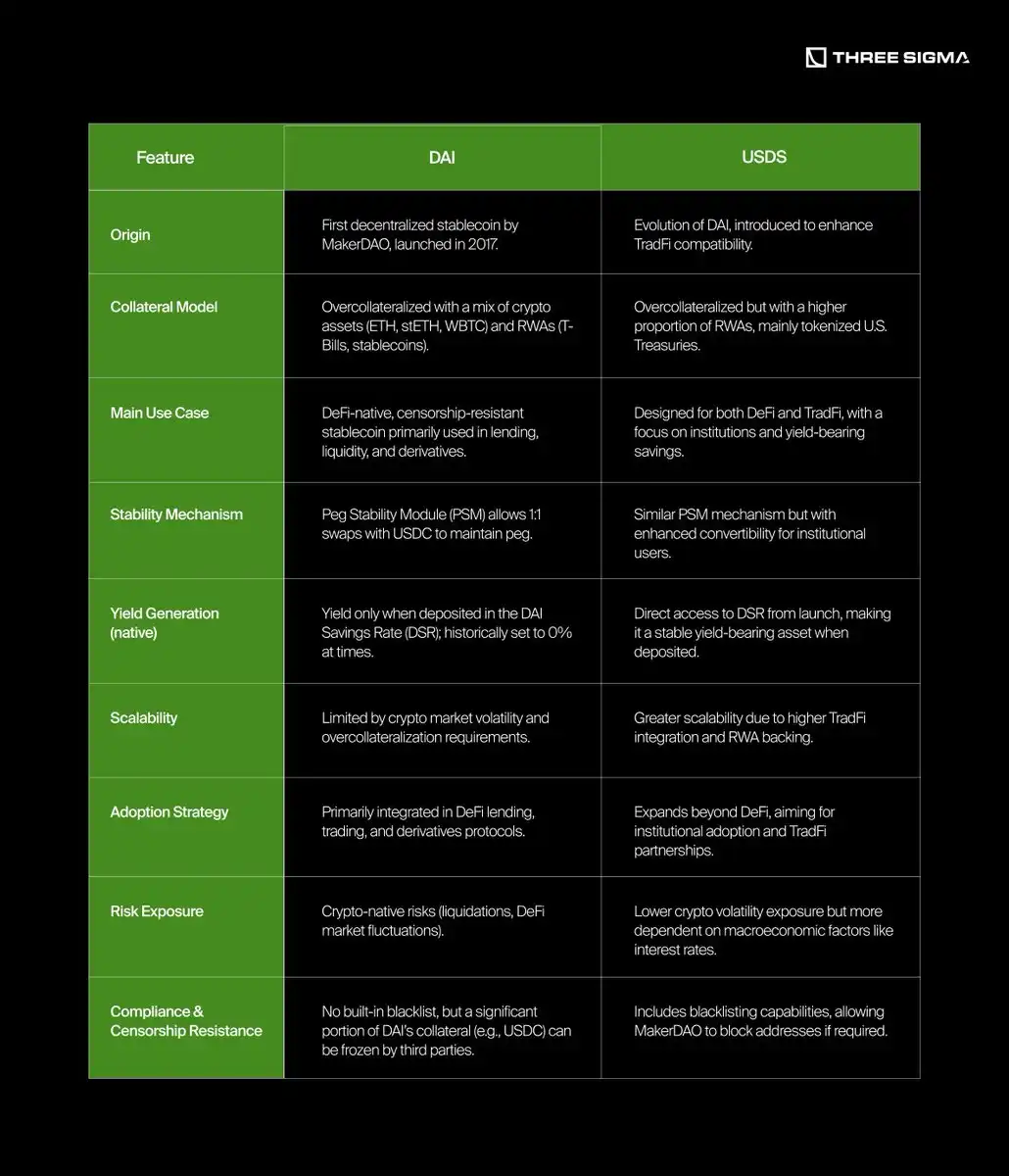
The transition from DAI to USDS reflects a shift toward broader institutional adoption. While DAI started out as a crypto-native stablecoin backed primarily by decentralized assets, USDS optimizes its collateral structure by introducing more RWAs, especially U.S. Treasuries.
Additionally, USDS enhances stability through a direct convertibility mechanism, making it easier to maintain its peg to the U.S. dollar. Unlike DAI’s early reliance on external DeFi incentives, USDS was designed from the outset to provide built-in yield through the DSR, making it more attractive in both DeFi and TradFi environments. This structure fits in with the increasingly popular RWA yield DeFi strategy in 2025.
Transparency is fundamental to the design of the Sky ecosystem. It is not only a tool to maintain the anchoring mechanism, but also a prerequisite for building trust, attracting institutional participation and responsible capital allocation. In an environment where billions of dollars in assets are managed, users and institutions require clear visibility into where these funds are stored, how they are used, and the systems that back them up.
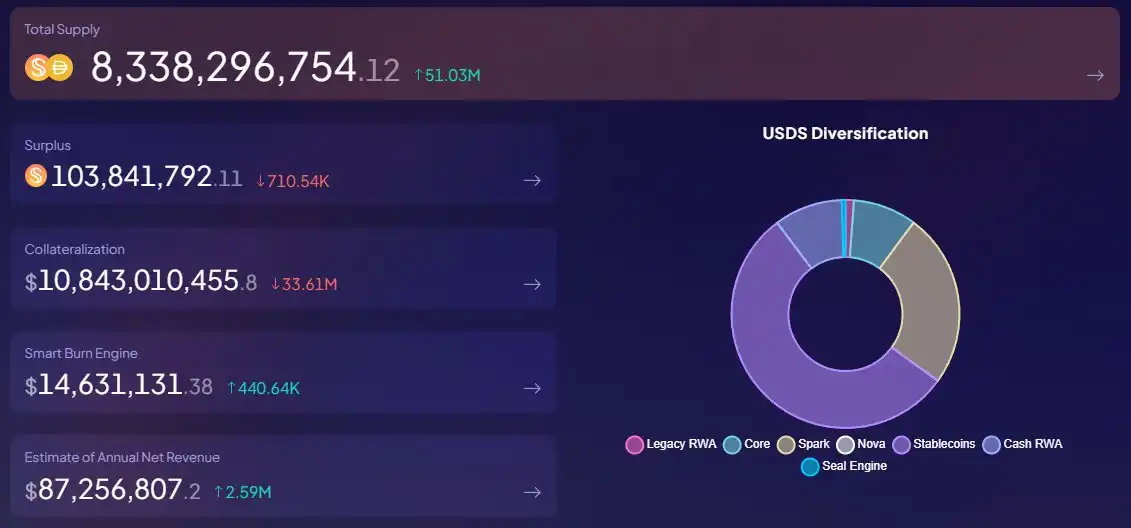
As a result, Sky provides a public, real-time dashboard that clearly displays USDS backing, decentralization, and earnings. But transparency alone cannot stabilize a currency; the peg is maintained through over-collateralization, risk-managed asset allocation, and protocol-level mechanisms.
USDS always maintains more collateral than issuance. As of now, the total collateral base of USDS is over $10.8 billion and the supply is approximately $8.3 billion, ensuring there is sufficient buffer to cope with market fluctuations or redemptions. Its collateral is distributed across several key sources:
- Stablecoins (54.8%): Mainly supported by the LitePSM module, which is a pegged stability module that allows 1:1 exchange between DAI and USDC to support the peg of USDS.
- Spark (24.7%): Sky’s lending and liquidity protocol that mints USDS with high-quality, yield-generating collateral.
- Cash RWA (9.7%): 100% held in BlockTower Andromeda, a strategy that invests in short-term U.S. Treasuries and provides low-risk, real-world returns.
- Core (9%): Sky’s over-collateralized Vault system, where users mint USDS using assets such as ETH and stETH under strict collateral thresholds.
Together, these mechanisms ensure that USDS remains stable, over-collateralized, and backed by a range of liquid, yield-generating assets, while transparency ensures that anyone can verify this at any time.
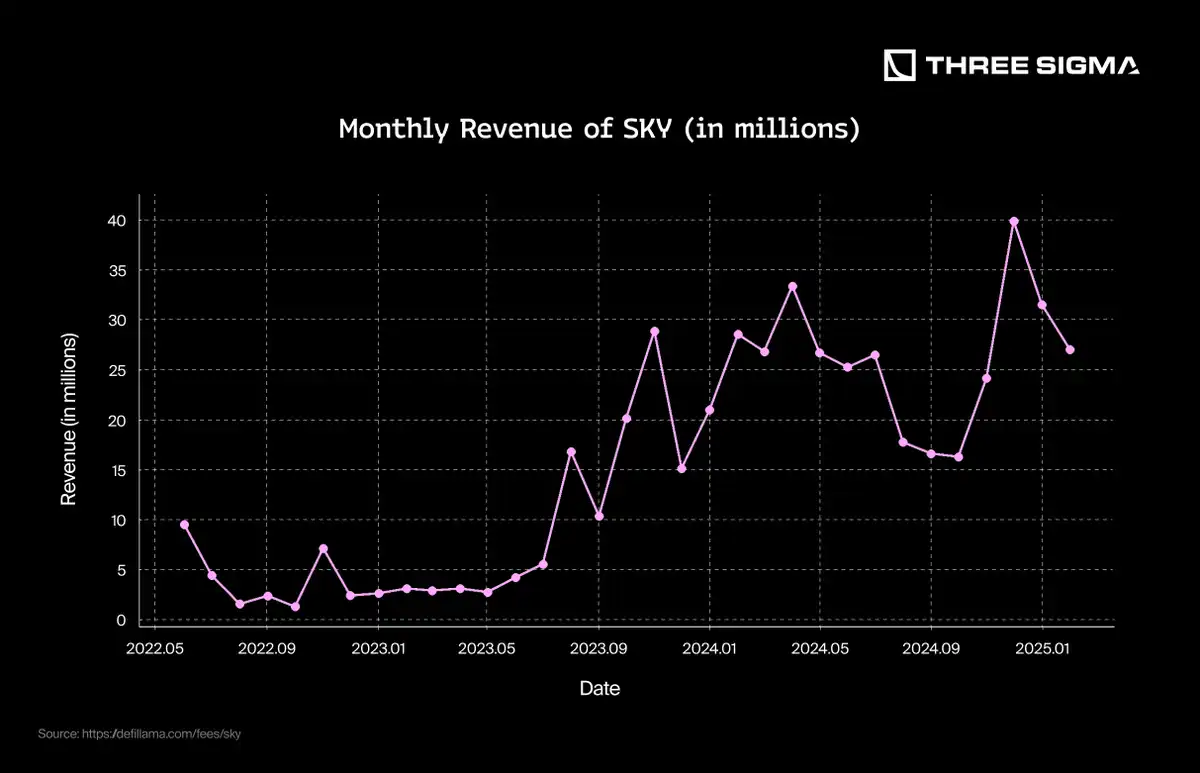
Historical revenue trends
The chart above shows the cumulative revenue from the Sky agreement from mid-2022 to early 2025. While revenue grows steadily in the early months, growth accelerates significantly in late 2023 as a broadening suite of DeFi integrations, increased adoption of USDS, and deeper exposure to real-world assets such as short-term U.S. Treasuries coincide with the start of rising interest rates. By early 2025, cumulative revenues had exceeded $500 million, reflecting Sky's ability to capture returns across crypto-native and institutional strategies while sustainably expanding its suite.
USDe
USDe is a delta-neutral synthetic USD stablecoin that uses a synthetic USD structure maintained through perpetual futures and was developed by Ethena Labs. Unlike traditional stablecoins that are backed by fiat reserves or over-collateralized crypto assets, USDe maintains its peg to the U.S. dollar through automated hedging strategies. This makes it fully supported, extensible, and censorship-resistant. Ethena also offers sUSDe, a yield-bearing version of USDe that can earn rewards through arbitrage of funding rates in liquid collateral assets and futures markets.
Since its public launch in early 2024, Ethena has rapidly expanded its suite, reaching a $6 billion supply in ten months, making USDe the third-largest dollar-denominated asset in the crypto space. It has also become a foundational component of DeFi, integrated in major protocols such as Pendle, Morpho, and Aave, and its adoption has driven significant growth. In addition to DeFi, USDe has also penetrated into CeFi and is currently integrated as margin collateral on about 60% of centralized exchanges, surpassing the USDC balance on Bybit in less than a month.
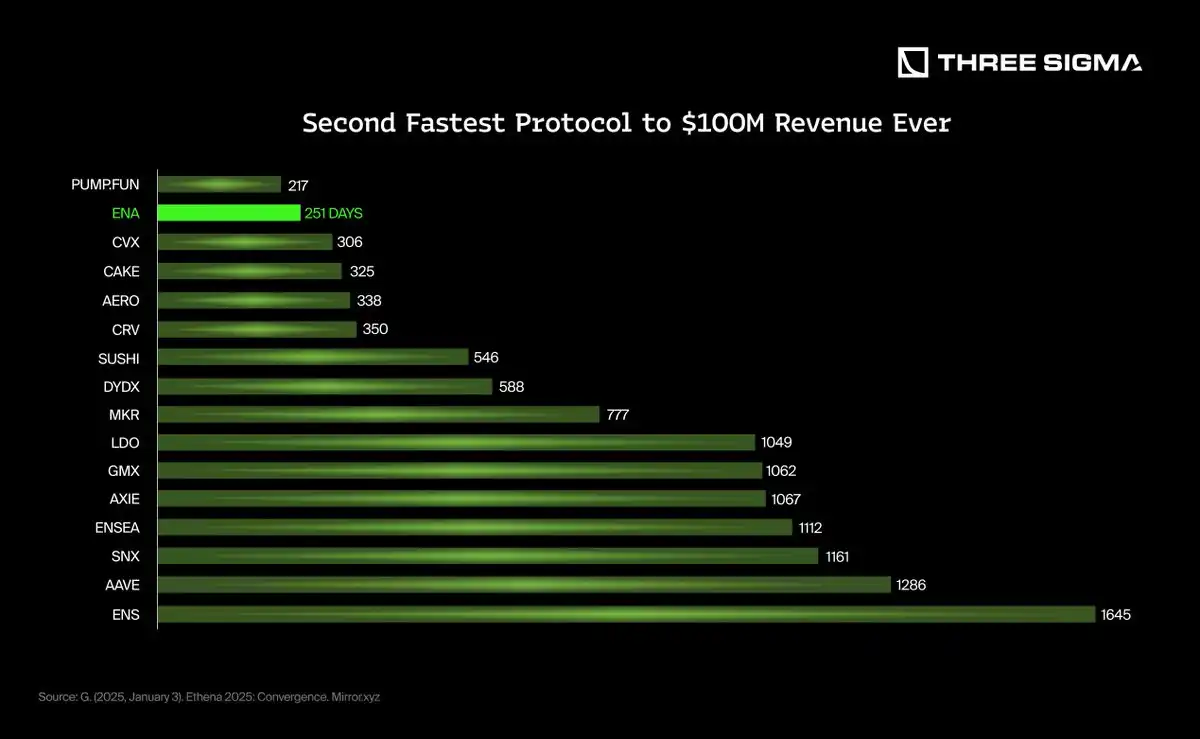
If we drill down into revenue, Ethena is not far behind, becoming the second fastest dApp in history to reach $100 million in revenue (after Pump.fun), reaching this milestone in 251 days. In 2024, Ethena became the dominant force in DeFi, with its assets accounting for more than 50% of Pendle TVL, approximately 30% of Morpho TVL pegged to Ethena-related assets, and became the fastest growing new asset on Aave, reaching $1.2 billion in deposits in just three weeks.
The next phase of Ethena is defined by Convergence, which aims to achieve the convergence of DeFi, CeFi, and TradFi through USDe. By introducing iUSDe, a wrapped version of sUSDe designed for institutional adoption, Ethena plans to offer a high-yield, crypto-native USD product tailored for asset managers, private credit funds, and exchange-traded products. By connecting capital flows and interest rates across financial systems, Ethena positions USDe as a cornerstone of the evolving digital dollar space.
How does USDe work?
USDe remains stable through a delta-neutral hedging strategy, ensuring its value is not affected by market fluctuations. When users mint USDe, the collateral received by Ethena can include ETH, BTC, LSTs, USDT, USDC, and SOL, among others. To neutralize price risk, Ethena will open an empty top position in a perpetual futures contract for each collateral received. For example: If the collateral is ETH, Ethena will short ETH perpetual futures.
This mechanism ensures that any price fluctuations of the collateral will be hedged by the corresponding futures position. If the collateral appreciates, the short prime position will suffer a loss, but this will be offset by the appreciation of the collateral. Conversely, if the price of the collateral falls, shorting the top position will result in a profit, offsetting the depreciation of the collateral. This mechanism ensures that USDe remains stable and is not affected by market fluctuations.
Unlike other synthetic stablecoins, Ethena does not use additional leverage and only uses the leverage naturally applied by derivatives exchanges to value collateral. This minimizes liquidation risk and ensures that every empty top position is 1:1 backed by an asset.
For enhanced security, Ethena’s backing assets are kept on-chain and escrowed through an over-the-counter settlement system to reduce counterparty risk. Ethena never fully transfers control of assets to derivatives platforms, but is only used to provide margin for its short hedging positions, ensuring decentralized and transparent asset management.
Ethena generates revenue by capturing a portion of the returns generated by its delta-neutral strategy, including:
Funding rate arbitrage: Ethena profits when the funding rate of perpetual futures is positive.
Liquid Staking Rewards: Staking income generated by staked LSTs, a portion of which is retained by Ethena.
Basis Profit: Ethena benefits from the efficiency differences between the spot and futures markets.
Protocol Fees: A portion of the total returns is used for the reserve fund and protocol treasury to ensure long-term sustainability.
While USDe’s delta-neutral strategy minimizes exposure to price volatility, it remains susceptible to fluctuations in funding rates, market imbalances, and counterparty risk. If funding rates remain negative for a long time, Ethena’s reserve fund will absorb the losses, but long-term negative rates could put pressure on the system.
A liquidity crisis or extreme volatility could lead to a temporary decoupling of the peg if the spot and futures markets diverge. Additionally, relying on centralized exchanges for hedging introduces counterparty risk, but Ethena mitigates this risk by keeping assets on-chain and performing over-the-counter settlement.
Historical revenue trends
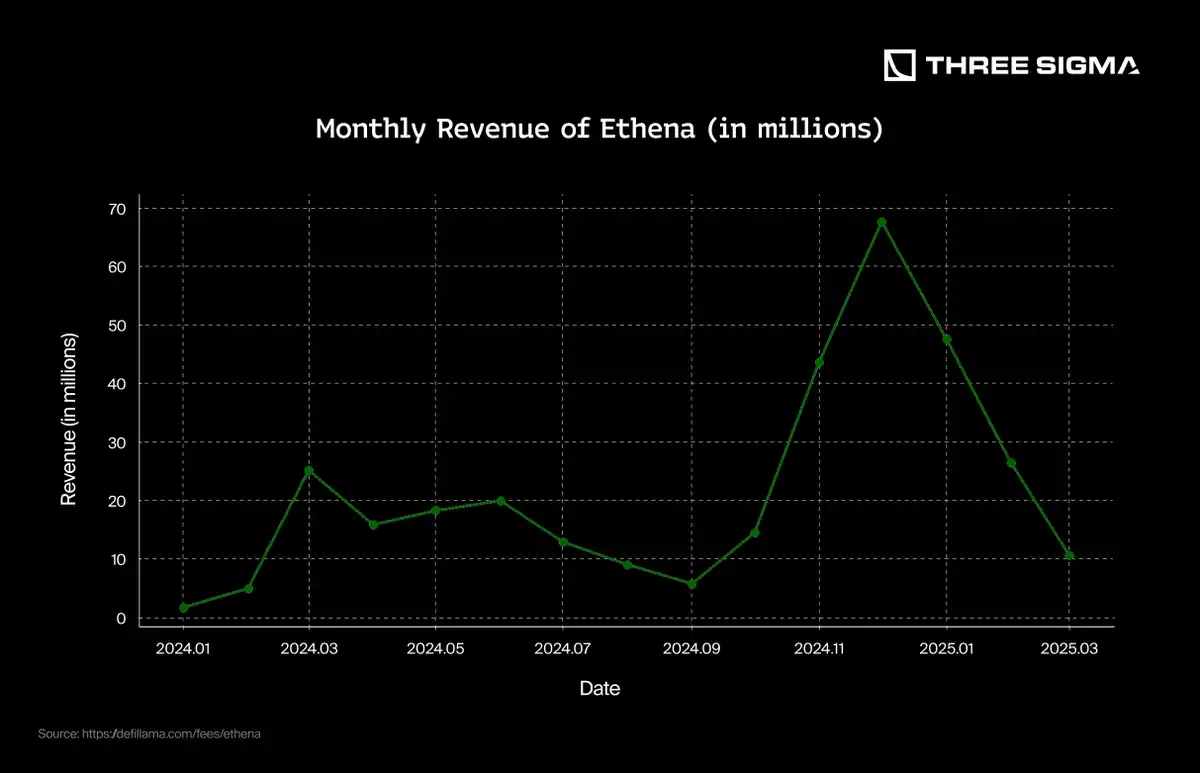
Ethena was opened to the public on February 19, 2024, allowing users to mint USDe by depositing stablecoins and stake them as sUSDe to earn yield. In less than a year, the protocol has accumulated revenue of more than $320 million, making it one of the fastest profit curves in DeFi history.
Steady revenue growth in the first half of 2024 reflects continued growth in USDe supply and widespread adoption on DeFi and CeFi platforms. However, the sharp acceleration in revenues begins in October 2024, coinciding with the occurrence of:
USDe and sUSDe integrate into major lending markets such as Aave and Morpho.
Increased market volatility has brought about a surge in funding rate arbitrage opportunities.
The launch of new institutional products such as iUSDe expands Ethena’s reach into the TradFi space.
By the first quarter of 2025, the protocol's cumulative revenue exceeded US$300 million. Despite being online for less than 15 months, Ethena has already ranked among the top revenue generators in the crypto field. This rapid growth demonstrates strong market demand and validates the sustainability of USDe's delta-neutral model.
However, after reaching a peak in late 2024, monthly revenues fell sharply in the first quarter of 2025. This decline correlates with a reduction in funding rate arbitrage opportunities, with perpetual futures funding rates on major exchanges normalizing. With lower volatility and a more neutral funding environment, one of Ethena’s main revenue streams has temporarily weakened, highlighting the model’s sensitivity to market conditions.
4. Correlation between interest rates and income
The impact of interest rates on stablecoins is one of the most decisive factors in their revenue performance. As mentioned earlier, stablecoins generate income through a variety of mechanisms, including interest-bearing reserves, market arbitrage, and other yield-generating strategies. Because many stablecoins hold assets that are subject to changes in interest rates, their income potential is often affected by macroeconomic conditions.
To better understand this relationship, we adjust revenue by dividing it by supply. This normalization makes the comparison more accurate, as an increase in stablecoin supply naturally leads to greater potential revenue generation. By focusing on revenue per unit of supply, we can isolate the direct impact of interest rate fluctuations on stablecoin profitability.
USDT
In-depth chart analysis vividly demonstrates the positive correlation between Tether revenue and interest rate fluctuations. A historical chart comparing Tether’s quarterly revenue to interest rate changes shows clear synchronicity, highlighting the near-instantaneous response of revenue to interest rate adjustments.
These visualizations effectively highlight the sensitivity of Tether’s revenue to the interest rate environment, providing predictive insights into potential future performance scenarios. They highlight the importance of proactive financial and reserve management strategies to mitigate revenue risks associated with volatile or declining interest rate cycles.
The chart below shows the correlation between interest rates and adjusted stablecoin revenue. Each chart shows the changing relationship between the supply of each unit of stablecoin (vertical axis) and the interest rate (horizontal axis).
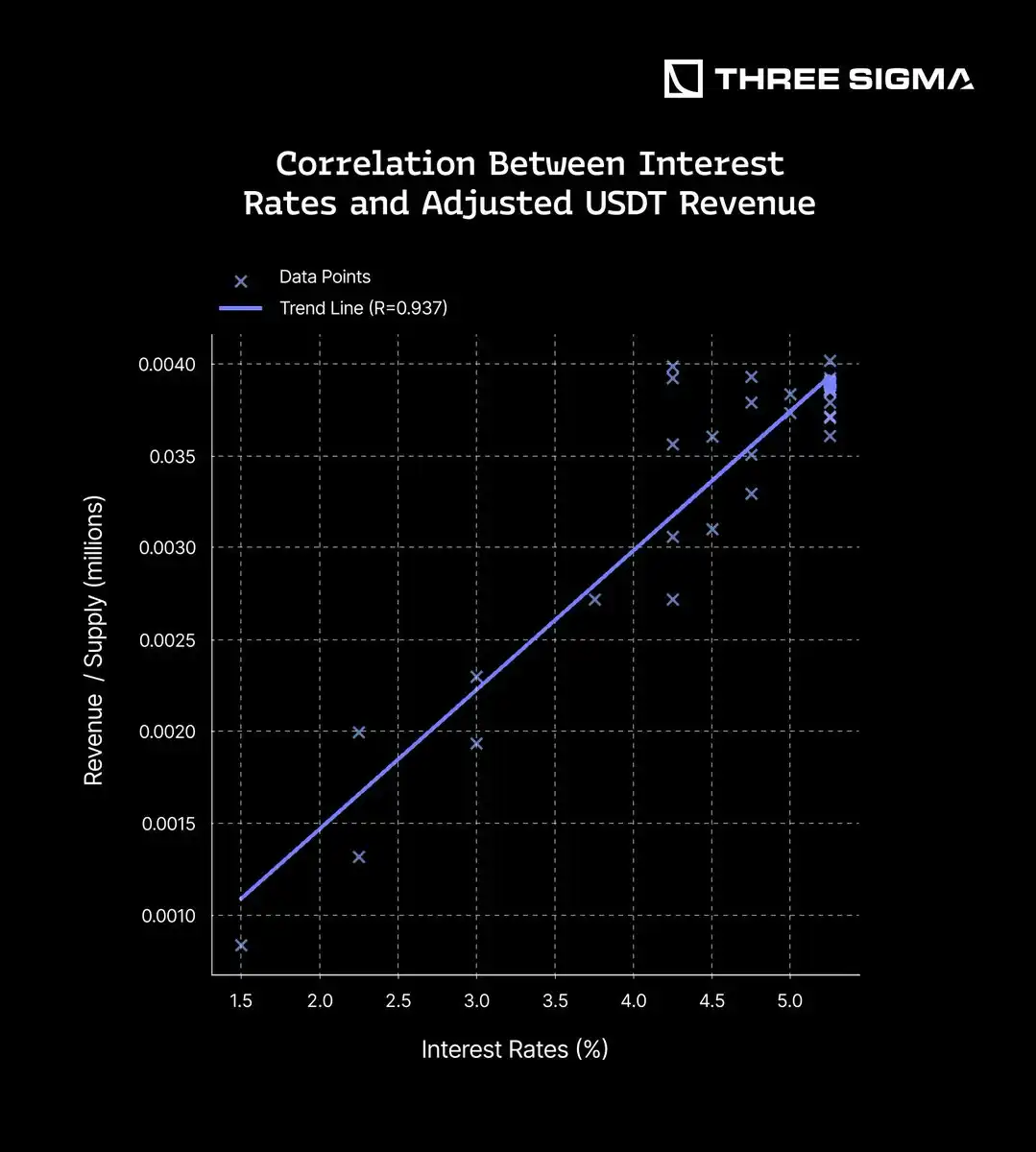
The chart further highlights the strong positive correlation between interest rates and USDT adjusted revenue per unit of supply (R = 0.937). This shows that as interest rates rise, USDT's revenue per unit of supply also increases, reflecting the growth in USDT's returns on its investments in U.S. Treasuries. As interest rates rise, the yields on these bonds increase, directly affecting USDT's overall revenue.
This correlation highlights how USDT can effectively manage its reserve assets to benefit from changing economic conditions, especially in a high-yield environment. It reflects USDT’s flexible financial strategy and its positioning to perform well when interest rates rise, enhancing its economic stability and role as a reliable digital asset. As mentioned earlier, a 100% correlation is impossible because 80% of reserves are held in cash and Treasury bills, with 80% allocated exclusively in Treasury bills.
USDC
USDC’s economic strength is reflected in its strategic reserve management. As interest rates rise, USDC benefits from its large holdings in U.S. Treasuries, which offer higher returns. USDC invests 75%-80% of its reserves in government bonds, which not only maintains stability but also generates additional income as bond yields increase. The direct correlation with interest rate fluctuations enables USDC to benefit in a rising interest rate environment, further solidifying its position as a yield-generating stablecoin.
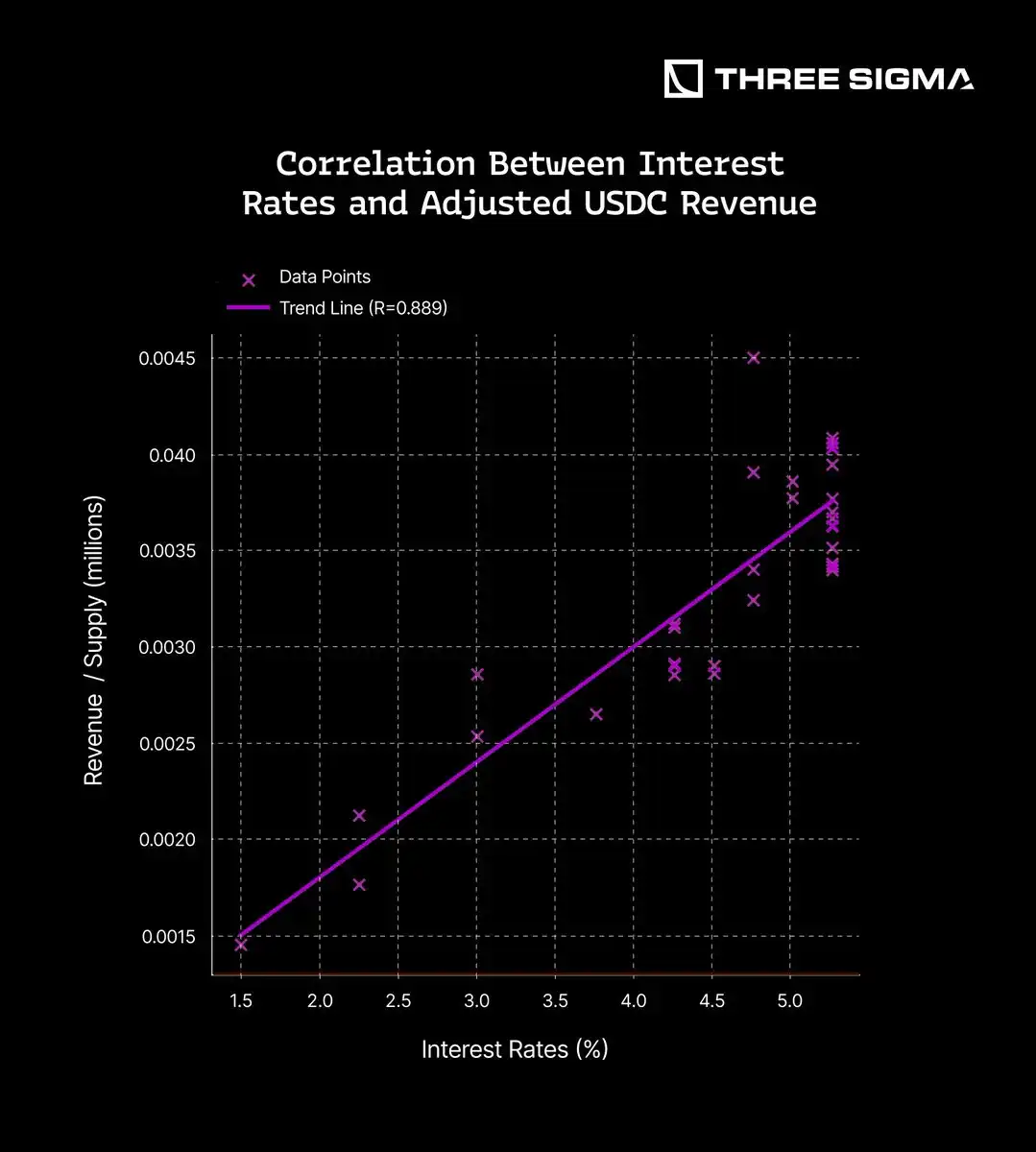
The trend line shows a strong positive correlation (R = 0.889), indicating that as interest rates rise, USDC revenue per unit of supply increases accordingly. This is in line with expectations since, like other reserve-backed stablecoins, USDC derives its income from high-yielding assets such as U.S. Treasuries.
This correlation highlights USDC’s ability to optimize reserves and adapt to economic changes. It also highlights how reserve-backed stablecoins can take advantage of rising interest rates to enhance yield generation, further solidifying their role in the digital asset ecosystem.
While this correlation is strong (R = 0.889), it is lower than that of USDT due to differences in reserve composition. USDT maintains a larger portion of its reserves (approximately 80%) in short-term U.S. Treasury bills, which are highly sensitive to changes in interest rates. In contrast, USDC’s reserves are more diversified, with only 37.5% of its reserves in Treasuries and nearly 50% of its reserves in repurchase agreements, which respond more indirectly to interest rate fluctuations. This diversified approach enhances liquidity and stability, but also slightly weakens the direct impact of interest rate increases on returns, resulting in weaker correlations. In summary, a direct comparison of USDT and USDC revenue highlights the impact of reserve composition and yield strategy.
SKY (DAI/USDs)
SKY's economic strength is reflected in its strategic reserve management. As interest rates rise, SKY stablecoins (USDS and DAI) benefit from their exposure to yield-yielding assets.
Unlike USDC and USDT, which are traditionally backed by institutional reserves, DAI has historically relied on crypto-collateral assets such as ETH. However, in October 2022, MakerDAO began allocating a large portion of its DAI reserves into U.S. Treasuries and other real-world assets (RWAs) to capture higher yields. As of July 2023, over 65% of DAI’s reserves are pegged to RWAs, making its income more sensitive to interest rate fluctuations. This shift brings DAI’s behavior closer to that of institutional stablecoins, directly benefiting from rising interest rates.
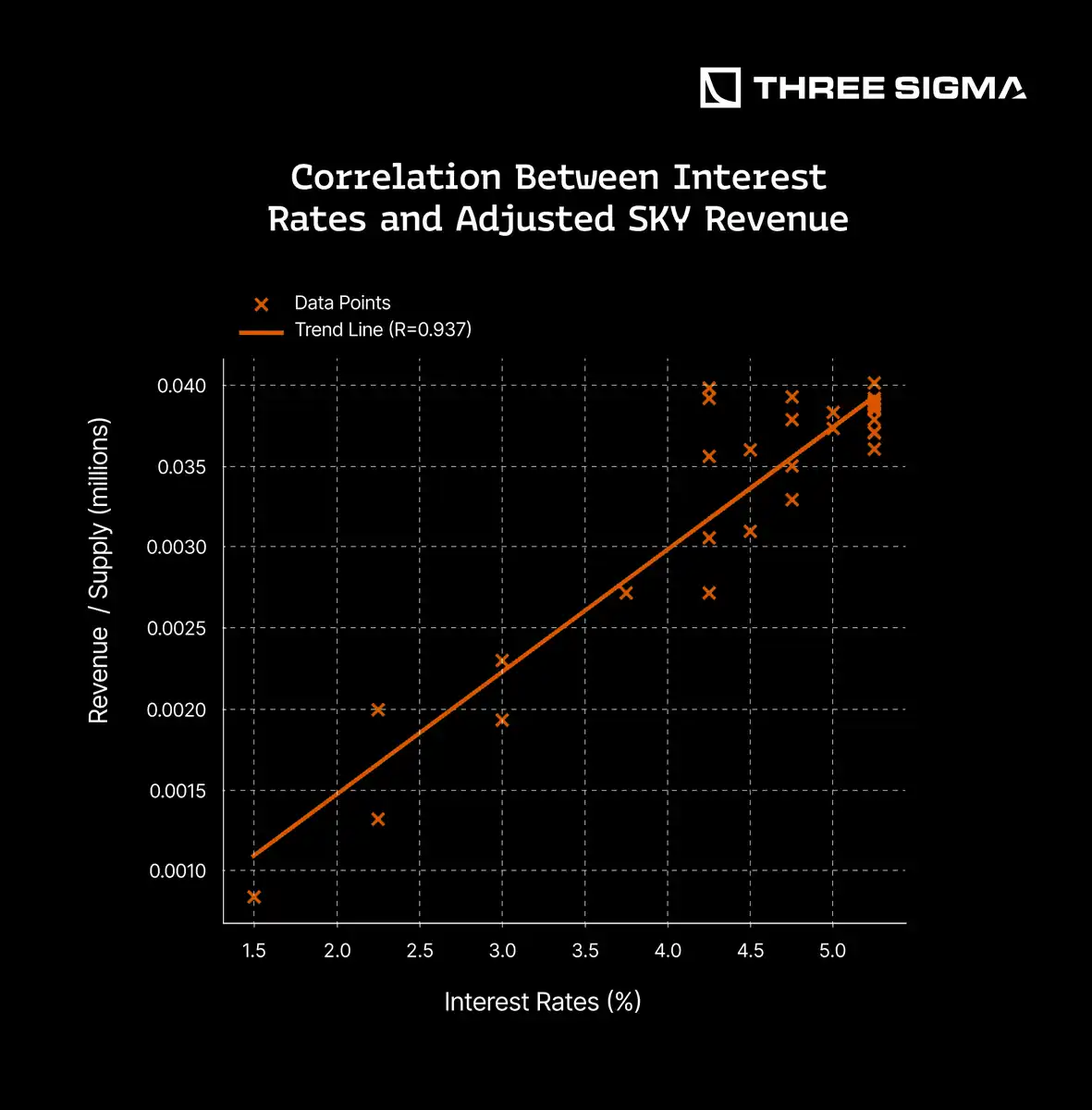
As expected, changes in the composition of DAI reserves lead to a strong positive correlation between interest rates and SKY stablecoin revenue per unit supply (R = 0.937). The data confirms that higher interest rates help increase income generation, further confirming that the SKY stablecoin now performs similarly to yield-optimized institutional stablecoins.
USDe
USDe's revenue model is primarily based on funding rate arbitrage in the perpetual futures market, rather than traditional interest-bearing assets such as U.S. Treasuries. As we can see, its hedging strategy involves taking a short top position in perpetual futures, profiting from the fees paid by long traders when an imbalance in open interest occurs.
When demand for long top positions increases, funding rates rise, making it more expensive to hold long top positions while providing profit opportunities for short traders (including USDe). However, this revenue model is less directly impacted by traditional interest rate changes and is more dependent on market volatility, trader positions and overall leverage demand in the crypto market.
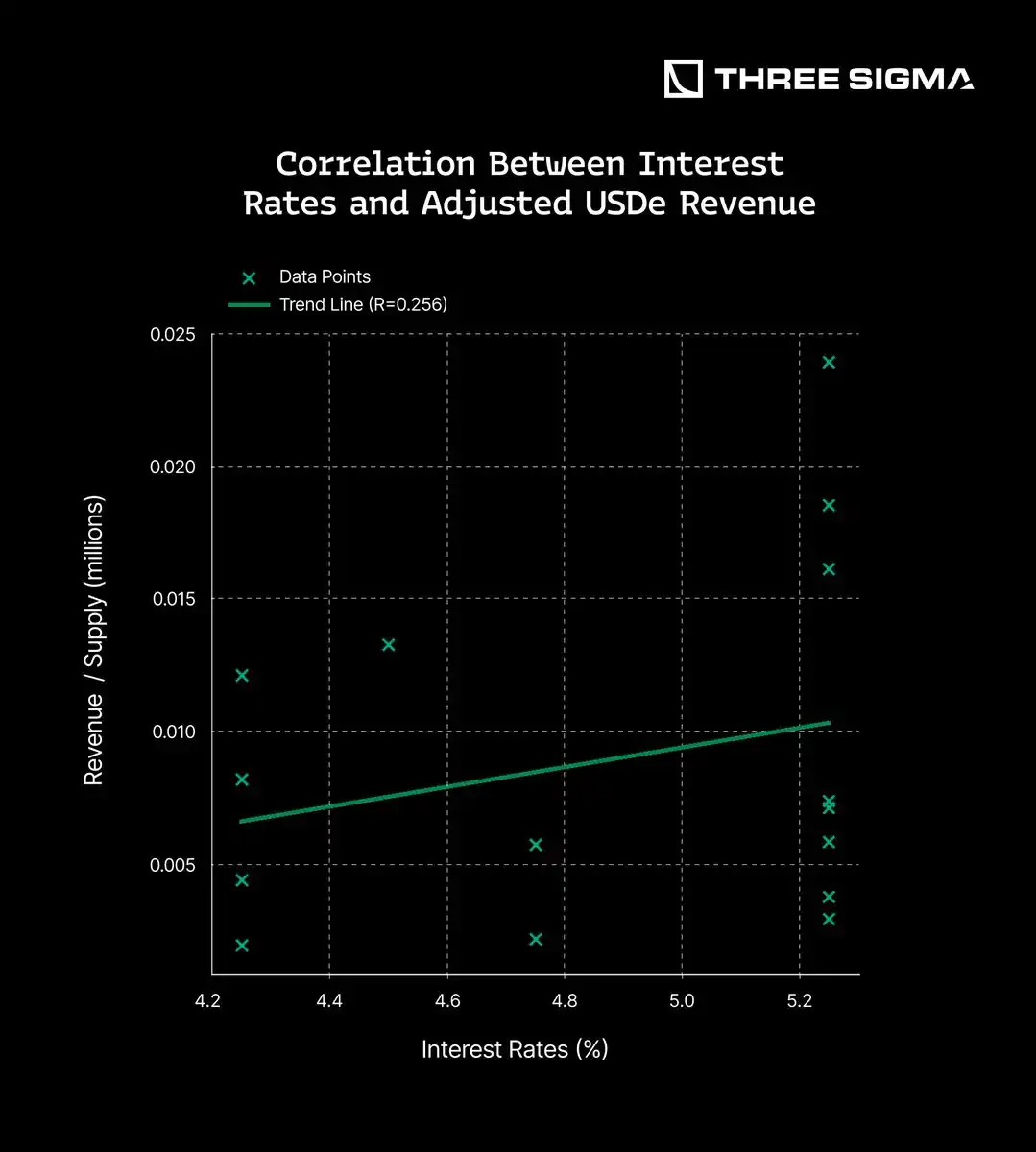
The trend line shows a weak positive correlation (R = 0.256), indicating that while higher interest rates may have some impact on USDe revenue, the relationship is not particularly strong.
This is in line with expectations, as USDe’s revenue model is primarily driven by conditions in the perpetual futures market rather than interest rate movements. Funding rates and leverage requirements play a much larger role in revenue generation than traditional interest rate hikes.
This correlation highlights that USDe’s returns rely on trader behavior rather than direct exposure to real-world interest rate changes. While lower interest rates may encourage greater risk-taking and use of leverage in crypto markets, USDe profitability remains closely tied to the imbalance in funding rates in perpetual futures trading.
5. The impact of interest rates falling to 0%
interest rate
Interest rates represent the cost of borrowing money, or conversely, the return you receive for lending or depositing money. Central banks, such as the U.S. Federal Reserve System, set benchmark interest rates (such as the federal funds rate) to manage economic growth, control inflation, and stabilize the financial system. Lower interest rates generally encourage borrowing and stimulate economic activity, but they can also fuel inflation.
Conversely, higher interest rates discourage borrowing, slowing economic expansion but helping to curb inflationary pressures. Historically, interest rates have fluctuated wildly depending on economic cycles and crises, typically approaching zero during recessions (e.g., the 2008 financial crisis, the COVID-19 pandemic) and rising sharply during inflationary periods (e.g., post-pandemic 2022-2024). Interest rate fluctuations directly impact the yields on Treasury bills (T-Bills) and bonds, which is critical to stablecoin issuers who rely on returns on these investments.
Historical interest rates
The interest rates that require the most attention are those set by the U.S. Federal Reserve System, particularly the federal funds rate, because of the dollar’s global dominance as the primary reserve currency and its broad influence on international financial markets. Changes in U.S. interest rates have a significant impact on global economic activity, currency valuations, investment flows, and borrowing costs, making them an important benchmark for global financial stability.
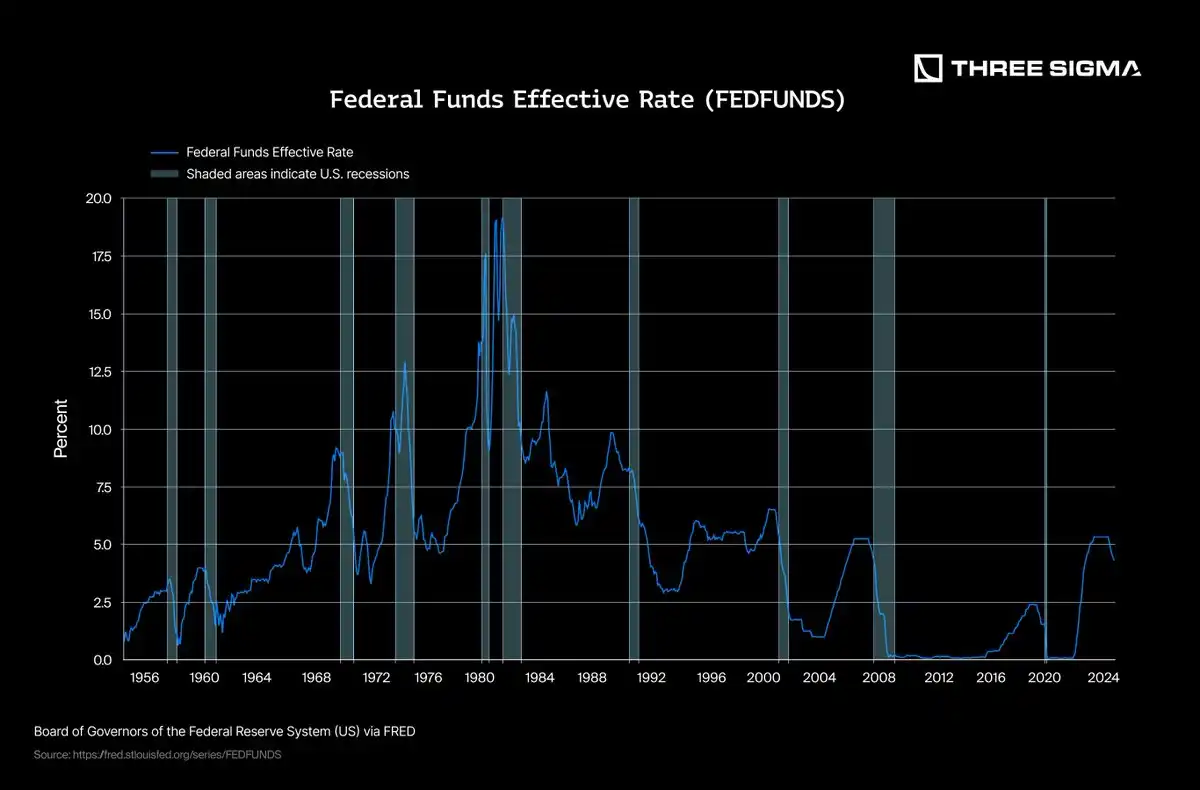
Historical charts clearly illustrate several major interest rate cycles, including historically high rates in the early 1980s to combat inflation, followed by a steady decline in rates into the low-rate environment of the past two decades. The 2008 financial crisis in particular forced interest rates to near zero to stimulate economic recovery.
Specifically, in the last interest rate cycle (2010-2020), the US Federal Reserve kept interest rates at historically low levels (close to 0%) for a long time, and only began to gradually increase them when the economy gradually recovered from 2015 to 2018. However, the outbreak of the COVID-19 pandemic in early 2020 once again prompted a sharp reduction in interest rates to near zero, aimed at responding to the economic slowdown, ensuring liquidity, and stabilizing financial markets.
Comparison of the correlation between interest rates and income
As we discussed earlier, the revenue models of some stablecoins are highly dependent on interest rates, while others have structures that insulate them from these fluctuations.
The information provided clearly demonstrates this distinction. USDT, USDC, and SKY are all highly correlated (R ~0.89–0.94), highlighting their significant dependence on prevailing interest rates. Their income mainly comes from traditional investments, such as government bonds, which makes them face greater risks when interest rates are close to zero, which will seriously affect their profitability.
In stark contrast, the correlation for USDe is significantly weaker (R = 0.256), reflecting its completely different income generation method. USDe's revenue mainly comes from the mechanisms of the crypto market, such as perpetual futures funding rate arbitrage and staking income, rather than traditional, interest rate-affected assets.
In summary, these data strongly suggest that fiat-backed and treasury-backed stablecoins (such as USDT, USDC, and SKY) face considerable risks in a low-interest rate environment. In contrast, algorithmic stablecoins like USDe have demonstrated greater resilience due to their alternative income strategies and may serve as strategic diversifiers in portfolios, providing relative stability as interest rates decline.
Scenario of interest rates falling to 0%
In a scenario where interest rates return to 0%, the impact of stablecoins varies significantly, depending on their revenue model and asset allocation:
Tether
Since USDT mainly generates income through traditional financial assets (such as treasury bills), a drop in interest rates to 0% will greatly reduce its revenue sources and seriously affect profitability. However, Tether’s strategic diversification into alternative investments, including cryptocurrencies (BTC, ETH) and precious metals, may partially mitigate this impact. However, these alternative assets carry higher volatility and risk and may not fully compensate for lost interest income, potentially weakening their overall market position.
In 2024, Tether maintained very low operating expenses, thanks to a lean structure of under 50 employees, minimal administrative overhead, and since transaction fees on USDT tokens generally covered these transactional expenses. Legal and regulatory expenses were also relatively low, with no major fines this year, compared with an $18.5 million fine paid to the New York Attorney General in 2021.
Financially, Tether maintained strong reserves at the end of 2024, with reserves exceeding obligations to USDT holders at approximately $7.1 billion and total equity at approximately $20 billion. Given its conservative annual operating expenses (likely less than $100 million), Tether will be able to maintain operations for more than 70 years even if future revenue were to drop completely to zero, demonstrating its outstanding financial stability and almost unlimited operating space.
Circle
Circle recently filed an S-1 registration statement with the U.S. Securities and Exchange Commission, indicating that it plans to list on the New York Stock Exchange under the ticker symbol "CRCL."
In 2024, Circle reported total revenue of approximately $1.68 billion, up 16% from $1.45 billion in 2023. Notably, over 99% of this revenue comes from reserve income, primarily interest earned on the assets that back USDC. In 2024, the company's net income is expected to be approximately $156 million, a significant decrease from $268 million in the previous year, mainly due to increased operating and distribution expenses.
Total operating expenses for 2024 are approximately $492 million, with the majority going to employee compensation ($263 million), general and administrative expenses ($137 million), IT infrastructure ($27 million), depreciation and amortization (approximately $51 million), marketing expenses ($17 million), and digital asset impairment ($4 million). In addition, Circle incurred approximately $1.01 billion in distribution and transaction costs, of which approximately $908 million was paid to its main distribution partner, Coinbase.
As of December 31, 2024, Circle held $751 million in cash and cash equivalents and $294 million in other liquid investments, for total available liquidity of approximately $1.045 billion. When estimating the financial sustainability of a company in a zero-revenue scenario, it is important to distinguish between these two types of assets:
Cash and cash equivalents of $751 million represent highly liquid, immediately available funds – appropriate for conservative financial sustainability estimates. Based on this alone, and assuming current annual operating expenses of $492 million, Circle's financial sustainability is approximately 18 months.
If the full $1.045 billion of liquidity (cash and other current assets) is included, and assuming that these additional assets are readily available and unrestricted, the financial sustainabi