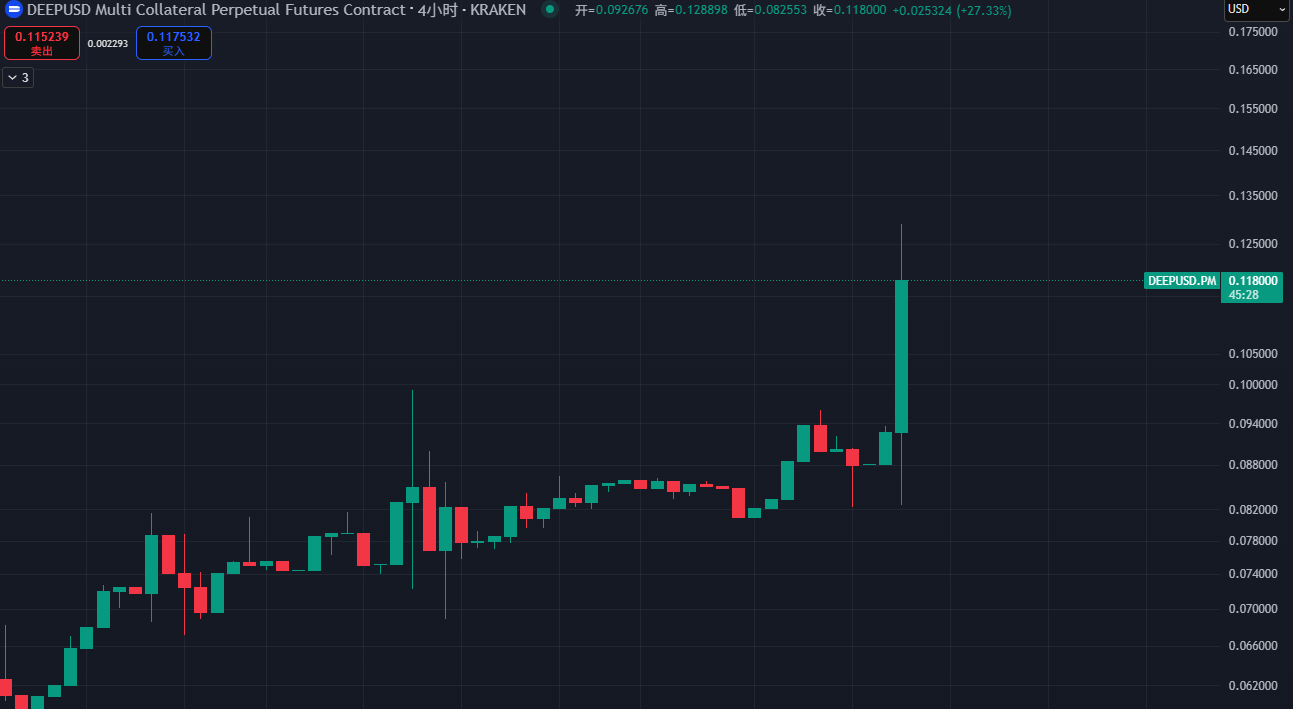
Today, the native token DEEP of DeepBook surged 50% on its first day on Upbit, like a "nuclear bomb" igniting attention to the Sui ecosystem. As the first native liquidity layer on the Sui blockchain, DeepBook promises unprecedented efficiency and transparency for DeFi with its decentralized Central Limit Order Book (CLOB) architecture. Now, Sui is rapidly emerging in the decentralized finance field, and DeepBook is undoubtedly the trendsetter of this wave. This article will take you into the fascinating world of DeepBook with a relaxed yet professional tone, revealing its technical core, team background, token economic model, and why it might become the "killer app" of the Sui ecosystem.
What is DeepBook? The "Super Exchange" of DeFi
Imagine a digital marketplace where buyers and sellers flow endlessly, with prices open and transparent, and trades as fast as lightning. This is the core of DeepBook - a decentralized Central Limit Order Book (CLOB) running on the Sui blockchain. Unlike common Automated Market Makers (AMMs), DeepBook does not rely on liquidity pool curve pricing, but instead ensures price stability and extremely low slippage by real-time matching of buy and sell orders. Whether it's a small retail investor wanting to buy 1000 SUI or an institutional player needing to balance liquidity, DeepBook can quickly match trades like a super butler.
The Sui blockchain, built by former Facebook engineers, is known for its high throughput (processing over 5000 transactions per second) and low gas fees (with an average settlement time of only 390 milliseconds). DeepBook fully leverages Sui's performance advantages to create a liquidity platform "deep as the ocean". Whether individual traders or DeFi protocols, everyone can find sufficient counterparties here and enjoy an experience almost like a traditional exchange, without the need for a centralized "intermediary".
Even cooler, DeepBook's ledger is completely open, and anyone can view transaction records and prices, with fairness at a glance. You can even use this data to build your own trading dashboard, transforming into a "Wall Street wolf on the chain". For developers, the SDK provided by DeepBook makes integrating trading functions as simple as building with blocks, greatly lowering the barrier to building DeFi applications.
Technical Explanation: Why is DeepBook So "Hardcore"?
To understand DeepBook's charm, we first need to discuss its technical core. Don't worry, we'll translate complex terms into "human language" to help you easily grasp its impressive features.
... [rest of the translation continues in the same manner]- Anti-wash trading: By burning excess fees, ensuring that incentives cannot be abused by malicious volume manipulators. At the same time, market-making rewards will gradually decrease when liquidity is sufficient, reducing the motivation for meaningless transactions.
- Anti-governance capture: Governance parameter adjustments are strictly limited, and the "square root" voting mechanism allows small users to have a say, avoiding the dominance of large users.
3. The "catalyst" role of the token
DEEP is not only a "pass" for trading but also a "catalyst" for Sui ecosystem's liquidity. As more traders stake DEEP, DeepBook's liquidity will be further enhanced, forming a positive cycle. The public ledger and low gas fees make this cycle more efficient.
The significance of DeepBook: The "engine" of the Sui ecosystem
The launch of DeepBook is not only a milestone for the Sui ecosystem but also potentially a paradigm shift in the DeFi field. Here are several reasons why it is so important:
1. Filling the "liquidity blank" in DeFi
Traditional DeFi protocols mostly rely on AMM and struggle to meet institutional-level trading needs. DeepBook's CLOB architecture provides professional traders with a familiar order book experience while retaining the decentralized characteristics of blockchain. This "having the best of both worlds" design makes DeepBook a bridge connecting retail and institutional investors.
2. Empowering the Sui ecosystem
As Sui's native liquidity layer, DeepBook provides infrastructure for other DeFi protocols. Whether lending platforms, derivatives exchanges, or front-end applications, they can utilize DeepBook's liquidity to build more complex financial products. This "building block" composability is the charm of blockchain.
3. Community-driven future
DeepBook opens governance to the community through Sui Improvement Proposals (SIPs), allowing anyone to propose protocol optimizations. This openness not only sparks innovation but also makes DeepBook a true "public good".
Market potential: Will DEEP become the "first currency"?
The 50% surge on DEEP's first day of listing is just the tip of the iceberg of its potential. Market analysis suggests that DEEP is currently undervalued for three reasons: first, the rapid growth of the Sui ecosystem provides fertile ground; second, DeepBook's technical advantages are unique in the DeFi field; third, institutional investor endorsement ensures its long-term development.
Some industry insiders boldly predict that if Sui can further integrate Move language from other chains and export stable liquidity through DeepBook, DEEP may become the "first currency" of the Sui ecosystem. After all, on a low-latency, high-throughput blockchain, liquidity is king.
From obscurity to Upbit's stunning appearance, DeepBook declared to the world with a 50% surge: the DeFi era of Sui has arrived. As a technically hardcore, community-driven liquidity protocol, DeepBook not only provides traders with an efficient trading experience but also injects continuous vitality into the Sui ecosystem.