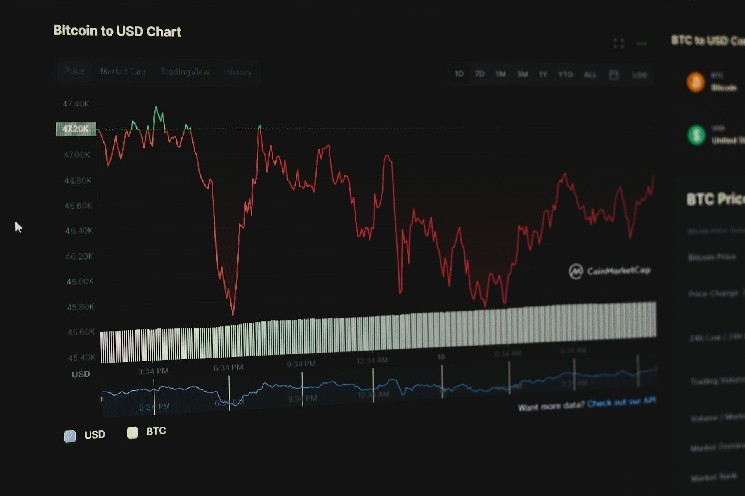
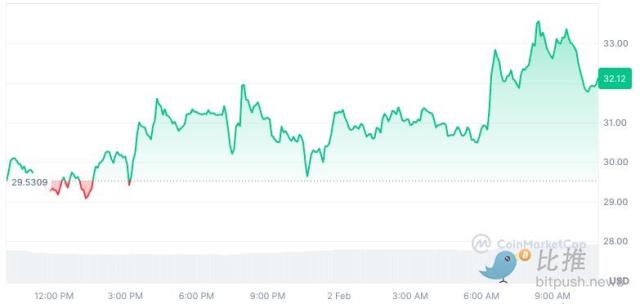
I believe the market has absolutely bottomed out around $74,500. At that time, Trump took an extreme stance on tariffs but was forced to compromise under the pressure of a financial market crash - after all, he was facing the 2026 midterm elections.
VX: TZ7971
So the market has bottomed out, funds have returned, and Bitcoin has rebounded by around 25%. Do you remember the market low after the FTX collapse in 2022? At that time, Yellen chose to reduce reverse repos from $250 million to 0, after which Bitcoin rose nearly 6-fold, and I believe we will see a similar upward pattern.
How long can market liquidity and positive sentiment last? What impact will rate cut expectations have?
Overemphasizing rate cuts is somewhat putting the cart before the horse. People always try to apply the experience from 2008-2019 - as soon as quantitative easing policies were introduced, the Federal Reserve printed money every week, and we could buy assets and make steady profits, which has become a conditioned reflex in financial markets. But the rules of the game have changed now. When the market realizes that quantitative easing means inflation, and inflation affects election prospects, the policy toolkit must be updated. Yellen's operation at the end of 2022 is a typical case - although not nominally QE, it created liquidity in some form, driving stocks, cryptocurrencies, and gold to surge in the following 18-24 months, until Trump took office.
Now, people are still waiting for Powell to cut rates or restart QE, which is completely outdated.
Currently, the US Treasury is implementing a buyback program, which, although not as explicit as QE, essentially provides leverage for Treasury buyers. government deficit expands, Tens of trillions of dollars in new will flood the the market, which means liquidity is toected just in its coat. If one waits for traditional QE signals before entering it may have already risen.
The data that truly needs attention is volatility, especially the bond market volatility index (MOVE). When index 140, policymakers will definitely intervene: for example, on April 8, when it reached 172 JPMorgan CEOMon criticized Trump's tariff policy on TV, and immediately changed In September after the, THROUGH Yadjusted the bond issuance structure, the marketket rebounded. History repeatedly proves that as the leverage rate of the financial system rises, the intervention threshold of policymakers is lowering.Trump, as a "ility," is precisely a positive for Bitcoin. He He is accustomed to the strategy of "extreme - testing reaction," and," and this unpredictability is the nutrient that the crypto market loves most. We We don't need to predict policy direction, as long as volatility rises, we can make money - because the high-leverage financial system simply cannot withstand severe volat.The key to this question this depends on the entry price point.holding period. There are many cash flow tokens that are not fully priced, and when the altcoin season or "fundamental season" arrives (i.e., when Bitcoin dominance peaks), there is indeed potential for explosion.How to screen?
First I'm looking for protocols or businesses users pay real money - not through token incentives, but by spending stablecoins or other cryptocurrencies to buy services. The services. The most most typical is exchanges, Such as Hyperliq,iqis a prime example, going going from zero to 10-20% market share in perpetual contracts within 18 months. They built an extremely efficient order book system and system where user fees are used directly token buybacks, and this simple and direct business model makes sense.
The second key is how token holders benefit. Many Many profitable projects (such as some top DEXs token holders cannot share the profits.. Take Uniswap as no matter how much the protocol earns, holding UNI is useless, if there are subsequent UUNI dividends or other new distribution mechanisms, is a big growth space. Including JUP, MKR, Aave are the same principle.