


Meta and OpenAI are in a full-scale war!
Zhidongxi reported on April 30th that today, at the first LlamaCon developer conference, Meta officially launched the AI assistant Meta AI App to compete with ChatGPT and announced a preview version of the official Llama API service for developers.
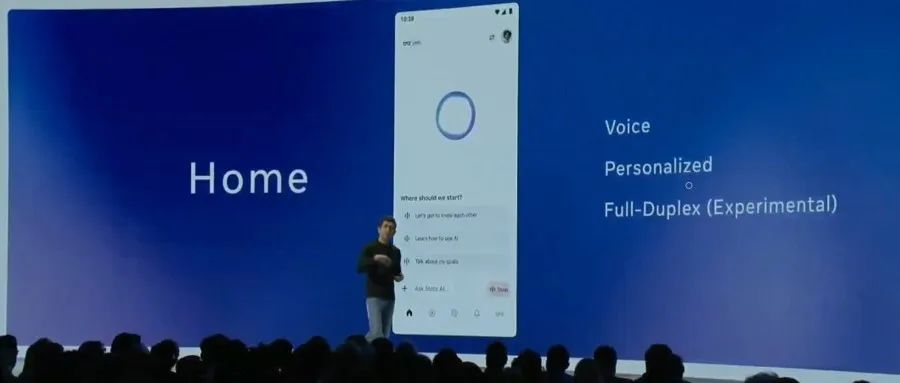
The Meta AI App is an intelligent assistant based on the Llama model that can understand user preferences through social media accounts and remember context. Like ChatGPT, Meta AI App supports voice and text interaction, and additionally supports full-duplex voice interaction (allowing parallel processing and response while receiving voice, supporting listening and speaking simultaneously, real-time interruption, and other functions).

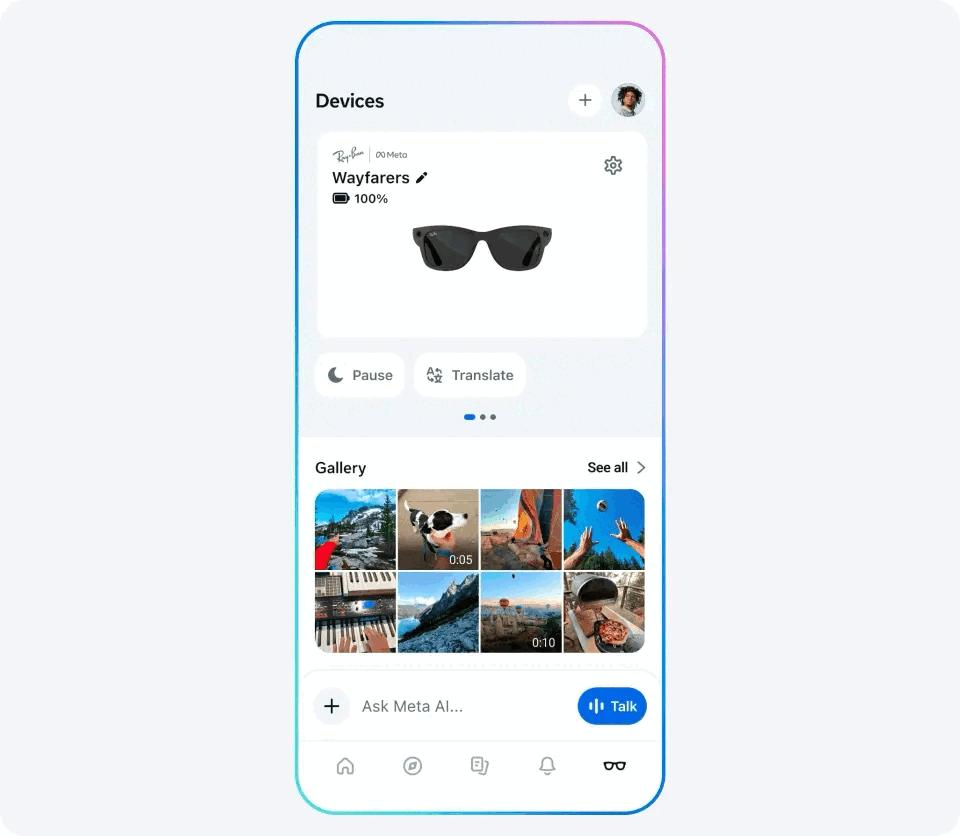
Meta AI App can be used as a companion application for Meta RayBan AI glasses, allowing users to directly interact with Meta AI App through the glasses.
The Llama API launched at the same time provides multiple models, including Llama 4, and is compatible with the OpenAI SDK, allowing products using OpenAI API services to seamlessly switch to Llama API.
Additionally, Meta provides tools for fine-tuning and evaluation in the new API, enabling developers to create customized models that meet their specific needs and use fast inference services provided by AI chip startups Cerebras and Groq.
It's worth noting that in the past few years, Llama-related releases were only a segment of the Meta Connect developer conference. Holding a dedicated conference this time clearly shows their emphasis on AI business. Meta CEO Mark Zuckerberg did not appear at the launch event and will participate in two discussions afterward.
Regarding pricing, developers can obtain free preview access to the Llama API through application. In the future, this API may adopt a paid model, with specific pricing yet to be announced. Meta AI App and web version are both online and free to use.
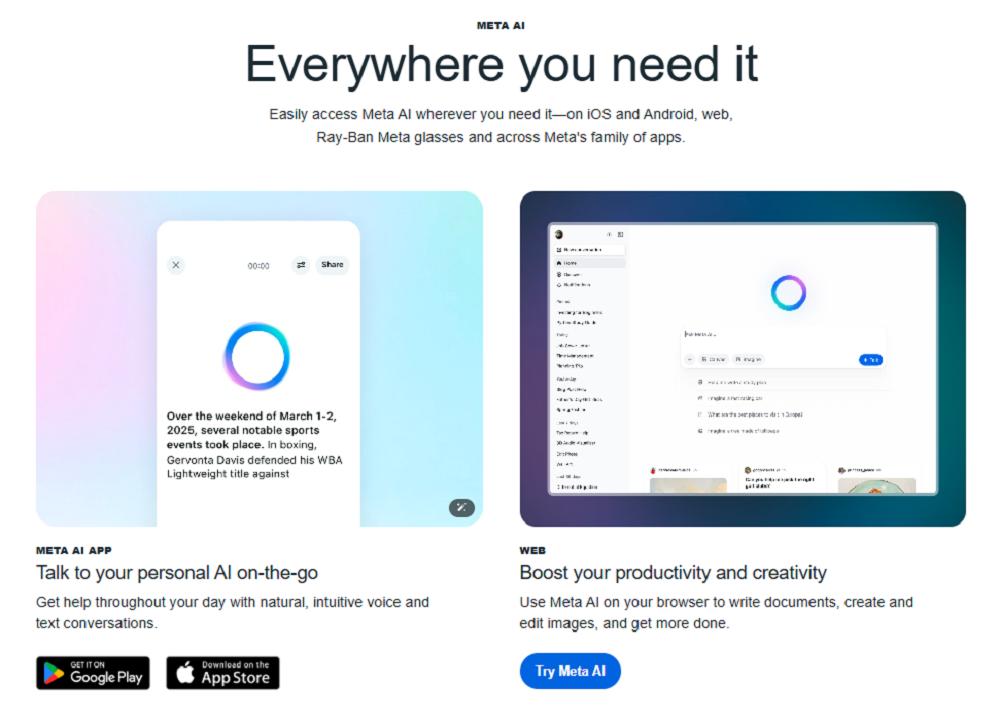
Meta AI Web:
https://www.meta.ai/
Llama API Documentation:
https://llama.developer.meta.com/docs/overview
01.
Llama Model Downloads Exceed 1.2 Billion
Meta AI App Focuses on Voice Interaction
Meta's Chief Product Officer Chris Cox shared the latest progress of Meta's open-source AI at the LlamaCon conference. Cox said that two years ago, Meta's internal team was skeptical about the commercial prospects and priority of open-source AI, but now open-source AI has become an industry trend.
Two and a half months ago, Meta announced that Llama and its derivative models had reached 1 billion downloads, and today, this number has rapidly grown to 1.2 billion.
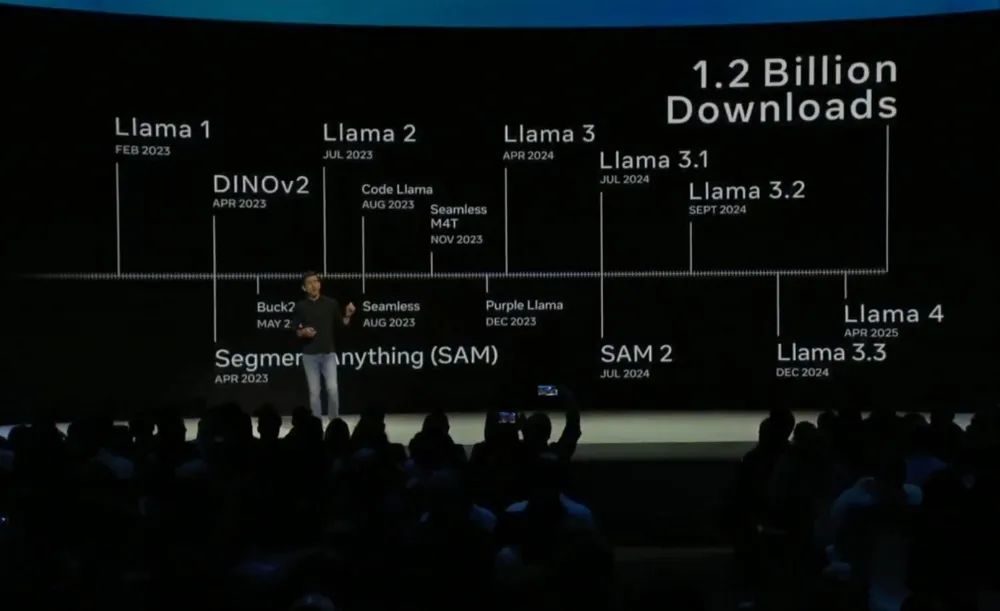
On the open-source platform Hugging Face, most of Llama's downloads come from derivative models, with thousands of developers contributing and tens of thousands of derivative models being downloaded and used hundreds of thousands of times monthly.
Currently, Llama models are applied to many Meta apps, including WhatsApp, Instagram, and others. In these scenarios, Llama models have been customized to meet specific use case requirements, such as conversational ability, conciseness (especially in mobile scenarios), and sense of humor.
To provide a richer AI experience, Llama launched a standalone intelligent assistant app - Meta AI.
Meta AI App places great emphasis on voice interaction experience, offering low-latency, expressive voice. Meta AI can also connect to users' Facebook and Instagram accounts, roughly understanding their interests based on interaction history and remembering user-related information.
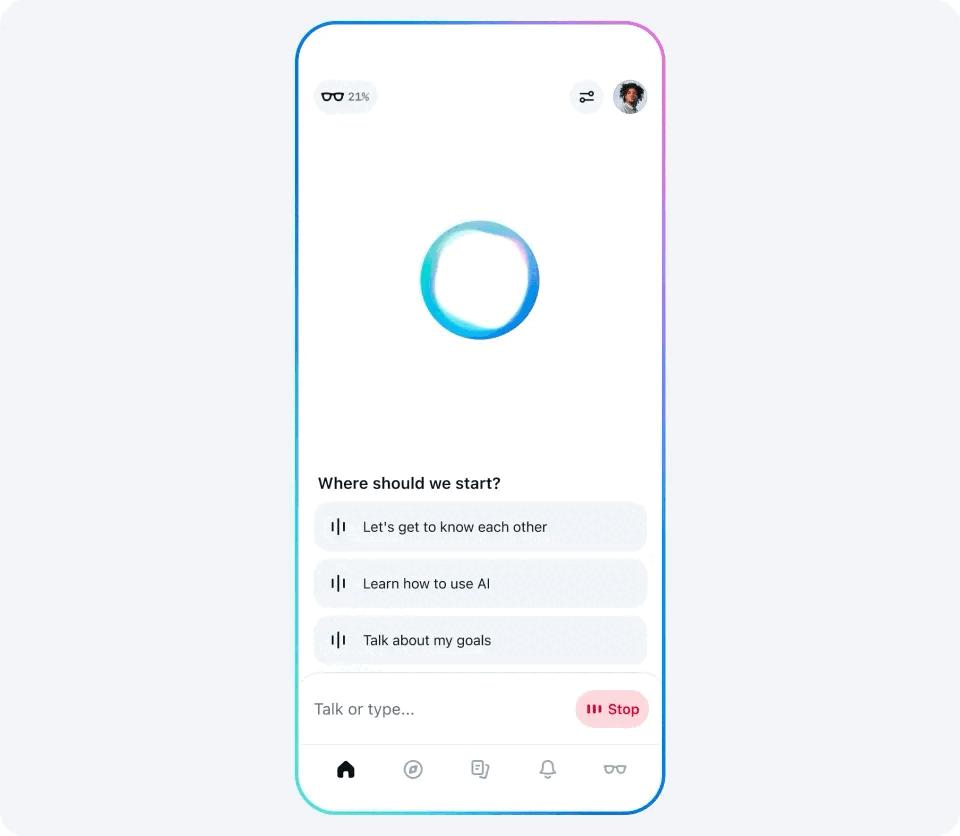
This app has a built-in full-duplex voice experimental mode. The related models are trained using natural conversation data between humans, capable of providing more natural audio output. Full-duplex means the channel is bidirectionally open, allowing users to hear natural interruptions, laughter, etc., just like a real phone conversation.
The full-duplex voice experimental mode is still in its early stages, lacking tool usage, web search, and the ability to understand recent current events.
Meta AI App incorporates social elements, allowing users to share prompts and generated results on the discovery page. This app can be used in conjunction with Meta Ray Ban smart glasses. Users will be able to start a conversation on the glasses and then access it from the "history" tab in the app or web, continuing from where they left off.
02.
One-Line Code Calling
Online Model Fine-Tuning Available
At the conference, Meta's Vice President responsible for Llama business, Manohar Paluri, and Llama research team member Angela Fan jointly released the Llama API service hosted by Meta.
Llama API offers simple one-click API key creation, callable with a single line of code. It supports lightweight Python and Typescript SDK developers and OpenAI SDK.
In the API service webpage, Meta provides an interactive playground. Developers can try different models, change model settings like system instructions or temperature, to test various configurations.
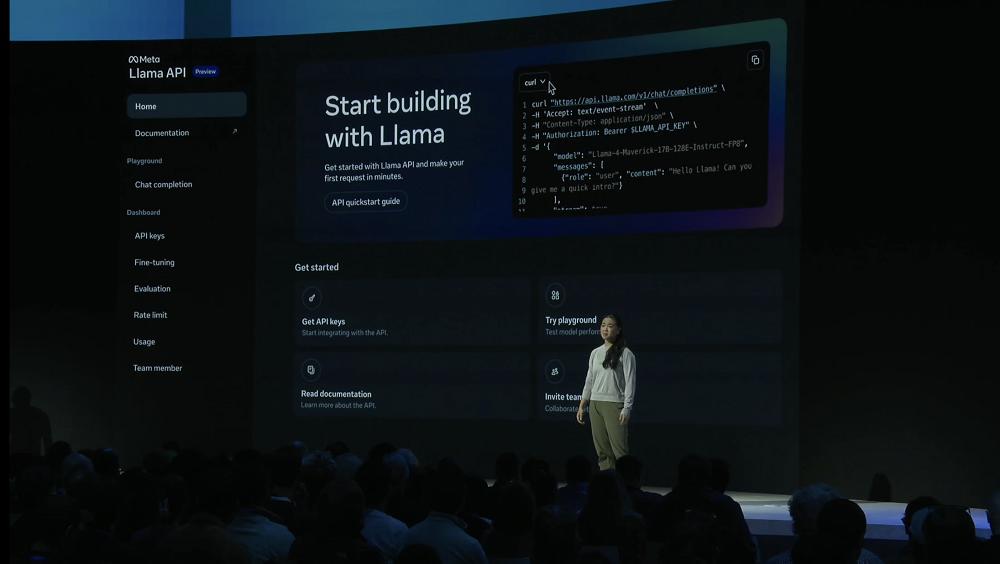
▲Llama API Interface
Additionally, developers can use multiple preview features, including JSON-based structured responses and tool calls.
Paluri believes that customization is where open-source models should truly lead. Llama API provides convenient fine-tuning services, currently supporting customization of Llama 3.3 8B.
Developers can upload data for fine-tuning on the fine-tuning tab or use Meta's synthetic data toolkit to generate training data.
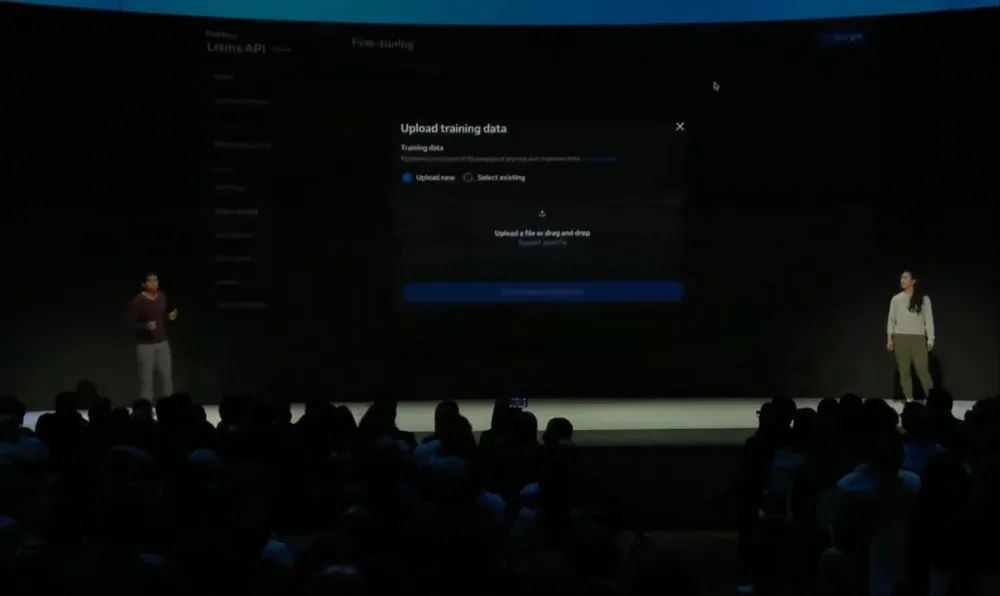
▲Llama API Model Fine-Tuning Interface
After data upload, developers can split a portion of the data to evaluate the performance of the custom model. On the Llama API platform, training progress can be viewed at any time, and the fine-tuned model can be downloaded for use in any scenario.
At the conference, Meta announced collaborations with Cerebras and Groq. These two companies can provide the computing power needed for Llama 4 API services, enabling faster inference speeds.
03.
Conclusion: Llama Explores New Commercial Paths
Since the launch of Llama 1 in 2023, the Llama series models have gone through four major versions, open-sourcing dozens of models with different parameter scales and architectures. However, models with hundreds of billions or even trillions of parameters mean massive investment - foreign media reported that in the past year, Meta has actively contacted Microsoft, Amazon, and other companies, hoping to establish cooperative relationships to share development costs.
This time, the launch of Llama API and Meta AI App marks Meta's active exploration of new commercial paths for the Llama series of open-source models. Although the current related services are free, in the future, Meta may use open-source models as an entry point to guide enterprises and users to use associated cloud services or monetize through the App. After telling stories of technological inclusivity and innovation, commercialization might be a challenge all open-source model manufacturers need to face together.
This article is from the WeChat public account "Zhidongxi" (ID: zhidxcom), author: Chen Junda, editor: Yun Peng, published by 36Kr with authorization.






