Author: Nancy, PANews
Recently, the decentralized AI data layer Pundi AI completed a transformation through token swap and brand upgrade, attracting market attention. At a time when the Web3 AI Agent heat is gradually fading, this veteran payment project has demonstrated its determination to break through and a firm belief in the long-term development of AI.
Recently, PANews interviewed Danny, a core contributor of Pundi AI, who reviewed his multiple entrepreneurial journeys from payment to AI, and shared the team's technical solutions, insights into the Southeast Asian Web3 industry, and profound thoughts on VC models and AI development. From Indonesia's QR code payment experiment to now cracking the global AI data bottleneck, Pundi AI's story is both a microcosm of technological iteration and a vivid portrayal of Web3 innovation exploration in Southeast Asia.
Starting Entrepreneurship in Indonesia, from QR Code Payment to AI Data Layer
From 2016 to 2017, Indonesia was one of the focal points of digital economy in Southeast Asia. At that time, internet development in the region was booming and momentum was strong. According to data from the Indonesian Internet Service Providers Association (APJII), during this period, the number of Indonesian internet users exceeded 130 million, accounting for over 50% of the total population (approximately 256 million).
The rapid popularization of mobile internet, accelerated infrastructure construction, and the rise of young consumer groups... These factors allowed the Pundi X team to keenly capture market opportunities and subsequently launched QR code payment business in Indonesia. This entrepreneurial experience was a powerful verification of the payment market potential in Indonesia, but also exposed a reality at the time: a large number of Indonesians still did not have bank accounts, making the convenience and inclusivity of digital currency payments particularly important, and this experience planted seeds for subsequent explorations.
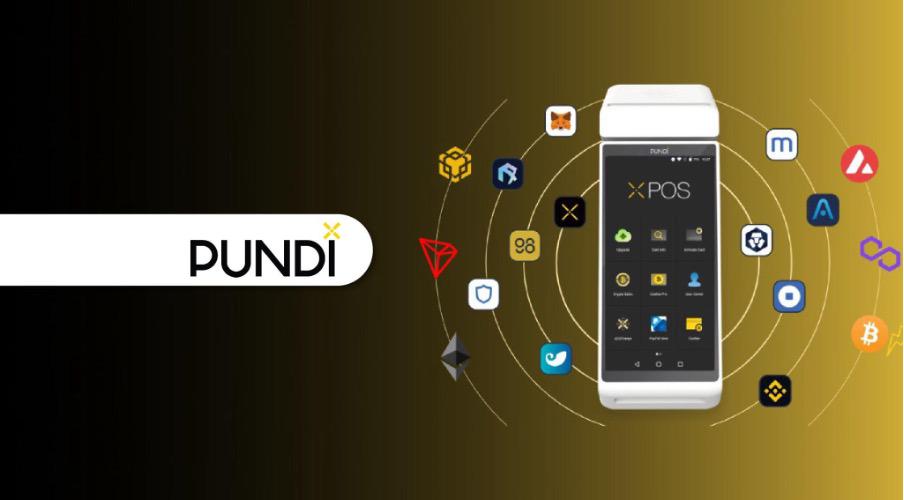
By 2017-2018, the blockchain wave swept in, and the Pundi X team decisively changed course, launching the Pundi X project and successfully completing an ICO of $50 million. It was a blockchain-driven device developer that could provide point-of-sale solutions XPOS, supporting merchants and consumers to conduct transactions on blockchain in physical stores. This payment function not only supported multiple blockchain networks such as Bitcoin, Ethereum, BNB Chain, and Polygon but was also adopted in over 30 countries/regions in Asia, Europe, and Latin America, achieving positive progress in market influence and product adoption.
After years of deep cultivation in crypto payment, Pundi X set its sights on the AI track in 2024. This year, AI technology continued to break through in multiple directions, with industrial applications flourishing. "AI is a 'great cause'," Danny candidly said. Thus, based on insights into AI data issues, Pundi X began building a decentralized AI data layer aimed at solving industry challenges such as data monopoly, uneven quality, and privacy protection.
[The translation continues in the same manner for the rest of the text, maintaining the specified translations for specific terms.]
"This is a time-consuming and thankless decision (excluding shell projects), meaning that previous brand accumulation needs to be completely rebuilt, and legal opinions and other documents need to be reapplied. At the same time, we need to face the uncertainty of whether exchanges and partners (such as data statistics websites, nodes, browsers, wallets, etc.) will support it, and potential delays," Danny frankly admitted in the interview.
Despite this, Danny believes this change is profound: at the brand level, it provides Pundi AI with an opportunity to renarrate, enabling it to update its brand image and bring a brand new market positioning; technically, the previous token contract could not be upgraded, so a completely new token contract is needed. Additionally, Pundi AI has made precision modifications to ensure the new token can be differentiated from Pundi X in price, avoiding market confusion. Danny also revealed that the newly launched dual-token model references Aerodrome's ve(3,3) mechanism: $PUNDIAI for trading, payment, and governance; $vePUNDIAI represents long-term holding and voting rights.
Notably, unlike many crypto projects that rely on external financing, Pundi AI has not publicly conducted any financing. According to Danny, since launching the DeFi project Function X in 2019, the Pundi AI team has never accepted external financing, not even participating in KOL rounds, with all resources fully allocated to the community. Danny explained that there are several considerations behind this choice: first, Pundi AI does not want to be driven by capital, constantly receiving investor inquiries about when to issue tokens or list on exchanges. The team wants to focus on what they truly want to do, without being influenced by external commercial pressures; secondly, there might be a veteran's sentiment and idealism driving them. Pundi AI believes that if the goal is merely to cash out and go public, the path will become narrower; whereas if the original intention is to create value for the industry and users, supporters will naturally converge.
"In our view, financing essentially uses past trust and future selling pressure to build current products. As for VC tokens in the current market environment, our attitude is complex and cautious. VC as a model is neither right nor wrong; it indeed accelerates market and technological evolution. However, the VC model nowadays seems to have changed, becoming synonymous with 'to exchange', a gathering for all parties, though there are VCs who genuinely support project construction," Danny said directly in the interview.
Although AI is penetrating various fields at an unprecedented speed, challenges still exist, especially in the crypto space, where the AI Agent track has noticeably cooled recently. Danny believes this is mainly because AI Agents in the past few months have not truly improved productivity, but rather look more like memes dressed in technological clothing. Pundi AI chooses to rely on AI and on-chain transaction technological advantages to create AI Agents with actual application scenarios that solve real pain points.
"We firmly believe that the Web3+AI field will usher in the second or even third wave of development - as AI models become increasingly powerful and high-quality data continues to accumulate, more and more excellent AI Agents will definitely emerge. In the short term, applications closely related to trading are most worth anticipating, such as AI Agents that improve trading efficiency, increase returns, or enhance security," Danny stated.
Southeast Asian Web3 Landscape Shows Tiered Differentiation, Malaysia Has More Advantages
In recent years, the Southeast Asian Web3 ecosystem has shown vigorous development. Besides Pundi AI, previously popular projects like Axie Infinity, Coin98, Virtuals Protocol, and Yield Guild Games have all originated from this region, successfully drawing global attention to Southeast Asia's blockchain potential.
Danny points out that the current Southeast Asian Web3 industry can be divided into several tiers: in the first tier, Vietnam has emerged with the rise of local projects, while Singapore has become a regional hub by attracting numerous executives and teams to relocate; the 1.5 tier is represented by Malaysia, with rumors of multiple exchanges establishing branches in Kuala Lumpur; the second tier mainly consists of Indonesia, the Philippines, and Thailand.
Among these Southeast Asian countries, Danny highlights the unique advantages of Malaysian Chinese teams: in terms of character, Malaysians demonstrate strong resilience and adventurous spirit; they learn quickly and can rapidly grasp cutting-edge technologies; they have language advantages, with fluent Chinese and English enabling easy connection between the Chinese-speaking world and international resources; their technical accumulation is also noteworthy, with a large number of engineers from China and Europe/America flooding in between 2020 and 2021, injecting experience into local teams; additionally, Malaysia has lower development and operational costs, and a time zone advantage that facilitates collaboration.