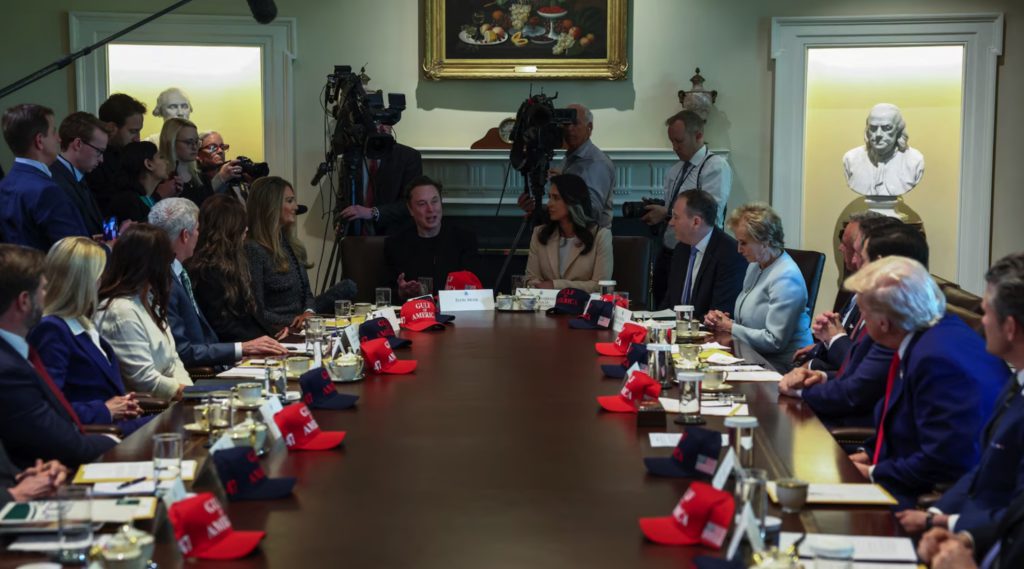
Led by global billionaire Musk, the Department of Government Efficiency (DOGE) has been in the spotlight since its establishment, aiming to reduce federal expenditures. However, during a recent White House press conference, Musk personally admitted that DOGE's effectiveness in driving budget cuts falls far short of its initial goals.
Musk also stated that the department, originally planned to conclude on July 4, 2026, may now continue operating until the end of 2028, effectively doubling its term.
DOGE's Efficiency Targets and Unfinished Mission
Regarding specific reduction results, Musk stated that DOGE has currently facilitated approximately $160 billion in federal spending savings. However, he candidly acknowledged that this figure is far from the ambitious $2 trillion target set in 2024. Despite this, he still anticipates that DOGE may ultimately achieve $1 trillion in total savings.
Musk pointed out that the main resistance to driving spending cuts comes from within the government, describing it as dependent on how much "pain" the Cabinet and Congress are willing to bear. He emphasized that while challenging, it is achievable, but requires handling numerous complaints and objections.
However, analyses from external independent institutions have questioned the savings amount claimed by DOGE. For example, analyses from the Cato Institute and CBS News suggest that DOGE's actual benefits might be significantly lower than official data, estimated around $63 billion, potentially including administrative errors and exaggerations.
Moreover, DOGE's own operations might have generated substantial additional costs. According to a CBS News analysis, considering factors like paid leave, rehiring processes, and potential productivity losses, related costs could reach as high as $135 billion.
Multiple Obstacles and Future Outlook for Reform
DOGE has been controversial since its establishment, facing resistance and skepticism from multiple fronts. Critics like Chatham House have argued that DOGE's reduction methods might be overly ideological rather than evidence-based, particularly in cutting research funding, which could potentially damage the United States' overall resilience and international competitiveness.
Simultaneously, DOGE has encountered multiple legal challenges, with numerous third-party entities questioning the constitutionality of its establishment. Public skepticism about DOGE's actual effectiveness has also been prevalent, especially since its reform actions have not addressed major social welfare programs like Medicare, Medicaid, and Social Security that constitute a significant portion of federal expenditures.
Overall, Musk's personal confirmation that DOGE has not met its expected federal spending reduction targets, while also revealing the potential doubling of the department's term, highlights the complexity and immense challenges of government efficiency reform. However, DOGE's development also reminds us that government reform is not a simple task accomplished overnight. It is more than just a numbers game, deeply involving systemic challenges, complex interest negotiations, and a profound understanding and redefinition of the nature of public services.