
The Fall of Protocol-Owned Frontends
This report examines the shift from protocol-specific frontends to independent platforms that have become the user-facing product layer.
Are protocols losing control of the end user?
Key Takeaways
- Users prefer aggregation over isolation: Instead of visiting separate sites, users increasingly opt for aggregator interfaces (DEX aggregators, trading terminals/bots) that provide a single point of access to many protocols. Convenience and breadth of features
Market Landscape Overview
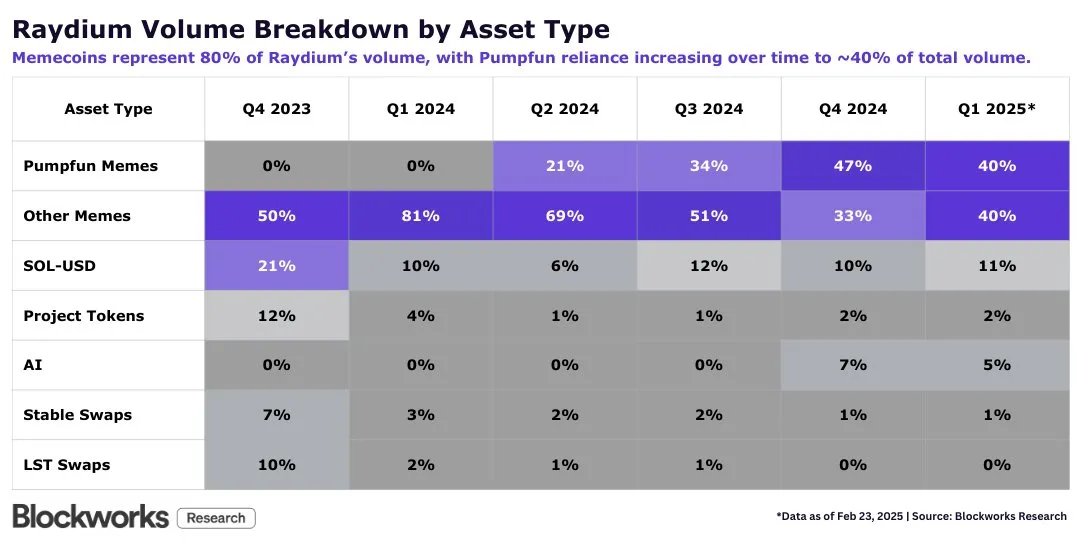
Memecoins now drive the bulk of DeFi activity on Solana, eclipsing more traditional DeFi trading. During the peak of the craze, Raydium derived about 80% of its volumes from memecoin trades according to @blockworksres (with 40% from pumpfun alone). On
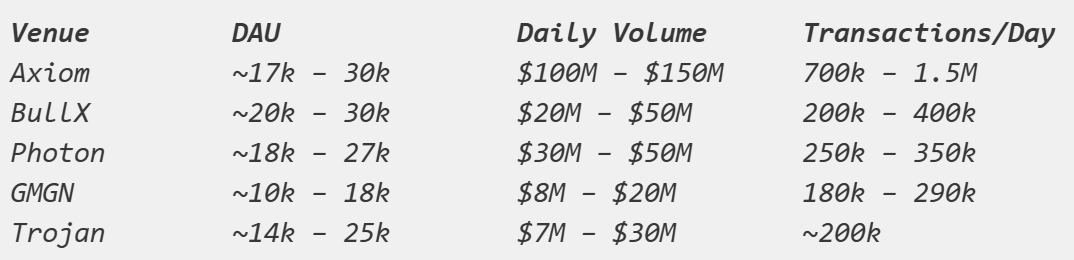
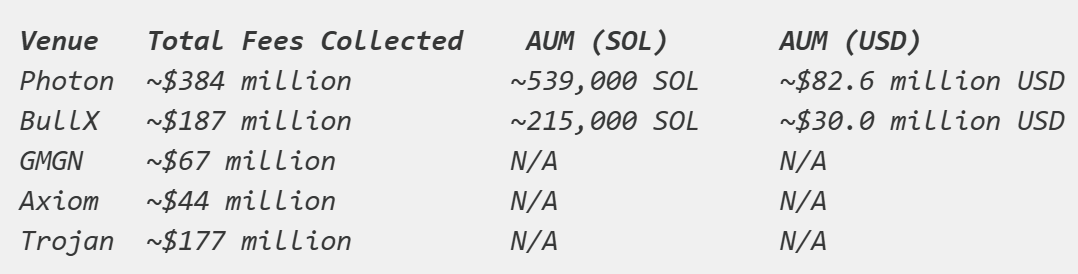

Native Protocol Front-Ends Are Increasingly Marginalized
One clear outcome of these trends is that the native web front-ends of liquidity protocols (like Raydium’s own site) have been marginalized.
Prior to PumpSwap, nearly half of Raydium’s volume and fees came from Pumpfun’s
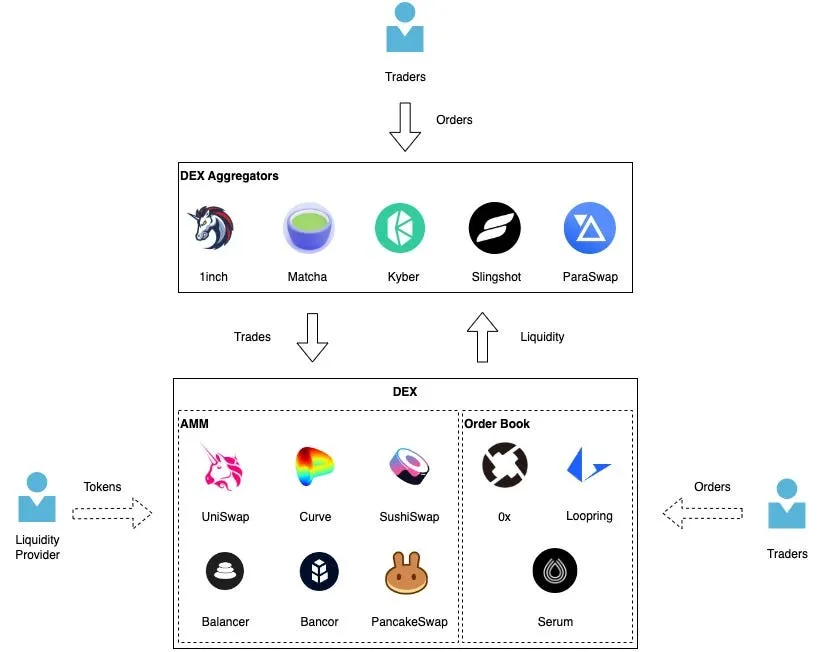
Legacy DEX Value Chain (Pre-2023)
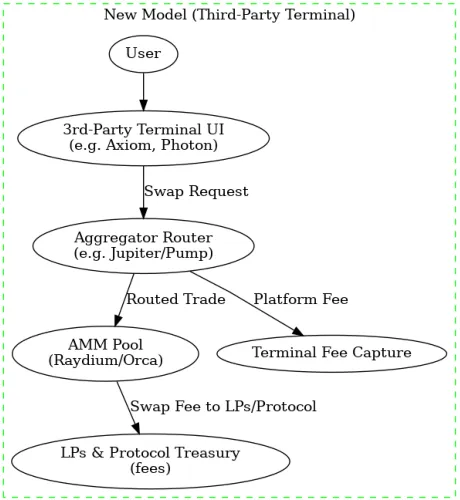
DEXes used to control the entire user experience and user traffic. Users went straight to the protocol website frontend to swap tokens, and those trades were executed directly against that protocol’s liquidity pools. A routing/aggregation layer
Terminal Monetization Models: Aligned vs. Extractive
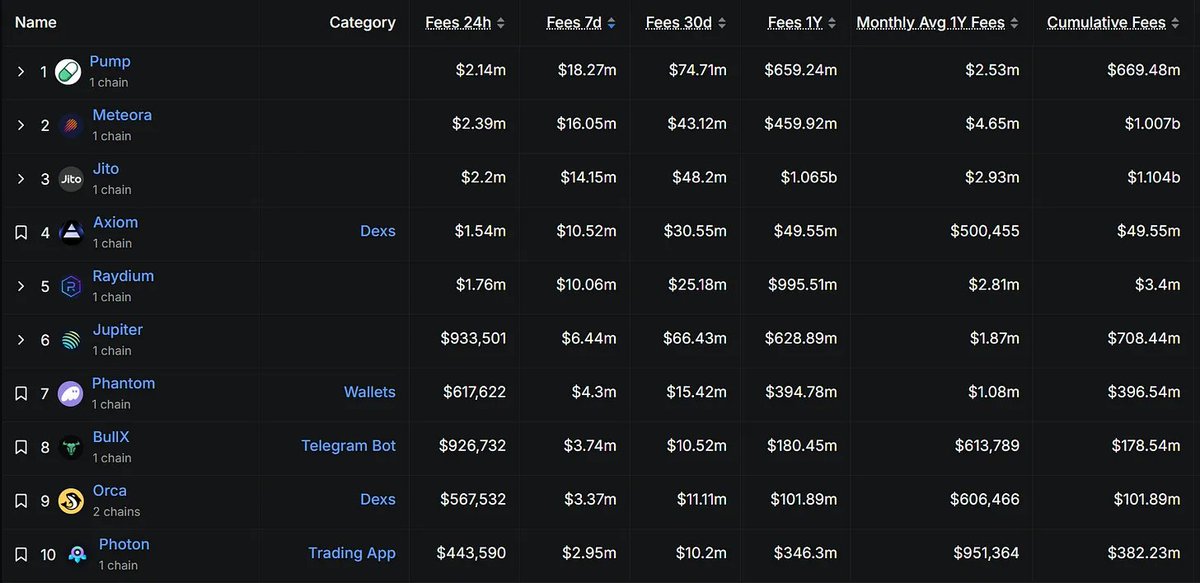
Most terminals can be argued as extractive since they introduce an added fee on top of the underlying infrastructure that is not shared within the ecosystem or improves on-chain liquidity for the broader good.
Terminals
Protocol Strategic Responses
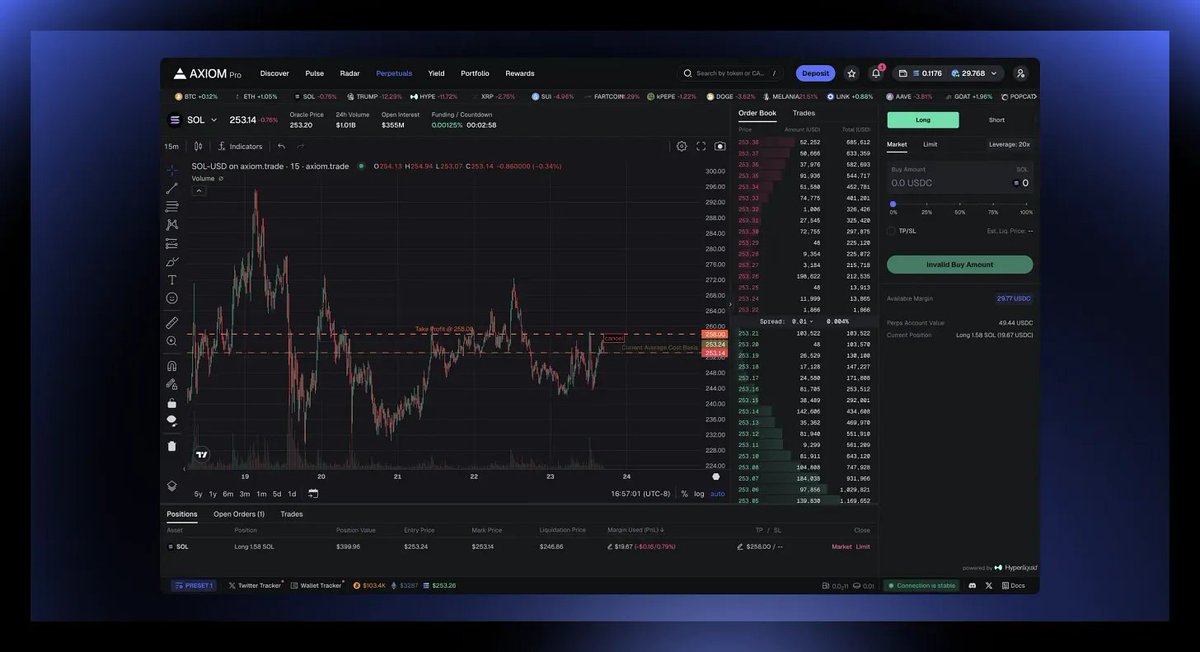
The implication is clear. To stay relevant, DEX protocols must either integrate into these aggregators, offer competitive frontend experiences, or find ways to align with the terminals. Jupiter is one of them.
Jupiter launched Ape Pro, closely


Risks, Dependencies & Long-Term Implications
Fragmentation of User Interfaces
The launch of various trading terminals has fragmented the user experience with each terminal offering its own unique UX with different dashboards, layouts, execution engines etc. This fragmentation
Conclusion
Highlighted by the success of frontend terminals, it has become more important than ever for protocols to not just focus on the tech, but also on UI/UX. Vertically integrating the token lifecycle from launch to LP (like Raydium’s launch of Launchlab), matters far less
peeps who might be keen on such boring content
@alpha_pls
@0xkyle__
@game_for_one
@Stoiiic
@redphonecrypto
@mgnr_io
@arndxt_xo
@rektdiomedes
@DefiIgnas
@yh_0x
@2lambro
@jack_anorak
@kelxyz_
@crypto_linn
@DefiIgnas
@matrixthesun
Substack version is also out:
definapkin.substack.com/p/the-...

From Twitter
Disclaimer: The content above is only the author's opinion which does not represent any position of Followin, and is not intended as, and shall not be understood or construed as, investment advice from Followin.
Like
Add to Favorites
Comments
Share
Relevant content