



Ethereum co-founder Vitalik Buterin urged the blockchain community to reconsider network design approaches and pursue a more concise and efficient structure.
In a blog post published on May 3rd, Buterin argued that Ethereum should adopt a simple protocol model similar to Bitcoin to improve efficiency, scalability, and security.
Buterin Emphasizes Bitcoin's Simplicity
Buterin described Ethereum's current system as overly complex, warning that technical depth increases costs, isolates research efforts, and raises the possibility of serious bugs.
The Ethereum co-founder also emphasized that the current design concentrates too much control among a few technically advanced contributors. He argued that this approach undermines the network's decentralization spirit.
To address these issues, Buterin proposes simplifying the protocol across all network layers over the next five years. Therefore, he suggests drawing inspiration from Bitcoin, the cryptocurrency with the largest market capitalization.
"Even a smart high school student can fully understand the Bitcoin protocol. Programmers can write a client as a hobby project," Buterin wrote.
According to Buterin, simplifying the protocol will make Ethereum more robust, reduce infrastructure costs, and lower the entry barrier for developers.
He also concluded that simplicity should be treated as a core value, just like decentralization. He believes Ethereum should prioritize design choices that promote clarity, robustness, and long-term sustainability.
How Will Ethereum Reduce Complexity?
To achieve this vision, Buterin highlighted three key areas where Ethereum can reduce complexity.
First, he recommended changes to the consensus layer, specifically simplifying the finality system and reducing the number of validators. These steps will lower operational costs and accelerate network consensus.
He noted that the consensus layer is loosely coupled with Ethereum's execution system. This separation provides developers with flexibility to implement improvements without compromising core functions.
"The good thing about the consensus layer is that it's relatively separate from EVM execution, which provides a relatively wide scope to continue these types of improvements," Buterin said.
The second focus is on revamping the Ethereum Virtual Machine (EVM).
To this end, Buterin recommends introducing RISC-V, a simpler and more efficient computing architecture proposed as an alternative execution option. He also envisions a future where developers can write contracts using RISC-V alongside EVM.
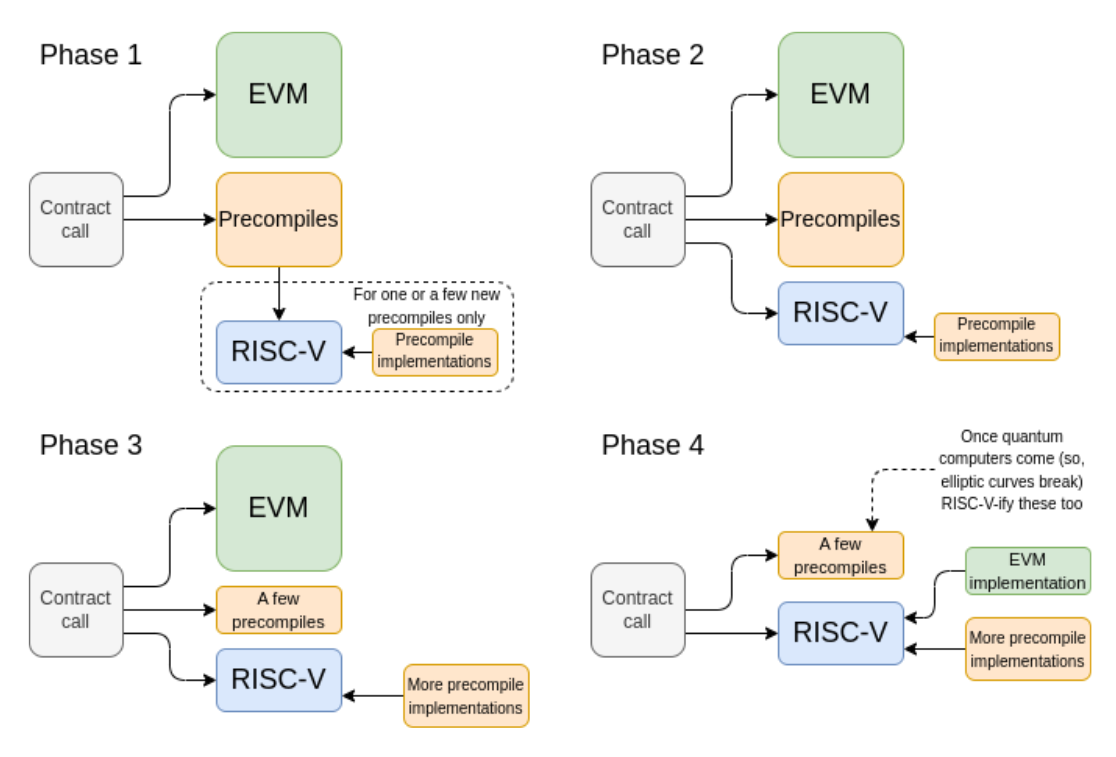
Additionally, he proposed replacing pre-compilations with standard on-chain implementations. He also suggested building a RISC-V-based EVM interpreter to support better maintenance and future upgrades.
Lastly, he urged standardization across protocol components. Instead of using different tools for similar functions, Ethereum could adopt a single erasure code, serialization format, and Merkle tree. This integrated approach will reduce redundancy and improve network clarity.
"Using different protocols to do the same thing in different places generally provides almost or no advantage, but this pattern appears because different parts of the protocol roadmap do not communicate with each other," Buterin pointed out.





