



No kidding, the global unemployment wave caused by AI is really coming!
In the past, such calls were only predicted sporadically by some people, but now, the mainstream media has fully recognized the fact: artificial intelligence will completely change the global labor market.
Recently, media such as Forbes and TechCrunch have issued warnings.
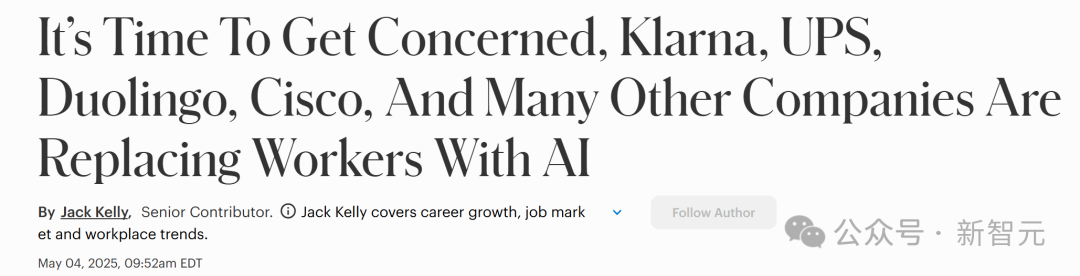
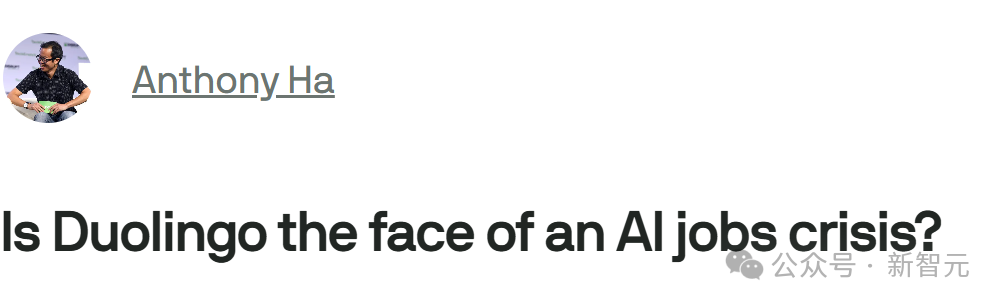
Now, due to the impact of AI, a large number of people have lost their jobs.
For example, Obama and his team are now discussing the serious consequences of this incident.
When human jobs are taken over by AI, where should we go?
"At first, no one cared about this disaster. It was just a wildfire, a drought, the extinction of a species, the disappearance of a city, until this disaster became closely related to everyone."
Duolingo, there will be more
Everyone knows about Duolingo.
In fact, this is not new.
A TechCrunch reporter once interviewed a former Duolingo employee who said that as early as the end of 2023, the company had laid off 10% of its employees, and there was another round of layoffs in October 2024.
In these two major layoffs, the first were translators, and then writers, both were replaced by AI.
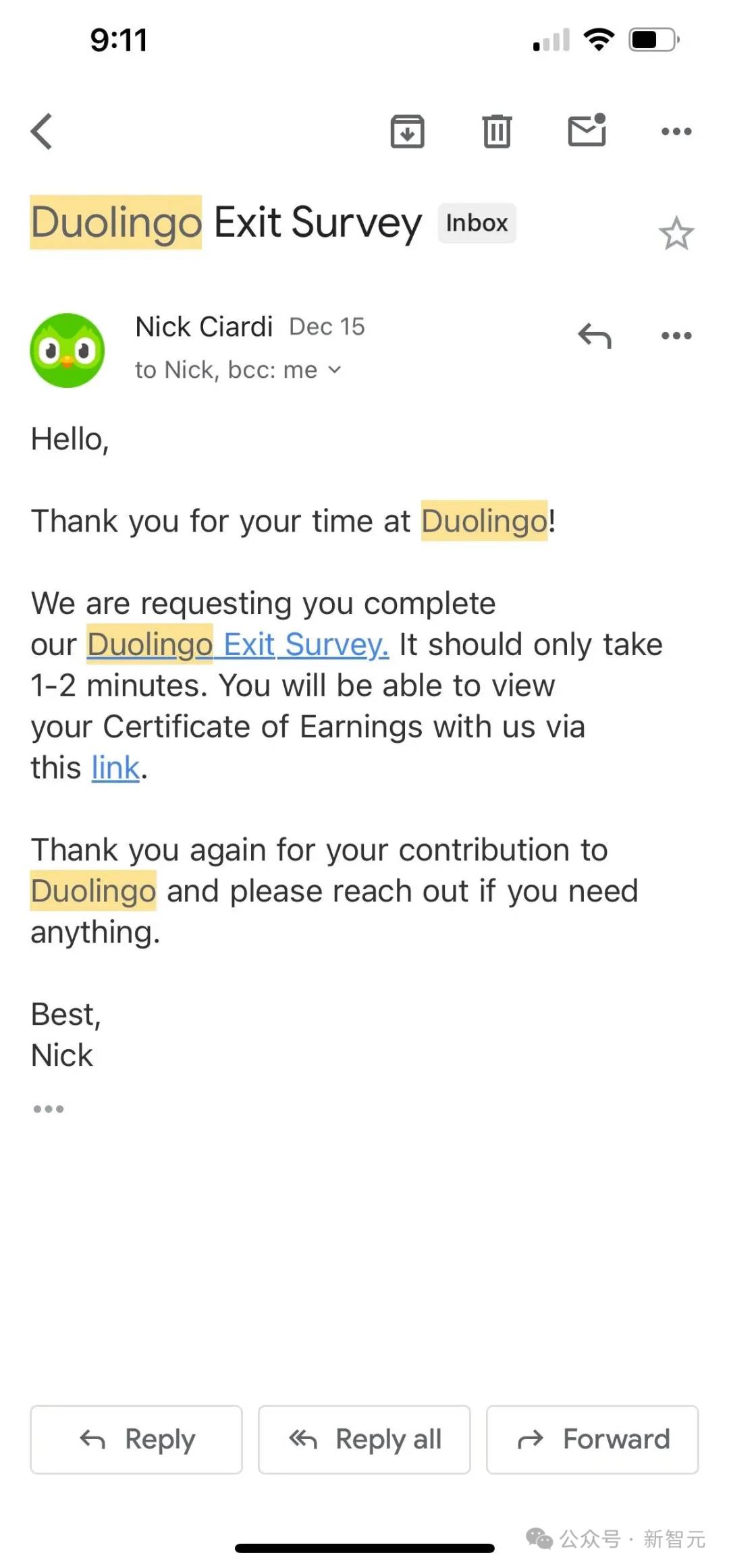
At the end of 2023, Duolingo laid off employees on the grounds that a large amount of content production and translation had been simplified using models such as GPT-4.
Below is a layoff email sent by Duolingo.
A laid-off employee revealed on Reddit that the reason given by the company was that AI can now replace creators, translators, and almost all similar positions.
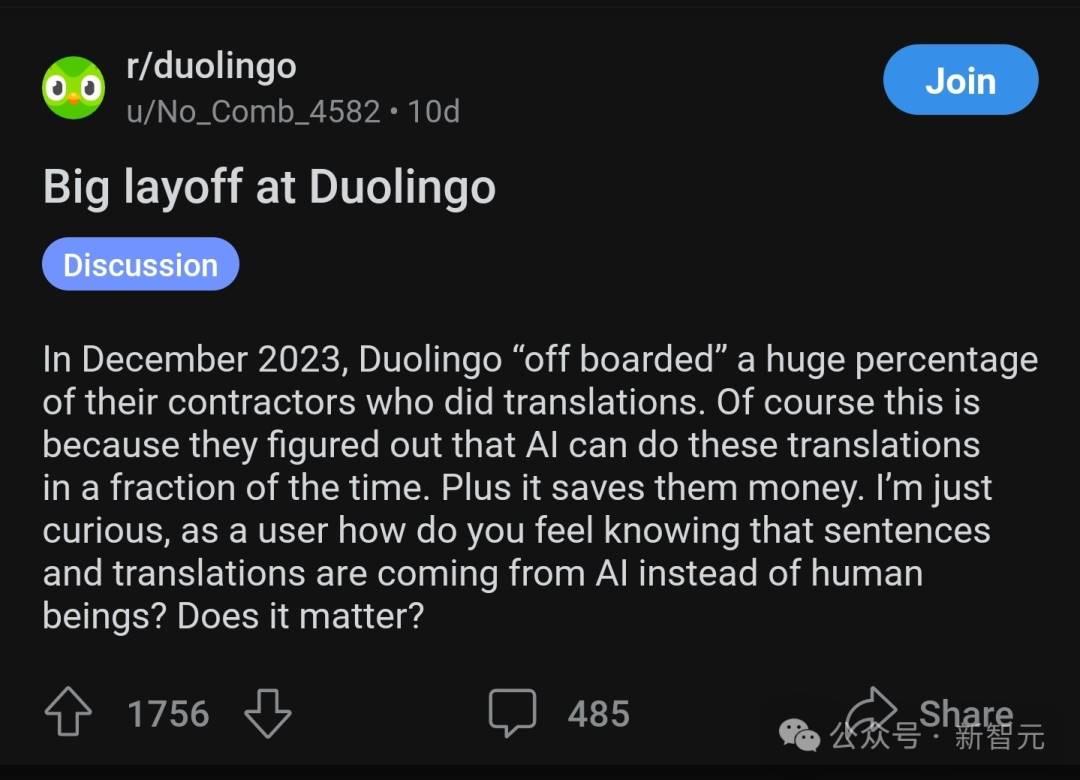

It is said that only a few people are retained in each team to continue to work as "content editors". Their responsibilities are to check the spam content generated by AI and then click to publish.
In addition, Duolingo also used GPT-4 to support the premium subscription version of Duolingo Max, using AI chatbots to help users practice conversations. They also have a proprietary AI model, Birdbrain, that provides users with personalized courses.
However, both the laid-off employees and Duolingo are actually very dissatisfied with this.
For laid-off employees, being replaced by AI is a heavy blow, and the instability of employment also causes a mental shock. Due to incomplete resumes, they often find it difficult to find a stable job.
Moreover, most of Duolingo's employees are contract workers. With this mechanism, the company can save a lot of costs and does not need to bear benefits such as insurance, paid vacation, and sick leave.
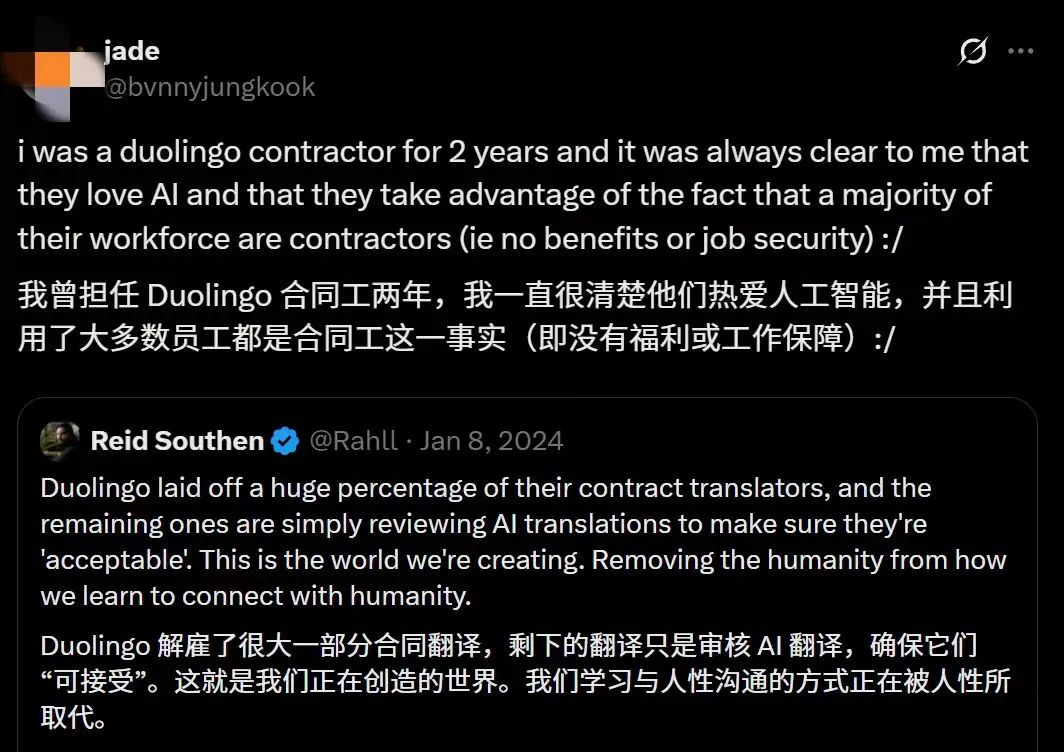
At the same time, Duolingo users are concerned that if AI translation is used, the value of experts who have a deeper understanding of language, idioms and cultural nuances will be deprived.
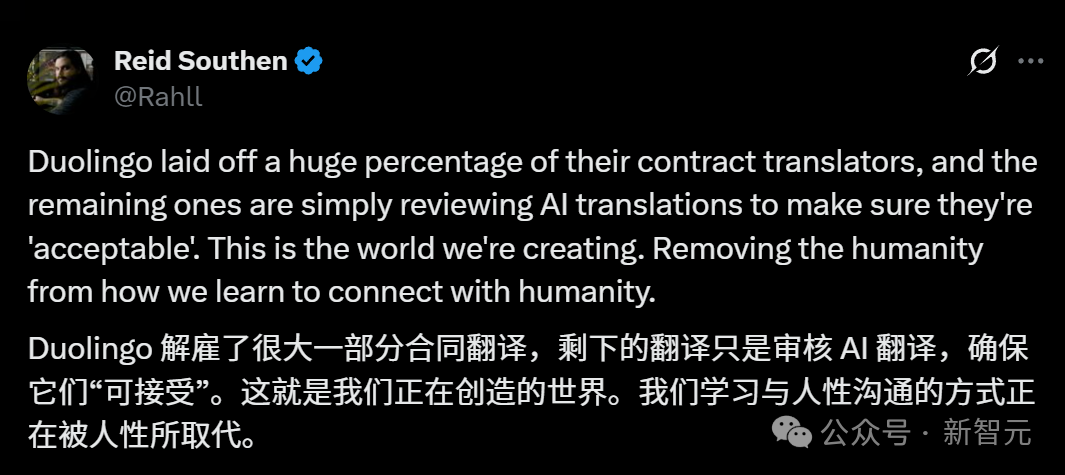
As early as in the 2023 "Future of Jobs Report", the World Economic Forum predicted that AI will change 23% of jobs in the next five years.
Now, two years later, this prediction has become increasingly evident.
The crisis, while seemingly simple, is essentially “a series of management decisions made by senior executives to cut labor costs and tighten controls within the company.”
But the consequence is a brain drain in the creative industries, falling incomes for freelance artists, writers and illustrators, and a tendency for major companies to hire fewer human employees.
In the view of foreign media reporter Brian Merchant, the so-called AI employment crisis is not a sudden "Skynet is coming" type of disaster, but a situation like DOGE, which lays off thousands of federal employees under the banner of AI priority strategy.
American college students are unemployed upon graduation
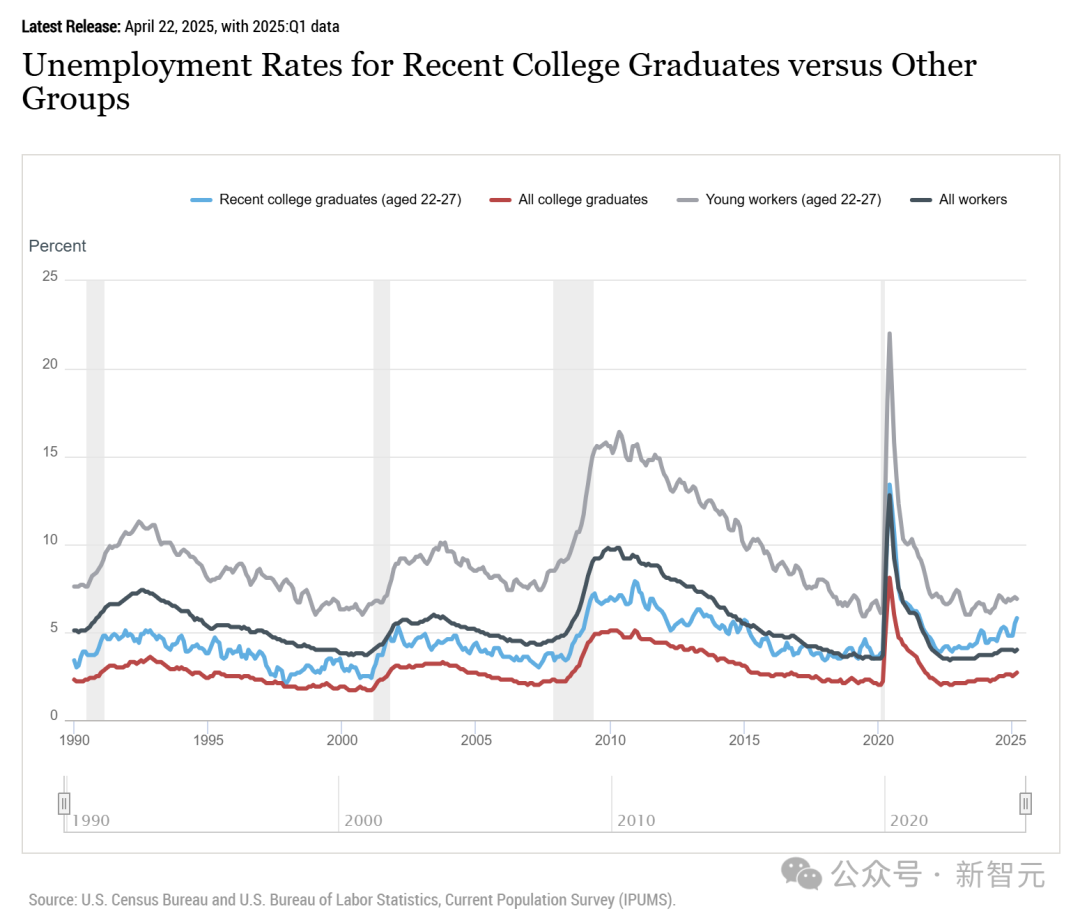
Not only that, The Atlantic also discovered that the unemployment rate among American college graduates is abnormally high recently!
One possible explanation for this is that many companies are using AI to replace entry-level white-collar jobs, or that the funds that would have been used to recruit new employees are now invested in AI tools.

Just during the May Day holiday that just passed, this foreign media discovered that some strange and worrying changes are taking place in the job market for college graduates in the United States.
The Federal Reserve Bank of New York said that the employment situation of recent college graduates has deteriorated significantly in the past few months, and the unemployment rate has reached 5.8%!
Even MBA students who have just graduated from elite programs often have difficulty finding jobs.
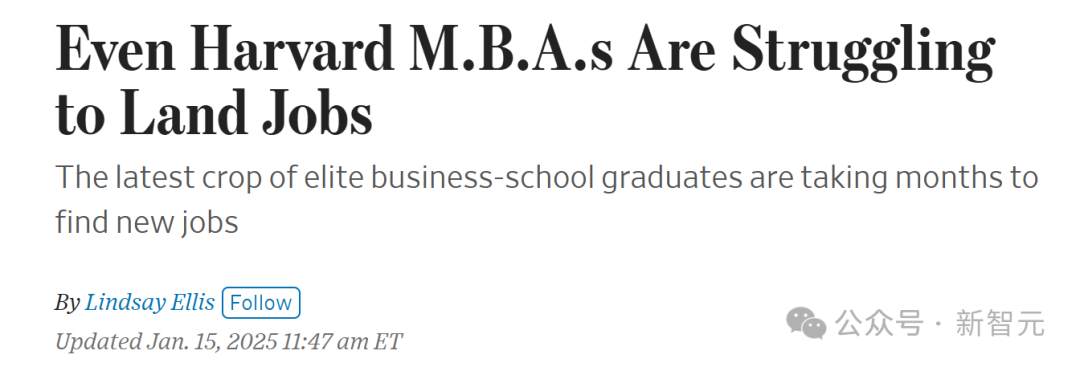
At the same time, the number of law school applications has surged, an unsettling reminder that young people used further education to avoid the pressure of finding employment during the financial crisis.
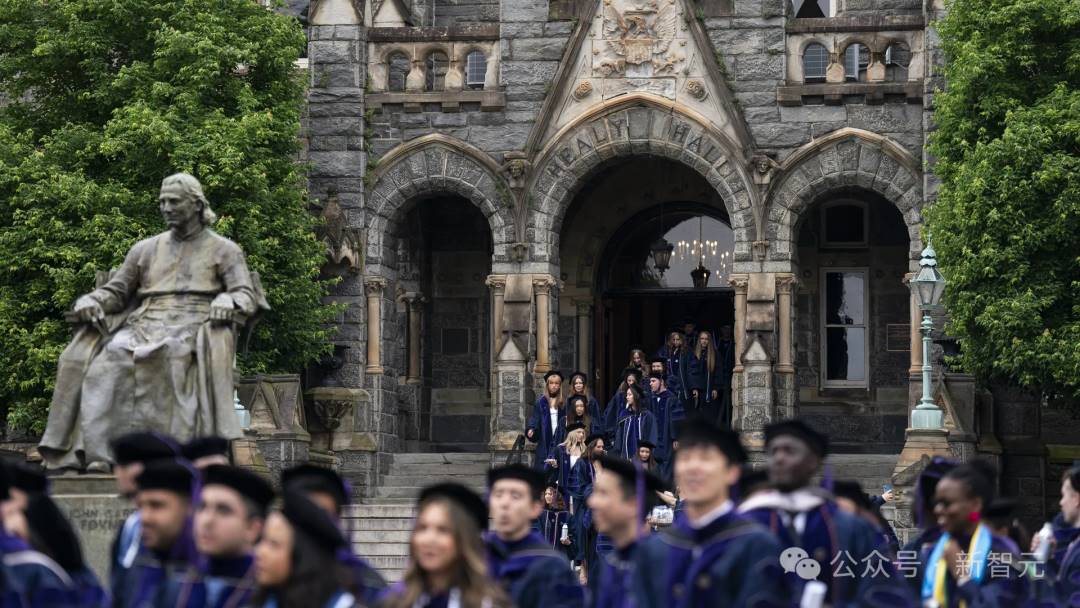
The Atlantic writer Derek Thompson speculates that there may be three reasons for this phenomenon.
The first is that the labor market for young people has not yet recovered from the impact of the epidemic. It can even be said that this recession has lasted for a long time.
Harvard University economist David Deming once said that it is more difficult for young people to find jobs than before, and this situation has lasted for at least a decade.
Not only did the Great Recession lead to mass layoffs, many employers also imposed hiring freezes. Just when the tech boom seemed to be on the horizon, inflation returned, prompting the Federal Reserve to raise interest rates, which directly suppressed economic demand.
White-collar jobs, especially in tech, have been hit particularly hard. Job openings in software development and IT operations have fallen sharply.
The second theory points to a deeper, more structural shift: College no longer confers the workforce advantages it did 15 years ago.
According to research from the Federal Reserve Bank of San Francisco, 2010 marked a turning point, after which the lifetime earnings gap between college graduates and high school graduates stopped widening.
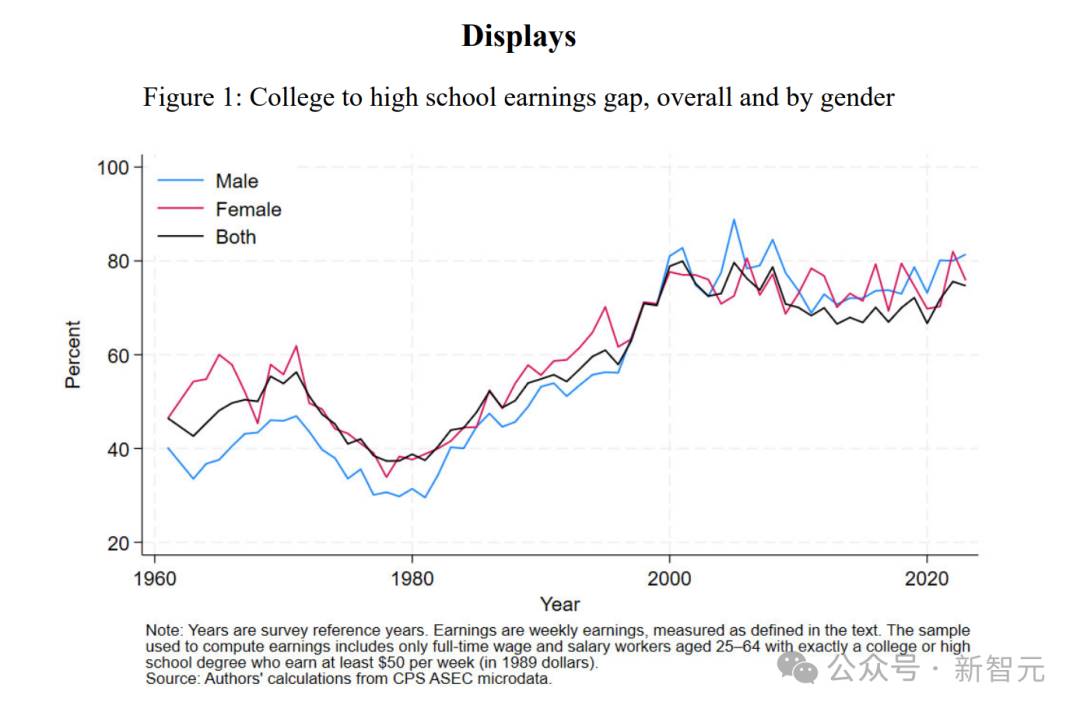
The third theory is the scariest of all — that a weak labor market for college graduates could be an early sign that AI is beginning to transform the economy.
If you consider one economic indicator - the graduating class gap, or the difference between the unemployment rate for young college graduates and the unemployment rate for the workforce as a whole - things are very different now.
Forty years ago, the unemployment rate among young college graduates was not high because they were relatively cheap labor.
But just last month, the employment gap for college graduates hit a record low.
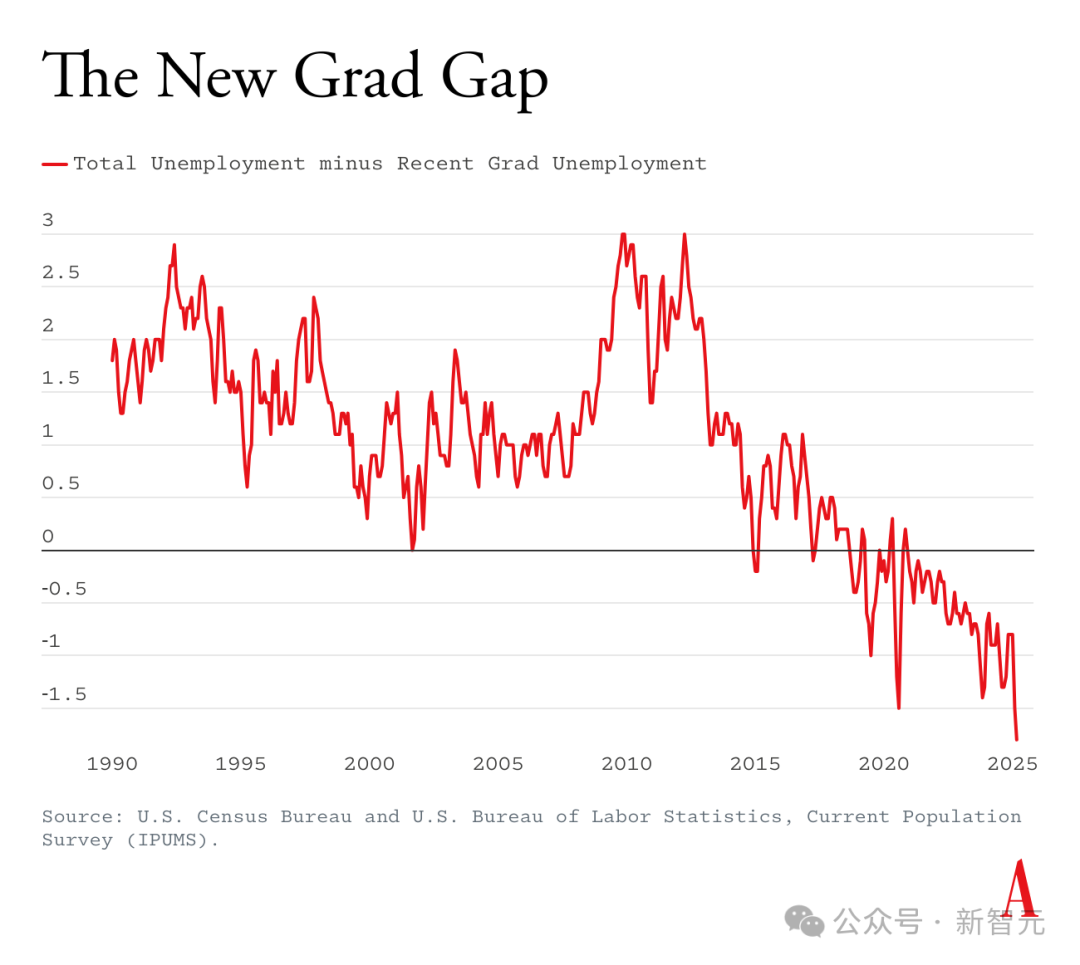
It can be said that the economic environment that American college graduates are entering today is worse than any month in 40 years.
Law firms and consulting companies are beginning to realize that five 22-year-olds using ChatGPT can do the work of 20 fresh graduates.
Moreover, even if employers do not directly replace human employees with AI, high spending on AI infrastructure will squeeze the share of time companies have left for new employees.
In short, the labor market for college graduates is showing yellow lights.
It’s AI’s turn to work
In short, more and more companies are now "quietly" asking you to leave your workstation.
This time, you are really going to be replaced by AI. This is not speculation, but a fact that is happening.
Thank you for your hard work. Now it’s AI’s turn to work.
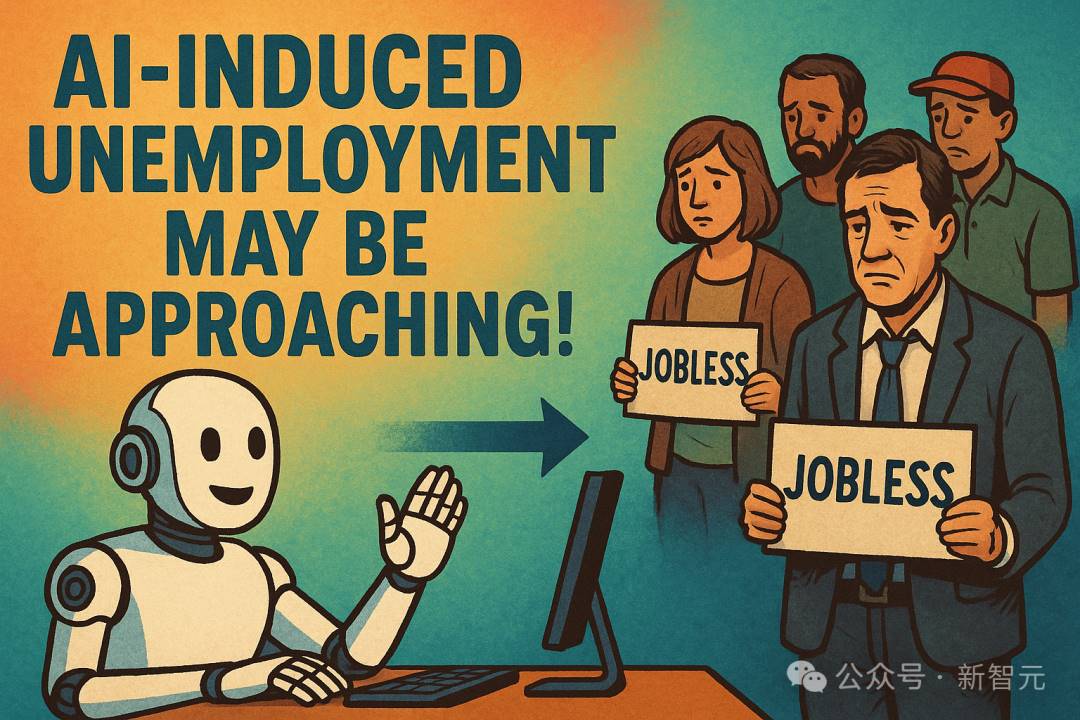
From customer service to translators, from pricing experts to tax advisors, more and more companies are looking to hire an AI that will never complain.
Don’t believe it? Take a look at the current status of the following five companies.
From 2024 to 2025, at least five well-known companies in the world - Klarna, UPS, Duolingo, Intuit, and Cisco - will lay off tens of thousands of employees directly or indirectly because of "AI is more efficient."
The reason is "We are not using AI to replace humans, we are just letting humans use AI to improve efficiency."
It sounds reasonable until you realize that human jobs are gone!

Klarna
Klarna, a leading buy now, pay later fintech company, announced that it will lay off more than 1,000 employees in 2024, accounting for approximately 10% of its global workforce.
At the time, the news immediately made the headlines of Forbes.
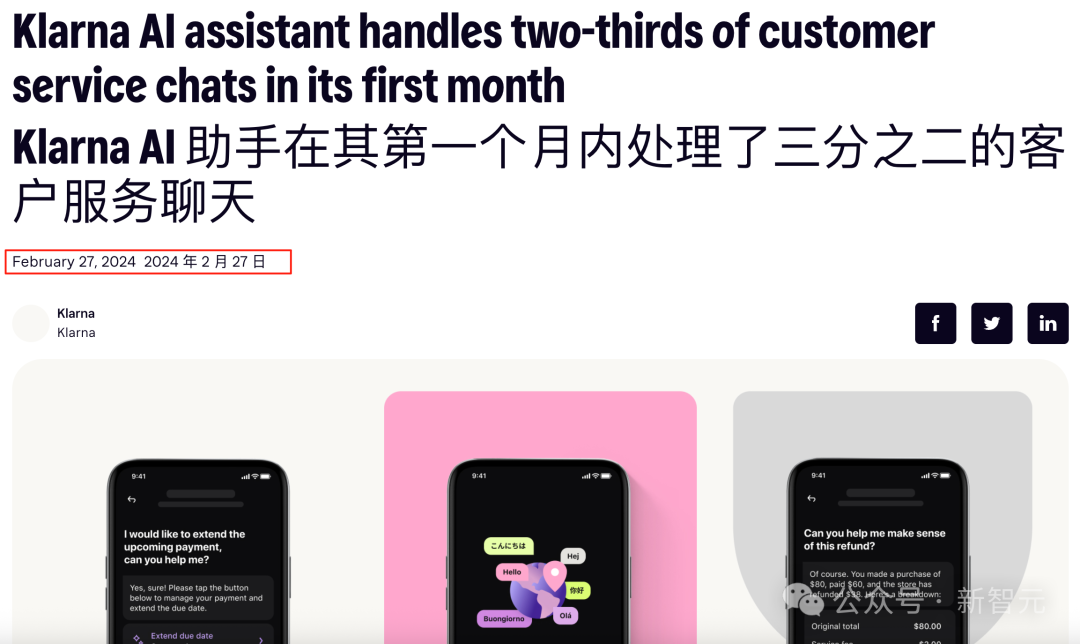
Companies are investing heavily in AI to handle customer service inquiries, process transactions, and optimize their operations.
Klarna built an AI assistant that does the work of 700 full-time employees.
Klarna’s CEO has openly discussed how AI-powered chatbots and automated systems are performing tasks once managed by human agents, such as answering customer queries and processing refunds.
By integrating generative AI, Klarna aims to reduce operating costs while scaling its service, with reports suggesting AI now handles a significant portion of its customer interactions.
ups
In early 2025, United Parcel Service (UPS) announced plans to lay off 20,000 employees, one of the largest layoffs in UPS’s 116-year history.
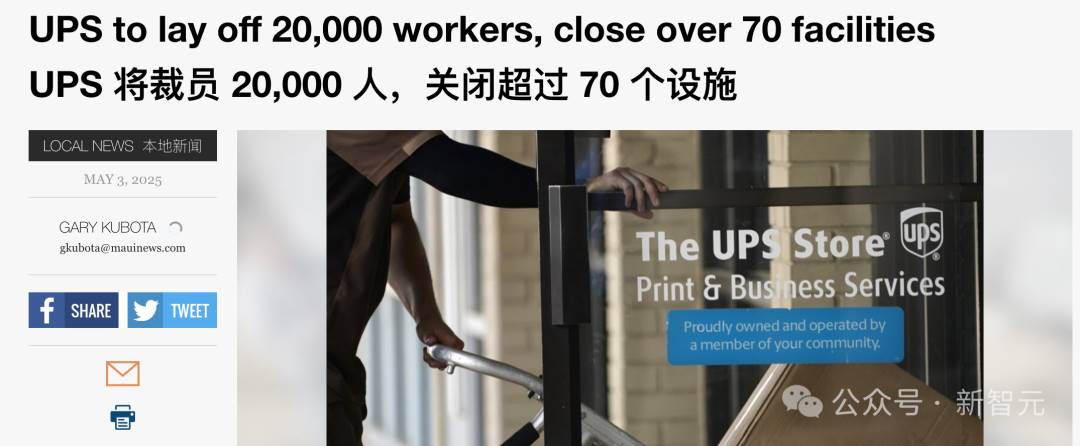
UPS CEO Carol Tomé confessed that the reason behind the layoffs was actually because of the introduction of AI and machine learning technologies.
Work like writing sales proposals that used to require human pricing experts is now done by AI, which is more efficient and less costly.
Although UPS still claims on the surface that "AI has not replaced humans", everyone can see that the company has begun to use AI to optimize logistics routes and handle customer communications, so naturally it no longer needs so many employees.
To put it bluntly, this wave of operations means that companies want to save money, and AI has become the most convenient tool for cutting costs.
Duolingo
Duolingo announced this week that it plans to replace contract workers with AI and become an “AI-first company,” a move that appears to suggest the AI-induced jobs crisis “has already arrived.”
The news was announced by Duolingo's chief engineering officer on LinkedIn.
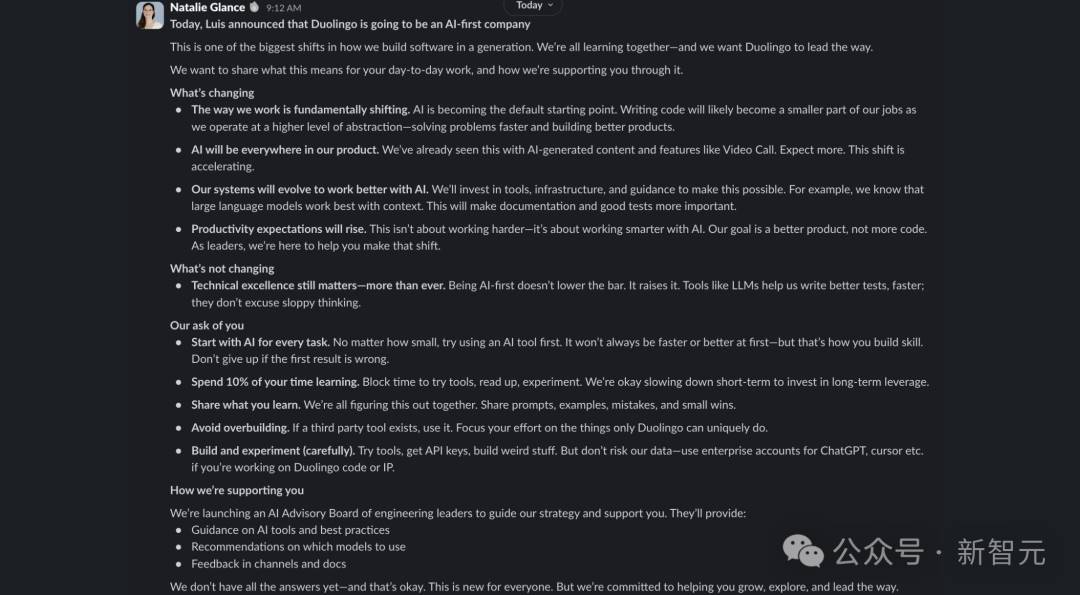
When the CEO sent an internal letter to LinkedIn, he painted a "BTC": in the future, the company's content production, employee performance evaluation, and even recruitment decisions will all rely on AI.
So Duolingo took the initiative and cut 10% of its contract translators, saying that AI was already capable of doing their jobs, such as automatically translating course materials in more than 100 languages.
Although the company particularly emphasized: "No permanent employees were fired!" - but in fact, the direction is already very clear: AI can also do the job of translation.
Intuit
Financial software company Intuit is a multinational computer software company headquartered in California, USA, which mainly produces software related to finance and tax refund.
About 1,800 employees will be laid off in 2024, but the money saved will not be used for dividends, but will all be invested in AI.
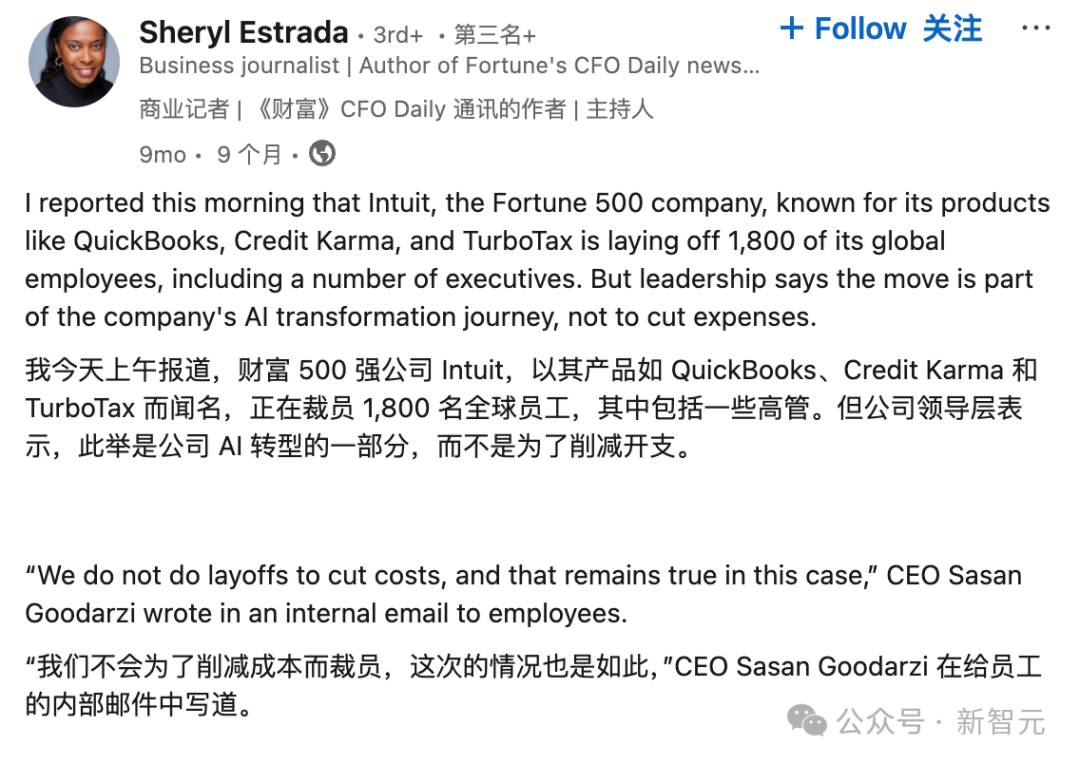
Artificial intelligence is a key component of its future strategy, especially in automating customer service, data analysis and tax preparation processes.
The company's top management was very frank: the focus of the future is artificial intelligence. In the past, these tasks had to be done by a large number of employees, but now AI can do it with just one click.
Cisco
Technology giant Cisco has also joined the "AI first" ranks - it previously announced a 7% layoff of its employees, or nearly 5,600 people.
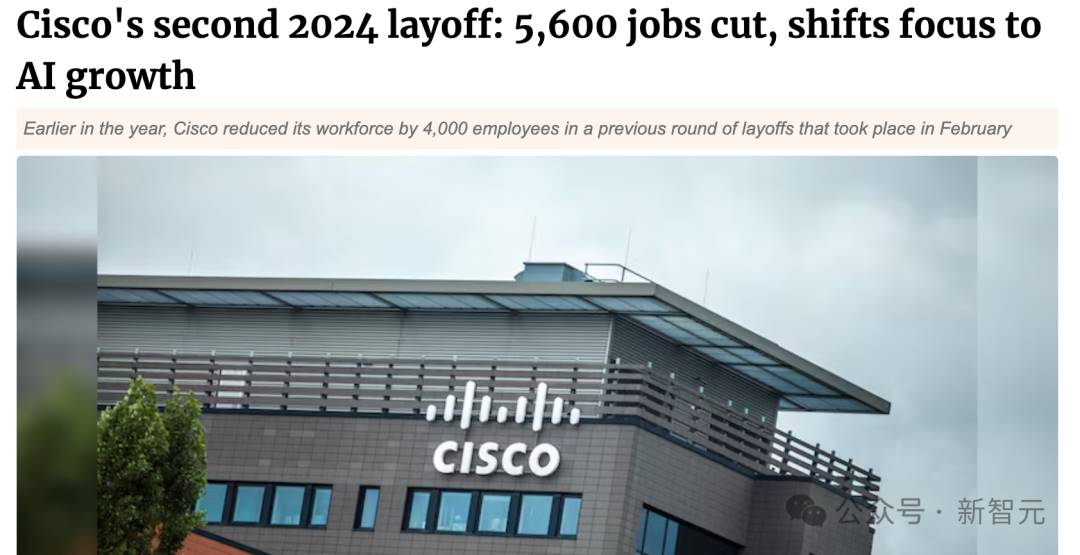
The company has been incorporating AI into its network solutions, such as predictive analytics for network management and automated customer support systems.
On the surface, this is a strategic adjustment by the company, but in fact, many jobs that used to require human intervention can now be done by AI. Cisco's move is just a microcosm of the technology industry: using AI to replace human labor, improve efficiency and reduce costs has become an industry consensus.
Will businesses that replace employees with AI succeed or fail?
Back in January 2024, Erik Brynjolfsson, a professor at Stanford University, said that smart companies will not use artificial intelligence to replace workers or jobs.
He said AI and humans should be used together because they each have different strengths, and AI should "supplement" human labor rather than replace it.
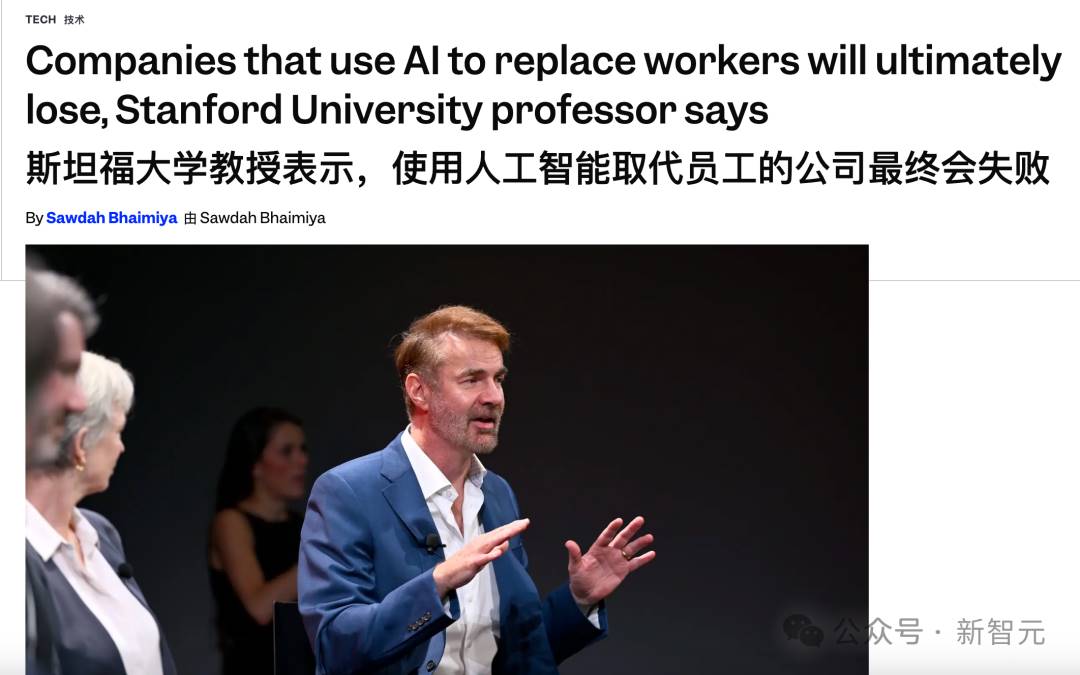
But times have changed, and AI's capabilities have reached a new level.
At the beginning of 2025, many world-renowned companies began to lay off employees intensively - for one reason: AI became more efficient and cheaper.
Klarna replaced 700 employees with AI customer service; UPS cut thousands of back-end jobs and turned to automated processes; Duolingo significantly reduced its content team and instead relied on AI to generate a question bank.
These companies did not choose "human-machine collaboration", but decisively bet on "AI first".
When generative AI first emerged, it was considered a good partner for humans.
But as AI has developed to this day, it seems that AI is no longer a partner of humans, but a competitor or even a replacer.
These companies are proving with practical actions that under the business logic of efficiency being king and cost being paramount, AI is not an "auxiliary tool" but the "optimal solution"!
This is not only a technological innovation, but also an earthquake in the workplace.
In the past, people fantasized that AI could help workers get rid of tedious work and focus on creation.
The reality is that the more repetitive the work is, the easier it is to be killed by AI ; and the more process-oriented the job is, the faster it will be swallowed up by the algorithm .
Society may be at a tipping point:
From AI assisting humans, humans need to learn to cooperate with AI;
From optimizing jobs to eliminating jobs;
From improving productivity to reshaping production relations.
And this change has already begun quietly, without waiting for everyone to be ready.






