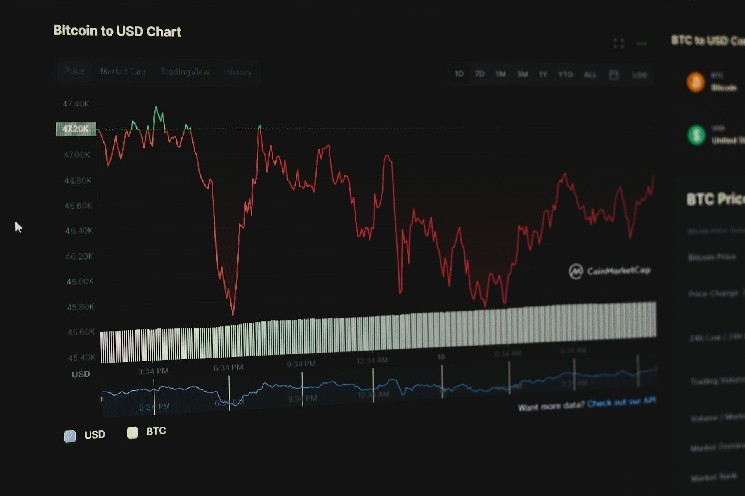
Of course not. In fact, the era of BTCFi has not even truly begun.
Recently, discussions about BTCFi being "dead" have been rampant at various conferences and social media, especially after the poor Token issuance performance of BTCFi protocols represented by Babylon, this sentiment has become even more intense.
Although Babylon indeed opened up a new narrative path, it also exposed several structural problems. Its core concept is to use Bitcoin as the underlying asset and output its "digital gold" security as a public product. From a supply-side logic, this is understandable, but besides technical feasibility, the key is: where is the real market demand? Large chains are unlikely to adopt it (as this would weaken the value and role of their native Token), while small chains might choose it, but their market capacity is limited and cannot support high valuations. If BTC security's value capture is only for these altcoins, it will not only continue to bring selling pressure for these altcoins but also make this economic model difficult to sustain.
The LST issued based on Babylon has liquidity advantages, but its actual value capture is limited. Currently, LST returns basically depend on platform or third-party Token incentives, lacking genuine, native BTC revenue support.
However, this does not mean that the BTCFi track is impassable. On the contrary, after deeply analyzing these phenomena, we should focus on two fundamental unresolved issues:
- How to achieve BTC's native security?
- From an economic perspective, how to establish the source and sustainability of native BTC revenue?
Bitcoin's "OP Moment"
Just like Ethereum L2 experienced a breakthrough after the Optimistic Rollup model truly worked, Bitcoin also needs its own "OP moment". Due to Bitcoin script language limitations and users' extremely high requirements for native security, achieving "truly native" L2 security is the first pillar of whether BTCFi can be established. The previous so-called BTC L2's inability to gain mainstream BTC community recognition, and BTCfi's failure to develop, are core reasons for this technical issue.
Currently, there are two viable technical routes: OP_CAT and BitVM2.
Although OP_CAT is technically reasonable, it requires modifying BTC mainnet script instructions. Considering this change touches the bottom line of Bitcoin fundamentalists, its advancement difficulty is extremely high. Moreover, as Bitcoin is increasingly accepted by the public, financial institutions, regulators, and even major governments, changing its underlying logic could seriously reduce its stability and trustworthiness.
In comparison, BitVM2 does not require modifying the Bitcoin protocol and, combined with the OCP (Optimistic Challenge Process) model, has a concise logic and stable efficiency. Under the premise of solving the economic model, it has a broad foundation for implementation.
Small spoiler: The breakthrough of BitVM2 technology is coming faster than expected, stay tuned for our release. We believe this is Bitcoin's "OP moment".
All problems, ultimately, are economic problems (It's the economy, stupid)
But security is not everything; the real challenge of BTCFi is the economic model.
The essence of the economic model is supply-demand matching: What value can BTC provide? Can these values satisfy real-world needs? This process of matching provided value with demand is the process of generating revenue. Moreover, besides revenue itself, we must also focus on the cost of obtaining revenue to ensure its sustainability rather than one-time incentives.
From the supply side, Bitcoin's core value mainly includes two points:
- Security brought by its decentralization and strong consensus;
- Liquidity value as a mainstream crypto asset.
From the demand side, BTC holders generally hope their assets can "earn while sleeping". Regardless of asset size, everyone hopes BTC can create more revenue. This demand is very strong and has a broad foundation. Products developed to meet these needs must be based on Bitcoin's native security and utilize the capital scale, efficiency, and arbitrage opportunities brought by liquidity.
Therefore, L2 built on native BTC security is the starting point for BTCFi's sustainable development. Combined with zk rollup bridge, BTC can be safely and efficiently introduced to the second layer for economic activities. The revenue generated by second-layer transaction volume (such as gas fees) should be partially returned to BTC holders as compensation for providing liquidity and security.
If the second-layer gas fees are denominated in BTC, this constitutes an extremely pure "native BTC revenue" model. Before this, BTC had almost no truly native revenue scenarios, except for funding rates in CeFi.
Babylon's model is essentially harvesting third-party Tokens, which is neither native nor sustainable.
Furthermore, to achieve sustained revenue, L2 operational costs must be effectively controlled.
In zk rollup solutions, roles like Sequencer, Prover, Challenger, Operator, and Committee each undertake different responsibilities with varying revenue structures. How to control total costs while ensuring the incentive mechanism will determine whether L2 has sustainable operational capabilities.
GOAT Network will soon release a new "Economic Brown Paper" detailing our solution, stay tuned.
In Conclusion
Although the market is still in a volatile period, truly valuable products will ultimately emerge. We firmly believe that the era of BTC L2 and BTCFi is about to arrive.
Based on the architecture of BTC native security, we expect more refined BTCFi products targeting different risk appetites will emerge, satisfying diverse revenue needs of BTC holders.
We are glad to move forward together, leading the innovation and exploration of BTC L2 and BTCFi.
LFGOAT!