Original Author: Syndica
Translated by: Zen, PANews
The Solana ecosystem's DePIN track revenue has reached a new high since the beginning of the year, with a cumulative monthly revenue of $458,000 in April, a 33% year-on-year increase, marking the best performance this year. This is mainly due to the steady growth of projects like Helium, Render, Hivemapper, and XNET.

However, the number of active contributors to DePIN protocols has slightly decreased. Helium, Hivemapper, Nosana, Render, Sallar, Sourceful, and XNET collectively maintain around 87,000 active contributors.

In April 2025, the number of contributors to small DePIN protocols increased significantly, with Nosana's growth rate exceeding 100%, while large protocols like Helium and Hivemapper saw stable or slightly declining contributor growth.

Here's a review of the performance of major DePIN projects:
Dabba Network
Dabba Network is a DePIN exclusive to the Indian market built on Solana, aiming to deploy Wi-Fi hotspots across India through a "hosted deployment" model in collaboration with local telecom operators, providing users with high-speed, low-cost internet access. From March to April, its cumulative data consumption jumped to 8,000 TB, achieving 2x growth; during the same period, device sales increased by 29%, further expanding the network scale.

Helium Mobile
Helium Mobile is a mobile virtual network operator under the Helium network, combining community-deployed Wi-Fi hotspots with partner cellular base stations to provide users with low-cost mobile data and voice services.
After opening free mobile plans to all users, Helium Mobile saw a 125% surge in new subscribers, reaching 36,000, a historical high. Correspondingly, Helium Mobile's revenue reached a record $250,000. The monthly revenue calculated by data point burning increased by 34% to a new high of $250,000, with data offloading accounting for 79%.
(Note: When users use mobile networks, part of the traffic is "offloaded" to Helium network hotspots for transmission and billing, which is called "offload data")
Additionally, Helium Mobile's average daily offload subscription volume increased by 65%, and offload data volume grew by 32%, both setting new historical records.

It's worth noting that since 2025, Helium's active contributors have shown a slightly downward trend, with the number of active contributors stabilizing around 75,000.

Hivemapper
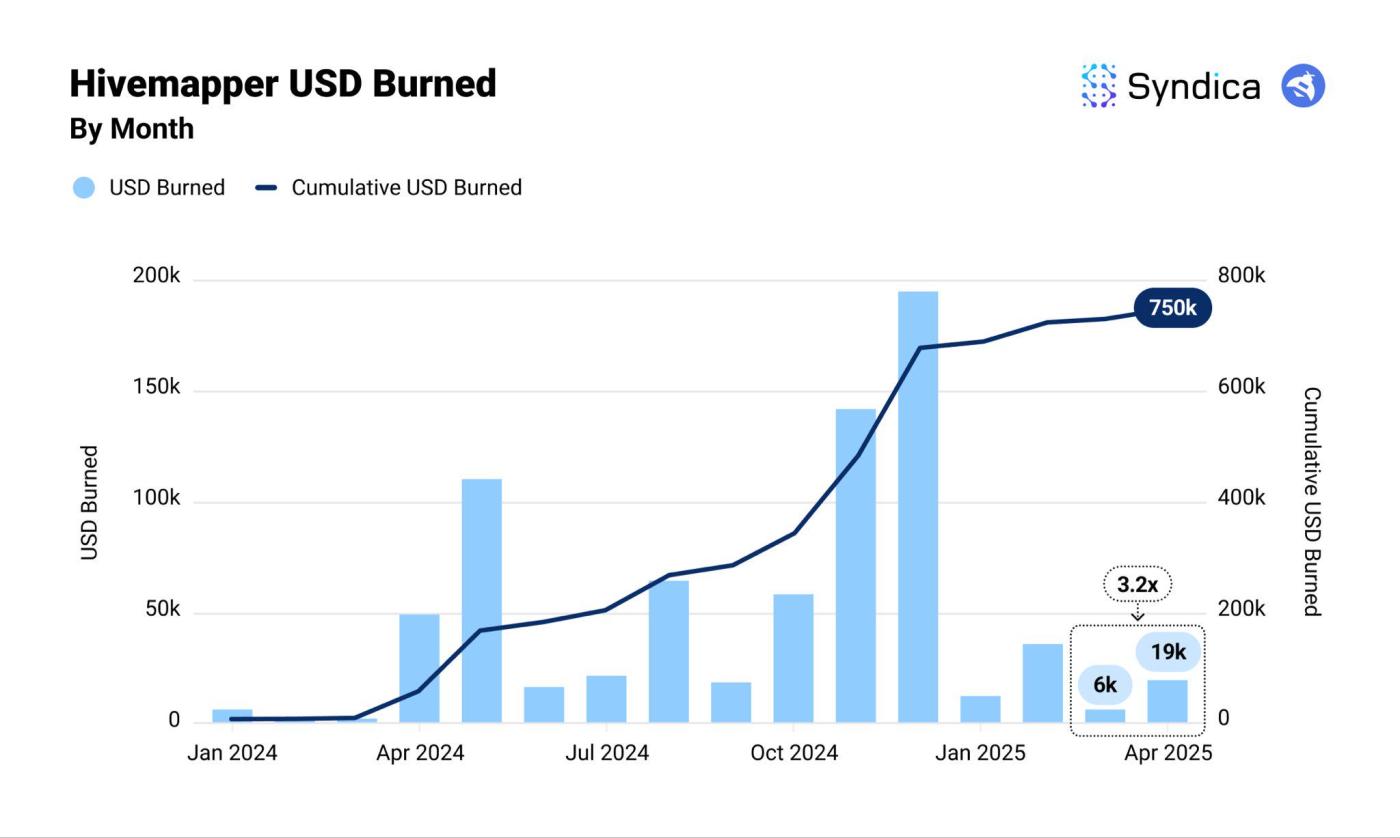
Hivemapper is a decentralized map network where users collect street-level images through dashcams and earn HONEY tokens as rewards. The team continues to iterate on the product side, with 20-30% of monthly Beekeeper platform fees used to burn $HONEY, which will further promote growth.
Hivemapper's monthly mapping mileage remained stable in April, and its AI-driven platform Beekeeper for fleet management was officially launched during the same month, expected to bring new growth momentum as more fleets join. Since February, Hivemapper has maintained around 5,000 active map contributors.
NATIX Network
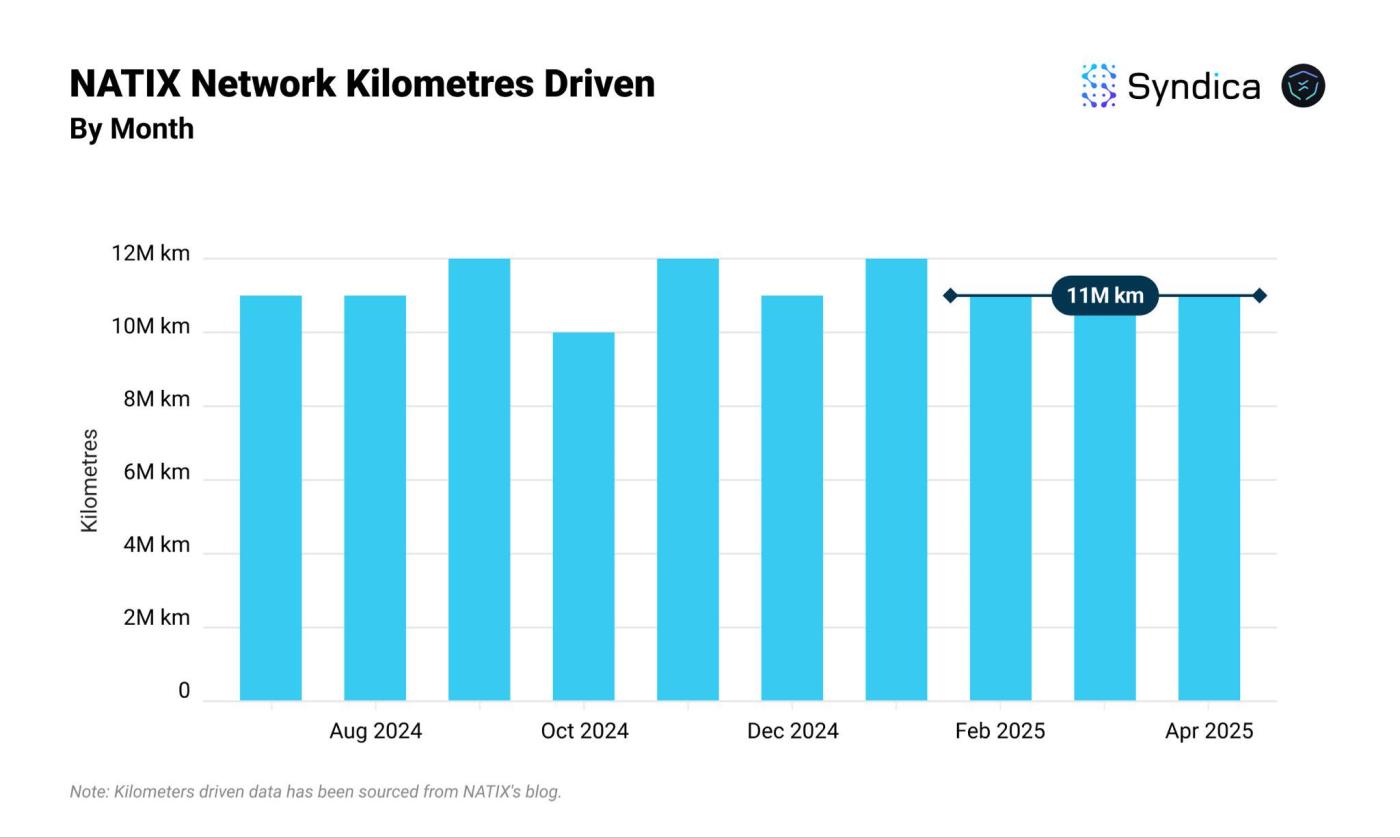
NATIX Network aims to collect street view and geographic data through smartphones and dedicated devices, providing high-precision positioning and imaging support for map creation, autonomous driving, and physical AI, with participants receiving token rewards for data contributions. The ecosystem remained stable in April, with user-driven mileage maintaining 11 million kilometers for the third consecutive month.
Sourceful Energy
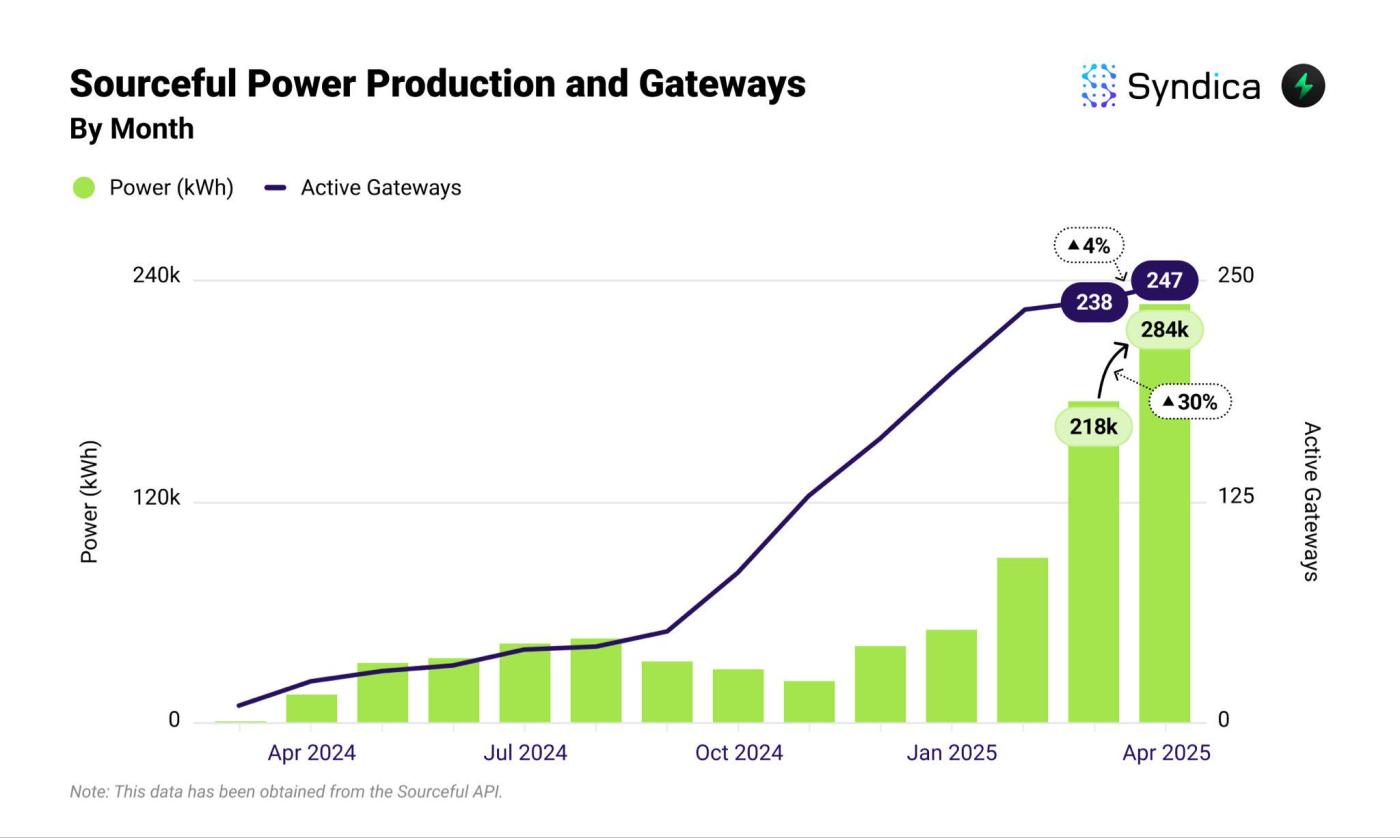
Sourceful Energy focuses on a decentralized virtual power plant (VPP), connecting residential and commercial distributed energy resources (such as solar panels, electric vehicles, and storage batteries) to the Solana blockchain network, with participants receiving token incentives for power or data contributions. In April, Sourceful Energy's power output increased by 30%, and with 500 pre-orders for the newly launched Zap smart energy efficiency analysis device, the growth momentum is expected to continue.
AmbiosNetwork
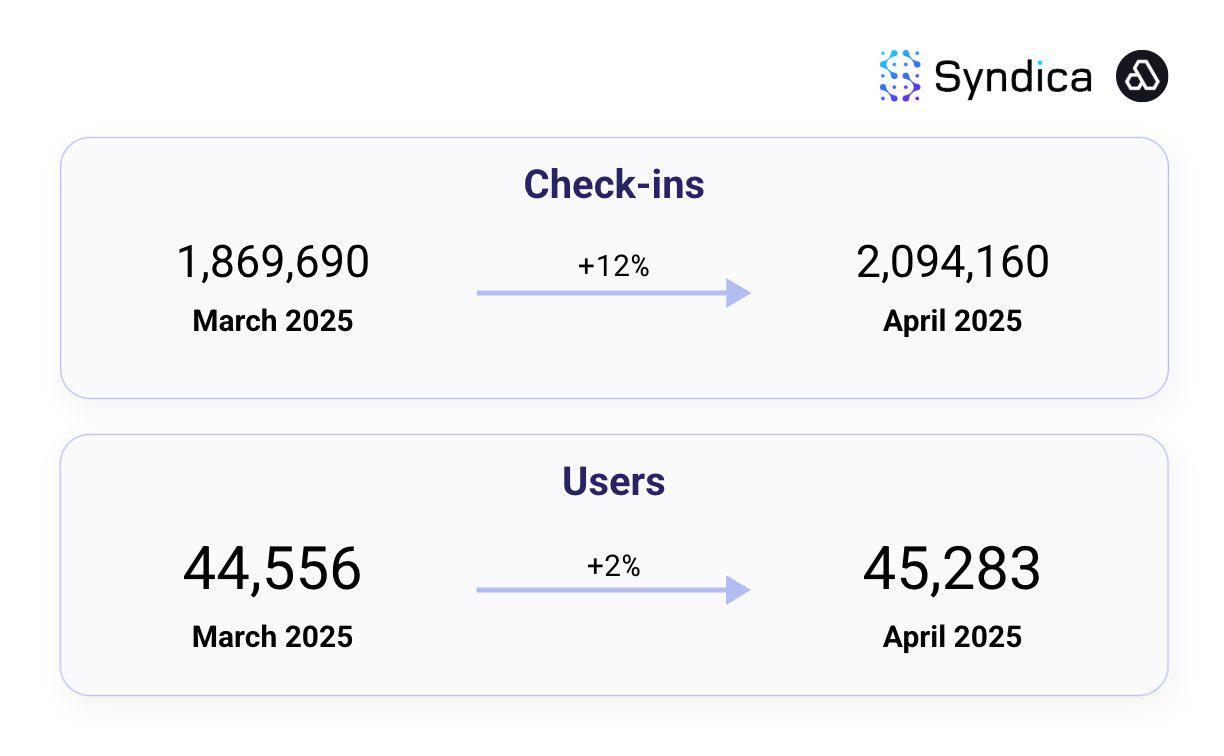
Ambios Network has built the world's largest environmental monitoring DePIN by deploying low-cost air quality and environmental sensors, providing real-time, hyper-localized environmental data to support businesses, AI, and public services, with sensor owners receiving token rewards. In April, Ambios Network's cumulative user ecosystem data check-ins exceeded 2 million, with a 12% increase in ecosystem data check-ins; the platform's total user base grew to 45,000, a year-on-year increase of 2%.