


ChatGPT Breaks the Ceiling of University Cheating, American Higher Education Faces an Unprecedented Trust Crisis: From the "AI Cheating Star" Roy Lee, who was expelled from Columbia University, to professors' futile attempts to identify AI papers, a generation of students grows up with ChatGPT, becoming "diploma illiterates". When university knowledge, degrees, and abilities become disconnected, who will pay for the collapsing education?
"American higher education is a joke!"
Remember Roy Lee, who was expelled from Columbia University for openly using AI to "cheat" and pass Amazon's written test?
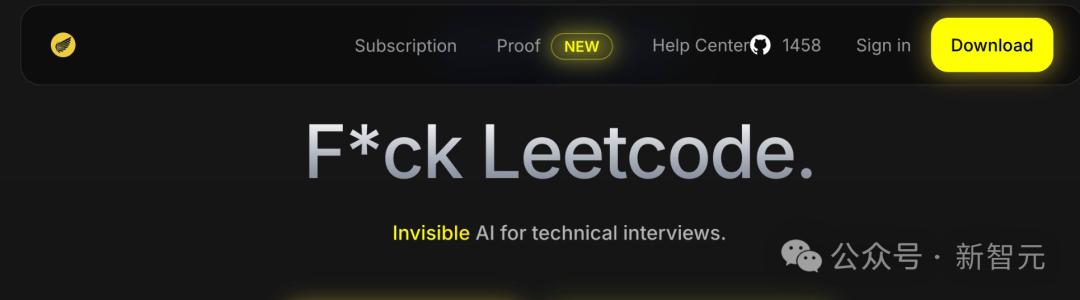
Roy Lee's initial viral product helped programmers cheat on algorithm problems
Of course, he didn't get discouraged and immediately started Cluely company, specializing in teaching people to "cheat in everything", and received $5.3 million in angel investment.
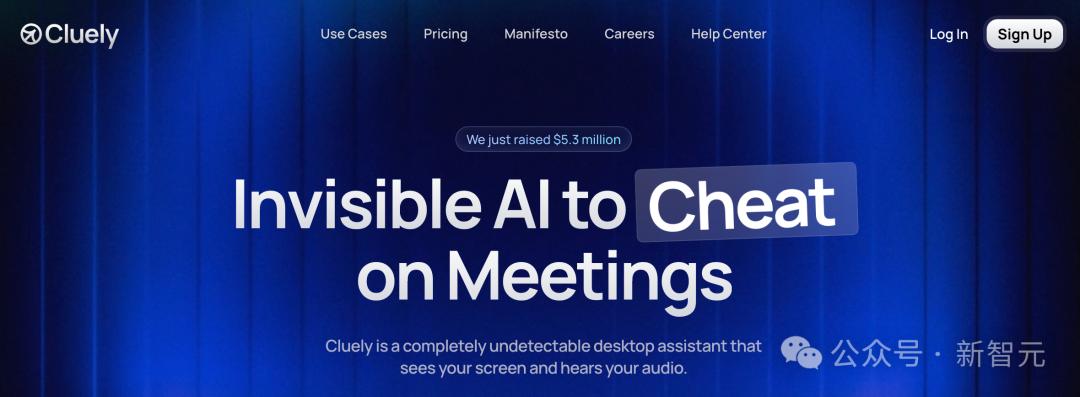
This time, Roy Lee is ready to double down on this trend: not just job hunting, American universities are also going to be "doomed"!
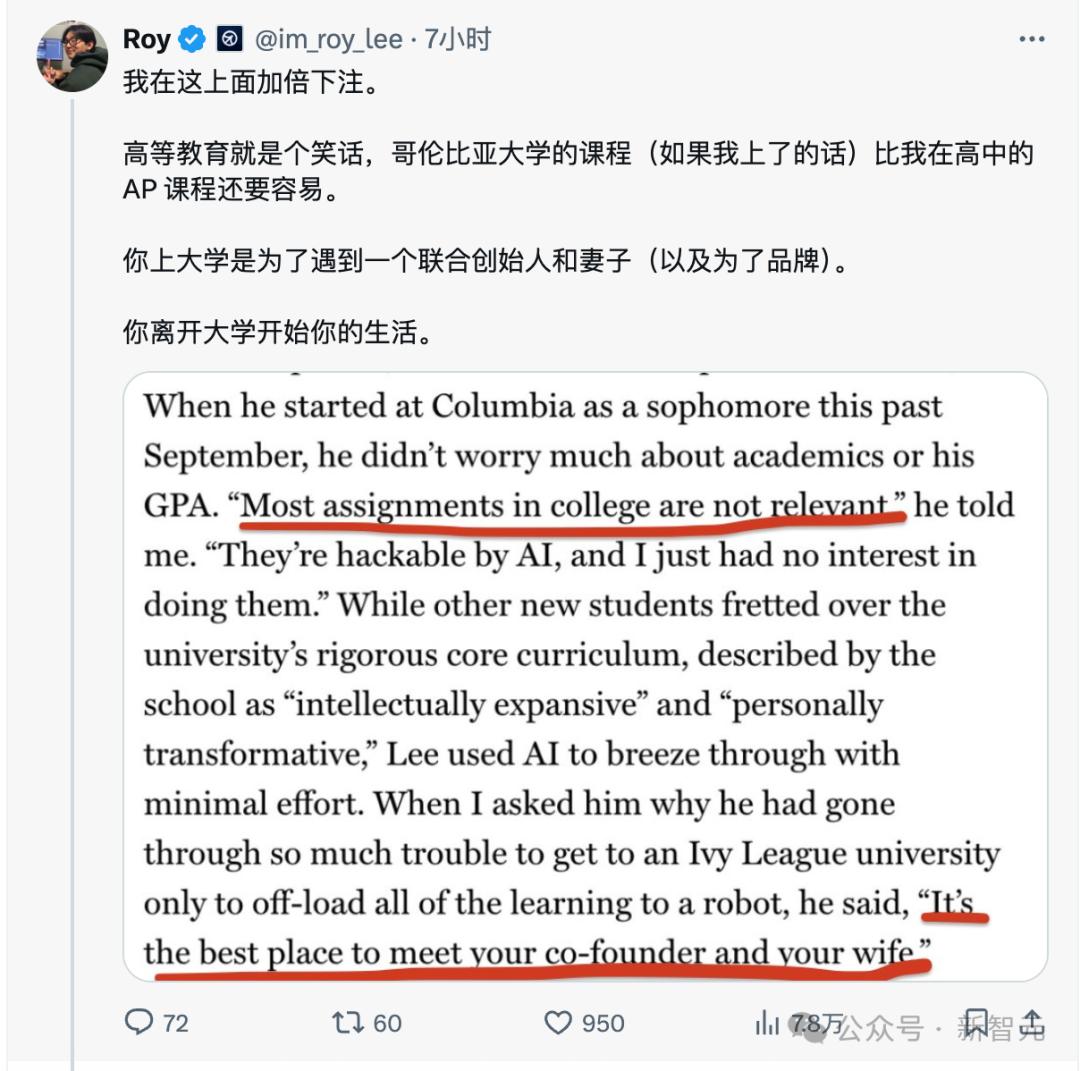
After obtaining offers through AI cheating, everyone started using ChatGPT to "cheat" through university.
"The only purpose of university is to find a partner and wife," Lee says, only by leaving university can your life truly begin.
In his latest interview, James Walsh used Lee's story as an introduction to describe how American universities are being "breached" by ChatGPT.
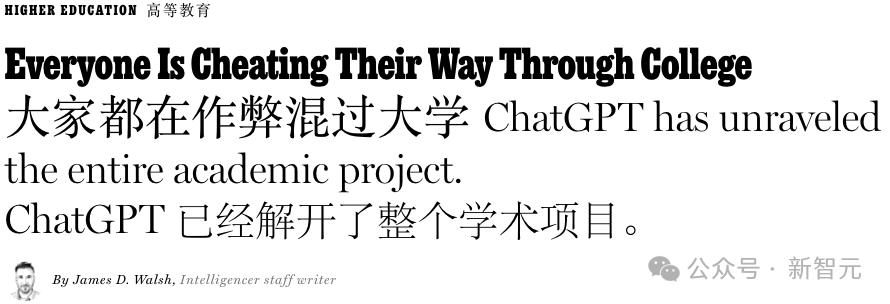
Neither American college nor high school students can resist ChatGPT.
- "With ChatGPT, I can complete a paper in 2 hours that used to take 12 hours"
- "Who can resist a tool that makes every assignment simpler with seemingly no consequences?"
- "I see almost all other students' laptops running ChatGPT in class"
New and old students say they are addicted to ChatGPT, just like TikTok, Instagram, and Snapchat, but teachers feel desperate.
(Translation continues in the same manner for the entire text)Some students indicate that certain professors are rumored to have a threshold (such as 25%), where assignments exceeding this value might be considered "cheating".
However, most professors have already assumed that these AI detection tools are unreliable - humans can't even tell, let alone admit that humans are inferior to detection tools.
Of course, not all students are fools + "illiterate".
There are many simple ways to deceive professors and detectors. After using AI to generate papers, students can rewrite them in their own tone or add spelling errors - in simpler terms, this is plagiarism.
Or without being so "troublesome", some students directly tell ChatGPT "write like a slightly stupid freshman".
So you see, AI is still useful. If this request were made to humans, they would feel somewhat uncomfortable, but AI won't.
AI has no emotions, won't get tired, won't question you, and won't give you a look of disdain about "cheating".
For it, everything is just instructions and responses.
And sometimes, a person's dependence on AI is not because they are lazy, but because they are completely disappointed with "American universities".
A Child Deeply Hurt
Let's return to Roy Lee.
Are you curious why Lee has such a "grudge" against university education?
In fact, before being expelled from Columbia University, Roy Lee had even "attended" Harvard - he was actually pre-admitted, but his high school "misbehavior" led Harvard to cancel his qualification, which shows Lee's personality!
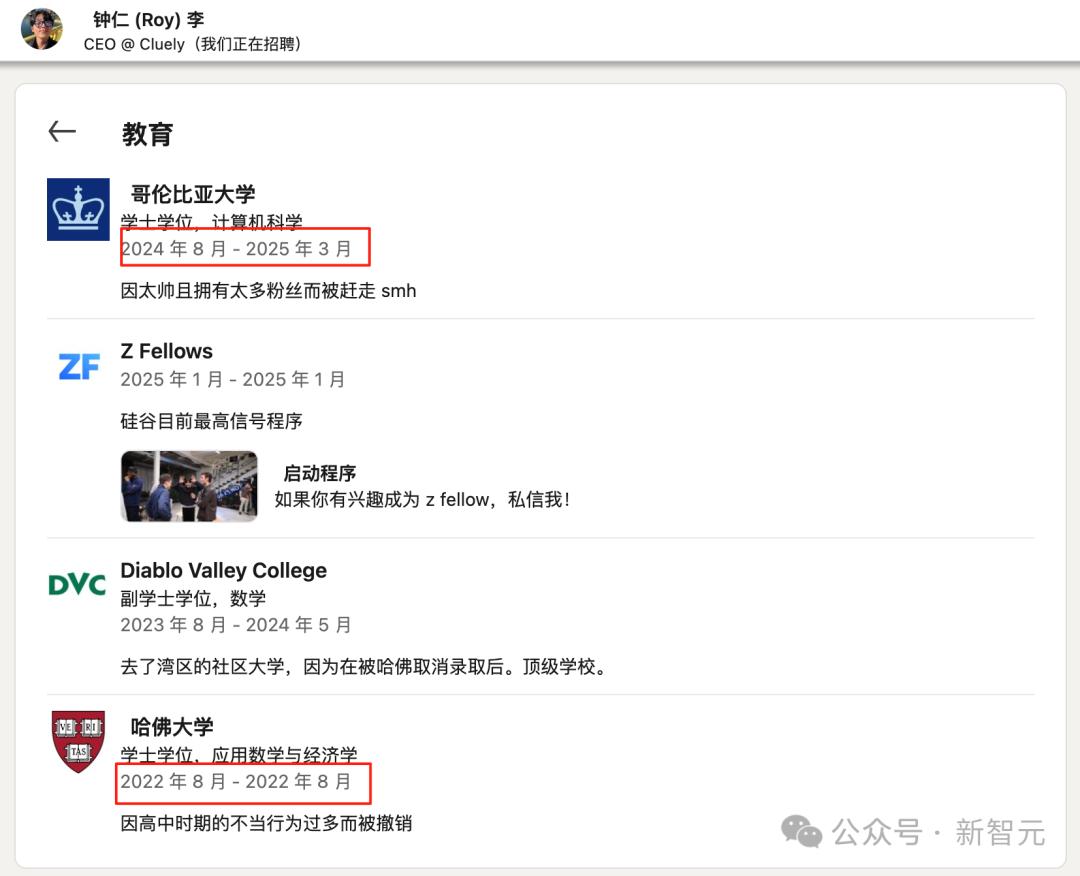
Lee was born in Korea and grew up in Atlanta, with parents running a college preparatory consulting company.
He says he was admitted to Harvard in the early part of his final high school year, but was suspended after sneaking out during an overnight field trip, and Harvard withdrew his admission.
A year later, he applied to 26 schools, but none admitted him!
Therefore, he spent a year at a community college before transferring to Columbia University.
About this tortuous experience, Lee had ChatGPT help him polish it: "Transforming his (Roy Lee's) tortuous higher education journey into a parable of his entrepreneurial ambition".
When he started his second year at Columbia University last September, he was not too concerned about academics or grades.
"Most university assignments can be completed through artificial intelligence, and I have no interest in this."
While other freshmen were anxious about the school's strict core courses, Lee easily passed them with "minimal effort" using artificial intelligence.
The remaining time led to his later "feat": recording the entire Amazon interview process - from OA to final offer.
"I posted the video. It started to go viral".
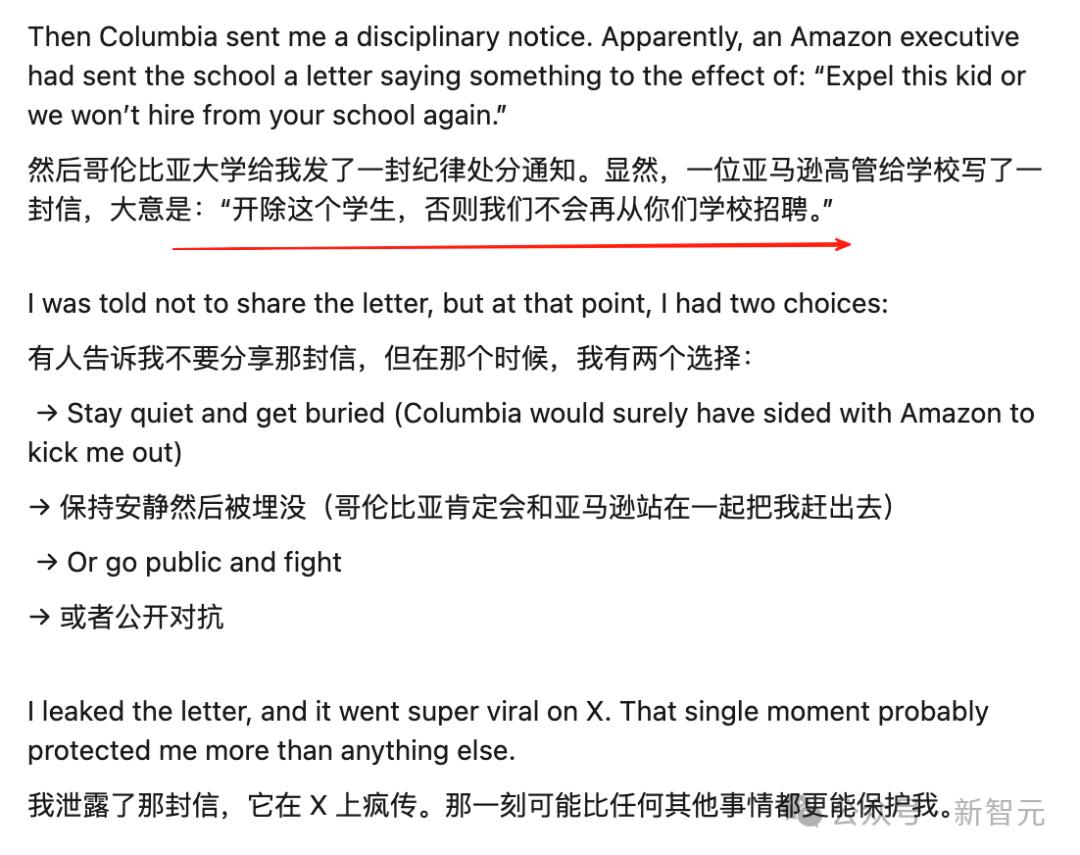
Of course, the result was not good. Columbia University expelled him.
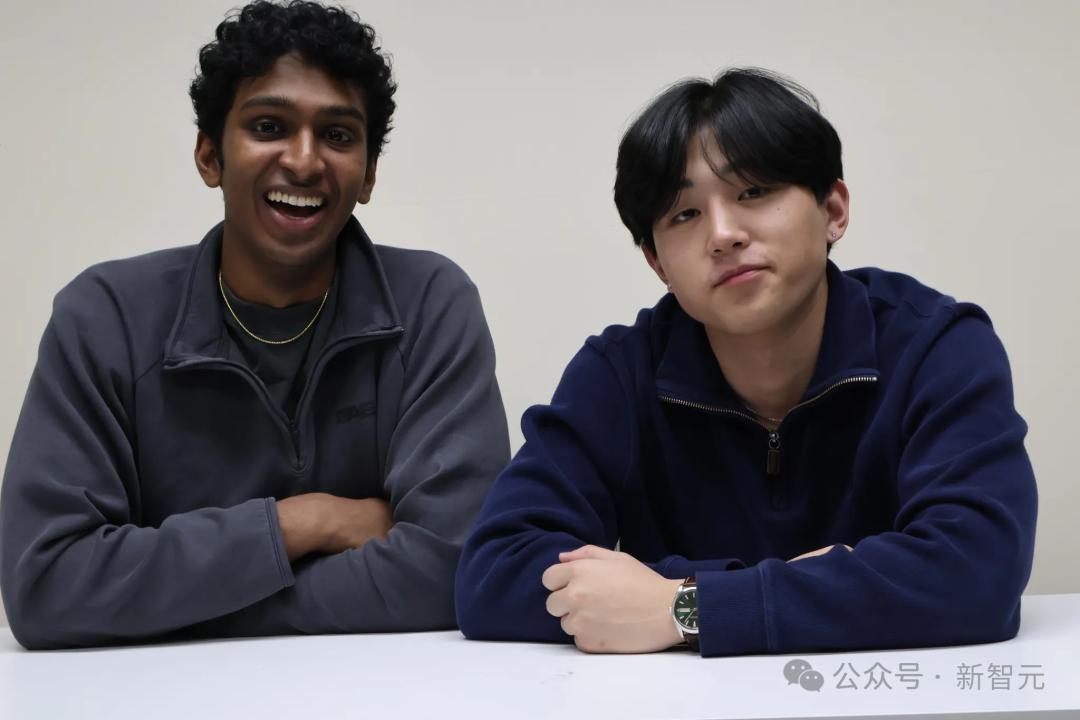
The subsequent story we all know: After dropping out, Lee raised $5.3 million to start a business with only one purpose - "cheating in everything".
But when cheating becomes the "default option" - whether it's the heartbroken Lee or college students who can't refuse ChatGPT - the truly worth asking question is not "who cheated", but "who should pay for this".
This cost is not just about grade distortion or academic corruption, but the spillover cost caused by the imbalance in the entire American higher education system's value positioning, incentive mechanisms, and student mental health.
Who Should Bear This Cost
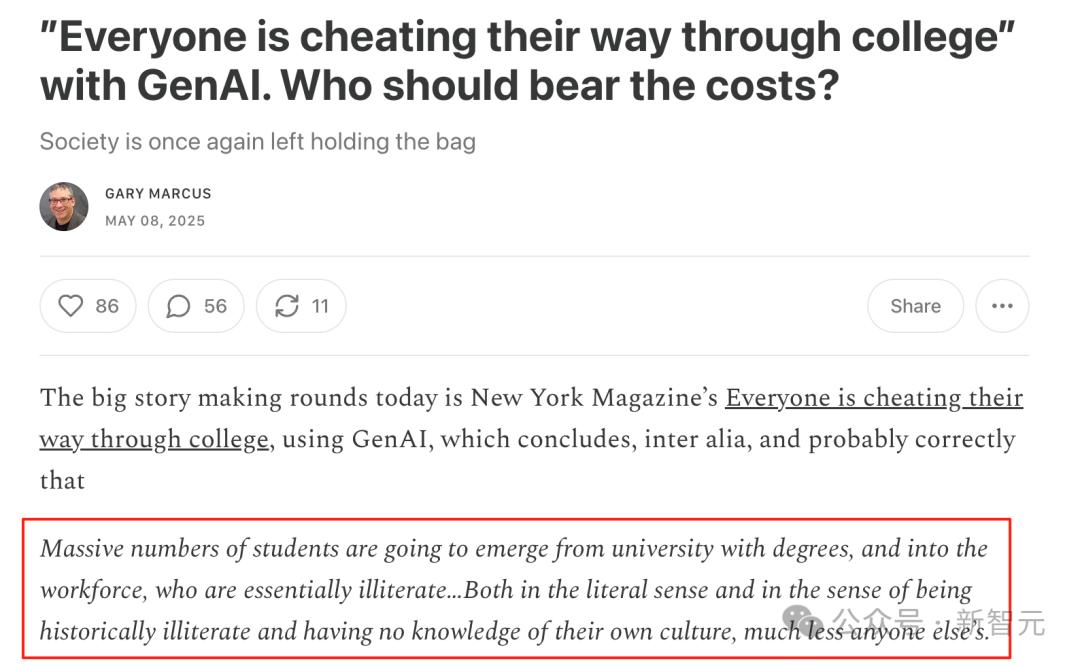
The article recording Lee's story and describing how ChatGPT is used by students to cheat, titled "Everyone is Cheating Through College", is currently generating high discussion.
Gary Marcus, one of the most famous "trolls" on the internet, believes that "many students will graduate from college with degrees and enter the workforce, but they are essentially illiterate" might be the most correct conclusion of this article.
So, should using ChatGPT to cheat be blamed on students?
But another post offers a different perspective: "Has anyone stopped to ask why students cheat?"
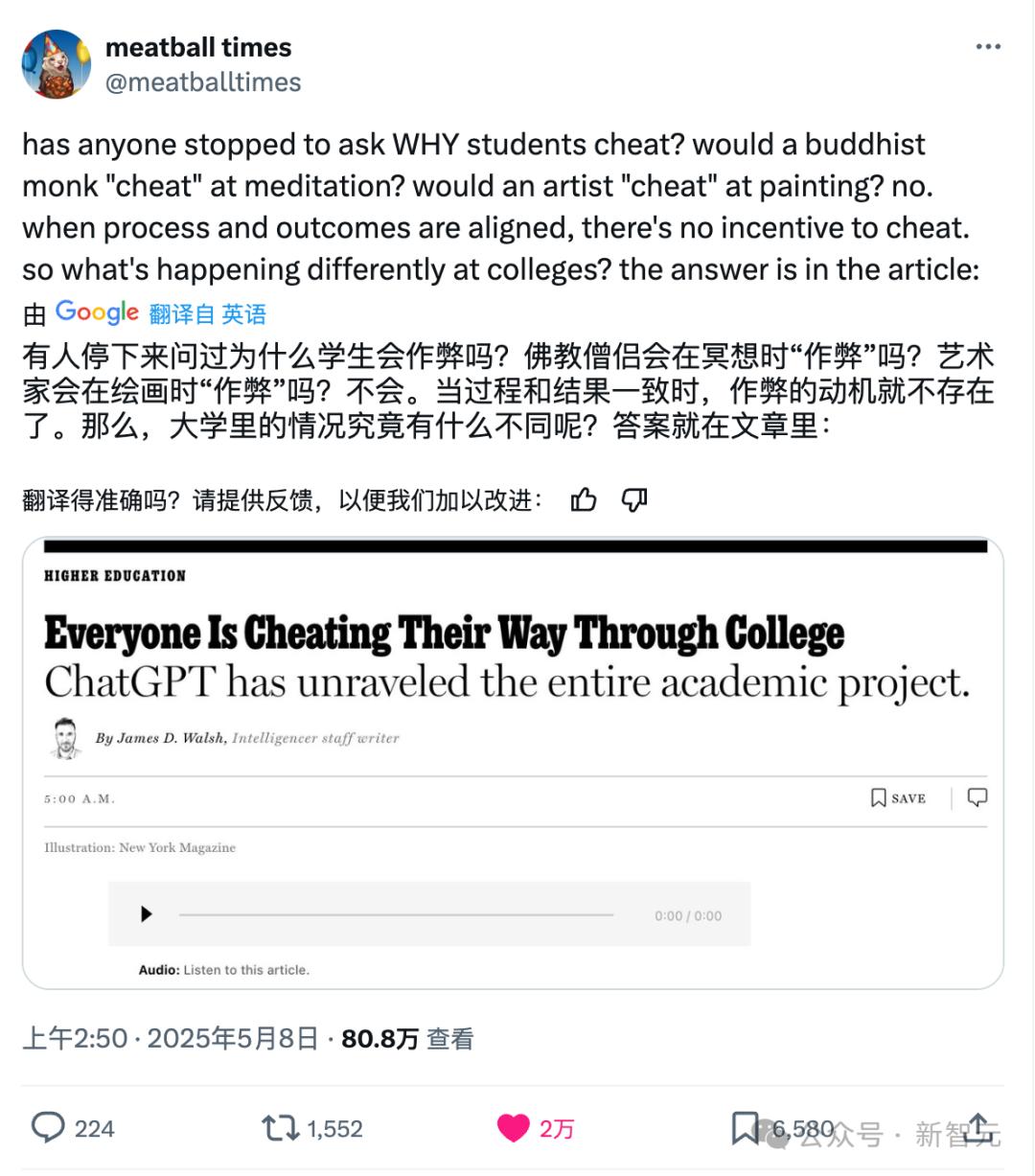
Do Buddhist monks cheat during meditation? Do artists cheat while painting? If someone truly loves something, like learning, would they cheat to "escape" exams?
This is a question that touches the soul.
Metaball believes the article's author "wrongly believes" Ivy League schools are about education.
But Lee understands that Ivy League schools are about elite cultivation and network building.
For Ivy League schools, "all" academic work is a distraction.
Zuckerberg learned a lot from Harvard - but never in the classroom. He got what he needed and then dropped out.
The "stars" who succeeded after dropping out seem to be proving this fact - academic work seems to have little help for future work.

Somewhat ironically, this summary was also organized by ChatGPT
Cheating is the most economical and effective way to obtain the enterprise work diploma through school.
In this discussion, meatball proposed several reasons why American universities are currently "breached" by ChatGPT:
- The goals of university general education and employment-oriented goals are fundamentally incompatible
- The methods of assessing students have poor incentive mechanisms and are not predictive anyway
- Learning in universities has a very weak relationship with real-world goals
These problems seem solvable by just making some adjustments - optimizing teaching design, improving course practicality, introducing AI tools, so students won't have the impulse to cheat.
But higher education will ultimately have to rethink a fundamental question: What are we learning for?
Perhaps what needs to be refreshed and reconstructed is not just the educational system, but the entire cognitive framework of the relationship between "knowledge", "education", and "ability".
However, when all this is truly achieved, everyone might face a "terrifying" truth:
The repaired university might have already lost most of its "essence".
This is probably the deepest panic of American universities and educators.
References:
https://nymag.com/intelligencer/article/openai-chatgpt-ai-cheating-education-college-students-school.html
https://garymarcus.substack.com/p/everyone-is-cheating-their-way-through
This article is from the WeChat public account "New Intelligence Element", author: Ding Hui, published by 36Kr with authorization.






