Labeling Bit Coin as "digital gold" is a misunderstanding of this revolutionary monetary form. This description simplifies Bit Coin to an asset with only storage value, obscuring its deeper technological advantages and financial potential.
[The rest of the translation follows the same pattern, maintaining the original structure and translating all text while preserving HTML tags]Unlike the rare and low-frequency human audits of gold, Bitcoin's verification is automatic. Through the proof-of-work mechanism, a new Block is added every 10 minutes, and the system automatically verifies transaction legality, total supply, and consensus rules.
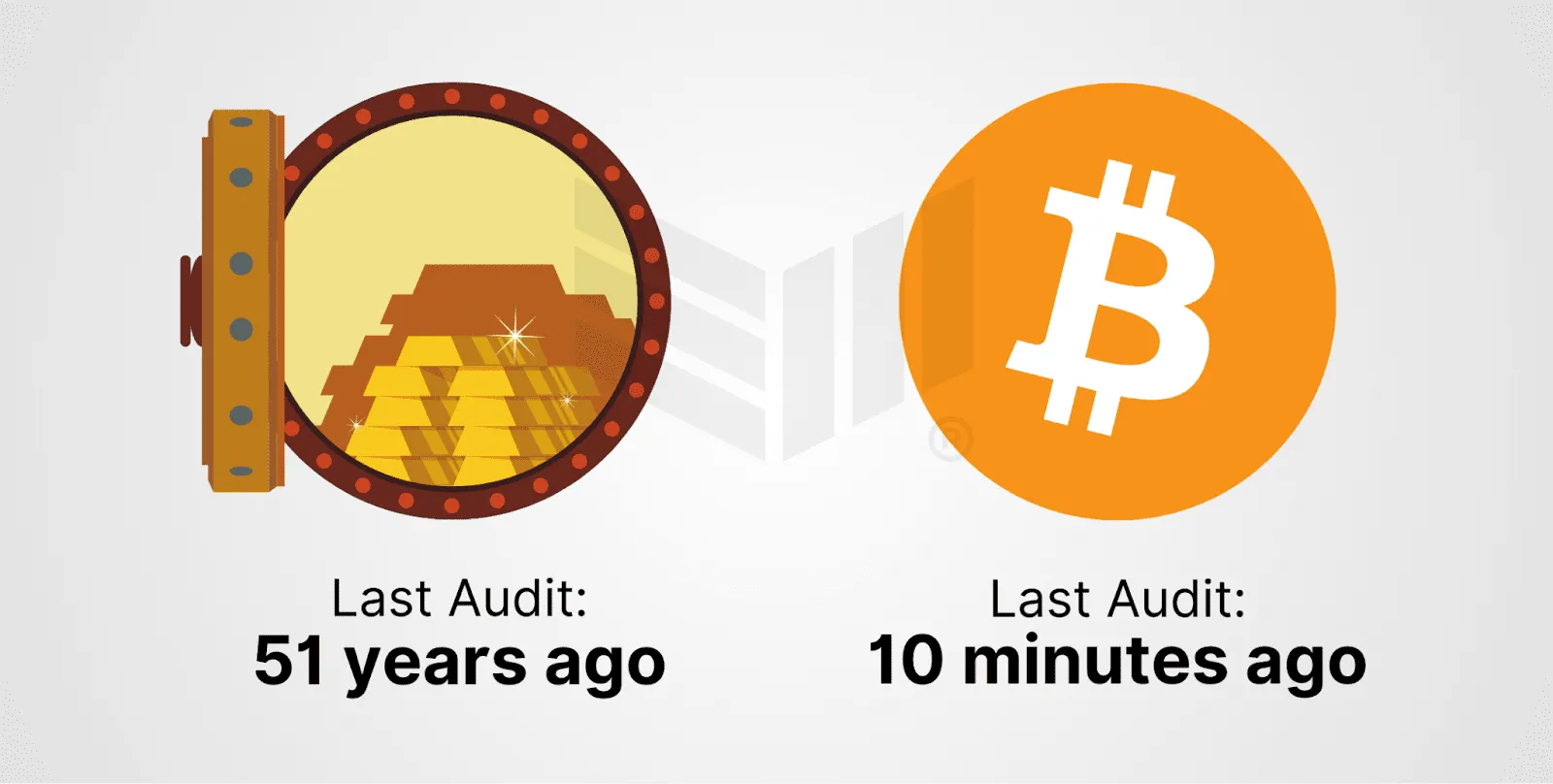
Compared to the third-party trust mechanism relied upon by traditional audits, Bitcoin achieved on-chain verification that requires no trust and is openly transparent. Anyone can independently verify blockchain data in real-time, with "don't trust, verify" becoming Bitcoin's consensus principle.
Portability
Bitcoin's mobility needs no elaboration. Gold is bulky and heavy, requiring specialized ships or aircraft for cross-border transportation. Bitcoin, however, is stored in a wallet, with its "weight" always zero, regardless of the amount.
But Bitcoin's true advantage is not its convenience, but that it requires no physical "movement". In reality, receiving a gold payment means bearing transportation costs and intermediary trust risks. In cross-border transactions, third parties include transaction matchmakers, export logistics teams, transportation personnel, recipients, and custodial institutions, with each link being part of a trust chain.
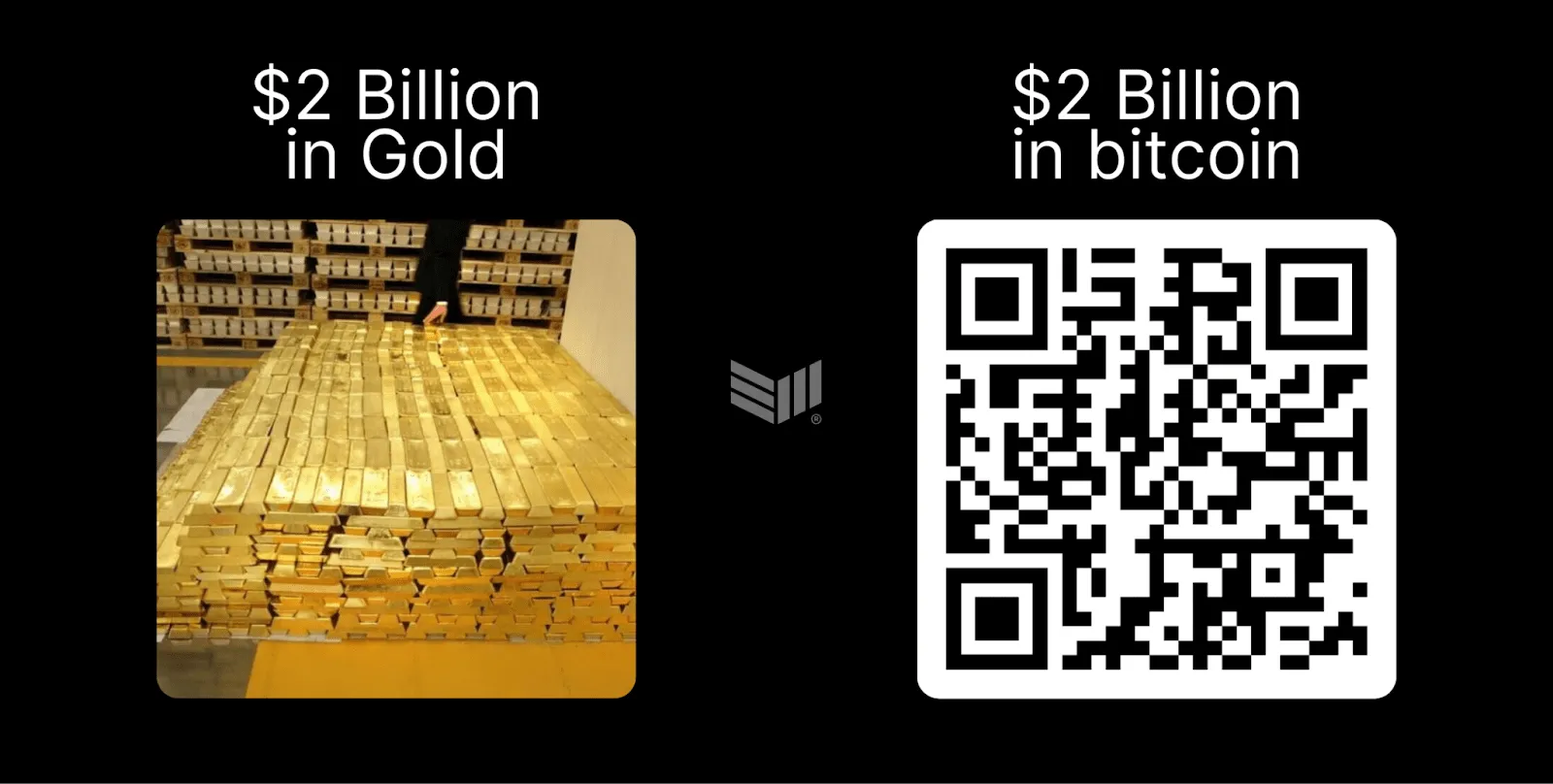
Bitcoin requires no intermediaries. Users can directly complete cross-border payments through the blockchain, with transactions fully open and verifiable, and no fraud risk. This is humanity's first true "electronic cash".
Conor Mulcahy of Bitcoin Magazine once noted: "Electronic cash is a type of currency that exists only in digital form and is used for peer-to-peer transactions. Unlike electronic money that relies on banks and payment processors, electronic cash mimics the anonymity of physical cash and the direct exchange characteristics between users."
Before Bitcoin's birth, peer-to-peer non-face-to-face transactions were still a theoretical assumption. Those critics who believe "what cannot be seen or touched is not real" will gradually be phased out in this accelerating digital era.
Not All Bitcoin "Adoption" is Worth Celebrating
If the goal is merely to drive Bitcoin's price up, the "digital gold" narrative is indeed effective, with governments, institutions, and individuals continuing to enter the market, and prices continuously rising.
But if Bitcoin is viewed as a technological revolution changing the free order, its dissemination method must be reconsidered. To position Bitcoin at the core of the global financial freedom system, it is necessary to educate those who have not yet encountered Bitcoin, conveying its uniqueness rather than relying on simplified analogies.
Bitcoin deserves to be recognized as an entirely new form of currency, not a digital substitute for gold.