


NVIDIA founder and CEO Jensen Huang today (19th) delivered a speech at Computex 2025, outlining an AI-driven future blueprint for the global tech industry. The conference showcased a new robot revolution and a "digital twin" platform that changes production, with practical applications in Omniverse. During the live broadcast, he mentioned ongoing deep collaboration with eight Taiwanese manufacturers, expecting to soon achieve results that can replace thousands of workers in robot and simulation platforms.
Eight Taiwanese Manufacturers Lead the Way
Huang announced that eight top Taiwanese tech manufacturers have introduced NVIDIA's Omniverse "digital twin" platform, including Foxconn, Wistron, Pegatron, Quanta, Wiwynn, Delta, Gigabyte, and TSMC. He demonstrated how Omniverse and physical AI can help various manufacturers optimize production lines in the "digital twin" environment.
Huang stated that modern factories are extremely complex, and production lines are embracing a robot-based future that will be redefined by robots and software:
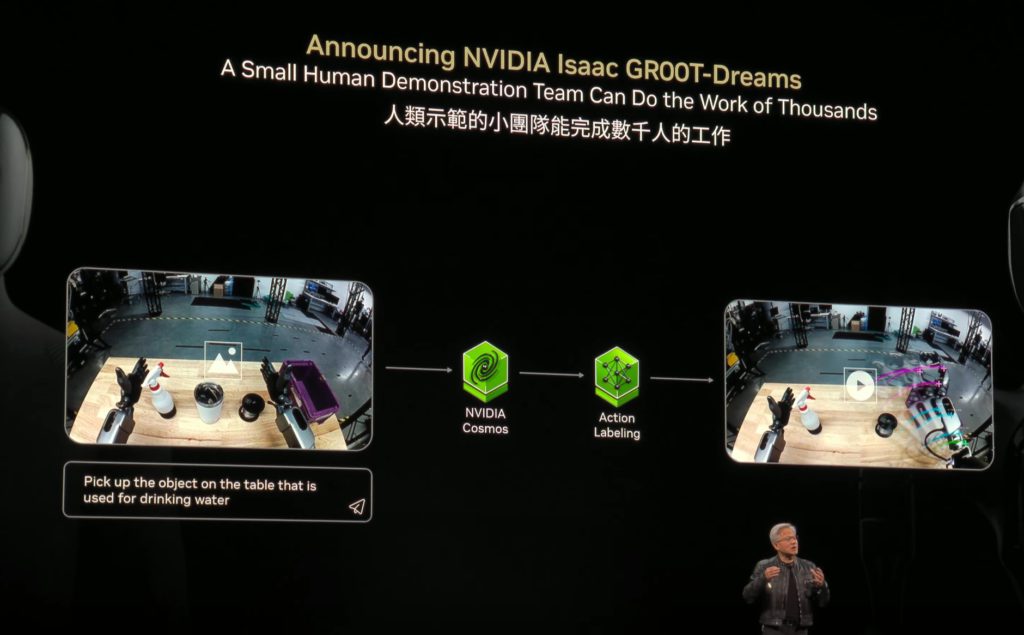
A small group of human demonstrators can complete the work of thousands... In the future, robots will participate in work and help us create and design robots. They can become a professional team... With digital twins in the factory, you'll have digital twin robots, and with these robots, you'll have a fully digitized factory. This is Pegatron's digital twin, Foxconn's digital twin, Gigabyte's digital twin, Quanta's, Wistron's, and TSMC is building the digital twin of their next-generation wafer fab. Globally, $5 trillion worth of factories are being built... This is a huge opportunity and timing point for transitioning to the digital twin era and preparing for a robotic future.
Changes in Taiwanese Manufacturers Introducing Digital Twins
NVIDIA's three-minute conference video highlighted the actual cases of Taiwanese manufacturers introducing digital twins, covering everything from design, factory layout, production line optimization, yield control, to production line human monitoring and quality control.
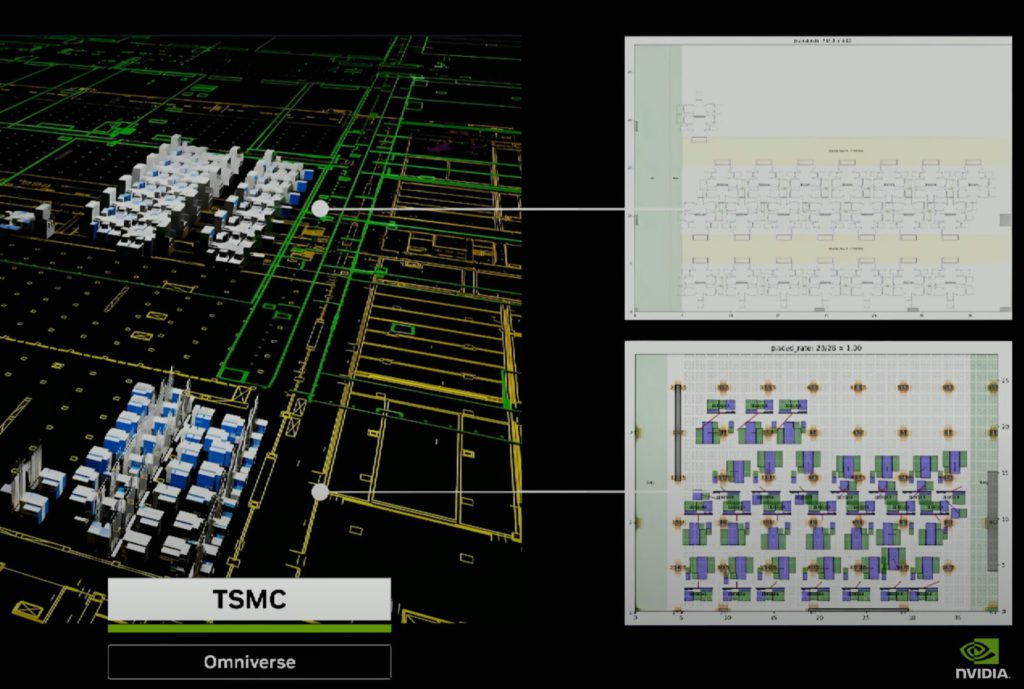
In factory design, TSMC is using Omniverse to automatically generate 3D building layouts from 2D CAD designs, optimizing complex pipeline and floor passage layouts, saving months of time in new factory deployment and subsequent optimization;
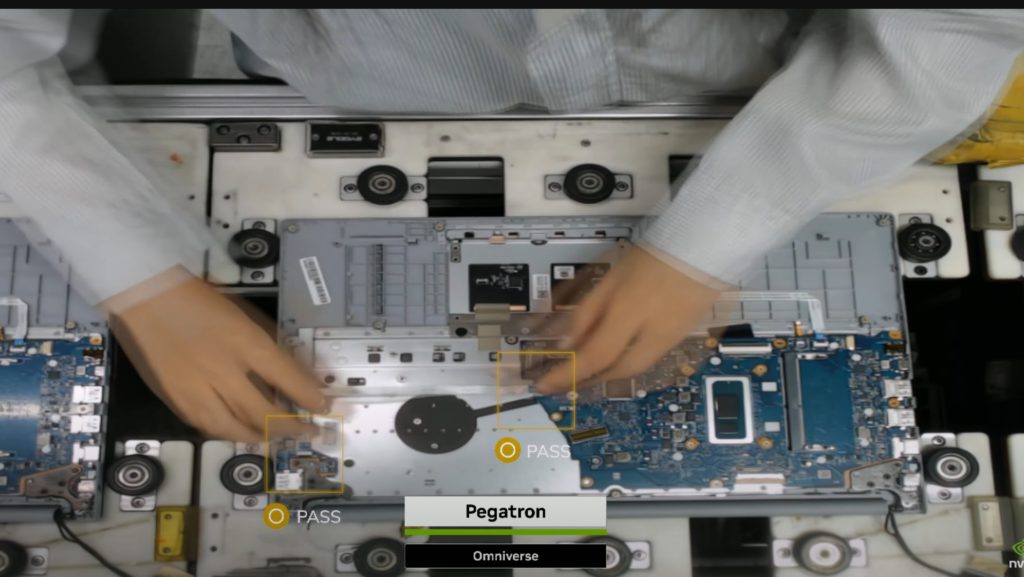
Quanta, Wistron, and Pegatron use Omniverse to configure production line placement, simulating operations before actual deployment to reduce downtime. Pegatron also uses physical calculations for metal welding agent distribution and coating to reduce manufacturing defects. 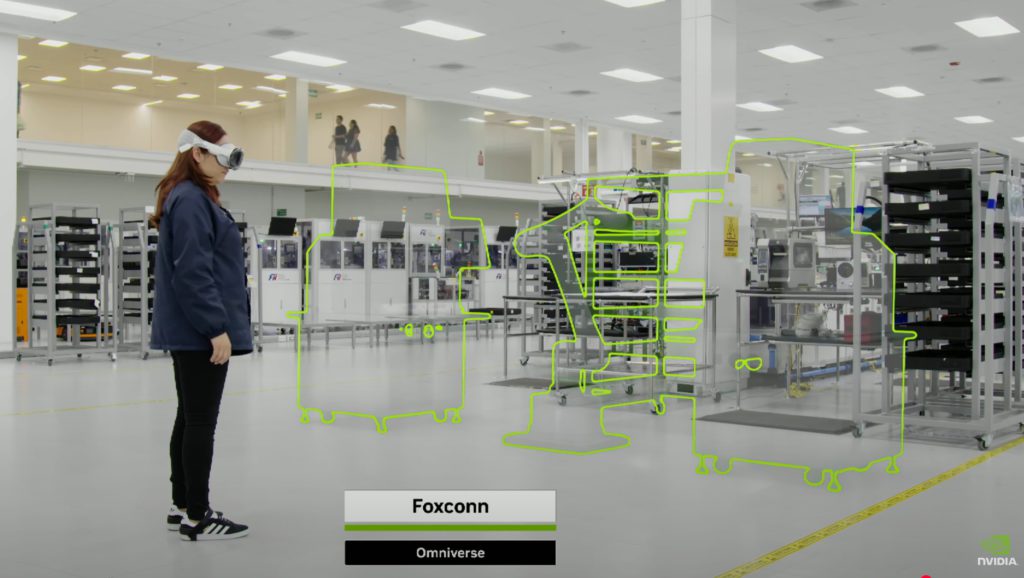
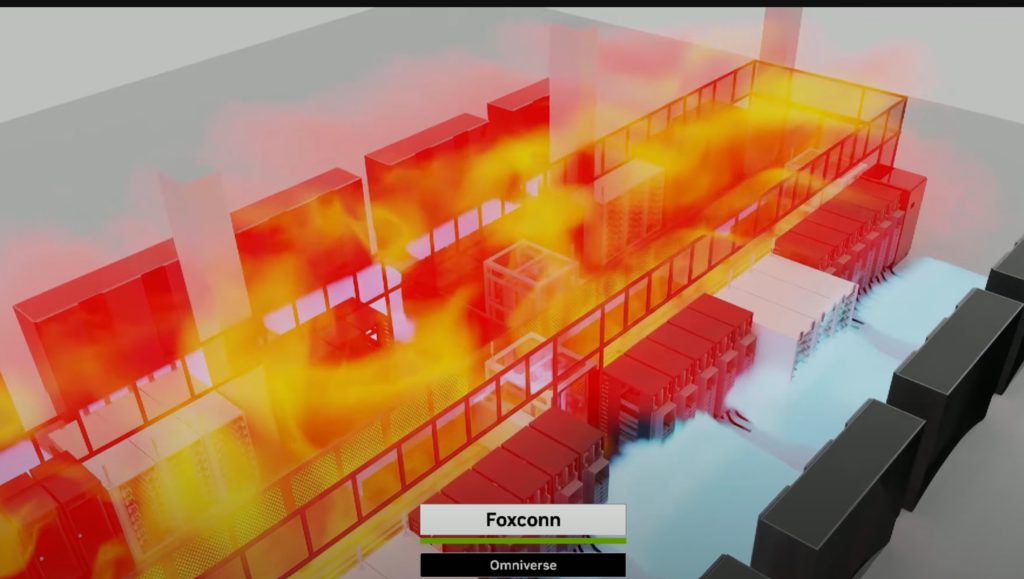
In component assembly, Quanta uses Siemens Team Center X in Omniverse to analyze computer component assembly processes on circuit boards. In catering and server rack environments, Foxconn restaurants and Quanta simulate thermal flow and cooling efficiency through Omniverse.
In production line management, visual AI agents can be introduced to check if manual assembly lines meet all standard procedures, reducing supervision costs.
Robot Progress
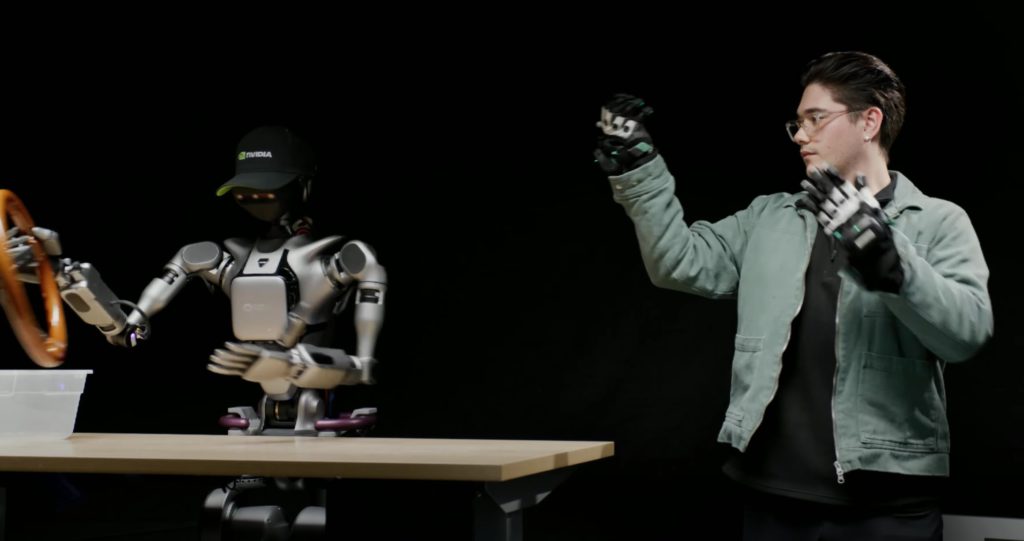
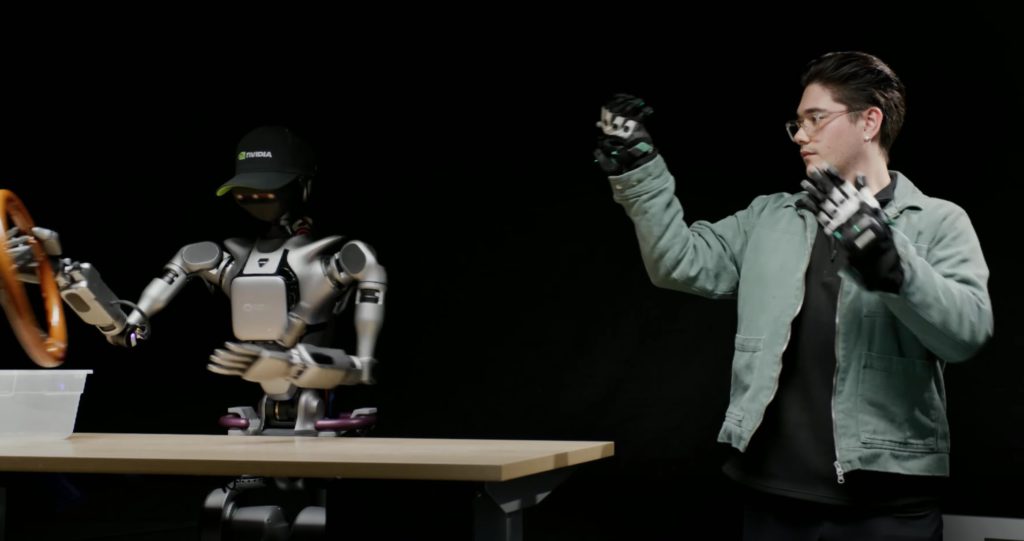
Beyond digital twins, NVIDIA introduced Isaac robots completing human tasks through the GROOT-DREAMS platform. Currently, voice and text commands can precisely control remote robots on the platform, including covering boxes, pouring objects from teacups into small boxes, and wood polishing. Through NVIDIA COSMOS, these can be converted into robot language understanding and real behaviors.
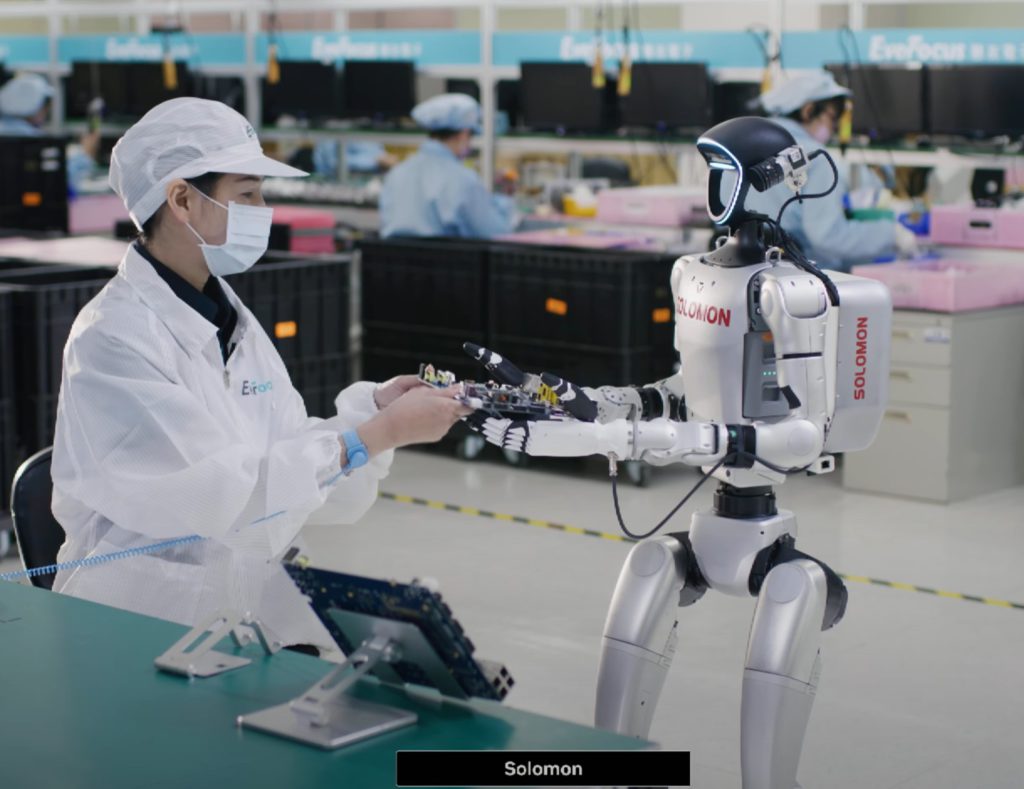
This suggests that a few high-level AI management personnel can easily establish and operate robot production line teams for complex production operations. Interestingly, NVIDIA also demonstrated a diagram of humans handing over work to robots.
In the past, the robotics industry had limited achievements due to insufficient investment. However, with the AI era, this will rapidly accelerate robot development to a scalable, high-speed technological breakthrough. We will invest massive resources, and the related market value will reach $3 trillion.
To run such a robot system, data center computing and investment are enormous, requiring three computers: one for AI learning, the second as a simulation environment engine where AI can learn to be a good robot, and the third for deployment and management.
NVIDIA Opens New Job Positions to Support Taiwanese Manufacturers
Whether technological advancements will affect traditional tech industry workforce is likely certain and rapid. With NVIDIA's collaboration with Taiwanese manufacturers, the tech industry may accelerate workforce elimination in traditional positions. However, new industries and positions will emerge, such as emerging engineers who can operate large robot groups through AI, and robot operators who can complete tasks using precise and high-level customized prompts. Despite Huang Renxun stating that new factories are being built globally, whether the new job openings will exceed reduced manpower remains unknown. What can be confirmed is that some departments of AI-integrated Taiwanese manufacturers may soon face workforce restructuring.
NVIDIA's massive recruitment of employees in Taiwan is also a demonstration of strengthening support for Taiwanese manufacturers. According to recent news, NVIDIA has opened various job positions in Taiwan, including software and hardware engineers, and announced establishing operations at the New Life Insurance land in Beitou Science Park T17 and T18. It can be expected that Taiwan will move towards an AI fully automated technology park, and this AI trend sweeping across Taiwan means those unable to catch up with new work models may lose work opportunities entirely.






