On the second day after the token exchange of the veteran public chain EOS was launched for "A", the Trump family-related crypto project WLFI suddenly made a large-scale purchase.
On May 16, according to on-chain data, WLFI first bought $3 million worth of EOS on PancakeSwap in the BSC ecosystem, and then bought $3 million worth of Vaulta (token symbol: A) on the exSat ecosystem DEX protocol 1DEX.
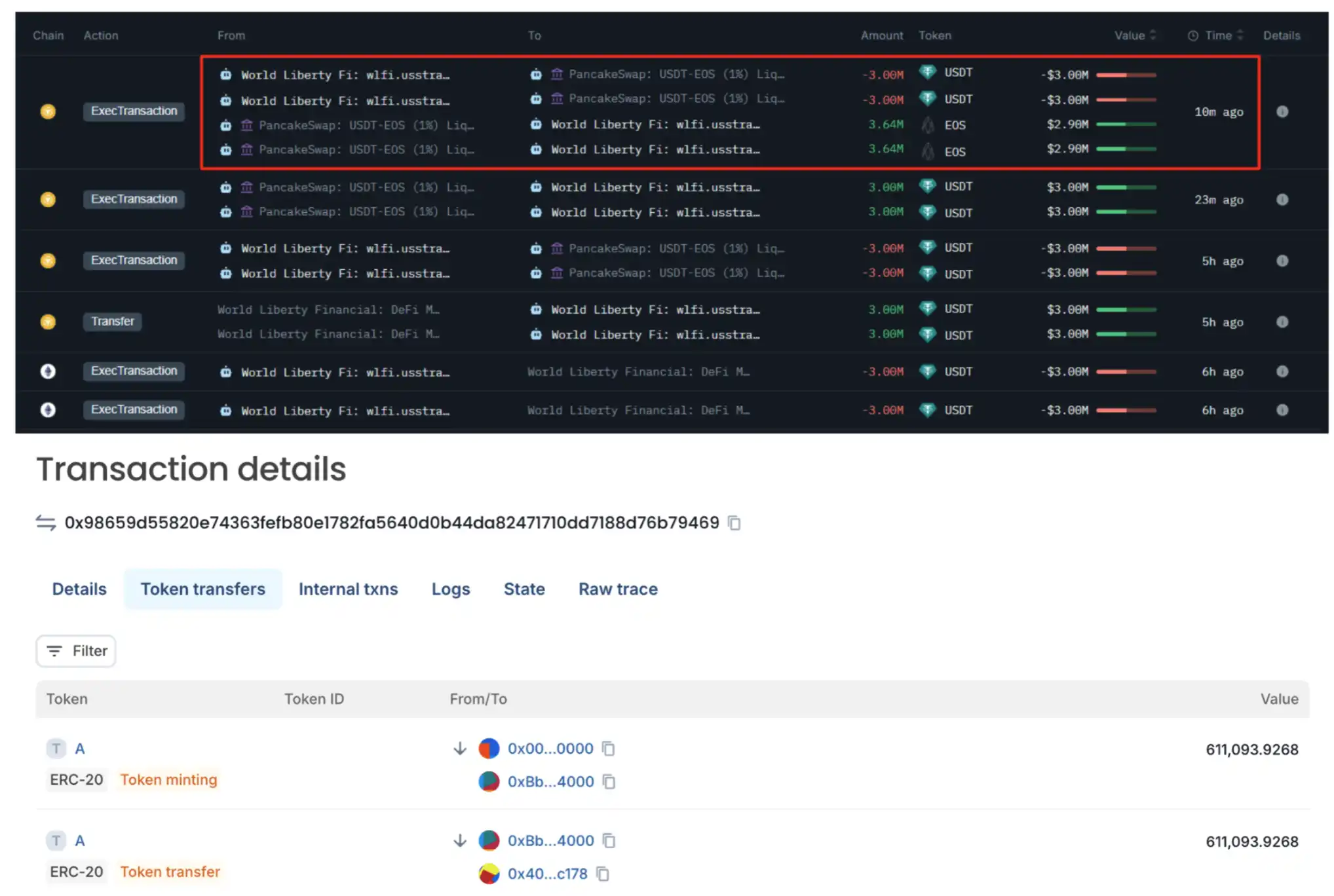
This operation directly boosted market sentiment. From EOS to Vaulta, this is not simply changing a name, but an upgrade at the narrative level.
Vaulta, born on the basis of the veteran public chain EOS, now has a more clear positioning: to build a Web3 banking network for global users. In other words, it is both an open financial platform and a "blockchain version of a banking operating system" serving individuals and institutions.
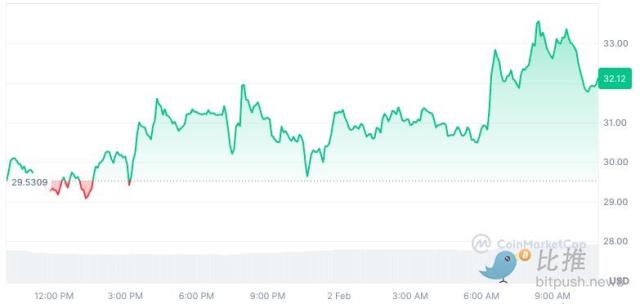
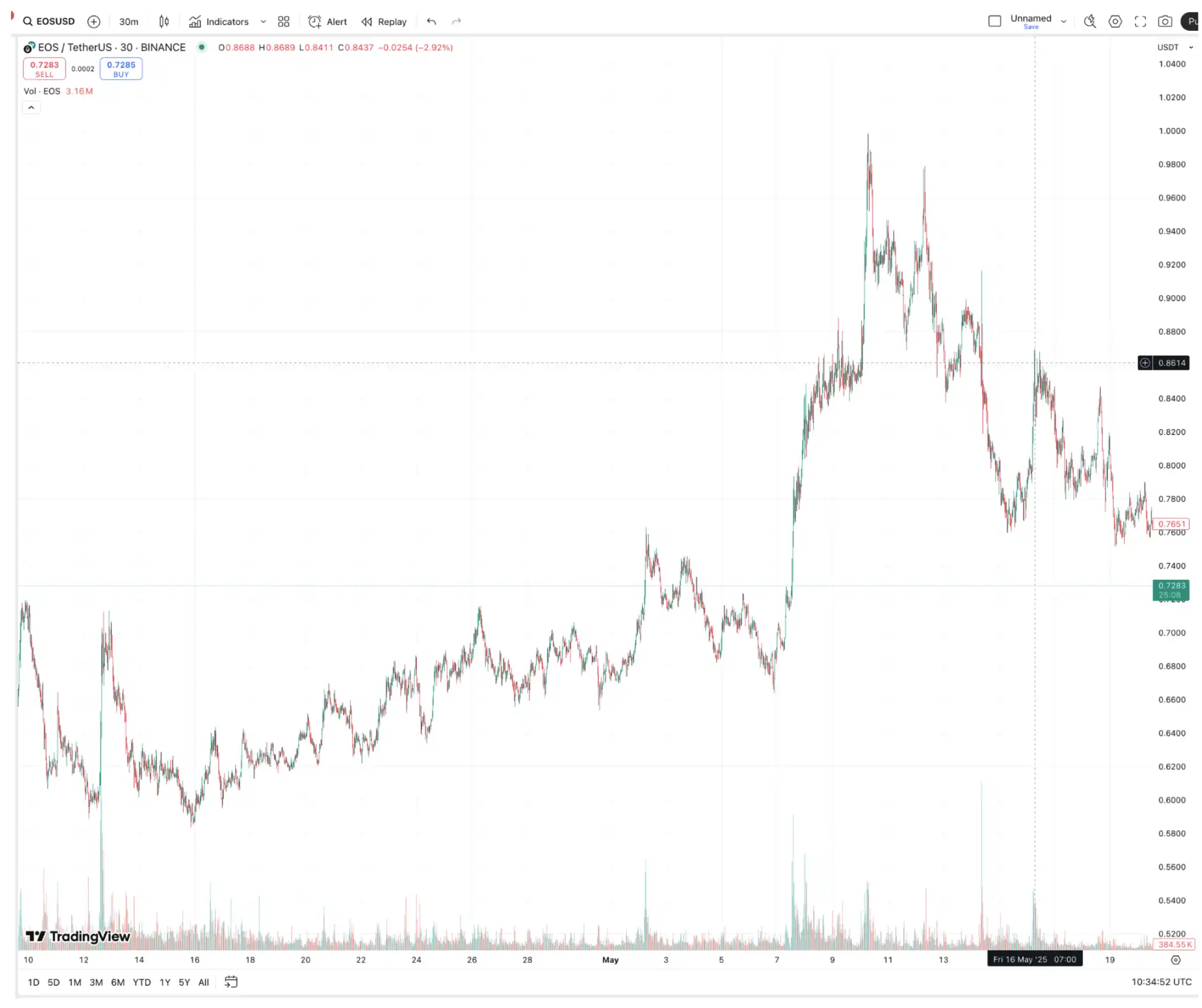
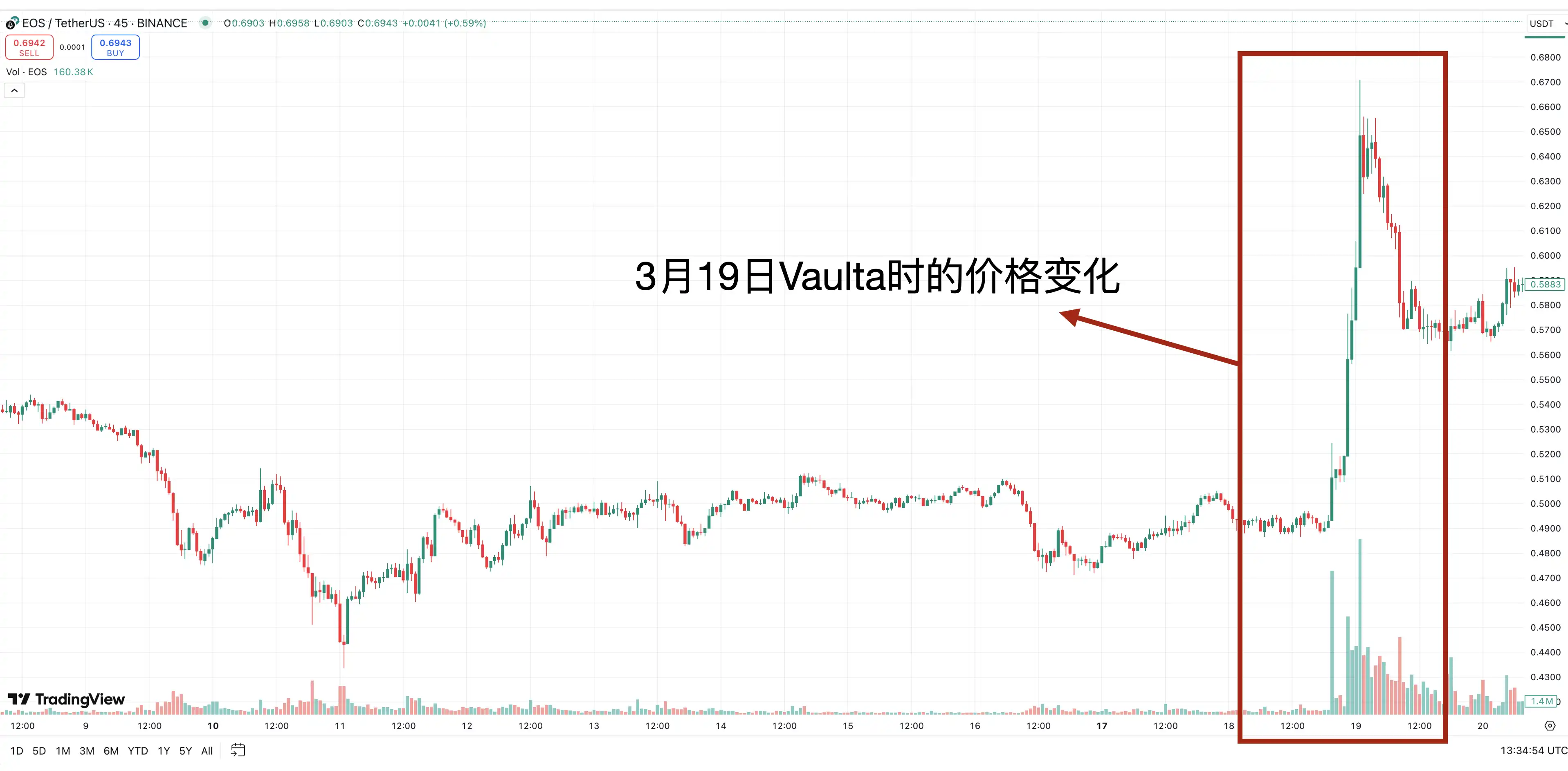
Since Vaulta announced its transformation, the market response has been very direct. While the entire market was declining or consolidating, EOS saw a significant rise.
The core of this system consists of the Vaulta mainnet and exSat protocol, which will integrate more native components in the future to serve real-world financial scenarios, from payment and custody to asset management, with the goal of becoming the "foundation of an on-chain bank".
[The translation continues in the same manner for the rest of the text, maintaining the specified translations for specific terms.]VirgoPay's first phase will be launched in multiple major financial markets, including the United States, Canada, Hong Kong, Australia, Brazil, and Argentina, with plans to expand to high-growth global remittance networks in South America, Southeast Asia, and the Middle East. It is estimated that the global cross-border remittance market will exceed $1 trillion by 2029, and the Vaulta + VirgoPay combination is building an on-chain channel for this blue ocean market.
Unlike traditional Web3 projects, Vaulta did not rush to deploy a technical template but instead entered from the most painful real-world scenarios, gradually constructing an on-chain banking operating system: VirgoPay is the first scenario implementation under the Vaulta Banking OS framework. Through Virgo's global payment network, Vaulta's chain will first connect a large number of non-crypto users. This is not just a product collaboration but a milestone in Vaulta's transformation from a "Layer 1 chain" to a "chain banking system". From Virgo's ecosystem perspective, this collaboration also means that its stablecoin payment capabilities will be formally embedded in sovereign chains, becoming part of the blockchain settlement system.
In the coming weeks, Vaulta and Virgo will successively disclose the timeline for VirgoPay's official launch and how the product will be deeply integrated with Vaulta's Banking OS system.
Additionally, Vaulta has another recent development: establishing a strategic partnership with Ultra. Ultra is an all-in-one gaming platform for players, publishers, and developers. This also means bringing more gaming and GameFi opportunities to Vaulta's community.
In the future, Vaulta and Ultra will work together to accelerate the creation of a comprehensive platform that enables digital assets to be tokenized, freely traded, and monetized across different games, leveraging a fast, low-cost, and highly interoperable infrastructure. Moreover, the platform will support decentralized markets, cross-game integration, and metaverse banking services, comprehensively expanding the boundaries of the digital economy. Related reading: 《Vaulta and Ultra Establish Strategic Partnership, Jointly Promoting the Future of Finance and Gaming》
Vaulta is Not EOS
In this world, having a troublesome ex is more heartbreaking than having a "former parent company" that does evil.
Looking back at Vaulta's history, you'll find that EOS's problem was never about technology, but about power misallocation: By the end of 2019, EOS's price fell below $5, and the following year it dropped to a low of $1.8, plummeting over 90% from its historical high of $23. At that time, when super nodes faced a survival crisis, developers were leaving, and market liquidity was drying up, what EOS's ecosystem needed most was rescue from its parent company Block.one, but Block.one did nothing.
We all know that through EOS's ICO, Block.one raised $4.2 billion, becoming the largest financing event in crypto history. Theoretically, this fund could support EOS's long-term development, support developers, drive technological innovation, and allow the ecosystem to grow continuously. When EOS ecosystem developers begged for funding, Block.one threw out a $50,000 check—not even enough to pay two months' salary for a Silicon Valley programmer. However, according to the latest overseas media reports, Block.one's CEO BB lavishly spent $172.8 million buying a villa, almost breaking the record for the highest transaction amount in Italian real estate history.
More shocking than Block.one's chaotic governance is that Block.one increasingly resembles a "family business" centered around CEO BB. His sister parachuted in as CMO, with her only visible "achievement" being changing EOS's brand color from tech blue to a "softer Morandi gray"; his mother controls the EOS VC investment fund, and the social application she led investment in, Voice, had fewer than 10,000 users after a year, yet consumed $150 million. EOS founder BM exposed on Twitter that he has "no decision-making power" and could only watch the team pour resources into the enterprise-level toolkit EOSIO—a project customized for giants like Walmart, completely unrelated to the EOS mainnet. Related reading: 《7 Years Later, the Largest $4.2 Billion Financing Project Announces Failure》.
In 2021, the community initiated an "uprising" and "independence", cutting off Block.one's control. "At first, I was just a validator helping deploy the mainnet, not leading the network, just a technical member of the community." But after witnessing EOS being shelved for three years, Yves La Rose established the EOS Network Foundation.
"At the beginning, we didn't even own EOS's intellectual property, GitHub repository, or even social media accounts. This brand reconstruction was actually a reclaiming of identity," said Yves La Rose.
In these three and a half years, Vaulta has been rebuilding brick by brick—all newly added functions and products point to one direction: Web3 banking. The last piece of the puzzle is changing the name and token code.
This means that, in fact, Vaulta has no relationship with the early EOS or its parent company Block.one. It is a "child" gradually stripped from the old system and reconstructed by the entire community. Vaulta is the result of the strategic restructuring led by the EOS Network Foundation, and now the Vaulta Foundation inherits the EOS Network Foundation, continuing its mission as an independent, community-driven organization.
Vaulta is not a case of old wine in a new bottle, nor is it "EOS's continuation", but the "starting point of Web3 banking". Vaulta's story is just beginning.
Welcome to join BlockBeats official community:
Telegram Subscription Group: https://t.me/theblockbeats
Telegram Discussion Group: https://t.me/BlockBeats_App
Official Twitter Account: https://twitter.com/BlockBeatsAsia