Pi Network is facing increasingly large challenges as nearly half of its nodes are concentrated in Vietnam. This high concentration, along with the country's tightening cryptocurrency regulations, has raised concerns about the project's decentralization and long-term stability.
Moreover, the core team's control over most of the Pi Coin (PI) supply further intensifies these concerns.
Is Pi Network's Future at Risk?
According to data from Piscan, Vietnam hosts 154 out of 319 global network nodes, accounting for 48.2% of the total. At the time of writing, 33 out of 76 connected nodes are located here, emphasizing Vietnam's dominance.
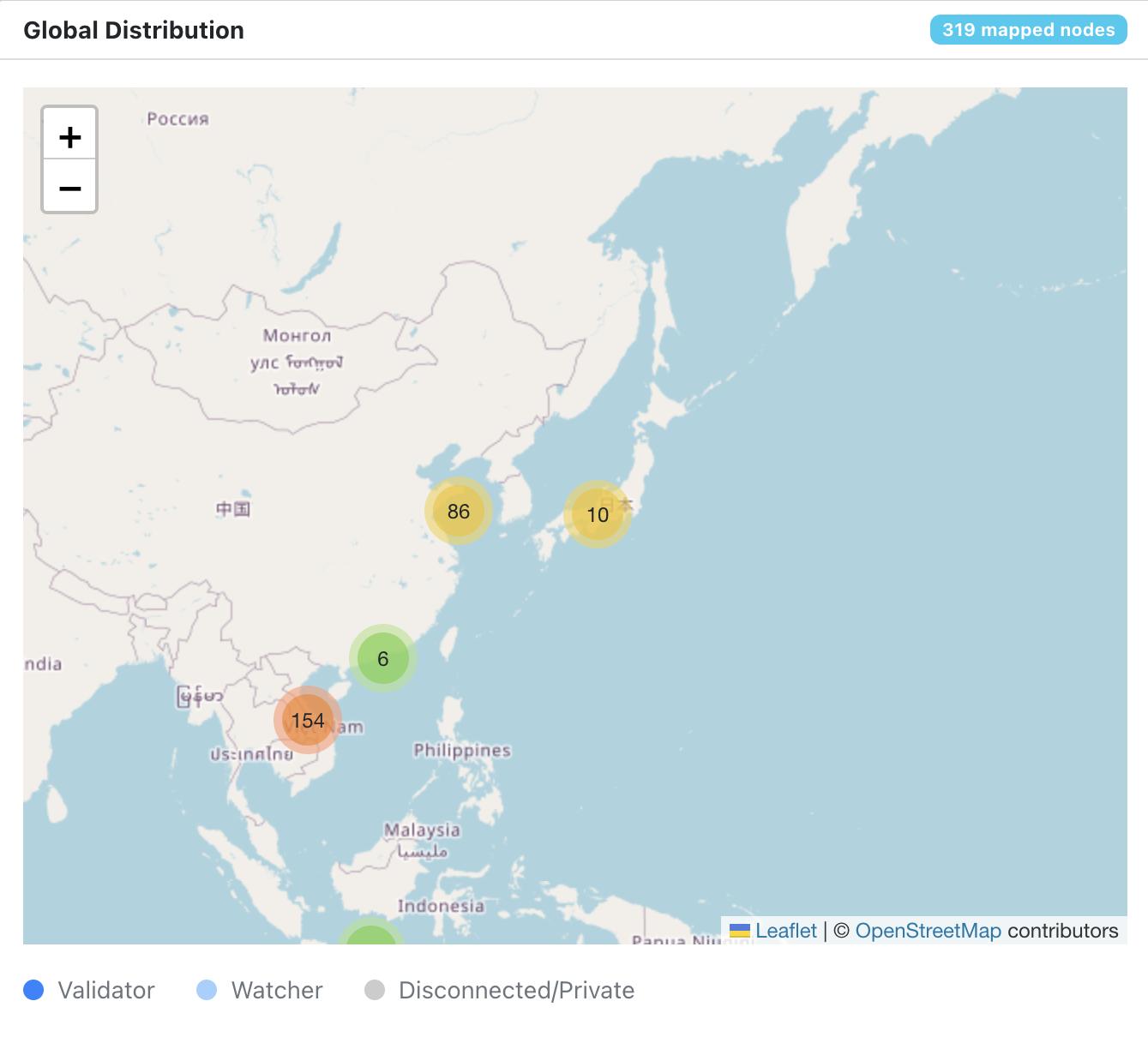 Total nodes of Pi Network in Vietnam. Source: PiScan
Notably, Pi Network only has two validation nodes, both belonging to the core team. This is itself a significant centralization issue, raising questions about the network's integrity.
However, the geographical concentration of Pi Network's monitoring nodes in Vietnam raises concerns about the network's fairness and decentralization, as users from one country could hold disproportionate control over network activities.
Vietnam's legal framework further complicates the situation. According to Vietnamese law, virtual currencies like Pi Coin are not legal non-cash payment instruments. Furthermore, authorities can penalize individuals using Pi Coin for payments.
"Any individual or organization using cryptocurrency, including Pi Coin, for payment transactions will be fined under Article 26, Clause 6 of Decree 88/2019/ND-CP, amended by Clause 15, Point d of Article 1 of Decree 143/2021/ND-CP (with fines from 50,000,000 VND to 100,000,000 VND) or may face criminal prosecution under Article 206," authorities wrote in a post in March.
The country's cautious approach is further demonstrated by legal warnings about Pi Network's potential risks. In 2023, Vietnamese authorities even conducted an investigation into Pi Network, citing concerns about its business model.
Moreover, Vietnam's Ministry of Finance has proposed new regulations to tighten cryptocurrency oversight by restricting custody only to licensed organizations. This proposal emphasizes the need for stricter control of cryptocurrency activities in Vietnam to ensure transparency, security, and compliance with local laws.
Although still under review, this policy could impact local Miners' operations, potentially destabilizing Pi Network's infrastructure.
These issues are further complicated by Pi Network's token distribution. Data from PiScan reveals that the Pi Foundation's wallet holds over 60.7 billion Pi out of the 100 billion supply.
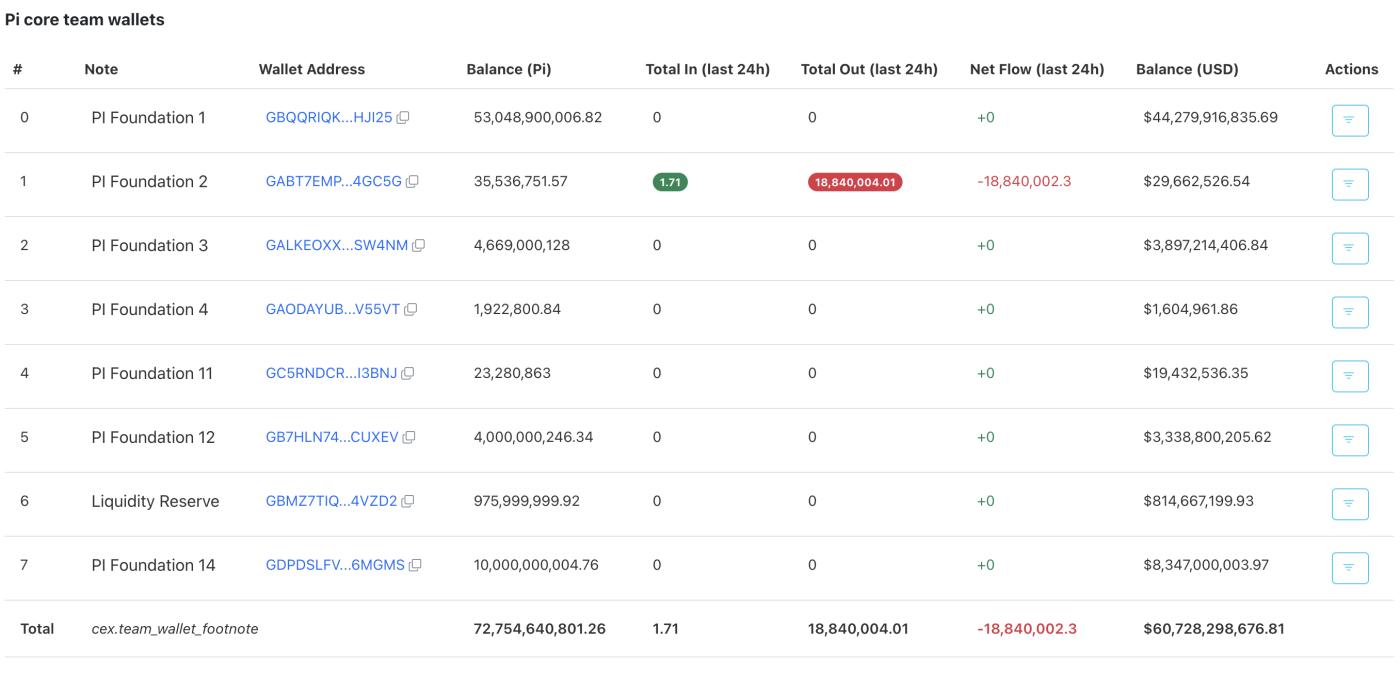 Pi Coin Supply Concentration. Source: PiScan
This concentration weakens the trust and decentralization spirit that cryptocurrency aims for.
"As long as the team holds a number of coins, it will never be decentralized," a user wrote on Reddit.
Furthermore, BeInCrypto recently reported that a Pioneer alleged the team is engaging in insider selling, eroding trust. Therefore, for a project that promotes itself as a decentralized, user-driven ecosystem, addressing these structural weaknesses will be crucial to maintaining credibility and ensuring long-term stability.