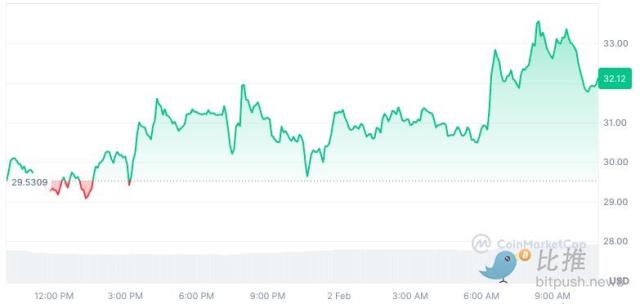
BTC price has broken through the $110,000 mark. Despite geopolitical tensions and tariff-related news creating an uncertain market environment, rational operations can still capture opportunities brought by this round of price increases.
Low retail participation in this market trend, with large token holders' dynamics becoming key price fluctuation indicators
Although BTC price has reached a new historical high, traditional retail participation indicators remain surprisingly low, causing many traders to miss this round of price increases. This market trend largely lacks retail fund momentum. Unlike the enthusiastic atmosphere and high emotions of previous previous bull markets, of this increase clearly lacks retail dynamics. Funding rates remain consistently low, retail trading activity is extremely weak, and other mainstream crypto assets are generally lagging.
Different from previous bull market cycles, retail's in Bstructure is no longer increasing. This contradicts a widespread view that Bview is earlystage of of absorbing billions of new users. On-chain data shows that a large amount of circulating BTC is being continuously absorbed by a few whale-level wallets.
As this trend accelerates, clarifying how enterprise-level demand drives price behavior and its continuation cycle has become key to market judgment. Continuously on tracking on-chain data and wallet activity will help insight into the evolution direction of token holding power structure and identify key price intervals for large token holders' potential entry or reduction.
BTC ownership transfer in progress, with long-term allocation intent evident
In this market trend, retail is absent, which well explains why funding rates and trading volumes remain low. We are witnessing a quiet and orderly BTC ownership transfer - gradually flowing from early users, investors, miners, and exchanges to a new generation of institutional investors represented by MicroStrategy. This structural transformation further explains the continued weakness in bullish option demand and implied volatility remaining at low levels.
The current round of increase is mainly driven by continuous spot market accumulation, rather than speculative derivative, reflecting the market's long-term allocation intent, not short-term speculation sentiment.
In sudden market corrections, often some suffer significant losses due to misjudgment. The key to losses is not temporary liquidation during sharp declines - in some cases, this approach is reasonable. The real problem is: they failed failed to identify potential correction risks in advance, and even when relevant warning signals had appeared, they still chose to ignore analytical conclusions.
Disclaimer: Markets involve risks, investment requires caution. This article does not constitute investment advice. Digital asset trading may involve extreme risks and instability. Investment decisions should be made after carefully considering personal circumstances and consulting financial professionals. Matrixport is not responsible for decisions based investment on provided in this content.