Article Authors: Rao Weitong, Hu Yiming
What are "Arbitrage Trading" and "Foreign Exchange Matching"?
Virtual currency arbitrage trading refers to a strategy of exploiting price differences between different exchanges or trading pairs through high-buy and low-sell operations. Its core lies in completing buy and sell transactions of the same asset within an extremely short time, achieving zero-risk or low-risk returns through rapid trading. For example: An arbitrage trader discovers frequent arbitrage opportunities between BTC/USDT trading pairs on OKX and Binance, so they deposit USDT on OKX and BTC on Binance. When an arbitrage opportunity appears, they simultaneously exchange USDT for BTC on OKX and BTC for USDT on Binance, completing the arbitrage.
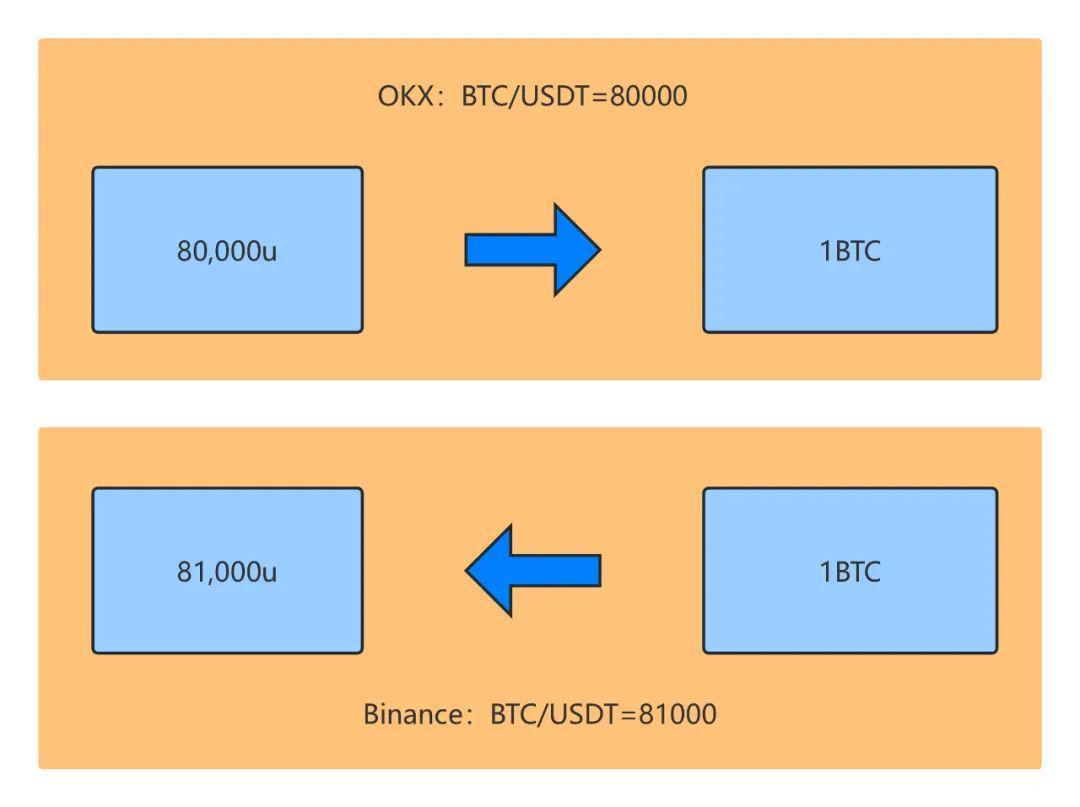
The above is the simplest description of arbitrage trading, but in practice, to capture profits, traders' transaction chains are likely to be much more complex, potentially involving currency exchange at some point, which could lead to potential "foreign exchange matching" behavior.
Potential Criminal Legal Risks of Arbitrage Behaviors
Based on the above analysis, everyone can have their own view on the criminal legal risks of arbitrage involving "foreign exchange countertrading". In principle, if arbitrage behavior purely stems from exchange rate differences between virtual currencies and does not involve any legal tender, it does not constitute criminal risks of illegal business operations. However, in practice, some arbitrage behaviors still exist where the transaction chain is long and complex, and for those who have not conducted in-depth research, it is not clear whether legal tender transactions occur at any stage, such as the following situations of arbitrage that carry high criminal risks:
1. Indirect Fund Closed Loop: Repeatedly collecting large amounts of USDT purchased directly with foreign currency or virtual currencies from unknown sources, providing RMB for their redemption, and then selling virtual currencies and converting them back to RMB;
2. Abuse of Structured Tools: Using DeFi protocols, cross-chain bridges, and other tools to split transaction routes, concealing the ultimate fund flow of legal tender exchange;
3. Covert Countertrading: Parties appear to conduct cryptocurrency trading, but privately agree to settle legal tender profits based on domestic and foreign exchange rate differences.
Therefore, one should not hastily attempt arbitrage behaviors they do not understand, or they may place themselves in risk.
Exploring Technological Innovation within Compliance Frameworks
The compliance of virtual currency transactions is not "black and white", but requires seeking a dynamic balance between regulatory logic and technological characteristics. For practitioners, strictly adhering to the bottom line of "not touching legal tender exchange closed loops" and constructing a verifiable, comprehensive compliance chain through professional legal teams can achieve the coexistence of business safety and innovation value.