In the financial world, especially in the emerging and unknown field of cryptocurrency, various interpretations and speculations emerge in an endless stream, among which "conspiracy theories" often attract a lot of attention with their drama and incitement. When the market fluctuates violently, when certain narratives differ from intuitive feelings, those stories about "behind-the-scenes manipulators" and "carefully planned scams" have soil for spreading. Recently, a statement that portrays the Bitcoin market as a "house of cards" controlled by insiders, relying on false demand and unlimited money printing has once again sparked widespread discussion, with its spearhead directed at industry participants such as Tether and Bitfinex.
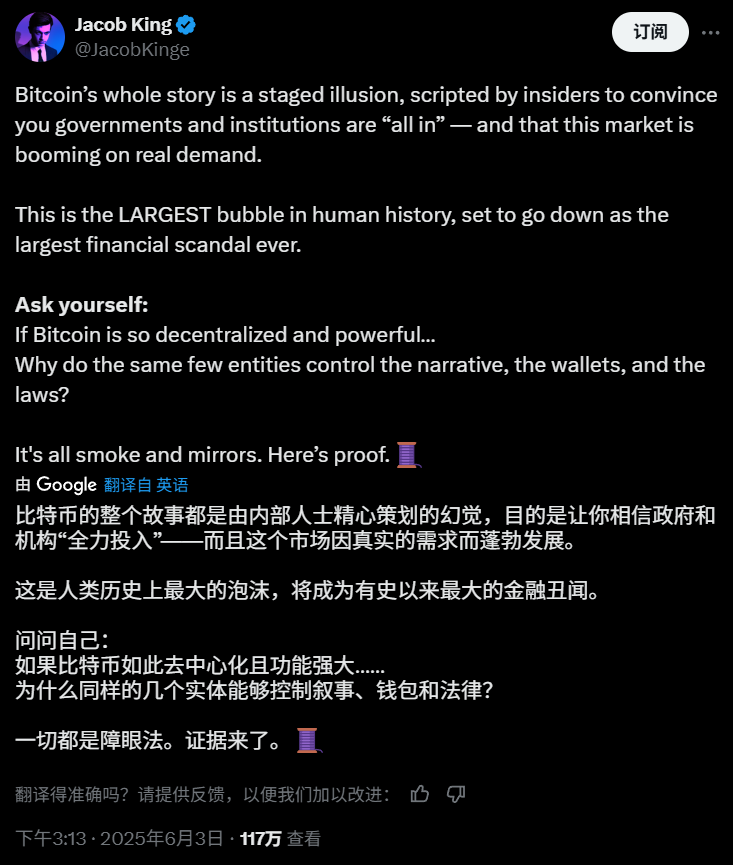
These arguments often amplify and connect certain doubts or controversies that do exist in the market, constructing a narrative that seems self-consistent but is actually full of logical leaps and evidentiary flaws. As rational observers and responsible media, we need to look beyond these sensational appearances, deeply analyze the core arguments of these so-called "conspiracy theories", clarify their specific accusations, and examine them one by one based on facts and logic, rather than easily falling into preconceived judgments.
Argument 1: Tether is an “unlimited money printing machine” that creates USDT out of thin air and manipulates the price of Bitcoin
The core accusation of the "conspiracy theory": This argument claims that Tether, the issuer of the stablecoin Tether (USDT), can "create out of thin air" and "print" a large amount of USDT, and then use these USDT without real legal currency to buy Bitcoin on a large scale. On the one hand, this move artificially pushes up the price of Bitcoin and creates a false prosperity; on the other hand, when the price of Bitcoin is pulled up, the manipulator will sell some Bitcoin in exchange for real US dollars or other legal currencies, thereby completing the "empty-handed" profit, and use these real legal currencies as their so-called "reserves" to deal with inspections, forming a self-reinforcing fraud closed loop. In short, Tether is the largest "internal banker" in the Bitcoin market, dominating the rise and fall of Bitcoin by printing money unlimitedly.
Rational rebuttal and factual analysis: To simply and crudely describe Tether’s operation as “unlimited money printing and Bitcoin price manipulation” is an overly simplified narrative that ignores the inherent complexity of the market and the actual operating mechanism and market demand of stablecoins.
First of all, the core issuance mechanism of USDT is based on market demand. In theory, when authorized market makers, large trading platforms or institutional investors need USDT for trading, providing liquidity or arbitrage, they will deposit an equivalent amount of fiat currency (mainly US dollars) to Tether at the official exchange rate (usually 1:1). After receiving the fiat currency, Tether will mint and issue an equal amount of USDT to these institutions accordingly. Conversely, when the institution needs to exchange USDT back to fiat currency, Tether will destroy the corresponding USDT and return the fiat currency. Therefore, the growth of the total amount of USDT largely reflects the real demand of the crypto market as a whole for stablecoin liquidity, especially when the market is active or there is a large market, the demand for stablecoins as a medium of transaction and a hedging tool will increase significantly.
Secondly, Tether's reserve issue is indeed a historical focus of controversy, but the situation is gradually improving. Historically, Tether has been repeatedly scrutinized by regulators (such as the investigation by the New York Attorney General's Office NYAG) and widely questioned by the market for the transparency of its reserve composition and the adequacy of its audit. These questions mainly focus on whether it always holds high-quality reserve assets equivalent to the total amount of USDT issued. Although most of these cases eventually ended in settlement (for example, Tether and Bitfinex paid fines to the NYAG but did not admit wrongdoing), all doubts have not been completely dispelled. However, in recent years, Tether has begun to regularly publish detailed reserve reports attested by third-party accounting firms (although not the top "Big Four"). Although these reports are not equivalent to comprehensive financial audits, they do provide a snapshot of the composition of its reserve assets (such as cash, cash equivalents, commercial paper, corporate bonds, precious metals, digital assets, etc.). Critics can still question the liquidity and risk level of its reserve assets, but this is different from the accusation of "printing money out of thin air."
Furthermore, it is untenable to attribute the long-term trend of Bitcoin prices entirely to Tether's "manipulation". The price of Bitcoin is driven by a variety of complex factors, including the global macroeconomic environment (such as inflation expectations, interest rate policies), technological development and innovation (such as Lightning Network, Taproot upgrades), changes in the structure of market participants (such as the entry of institutional investors), regulatory policy orientation, market sentiment, and geopolitics. Although in the early market without effective supervision, or in a specific time window, large-scale capital injections (whether from USDT or other sources) may theoretically have an impact on short-term prices, to prove that the entire Bitcoin bull-bear cycle of more than ten years is entirely a "scam" led by Tether, it requires a more direct and comprehensive chain of evidence than observing the correlation between USDT issuance and Bitcoin price fluctuations in certain periods. Many academic studies and market analyses have also failed to draw a definitive conclusion that Tether systematically and long-term manipulates Bitcoin prices.
Finally, if Tether is really a pure "money printing machine" without real demand support, its stablecoin USDT should have collapsed long ago because it could not maintain its peg relationship with the US dollar. Although USDT has experienced a brief depegging phenomenon in history, it has generally remained relatively stable, which in itself indirectly shows that there is a wide range of actual market demand for its use.
Argument 2: “National adoption” is a carefully orchestrated illusion, and key figures are deeply involved in “insider trading”
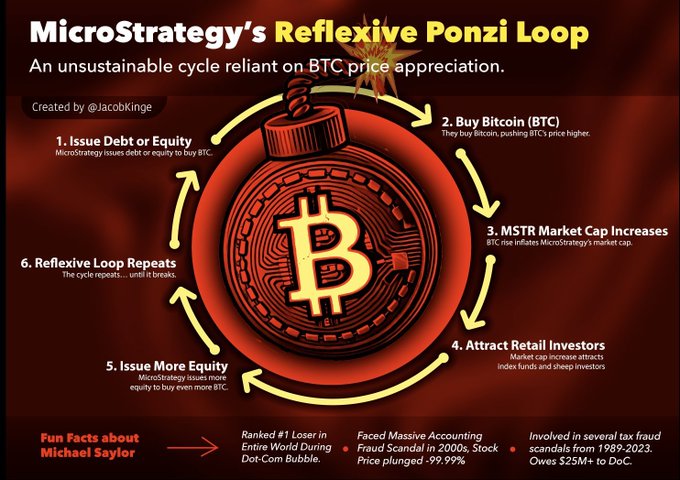
The core accusation of the "conspiracy theory": This argument claims that the announcement of certain countries (such as El Salvador) to make Bitcoin a legal tender, or the large-scale investment in Bitcoin by certain well-known entrepreneurs (such as Jack Mallers and Michael Saylor), is not a real national strategy or business decision, but a "performance" carefully planned and funded by "insiders" such as Tether and Bitfinex. The purpose is to create the illusion that "even countries/large institutions are buying Bitcoin" and lure retail investors (FOMO emotions) to take over, thereby creating conditions for these insiders to ship or further increase prices. Specific accusations include:
- El Salvador’s Bitcoin is not purchased with real money, but directly transferred from Bitfinex and Tether;
- Tether was deeply involved in drafting El Salvador’s Bitcoin bill;
- Jack Mallers’ company funds come directly from Tether reserves;
- Michael Saylor's MicroStrategy is engaging in a "reflexive Ponzi scheme" by continuously raising funds with high leverage to buy coins.
Rational rebuttal and factual analysis: Simply classifying state behavior or corporate strategy as part of a "conspiracy theory" often ignores the complex context of the event itself and the normal way the market operates.
On El Salvador’s Bitcoin Experiment :
- Routine operation of large-value Bitcoin transactions : Conspiracy theorists regard the claim that the treasury Bitcoin comes directly from Bitfinex and Tether transfers as evidence of "non-real money purchases" or "insider transfers". However, in the cryptocurrency market, especially when large purchases involve sovereign states or large institutions, it is standard operating procedure to directly sweep the market through over-the-counter (OTC) transactions rather than the open market. This is done to avoid the drastic impact of large buy orders on the market price within the exchange, so that the required amount of Bitcoin can be obtained at a more stable price. After the transaction is completed, the direct transfer of Bitcoin from the wallet of the seller (which may be the OTC department of a large exchange, a mining pool, or other entity holding a large amount of Bitcoin, such as the trading department/affiliate of Bitfinex or Tether) to the buyer (such as the treasury wallet designated by the Salvadoran government) is a completely normal settlement process. Therefore, asserting its nature based solely on the on-chain transfer path may ignore the regular market practice of large institutions acquiring digital assets.
- Considerations of transparency and actual benefits : Of course, this does not mean that El Salvador’s Bitcoin experiment is perfect. The transparency of its decision-making process, the specific cost of obtaining Bitcoin, the significant decline in the use of Chivo wallets after the initial promotion, and the actual impact of Bitcoin legalization on the national economy are all issues that deserve continued attention and in-depth discussion. These issues need to be objectively evaluated based on facts, rather than simply labeling them as "scams."
- Possibility of Tether’s involvement in legislation : As to whether Tether was deeply involved in drafting the Bitcoin bill in El Salvador, this is indeed a question that needs to be taken seriously. If true, it is necessary to evaluate the extent and manner of its involvement and whether it has gained improper benefits or had a negative impact on the fairness of the bill. However, this in itself does not directly constitute sufficient evidence that the entire “national adoption” is a fake scam, but should be examined from the perspective of regulation, lobbying, and potential conflicts of interest.
About Jack Mallers and Michael Saylor :
- Business cooperation and source of funds : Jack Mallers' Strike or its affiliates are accused of investing a large amount of bitcoin from Tether reserves, which requires specific evidence to confirm the direct flow and nature of the funds. Investment, cooperation or fund borrowing between companies in the crypto industry is not uncommon. The key is whether these transactions are compliant and transparent, and whether there are undisclosed relationships that may harm the interests of other investors.
- MicroStrategy's High Leverage Strategy : Michael Saylor's MicroStrategy has made a large amount of debt to purchase and hold Bitcoin for a long time as the company's core strategy. This is an open, high-risk, and high-leverage financial strategy. Saylor himself has never concealed his extreme optimism about Bitcoin and the company's aggressive approach. This strategy is more like a public declaration of betting on the future of Bitcoin. Its risks have long been known to the market, and investors can judge for themselves whether to agree and participate in its stock trading. Calling it a "reflective Ponzi cycle" may be a misunderstanding. The core feature of the "Ponzi scheme" is to pay the returns of early investors with the funds of later investors, while MicroStrategy's model is to use financing to purchase real assets (Bitcoin). Its success or failure depends directly on the future price performance of Bitcoin and the company's debt management capabilities, which is essentially different from the definition of a Ponzi scheme. Of course, the extreme risk of this strategy cannot be ignored.
Argument 3: “Institutional demand” is short-term speculation and has subsided. ETF fund outflow is a warning signal
The core accusation of the "conspiracy theory": This argument holds that the narrative of "institutional investors entering Bitcoin on a large scale" is nothing more than a product of a short-lived hype and FOMO sentiment, and that real, sustained institutional demand does not exist or has been greatly weakened. The net outflow of funds from Bitcoin spot ETFs after the initial inflow, or the fact that some institutions are not as interested in Bitcoin as expected, are interpreted as evidence that "institutions are running away collectively" and "smart money has quietly left the market", indicating that the price of Bitcoin lacks long-term support.
Rational rebuttal and factual analysis: Interpreting short-term fluctuations in institutional behavior as fundamental reversals of long-term trends often lacks a comprehensive understanding of the dynamics of financial markets.
- Normal fluctuations in ETF fund flows : The inflows and outflows of exchange-traded funds (ETFs) are inherently volatile. Net outflows in the short term do not fully represent a reversal of long-term trends or a fundamental decline in institutional interest. There are many factors that affect ETF fund flows, including: cyclical changes in investor sentiment, changes in macroeconomic conditions (such as interest rate adjustments, inflation data), short-term profit-taking behavior, periodic adjustments to asset allocation strategies, tax factors, and changes in the attractiveness of other alternative investments. To assess the true attitude of institutions towards Bitcoin and long-term allocation trends, it is necessary to observe data over a longer time dimension, and combine the institutions' own public reports, changes in positions, in-depth market research, and industry development fundamentals, rather than relying solely on short-term fund flow data to hastily draw conclusions.
- Gradual and diverse institutional adoption : The adoption of emerging assets such as Bitcoin by institutional investors is usually a gradual and prudent process, rather than a one-off event. Different types of institutions (such as pension funds, endowment funds, family offices, hedge funds, listed companies, etc.) have different risk preferences, investment cycles, regulatory constraints, and decision-making processes. The approval of Bitcoin spot ETFs does provide some institutions with a more convenient and compliant investment channel, but this is only one of the ways for institutions to participate in the Bitcoin market. Other ways include directly purchasing and custodial Bitcoin, investing in Bitcoin mining company stocks, and participating in Bitcoin-related financial derivatives transactions. Therefore, judging the "ebb" of overall institutional demand based solely on the short-term performance of ETFs may be a generalization.
- Regulatory prudence does not mean industry denial : Regulators (such as the US SEC) maintain a cautious attitude towards cryptocurrency-related products (such as more types of ETF applications) and emphasize investor protection and prevention of market manipulation. This is a normal manifestation of their regulatory duties. This also reflects from the side that the cryptocurrency market still needs to continue to work on transparency, compliance, risk control and market infrastructure construction in the process of maturity and standardization. Equating regulatory prudence directly with the denial of the entire industry or the long-term value of Bitcoin, or interpreting it as part of a certain "conspiracy", is obviously an over-interpretation and misjudgment.
Argument 4: Tether and Bitcoin have formed a "death spiral" and will collapse if the balance is lost
The core accusation of the "conspiracy theory": This is a dramatic doomsday argument that an unstable, interdependent "vicious circle" or "death spiral" has formed between Tether and Bitcoin. Specifically, Tether supports its own "value" (or creates the illusion that its reserves are sufficient) by constantly purchasing Bitcoin, and the price of Bitcoin in turn depends on the continuous liquidity provided by Tether (i.e. "printing" buying). Once a link in this fragile cycle breaks - for example, Tether suffers a large-scale run that makes it unable to cope with redemptions, or a catastrophic plunge in the price of Bitcoin causes Tether's Bitcoin reserves to shrink severely - the entire system will collapse like a domino, triggering an epic financial disaster. Saifedean Ammous's statement that Tether's Bitcoin reserves may exceed its US dollar reserves in the future is often cited to prove the instability and potential risks of this structure.
Rational rebuttal and factual analysis: Although there is a certain possibility of risk transmission between any highly correlated financial assets or entities, directly portraying the relationship between Tether and Bitcoin as a "death spiral" that is about to collapse may exaggerate its inherent fragility and misunderstand the core logic of the value support of both parties.
- Tether's core value support : As a stablecoin, Tether (USDT)'s core value proposition is to maintain a stable anchor relationship with fiat currencies such as the US dollar (usually 1 USDT ≈ 1 US dollar). Its value support mainly comes from the reserve assets it claims to hold, which correspond to the total amount of USDT issued. According to Tether's regularly released reserve reports, these assets currently mainly include cash and cash equivalents (such as short-term treasury bills, money market funds, etc.), corporate bonds, secured loans, and other investments including Bitcoin. Bitcoin does have a place in Tether's reserves, but it is not the entire or absolute majority of its reserves. The stability of USDT mainly depends on the liquidity, security and adequacy of its overall reserve assets, as well as the market's confidence in its ability to fulfill its redemption commitments.
- Bitcoin's multiple value drivers : Bitcoin's value does not solely rely on the liquidity provided by Tether. As mentioned earlier, Bitcoin's price and value are affected by a combination of factors, including technical characteristics (such as decentralization, scarcity, and security), network effects, market supply and demand, macroeconomic factors, regulatory environment, and investor sentiment and adoption. Although Tether, as the main stablecoin provider in the market, provides USDT liquidity that plays an important role in the activity and depth of the Bitcoin trading market, this does not mean that the intrinsic value of Bitcoin is entirely tied to Tether alone.
- Complexity of risk transmission : If Tether encounters a serious crisis of confidence or reserve problems, it may indeed have an impact on the entire crypto market (including Bitcoin), triggering liquidity tension and risk aversion. Conversely, if the price of Bitcoin experiences an extreme and sustained plunge, it may also put pressure on Tether's balance sheet, which holds Bitcoin as part of its reserves. However, whether this risk transmission will inevitably evolve into an uncontrollable "death spiral" depends on a variety of factors, including the scale of the impact, the response of other market participants, the ability of regulators to intervene, and the resilience of the two systems. Interpreting certain forward-looking or speculative statements (such as future assumptions about Tether's Bitcoin reserve ratio) as established facts or a harbinger of an imminent systemic collapse may lack an accurate grasp of the current actual situation and dynamic balance.
- The focus should be on transparency and risk management : A more rational perspective is to continue to pay attention to the transparency of Tether's reserve composition, the quality and liquidity of its reserve assets, the independence and credibility of audit reports, and the effectiveness of its own risk management framework and emergency plans. These are the key to assessing its stability and potential systemic risks.
Why are conspiracy theories so easy to breed and spread?
Bitcoin and the crypto world behind it, due to its disruptive technology, idealistic ideas, relatively lagging regulation in its early stages of development, and the uneven quality of market participants, naturally provide fertile ground for all kinds of extreme narratives and speculations. The following points may explain why such "conspiracy theories" are particularly prevalent:
- Information asymmetry and lack of transparency in some areas : Although one of the core features of blockchain technology is the openness and transparency of on-chain data, the internal operations, complete financial status, decision-making mechanisms and even actual controllers of many key centralized operating entities (such as some exchanges, stablecoin issuers, project foundations, etc.) are often not transparent enough to the general public, or even deliberately vague. This information gap provides a wide space for various speculations, suspicions and even malicious speculations.
- The warning effect of real fraud and failure cases in history : From the early Mt. Gox theft, to the recent bankruptcy of Celsius and Voyager, to the shocking collapse of FTX Exchange, the crypto industry has indeed experienced many major losses due to fraud, poor management, insider control or hacker attacks. These real negative cases have seriously weakened the trust of some investors in the industry, making people more likely to accept explanations pointing to "conspiracy" or "scam" when facing uncertainty or market fluctuations.
- The violent price fluctuations and the psychological tendency to seek simple attribution : Crypto assets such as Bitcoin are well-known for their violent price fluctuations. When the market experiences sharp rises and falls, many people, especially investors who have suffered losses, tend to rush to find a simple and direct reason to explain it all. "The market is manipulated by a few whale/insiders" is often easier to understand, accept and spread than admitting that "this is a natural market fluctuation under the complex action of multiple factors, superimposed with high-risk speculative sentiment." This is a common cognitive bias and psychological defense mechanism.
- Profit-driven and deliberate construction and dissemination of specific narratives : In any financial market, there may be some participants who actively create, amplify and spread specific narratives for their own interests (such as profiting by short the market, attacking competitors, promoting their own projects or views, attracting traffic and eyeballs, etc.), including "conspiracy theories" that are sensational, exaggerate risks, or even distort the facts. The anonymity and rapid dissemination of social media further exacerbate the spread of such information.
- The cognitive threshold of new technologies and the prevalence of emotional interpretations : For the general public who are not fully familiar with blockchain technology, cryptographic principles, and complex cryptoeconomic models, there is indeed a high cognitive threshold to deeply understand the intrinsic value logic of Bitcoin, mining mechanisms, consensus algorithms, and the operation of the entire ecosystem. In this case, simplistic, labeled, emotional, and even demonized interpretations are often easier to spread and accept than rational, objective, and complex analyses.
Conclusion: Stick to rationality, evidence and critical thinking in the fog
The world of Bitcoin is an arena where cutting-edge technological innovation, disruptive financial experiments and complex human nature games are intertwined. It not only demonstrates the huge potential and appeal of decentralized concepts and peer-to-peer value transfer, but also exposes the various irregularities, opacities and high risks that emerging markets will inevitably encounter in the early stages of development. The so-called "conspiracy theories" are often the product of selective extraction, one-sided interpretation and subjective speculation of these bizarre and complex realities. They may keenly point out some real problems or potential risk points in the industry, but the explanatory framework and final conclusions they provide often lack solid evidence support, rigorous logical deduction and comprehensive factual considerations.
We do not have to regard all doubts and criticisms as a scourge or malicious attacks, because constructive criticism, reasonable suspicion, and the continued pursuit of transparency and accountability are the necessary external pressure and internal motivation to drive any industry (especially emerging industries) towards maturity, standardization, and healthy development. The continued attention to the composition of Tether's reserves and the call for independent audits, the vigilant analysis of large-scale on-chain changes and the reasons behind them, and the strict scrutiny and full disclosure of related transactions and potential conflicts of interest are all manifestations of the market's maturity and responsibility.
However, when faced with grand narratives that claim to reveal "global manipulation," "huge scams," or "doomsday prophecies," it is particularly important to keep a clear head, think independently, and think critically. We need to carefully identify the source and reliability of information, distinguish between objective statements of fact and subjective expressions of opinions, understand that correlation does not equal causation, and be wary of arguments that appeal to emotions rather than reason.
The future of Bitcoin cannot be easily dominated or completely controlled by one or two so-called "conspiracies" or a few accused "insiders". It is more like a large-scale, ongoing, multi-party global socio-economic experiment. Its ultimate direction and historical position will be jointly shaped by the continuous breakthroughs and iterations of the technology itself, the gradual clarification and coordination of the global regulatory framework, the cognitive maturity and behavioral rationality of market participants, and the acceptance and interaction mode of the broader socio-economic environment.
In this new digital world full of unknowns, opportunities and challenges, only by adhering to the attitude of lifelong learning, cultivating the ability to think independently, and developing the habit of making judgments based on evidence can we avoid being blinded by temporary fog and misled by sensational narratives, so as to gain a clearer insight into its essential characteristics and development trends. For the entire encryption industry, actively embracing transparency, constantly strengthening self-discipline, daring to accept supervision, and honestly responding to the reasonable concerns and doubts of the market are the fundamental ways to effectively reduce the space for the breeding and spread of "conspiracy theories" and win the long-term trust and broad recognition of society.