


Author: Black Mario Source: mirror
Skate is a stateless, cross-virtual machine infrastructure layer dedicated to providing a unified application logic and liquidity framework for multi-chain ecosystems. It allows developers to deploy applications once and achieve shared state and logic across multiple chains, significantly reducing development costs and improving cross-chain deployment efficiency.
In fact, the current Web3 infrastructure generally suffers from fragmentation, where each chain has an independent runtime environment and contract system, requiring developers to repeatedly write and deploy logic, and users to frequently switch between multiple wallets and application interfaces. By building a universal execution environment, Skate has achieved synchronized coordination of logic, state, and liquidity, eliminating the need for state migration or replication and enabling smooth interaction without relying on bridging operations.
Skate's core design goal is to provide a highly composable and scalable runtime framework for on-chain applications without asset custody or state replication. Its underlying architecture supports compatibility with multiple virtual machines such as EVM, Solana, TON, and Move, with native cross-VM coordination capabilities, and ensures security and verifiability in cross-chain processes through stateless execution and AVS verification mechanisms.
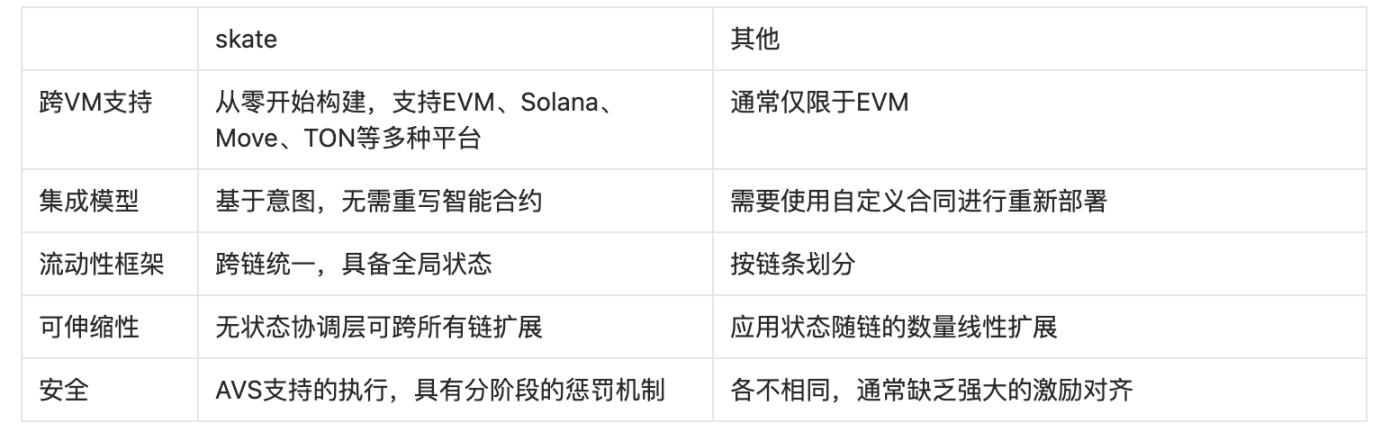
With this architecture, Skate provides infrastructure support for building a unified multi-chain application logic and liquidity network, driving Web3 from "multi-chain deployment" to "inter-chain integration" and laying the foundational platform for the next generation of cross-chain DeFi and asset protocols. As an important narrative direction aligning with current industry development trends, the project is about to launch its TGE and is receiving widespread market attention.
[The rest of the translation continues in the same manner, maintaining the specified translations for technical terms and preserving the original structure.]So far, Skate has successfully been deployed in multiple mainstream virtual machine environments, including Ethereum, Base, BNB Chain and other EVM chains, as well as Solana, Eclipse and other non-EVM networks based on SVM. These deployments have verified Skate's portability and operational efficiency in multi-chain systems, and also reflect its rapid response capability to real user needs.
It is reported that Skate AMM has accumulated a trading volume of over $100 million in just two months since its launch, and has completed the first round of protocol fee distribution. The new revenue system is not built through pre-mining or token subsidies, but is truly based on transaction fee income generated by on-chain trading activities, marking Skate as the first AVS on EigenLayer with actual protocol income recycling capabilities.
More importantly, these protocol incomes are distributed to AVS re-stakers by usage cycle, rather than static accumulation, thereby forming a sustainable incentive mechanism driven by real usage. This mechanism not only enhances the participation enthusiasm of Skate's running nodes but also builds a "demand-centric" validation service reference paradigm for the entire EigenLayer.
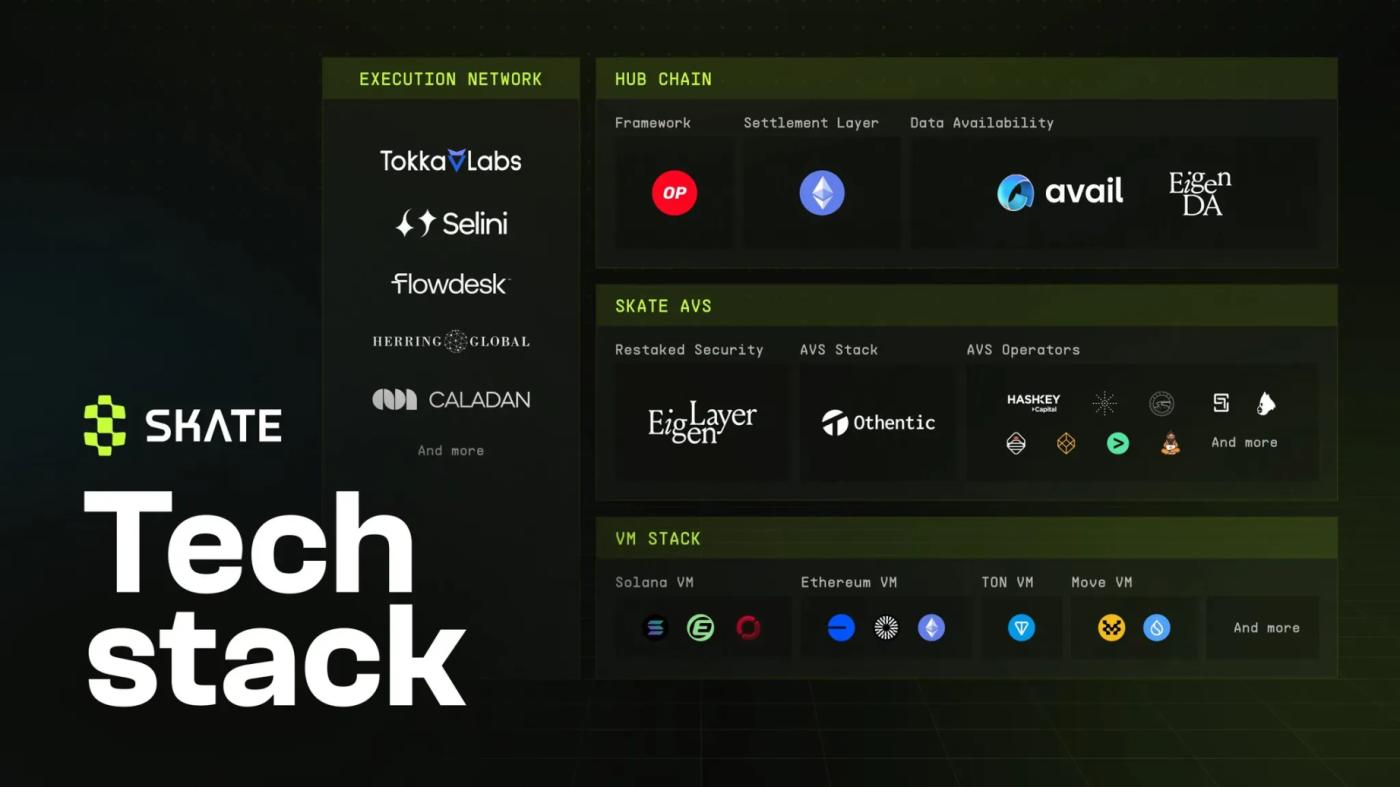
At a stage where AVS models generally face "high valuation, low income", Skate provides a replicable template: how to build a sustainable and verifiable protocol income system through cross-chain liquidity and high-frequency trading structures. As more DeFi protocols, RWA applications, and on-chain assets access Skate, the protocol income scale is expected to continue growing and further enhance the entire system's network effect.
Skate is driving a new infrastructure paradigm, namely a protocol economic model driven by actual transaction flows, setting a quantifiable growth path and replicable incentive structure for AVS and modular validation services.
Conclusion
Skate is building truly cross-chain application infrastructure for the multi-chain world. Through stateless architecture, AVS security guarantees, unified liquidity engine, and native compatibility with all mainstream virtual machine environments, Skate not only reshapes the technical path of cross-chain interaction but also provides an efficient, composable, and sustainable operating base for stablecoins, RWA assets, and a new generation of on-chain financial protocols.
At a critical stage where Web3 is moving towards multi-chain collaboration and asset interconnection, Skate's technical framework and product mechanisms have completed a closed-loop verification from concept to implementation. As more ecosystem partners join and core protocols are integrated, Skate will continue to promote inter-chain logical unity and liquidity integration, bringing unprecedented infrastructure standards to cross-chain finance and potentially fundamentally reconstructing Web3's scalability and user experience.






