


Yesterday, the decentralized asset management platform Trident announced a treasury financing plan for XRP up to $500 million and hired Chaince Securities LLC as a strategic advisor.
Against the backdrop of waning retail enthusiasm and cooling community discussions, this news has drawn market attention: Why do institutions still choose to allocate large amounts of XRP as on-chain reserve assets? Does this mean that the retail camp once known as the "XRP Army" is gradually being replaced by institutional funds?
Related reading: 《Trident Announces XRP Treasury Financing Plan Up to $500 Million, Appoints Chaince Securities LLC as Strategic Advisor》
XRP is one of the earliest blockchain projects to enter the public eye, yet it has long suffered labels such as "centralized," "entangled in lawsuits," and "lacking innovation." The five-year tug-of-war with the SEC, slowed technological iterations, and weak community engagement once made it a representative of an "old-era project." However, since 2024, XRP's ecosystem has quietly shifted: its price is approaching historical highs again, XRPL is building infrastructure around sidechains, stablecoins, and DeFi modules, and corporate buying and development investment are gradually warming up. These changes, though not loud, are accumulating substantial progress on multiple indicators.
This is not a narrative comeback, but a structural reconstruction completed in low-attention circumstances. This article will observe how XRP walks a second path of "neither exploding nor perishing" from the perspectives of capital flow, ecosystem evolution, and on-chain data.
Is XRP Making a Comeback?
Strategic Buying: Who is Buying XRP?
Although the mainstream narrative has not yet been updated, the capital choices in the real world are providing another answer. Despite XRP's "old coin" image in the crypto community remaining unchanged, the actual capital flow has quietly turned.
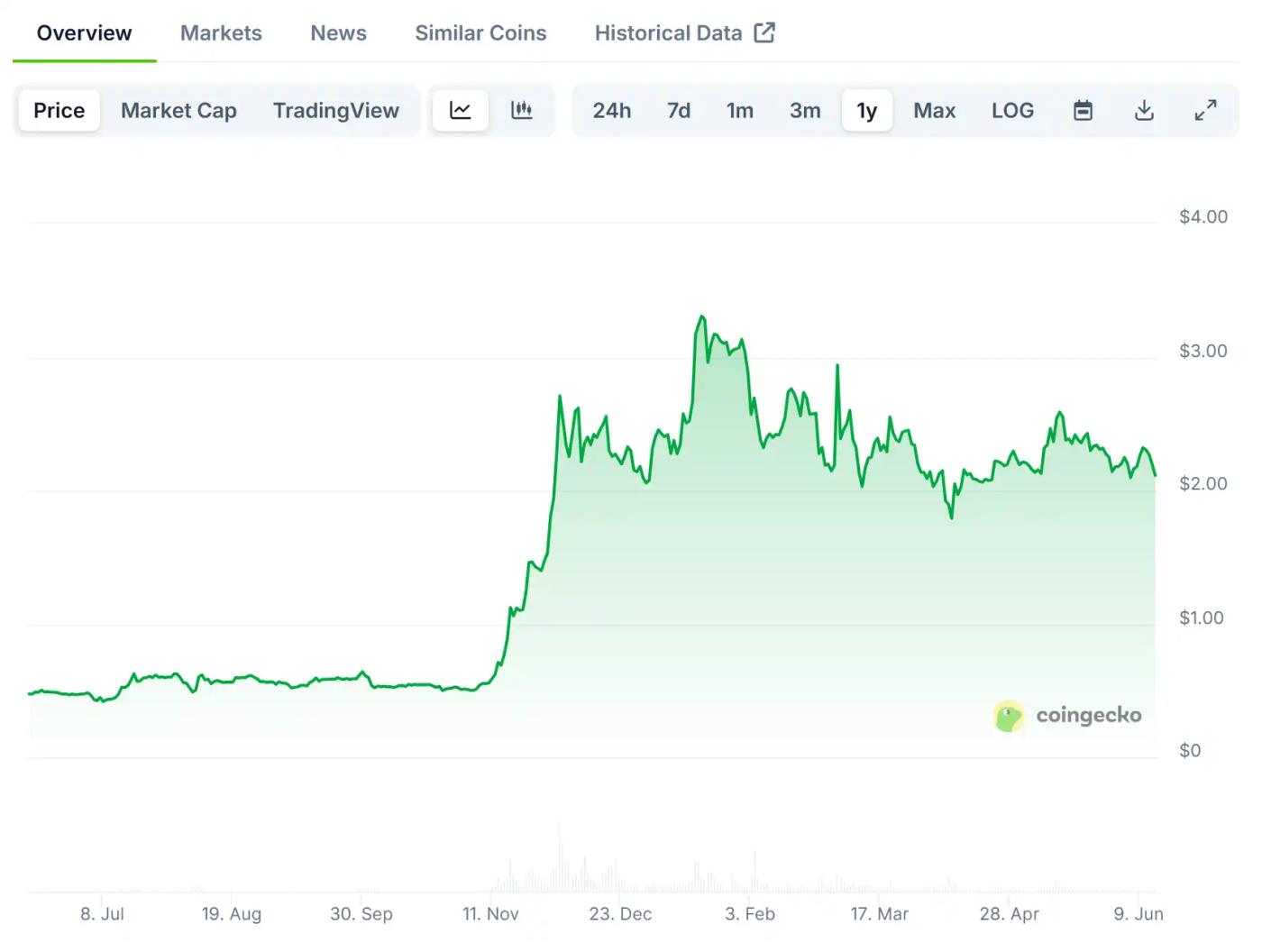
Over the past year, this project long viewed as a "centralized legacy" has not fallen into oblivion. Instead, its price has remained stable around $2, maintaining resilience through multiple market corrections. By the end of 2024, XRP's market cap briefly exceeded USDT, returning to the top three global crypto assets; its on-chain TVL simultaneously grew from less than $10 million to over $40 million.
Related reading: 《XRP Market Cap Returns to Crypto Third, What's Driving Its Surge?》
Meanwhile, a group of institutions has begun to re-evaluate XRP's asset attributes and include it in medium to long-term allocation ranges. On May 30, Hong Kong tech enterprise Webus International launched a $300 million financing plan using XRP for global payment systems. The next day, Nasdaq-listed energy company VivoPower announced completing a $121 million private placement to build an asset reserve mechanism centered on XRP, led by a Saudi royal family member and advised by Ripple ecosystem executives. On June 12, Trident DAO initiated an XRP treasury plan capped at $500 million, incorporating it into on-chain governance and asset-linked tools.
These practical cases from energy, transportation, and Web3 financial sectors collectively indicate that corporate perception of XRP has moved beyond controversy labels or market narratives, gradually viewing it as a realistic option of a "low-volatility digital asset." Especially as the SEC regulatory case approaches its end and Ripple perfects its compliance path, XRP's legal uncertainty has eased, and its low transaction fees and high settlement efficiency better match cross-border payment and financial allocation needs.
Although technical updates are still in progress, these capital behaviors have already constituted a non-emotional, medium-term planning asset selection logic. In other words, even if the community remains skeptical, the other side of the market is redefining its value through actions.
(Translation continues in the same manner for the rest of the text)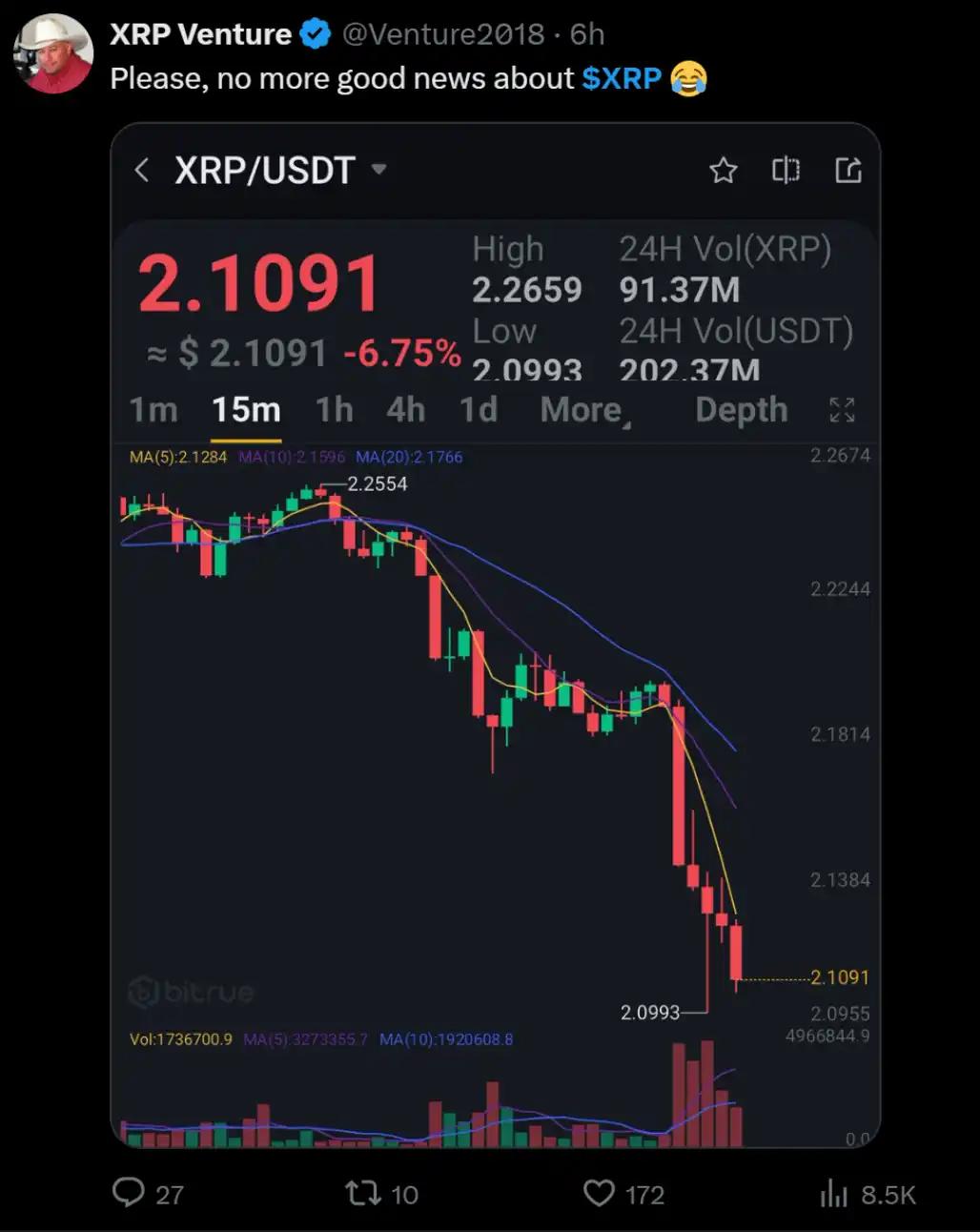
In any case, XRP may not become the center of narrative again, nor may it be suitable for short-term investors seeking explosive growth. However, it is still building, still being incorporated into financial systems by institutions, and developers are still constructing financial infrastructure. In an industry where the lifecycle of a project generally does not exceed five years, simply "still being alive" might already be rare enough to warrant a second look.





