


Original Author: Tiger Research
Original Translation: AididiaoJP, Foresight News
Abstract
In the first half of 2025, Korean cryptocurrency users expanded their activity from centralized exchanges to the on-chain ecosystem. This shift marks the market's maturity and diversification of user engagement.
Korean users hold significant Ethereum assets and maintain stable mainnet participation. Base users gradually increase engagement through decentralized applications (dApps). Solana attracted the most users with high activity. However, due to fatigue from short-term events (such as meme coin and meme launch platform conflicts), Solana users have a higher churn rate.
Korean cryptocurrency users exhibit different behavioral characteristics across various blockchains, defying a single characterization. Projects need to develop effective market strategies through systematic user segmentation, combining qualitative and quantitative approaches.
1. Overview of Korean On-Chain User Activity in the First Half of 2025
Korean users have begun gradually expanding from exchanges like Upbit and Bithumb to on-chain activity, signaling market maturation rather than a temporary phenomenon.
While centralized exchanges in Korea have maintained high trading volumes, on-chain activity is rapidly growing, creating a multi-layered market structure that is no longer exchange-centric. Recognizing this will help in developing more effective market strategies.
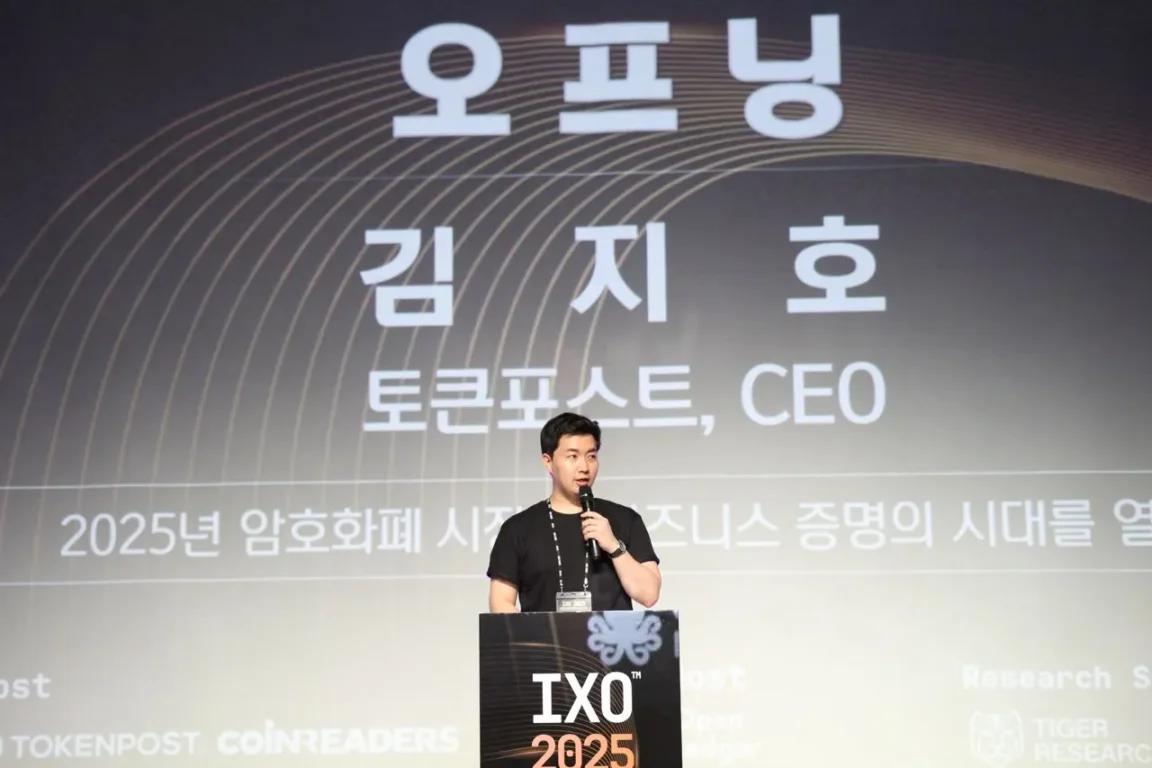
The IXO 2025 event held on January 24-25, 2025, further confirmed this market transformation. Hosted by TokenPost and CoinReaders, TokenPost's CEO Kim Ji-ho stated in the opening ceremony that Korean digital asset investors have exceeded 10 million, and the cryptocurrency market has transcended the niche tech community to connect with mainstream audiences.
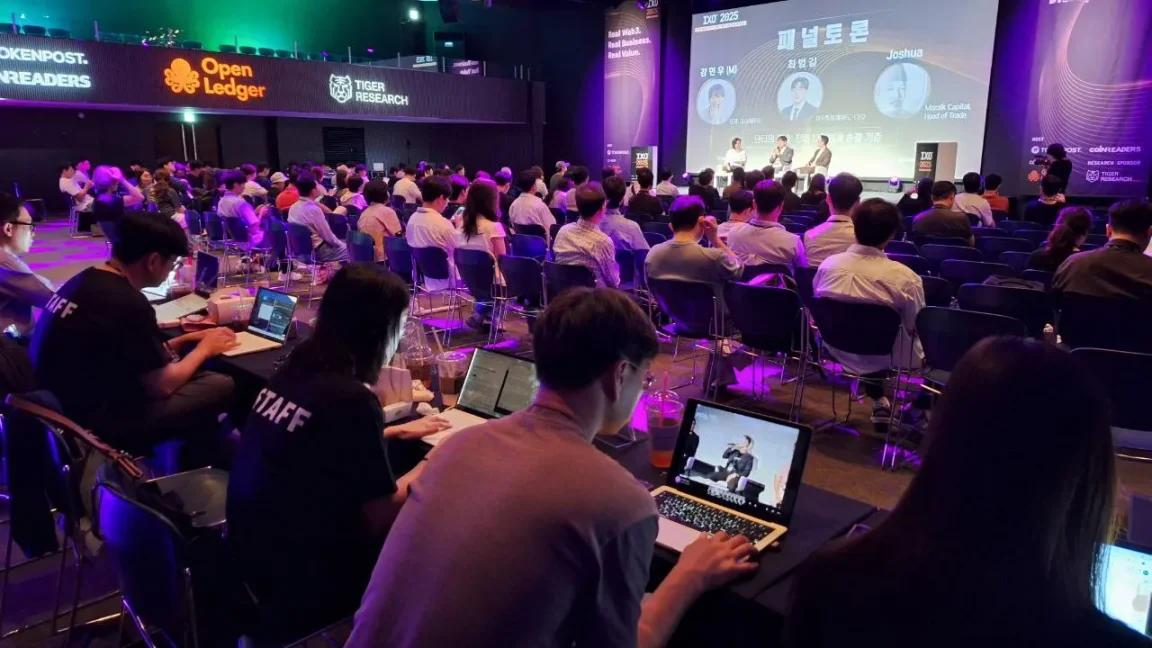
International participants are attempting to more deeply understand Korean on-chain user participation, no longer viewing Korea as an exchange-centric market structure. However, analyzing Korean user characteristics remains challenging, with systematic on-chain data collection still a significant hurdle.
This report, based on on-chain activity data from approximately 80,000 wallets, is aimed at readers seeking deeper insights into the Korean market. The study covers data from the first half of 2025, examining Korean user behavior across Ethereum, Base, and Solana ecosystems, providing practical insights for global projects considering market entry.
2. Korean User Characteristics: Ethereum, Base, and Solana
2.1. Activity Times
Ethereum, Base: Activity time (9 AM to 11 PM)
Solana: Late-night hours (midnight to 8 AM)
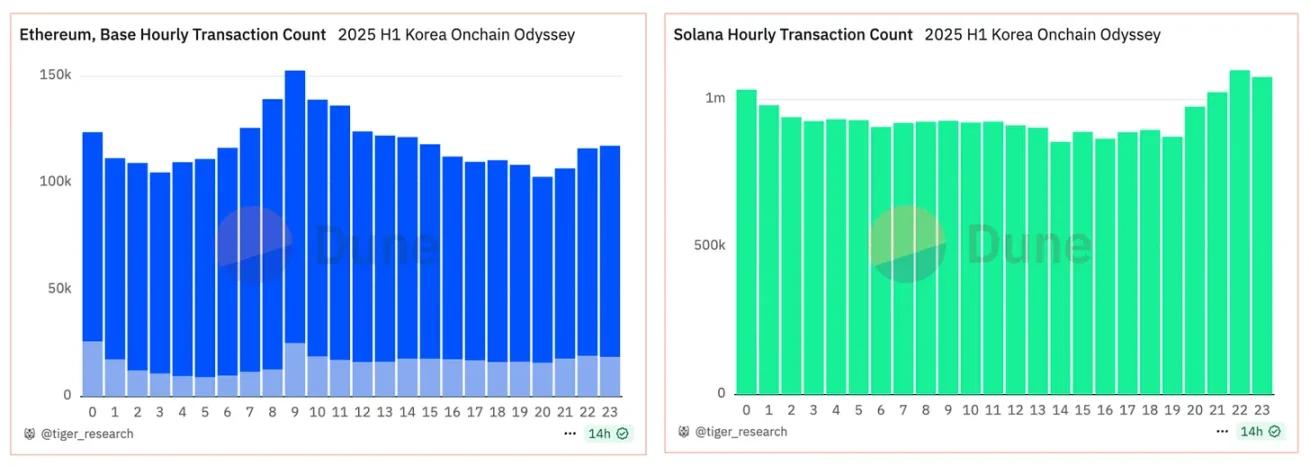
Korean users show significant differences in participation patterns across different blockchains, with notable variations in activity times. Ethereum and Base active users concentrate their transactions during daily activity hours from 9 AM to 11 PM.
Solana transactions are concentrated in late-night hours from midnight to 8 AM, with users remaining active during late hours, in stark contrast to other chains. This is because Solana has formed a trading-centric ecosystem, with major token issuances and activities aligned with North American time zones. Korean users actively participate even during early morning hours when the market is active.
This indicates Korean users' high adaptability to global markets, with active investment tendencies that transcend time zone adjustments, unwilling to miss global opportunities. Korean users' behavior extends beyond geographical limitations, keeping pace with global crypto market rhythms.
2.2. Fund Distribution
Fund distribution varies significantly across different blockchains. Based on collected wallet data, Korean users hold approximately $400 million in total assets on Ethereum, about 9 times the total assets on Base and Solana. This difference is primarily due to whale wallet assets rather than wallet numbers. Whales (over $1 million) and middle-class accounts (over $100,000) occupy a large proportion. Ethereum has 116 whale wallets, with an average of $2.5 million per wallet.
Solana chain assets present a different pattern. Retail wallets (below $100) comprise 99.9% of all wallets, with an average holding of just $30. However, a few whale wallets average over $8 million, creating an extremely polarized fund distribution.
These data indicate different investment tendencies among Korean users across chains. Ethereum attracts conservative large-scale investors focused on stability, while Solana attracts numerous retail investors seeking high returns, preferring short-term opportunities like meme coins and meme launch platform tokens. Base attracts mid-range investors between these two extremes. This demonstrates the Korean market's diverse user base, not concentrated on a specific investment tendency.
2.3. User Activity Trends
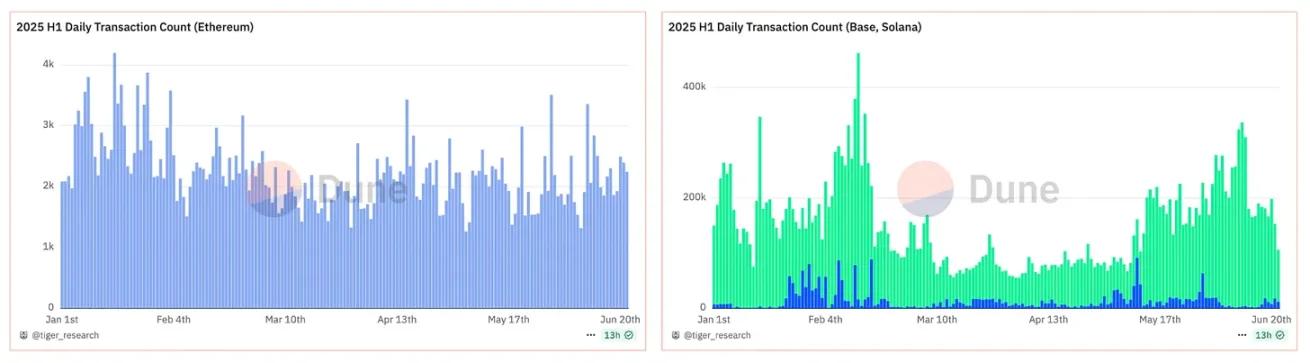
Ethereum's transaction volume remains stable long-term, unaffected by market fluctuations or external events. Korean users in the Ethereum ecosystem focus more on utility activities. They participate more in actual dApp usage, asset custody, and governance activities, rather than DeFi-centered trading activities.
Unlike Ethereum, Base and Solana transactions are sensitive to overall crypto market sentiment and short-term events. Transaction volume surged during initial cryptocurrency price increases, briefly declined, and rose again when Bitcoin broke $100,000 in May.
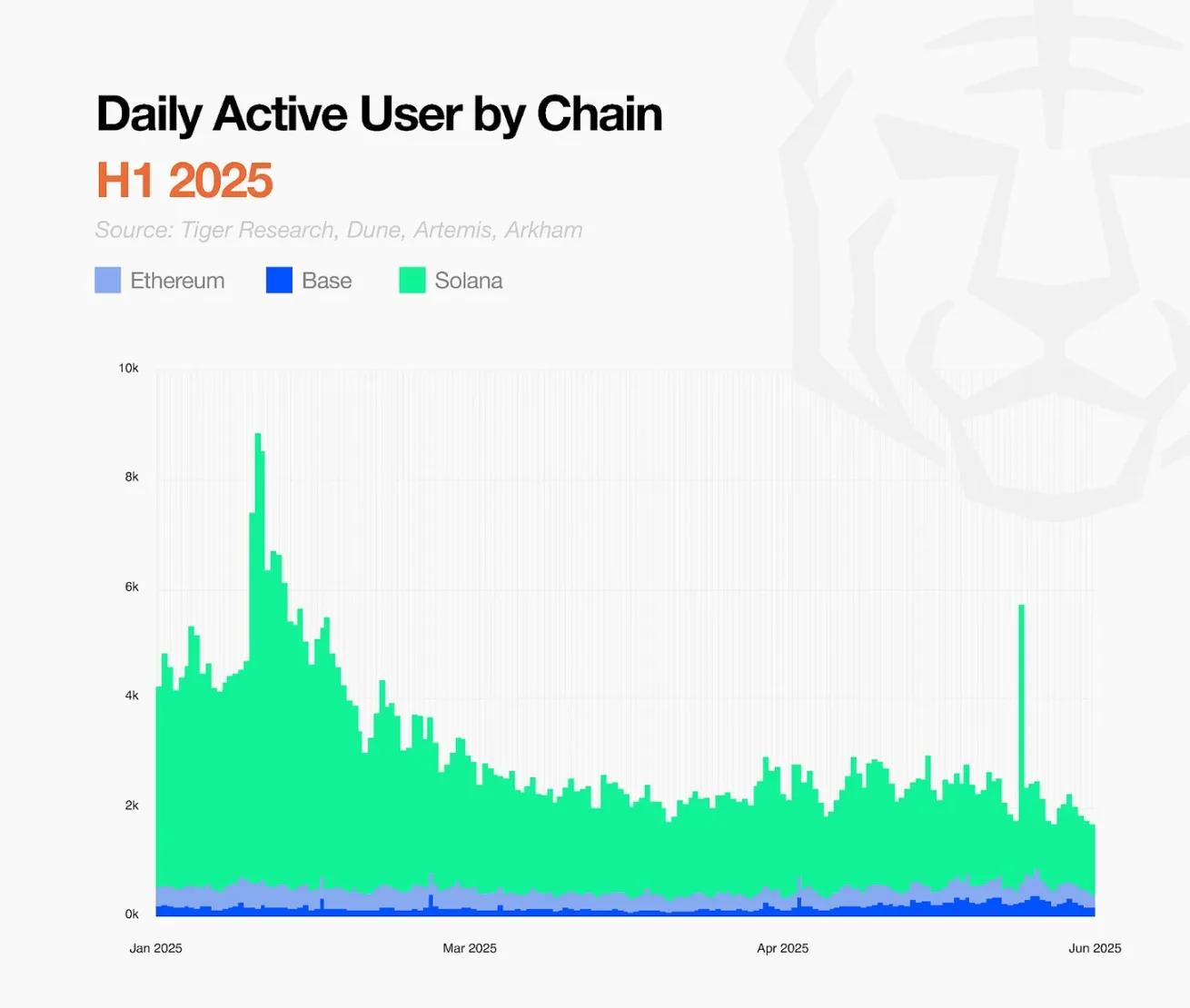
Base and Solana show similar transaction trends, but differ in daily active users. Solana has a higher user churn rate due to meme coin launch platforms and short-term event structures. Base, despite fewer loyal users, shows steady growth in active users, thanks to diverse dApps and consumer service adoption.
2.4. dApp Usage
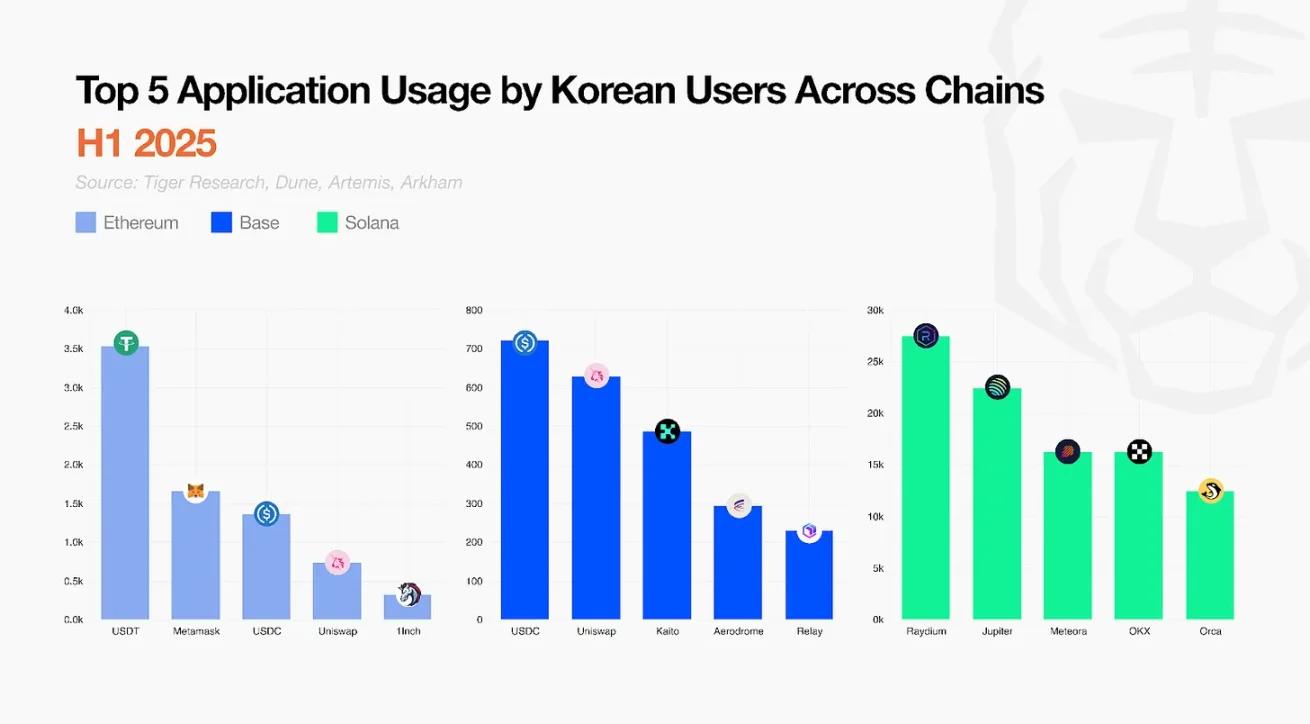
Korean users' dApp usage further reveals their differences.
Solana chain is trading-centric. Korean users primarily focus on DeFi trading, with low stablecoin usage, and SOL trading pairs dominating.
On Ethereum and Base, users are more actively involved in remittance and deposit activities, operating with USDT or USDC. These chains offer more diverse practical use cases. Kaito InfoFi service on Base is a major user attraction, currently ranking third on Base. Korean users respond positively to reward structures, tending to provide yields through token staking and incentive claims.
3. Conclusion
This report analyzed on-chain activities of approximately 80,000 Korean cryptocurrency users, helping develop more effective market entry strategies.
Most importantly, Korean users cannot be viewed as a homogeneous group. Compared to other markets, Korean users demonstrate deeper cryptocurrency market participation. Korean user characteristics primarily manifest in three aspects:
First, Korean users show strong global market adaptability. Late-night activities on Solana indicate participation transcending time zones, with users unwilling to miss global crypto market opportunities, behaving without geographical restrictions and aligning with global cryptocurrency ecosystem rhythms.
Secondly, strategies and investment tendencies differ significantly across chains. The same Korean users are conservative investors prioritizing stability on Ethereum, speculative high-return seekers on Solana, and display moderate tendencies on Base. This strategic differentiation creates a hierarchy based on investment purposes and risk preferences. Users optimize participation strategies according to each ecosystem's characteristics and culture, demonstrating the complexity of the Korean user group.
Third, users show high interest in incentive-based services. They actively participate in these services, with Kaito's rapid rise on Base as evidence. Korean users actively engage in revenue activities through token staking and reward systems. On-chain data confirms this trend, with Kaito separately listing Korean users on the leaderboard, and some projects expanding reward pools specifically for Korean users, which validates this observation.
Global projects considering entering the Korean market need to develop customized strategies that align with user characteristics. Korea is a balanced market without bias towards specific stages or types.
Strategy development should prioritize blockchain selection that suits target user segmentation. Korean users exhibit significant differences in expectations and behaviors across different chains.
Operationally, providing services based on North American time zones will not cause major issues, and global operational systems can be incorporated into long-term expansion plans.
User acquisition and retention require clear and sustainable incentive structures. Korean users are highly sensitive to token staking and reward systems, responding more positively to long-term participation structures, with short-term activities proving less effective.
Most importantly, these users should be viewed as partners in ecosystem development, not simply as users. This report aims to provide practical assistance for related strategy development.





