Translated by: Block unicorn
Preface
Mr. Kennedy became wealthy by operating in the liquor business during the Prohibition era (1920-1933, a period when the United States banned the sale, production, and distribution of alcohol), and after the end of Prohibition, he became the first chairman of the Securities and Exchange Commission. It is said that President Roosevelt remarked about this appointment: "Let a thief catch a thief." Kennedy subsequently cleaned up Wall Street with a passion for redemption, implementing rules that still regulate the securities market today.
A similar story in the modern cryptocurrency field is the transformation of OKX from a regulatory outcast to a potential IPO candidate.
According to a report on Sunday, the Seychelles-based crypto exchange OKX is considering going public in the United States, just four months after agreeing to pay a $505 million fine to the U.S. government for operating without authorization.
In February 2025, this global second-largest centralized exchange (CEX) admitted to processing over $1 trillion in unauthorized transactions involving U.S. users, knowingly violating anti-money laundering laws, and agreeing to pay a massive fine of over $500 million. Now, they want to invite U.S. investors to buy company shares.
Nothing demonstrates "we have turned a new page" more than voluntarily accepting quarterly earnings calls, disclosures, and filings required by the U.S. Securities and Exchange Commission (SEC).
Can a cryptocurrency company succeed on Wall Street? Circle recently proved this is possible. In the past few weeks, this USDC stablecoin issuer has shown that if crypto companies take the compliant route, investors will enthusiastically invest.
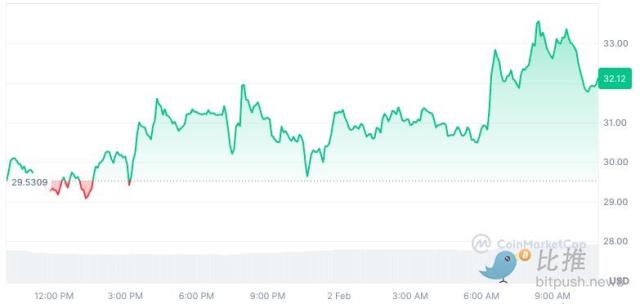
Circle's stock price soared from $31 to nearly $249 in just a few weeks, quickly creating billionaires and setting a new precedent for crypto IPOs. Even Coinbase, the largest U.S. crypto exchange, which has been public for four years, has risen 40% in the past 10 days, trading near its four-year high.
Can OKX achieve similar success in the exchange market?
Circle's regulatory record at the time of listing was very clean. They have been wearing suits for years, testifying at congressional hearings, and releasing transparency reports. Meanwhile, OKX recently admitted to facilitating $5 billion in suspicious transactions and proceeds of crime and had to strongly promise not to repeat such mistakes.
Different CEXs, Different Stories
To understand OKX's IPO prospects, let's look at Coinbase, the only large crypto exchange that has successfully entered the public market. OKX and Coinbase make money the same way: by charging fees for each crypto transaction.
When the crypto market is crazy, like during a bull market, they can make big money. Both platforms offer basic crypto services: spot trading, staking, and custody services. However, their business development approaches are entirely different.
Coinbase took a compliance-first route. They hired former regulatory agency members, built institutional-level systems, and spent years preparing to go public on Wall Street. This strategy worked, and they went public in April 2021, with a market cap now exceeding $90 billion despite the volatile crypto market.
In 2024, Coinbase's average monthly spot trading volume was $92 billion, primarily from U.S. customers who pay high fees in exchange for regulatory certainty. This is a turtle strategy: slow, steady, focused on doing well in one market.
OKX chose the rabbit strategy: move quickly, capture global market share, and consider regulatory issues later. From a business perspective, this strategy was very successful.
In 2024, OKX's average monthly spot trading volume was $98.19 billion, 6.7% higher than Coinbase, serving 50 million users in over 160 countries. Including their derivatives trading (where they hold 19.4% global market share), OKX processes far more crypto transactions than Coinbase.
OKX's daily average spot trading volume is about $2 billion, with derivatives trading over $25 billion, while Coinbase's are $1.86 billion and $3.85 billion, respectively.
The speed increase comes with increased costs. Coinbase has built good relationships with U.S. regulators, while OKX actively sought U.S. customers while being banned from operating in the U.S. Their attitude seems to be "ask for forgiveness, not permission," which works until you have to ask the Department of Justice for forgiveness.
There is one issue: crypto exchange revenues are entirely dependent on people continuing to trade cryptocurrencies enthusiastically. When the market is hot, exchanges make a fortune. When the market cools, revenues can drop dramatically overnight.
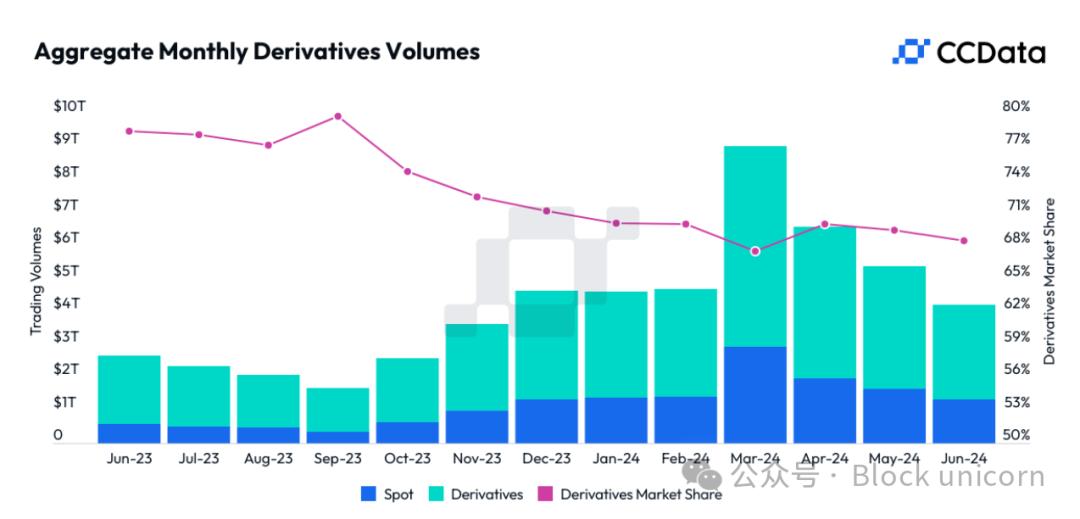
For example, in June 2024, the total spot and derivatives trading volume of exchanges dropped by over 50% from the peak of about $9 trillion in March.
OKX's $500 million settlement agreement became a forced education, teaching them how the U.S. financial market actually works. They seem to have learned from their costly mistakes. They hired former Barclays Bank executive Roshan Robert as U.S. CEO, opened compliance offices in San Jose, New York, and San Francisco, employed 500 staff, and started talking about building an "industry-defining super app," a corporate statement indicating they are seriously reforming.
Interestingly, will investors buy into this redemption narrative?
Valuation Game
Based on trading volume, OKX's valuation should theoretically be comparable to, or even higher than, Coinbase's.
Coinbase's market cap is about a single multiple of monthly trading volume, with an average monthly volume of $92 billion and a market cap over $90 billion. OKX's monthly trading volume is $98.19 billion, 6.7% higher than Coinbase. Using the same multiple, OKX's valuation would reach $85.4 billion.
However, valuation is not just a mathematical issue but also involves perception and risk.
OKX's regulatory baggage might lead to a valuation discount. Their international business means profits depend on rapidly changing regulatory environments, as they experienced in Thailand, where regulators just banned OKX and several other exchanges.
If applying a 20% "regulatory risk discount," OKX's valuation might be $68.7 billion. But considering their global influence, derivatives market dominance, and higher trading volume, a valuation premium is reasonable.
Reasonable valuation range: $70 billion to $90 billion, depending on investors' emphasis on growth and governance.
Advantages
OKX's investment appeal is based on several competitive advantages that Coinbase lacks.
Global Scale: Coinbase primarily focuses on the U.S. market, while OKX serves markets with surging crypto adoption: Asia, Latin America, and parts of Europe where traditional banking is less developed.
Derivatives Dominance: OKX controls 19.4% of the global crypto derivatives market, while Coinbase's derivatives business is minimal. Derivatives trading fees are higher and attract more experienced traders. Coinbase recently announced launching perpetual contracts, meaning OKX will face more intense competition from mature and regulated players like Coinbase.
Trading Volume Leadership: Despite being a private company with recent regulatory issues, OKX's spot trading volume still exceeds the publicly listed Coinbase.
Coinbase also has its advantages - a clean regulatory record and good relationships with institutional investors who prefer predictable compliance costs over a global growth story with regulatory complexity.
Potential Issues
OKX faces enormous risks, different from typical IPO concerns.
Regulatory Mutation: OKX operates in dozens of jurisdictions with rapidly changing rules. The Thailand ban is just the latest example. Any major market could lose substantial revenue overnight.
Market Cyclicality: Crypto exchanges' revenues fluctuate with trading activity. When crypto markets are calm, exchange revenues can plummet.
Reputation Risk: Despite reaching a settlement, OKX could still suffer severe reputational damage from a regulatory scandal. Crypto exchanges are inherently high-risk businesses where technical failures or security vulnerabilities can destroy customer confidence overnight.
Our Perspective
OKX's potential IPO might be a compelling test of whether public markets will overlook the exchange's problematic background.
Beyond regulatory drama, OKX actually has more advantages than Coinbase, the only successfully listed crypto exchange. They dominate in derivatives trading and global customer base.
Whether OKX has learned from its mistakes (expensive lessons are often memorable) may not matter. What truly matters is whether public market investors are willing to pay growth multiples for a company operating in dozens of unpredictable regulatory environments. Coinbase built a moat of US compliance reputation; OKX built a global trading empire and is now retrofitting compliance around it.
Both strategies can work, but they attract entirely different investors. Coinbase is a safe choice for institutional investors seeking regulated crypto exposure. OKX might attract investors who believe crypto's future lies in global adoption and complex trading products.
Circle proved investors are willing to invest in clean crypto stories. OKX is betting investors will do the same for them, even with a complicated past.
Whether OKX's reform image resonates in public markets will reveal investors' true priorities between growth and governance in crypto.