Original Title: 《Bitcoin Hashrate Slides Sparks Misconceptions - AGAIN!》
Author: BlocksBridge Consulting
Translated by: johyyn, BlockBeats
Editor's Note:
Recently, Bitcoin's network hashrate has shown a significant callback, triggering market speculation about "hash collapse" and geopolitical factors, especially after the US air strike on Iranian nuclear facilities. However, such judgments often overlook the probabilistic fluctuation mechanism of hashrate estimation and the impact of North American summer grid load management on mining pool operations. Based on difficulty adjustment models and mainstream mining pool data, combined with US power policies, Iranian compliance restrictions, and the latest legislative trends like the GENIUS Act, this article aims to clarify the true logic behind current hashrate changes and avoid being misled by fragmented public opinion.
Following is the original content (slightly edited for readability):
After the seven-day Bitcoin hashrate moving average reached a historical high of nearly 950 EH/s earlier this month, the indicator has fallen to around 810 EH/s, a drop of about 15%, sparking widespread market speculation. Some attribute this decline to geopolitical tensions, especially after the US strike on Iranian nuclear facilities.
Posts widely circulated on X suggest that this military action highly coincides with the hashrate decline, speculating that it might have caused local Iranian miners to shut down, thus "withdrawing" some "hidden hashrate" from the network. Meanwhile, market concerns about "hashrate collapse" have resurfaced, especially given the brief single-day average hashrate drop to 600 EH/s.
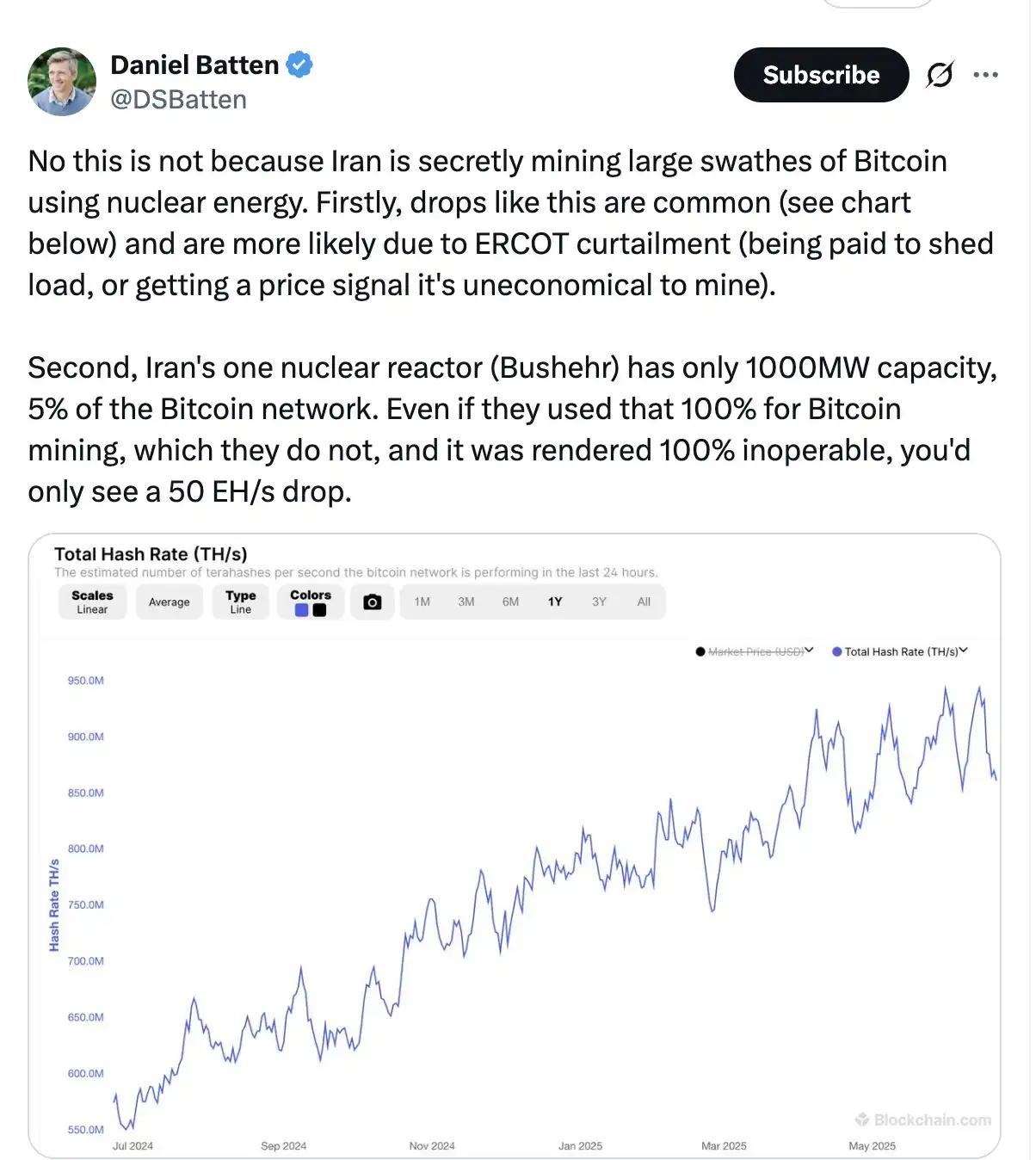
However, such interpretations often ignore the basic principles of Bitcoin hashrate estimation, a common misconception that repeats in each halving cycle.
Bitcoin's hashrate is estimated through the current network mining difficulty and block interval time, meaning short-term data fluctuations typically stem from probabilistic bias. Especially, single-day hashrate data is highly volatile, essentially reflecting miners' "luck" in block production rather than structural changes in network hashrate. Similarly, asserting that Bitcoin's hashrate has broken 1 ZH/s (zettahash) based on a brief single-day spike is imprecise.
The specific technical formula is as follows:
Hashrate (H/s) = Mining Difficulty × 2³² / Average Block Time (seconds)
Within the same difficulty cycle, the numerator remains constant, so hashrate estimation fluctuations are entirely driven by changes in block time.
As each market cycle progresses, newcomers will always misinterpret these short-term data fluctuations. The narrative of "hashrate collapse" is a recurring phenomenon in such declines, despite Bitcoin mining being a highly probabilistic process.
A more reasonable explanation is that the recent hashrate decline may stem from seasonal power restrictions in North America. Mining pool-level data (as shown below) indicates that the most significant drop is in Foundry USA Pool, which experienced intermittent shutdowns before coming back online. This operational pattern is highly consistent with power restrictions at mining facilities during the US summer peak electricity period to ensure grid stability.
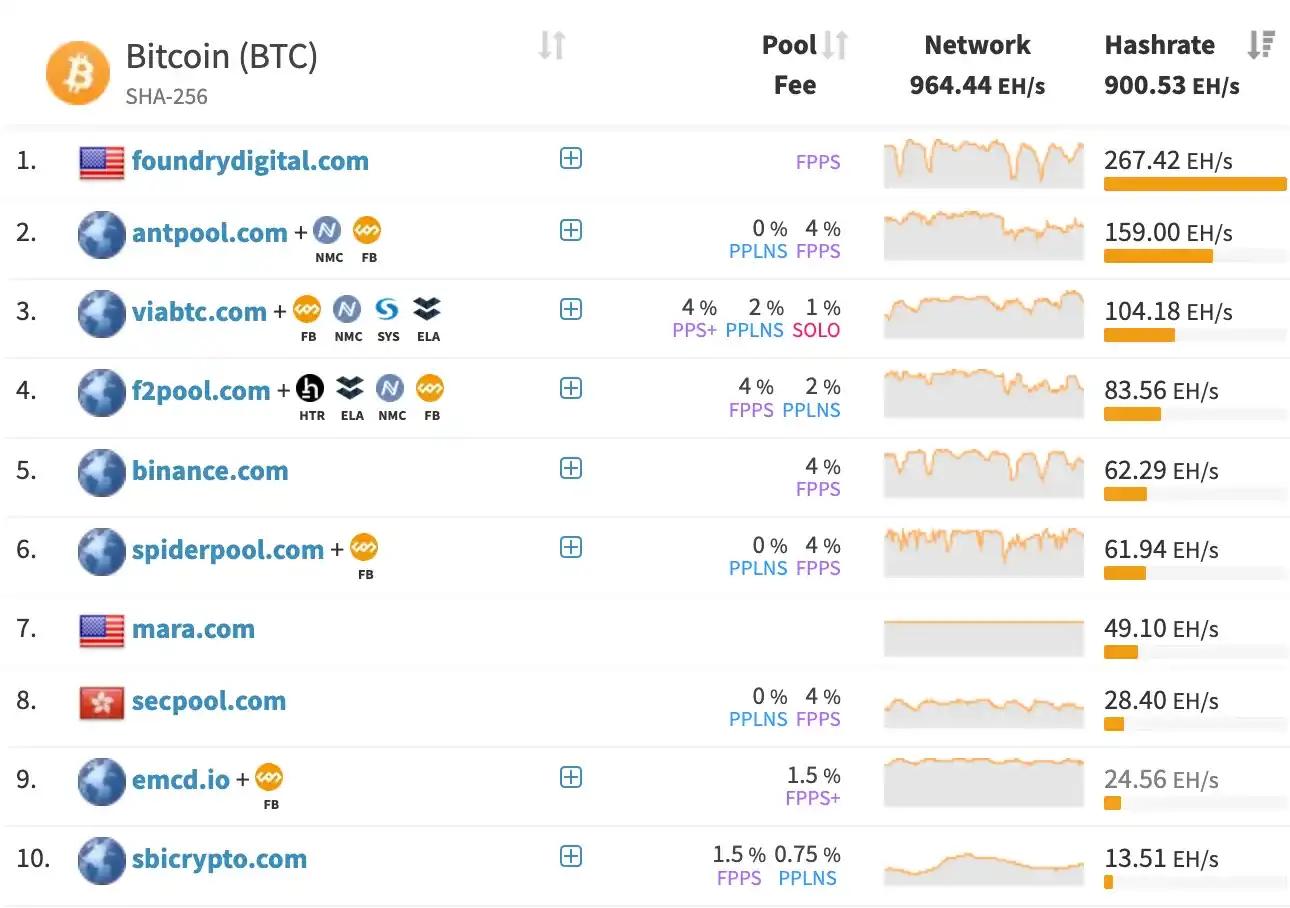
Source: Miningpoolstats on June 26
Even if some Iranian hashrate is disrupted, its impact is limited compared to the current large-scale power restrictions affecting major US mining pools. Considering sanctions compliance requirements, it's unlikely that Iran's large-scale hashrate would be connected to US-based pools like Foundry USA.
Looking ahead, Bitcoin's next mining difficulty adjustment is expected around June 29, potentially creating the steepest downward adjustment since the implementation of China's mining ban in mid-2021, possibly exceeding the -7.32% recorded during the 2022 bear market when miners were massively cleared out.
However, the network's overall hashrate currently shows a gradual recovery. A few days ago, the estimated difficulty adjustment was close to -10%, now revised to slightly below -8%. Regardless of the final adjustment magnitude, this expected difficulty reduction will provide some short-term relief for marginal operators, especially against the backdrop of halving effects and summer power constraints.