1. DePIN’s Vision and Real Dilemma
As a representative path for combining blockchain with the real world, DePIN was once highly anticipated. The original vision of DePIN was to allow everyone to participate in the construction of infrastructure and gain rewards from it, and eventually form a physical network that is built and shared by all people. However, despite the initial achievements of the DePIN project in terms of quantity and node scale, the user experience and commercial value in reality are still lagging behind.
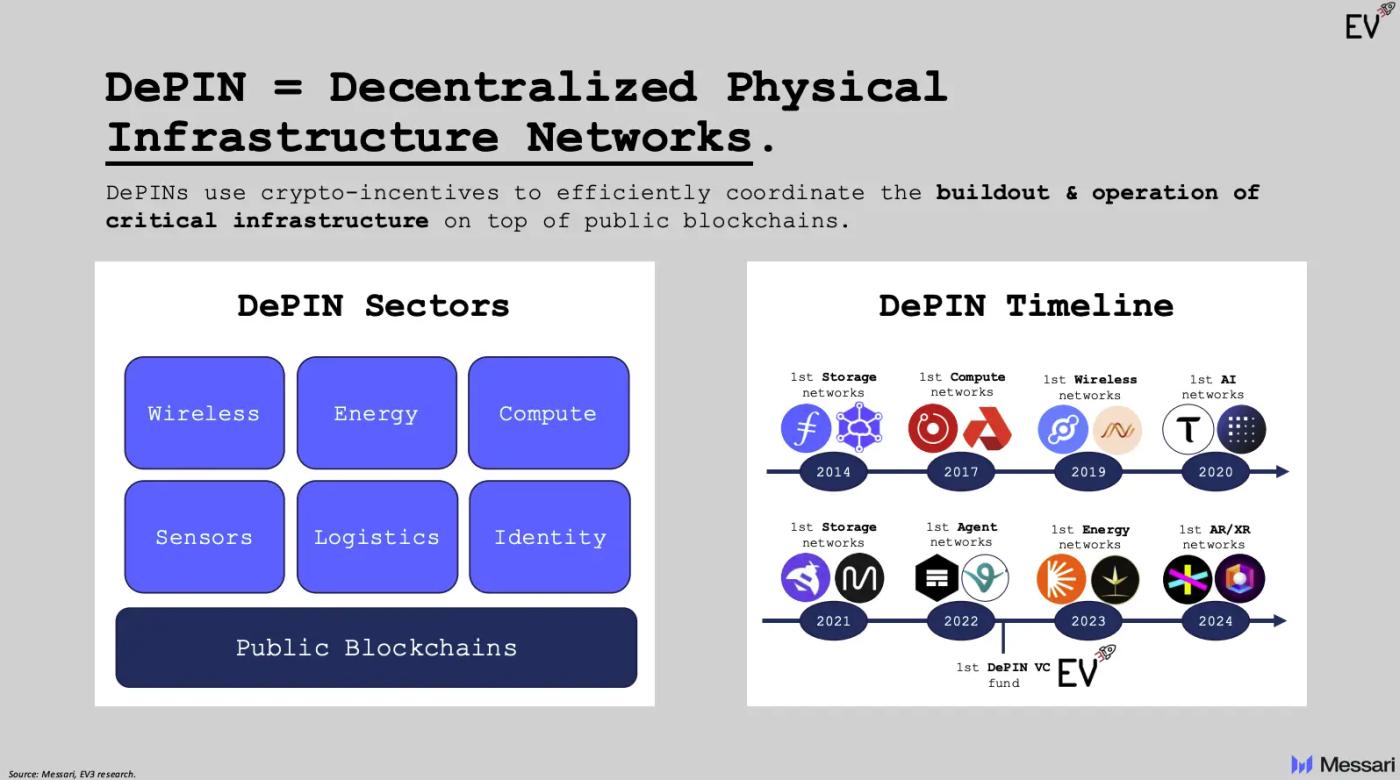
According to Messari data, there will be more than 13 million devices active in various DePIN networks worldwide in 2024, and the total market value of track tokens will exceed US$50 billion, covering more than 350 projects. However, from the actual market, most projects have falsely high growth and difficulty in landing, and it is almost difficult to run through the closed loop path of "user use → network growth → commercial realization".
Compared with the booming supply side, the advancement of the demand side is relatively lagging behind. Most DePIN projects are still in the incentive-driven cold start stage: node deployment is growing rapidly, but the actual usage rate of end users is low, the willingness to pay for services is limited, the commercialization model has not yet been run through, and some networks even have a serious deviation between actual revenue and token market value. Taking some Depin projects as an example, in their most glorious period, millions of nodes were built around the world, covering hundreds of cities. But by 2023, its monthly data revenue is still less than US$5,000, which is seriously out of touch with the scale of its infrastructure. This situation of "hot supply and cold demand" is exposing the deep structural problems of the old DePIN paradigm.
2. DePIN supply and demand mismatch: the cost of design logic
Although the DePIN project has achieved rapid growth in node deployment, with the number of devices and network scale reaching new highs, many networks have been slow to break through bottlenecks in actual use. In most cases, "node online ≠ user use", making it even more difficult to form a continuous closed loop of economic value. This is not a single point error in a project, but a structural problem exposed by the traditional DePIN model under the "supply priority" logic:
The design logic of traditional DePIN projects is mainly based on "deployment first, use later", that is, using token incentives to attract users to purchase and deploy dedicated equipment, thereby building a decentralized physical network, and then expecting end users to gradually access and complete the business closed loop. However, practice shows that this path of "equipment first, use lagging behind" is encountering structural bottlenecks.
The three major pain points of DePIN at present:
High threshold equipment costs limit user participation
DePIN networks usually rely on professional hardware equipment, such as communication hotspots, data routers, energy terminals, etc. The price of a single unit is usually between $300 and $1,000. Users need to purchase it at their own expense and bear the operation and maintenance, which has a high threshold. This makes it difficult for ordinary users to participate in the early nodes, making it difficult for the network to achieve true decentralization, and the service efficiency is also weakened.
Cold start difficulties and imbalance between supply and demand lead to widespread "idling" phenomenon
The value of the DePIN network depends on the linkage between the two ends: nodes provide services and users generate demand. However, in the early days when the network was not yet formed, the lack of user use made it difficult for nodes to function, and the low node utilization rate, in turn, hit the profit expectations of node deployers. This cycle of "no traffic → node idle → reduced incentives → user loss" is very easy to fall into negative feedback.
In the absence of an effective ToC product path, many projects can only maintain supply-side growth through token incentives, but this unilateral expansion cannot generate real market demand, and ultimately forms a hollow network structure of "device access ≠ value generation".
Node behavior is difficult to verify, and the system trust cost is high
In the traditional model, "device online" is considered a node contribution, but in actual operation, cheating behaviors such as false locations, simulated data, and cluster deployment are common. Due to the lack of a refined behavior verification mechanism, the system cannot distinguish between real and fake behaviors, but instead needs to invest more resources in anti-cheating and anti-sybil verification, raising the cost of operation and maintenance and trust.
In summary, the traditional DePIN network has achieved "external growth" in terms of node scale, but has failed to run through the internal logic of "behavior-driven". Connection ≠ use, deployment ≠ value. To truly unleash the potential of DePIN, it is necessary to reconstruct the complete link from behavior occurrence, verification to value precipitation, which is the weakest but most critical link in the current model.
3. The starting point of the paradigm shift: a sudden change in the path from equipment to behavior
Faced with the structural contradiction of "active node access and dormant terminal use" in traditional DePIN networks, more and more project owners and researchers have begun to reflect: Is the problem really in device deployment? Or is there a deviation in the way we understand DePIN?
According to Messari's DePIN Flywheel model, DePIN, as a new infrastructure paradigm, does not simply put "devices on the chain", but relies on three mutually reinforcing dynamic mechanisms to form a "structural flywheel" that can drive the growth of a trillion-dollar network.
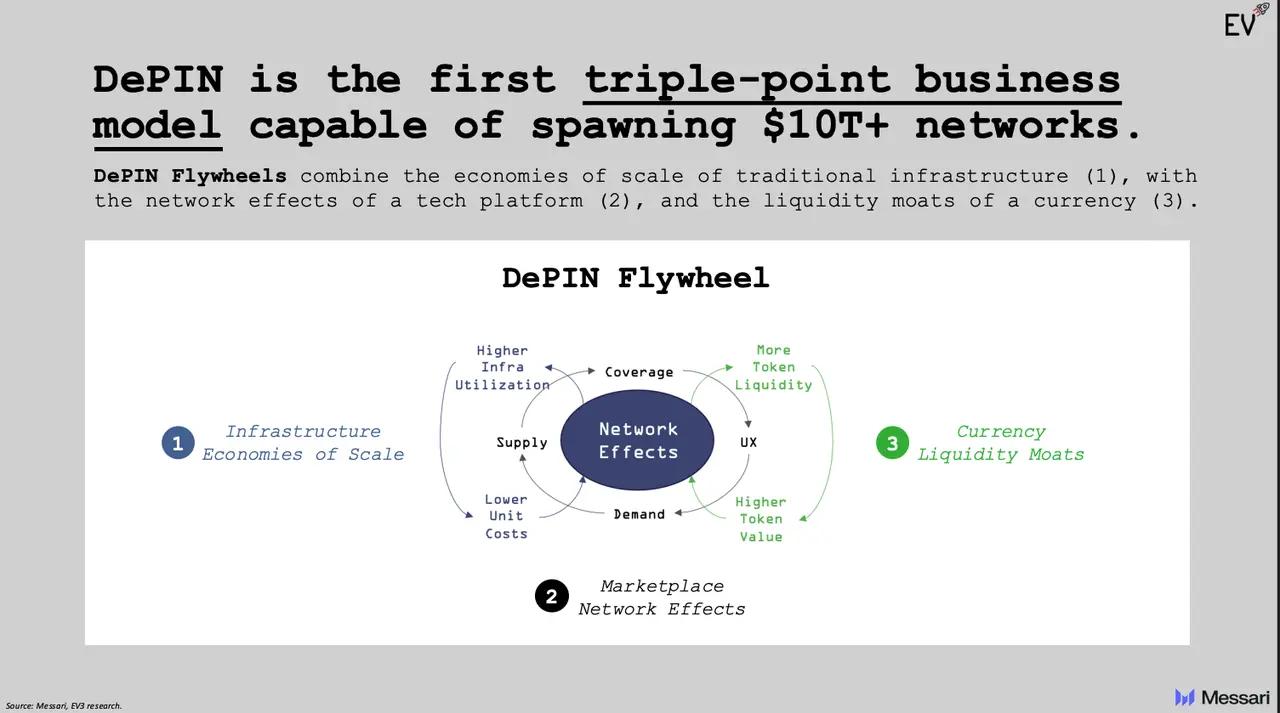
The flywheel revolves around a core goal, Network Effects, and is driven by three forces:
- Infrastructure Economies of Scale The more nodes there are, the lower the unit cost, the higher the facility utilization rate, and the improved marginal deployment efficiency, which incentivizes more participants to join.
- Platform-level network effects (Marketplace Network Effects) Node growth brings richer services → increased user demand → stimulates more node supply → forms a positive flywheel.
- Currency Liquidity Moats : The actual usage frequency increases the value of tokens, which in turn enhances incentive intensity and market feedback, and improves the stickiness of users and nodes.
However, traditional DePIN projects have made a lot of efforts in scale and incentives, but they still have difficulty running the flywheel. The reason is not complicated: they ignore the real starting point of the flywheel, that is, verifiable user behavior. We can imagine that if the node is just online and no real service is generated, the network effect cannot be established. If users are only attracted by airdrops and do not frequently participate in the behavior, the value of the token is difficult to support. If the system lacks a behavior verification mechanism, incentives are decoupled from use, and the flywheel will stall.......
In other words, to truly start the triple flywheel of DePIN, it does not depend on the number of nodes itself, but on whether there is a sustainable, high-frequency, and verifiable behavior structure as the driving force of the flywheel. It is in this theoretical background that CyberCharge began to try to shift from hardware networks to behavioral networks. They no longer regard devices as the only access point, but instead transform "daily use behavior" itself into a way of participation, allowing users to enter the network without barriers, make contributions, and receive incentives.
4. CyberCharge’s paradigm breakthrough: Restarting the DePIN flywheel with behavioral structure
As traditional DePIN projects are stuck in cold start and verification dilemmas, CyberCharge proposes a completely different path: no longer relying on device scale, but building network structure and economic incentives based on user behavior.
(1) Nodes are no longer “device owners” but “behavior generators”
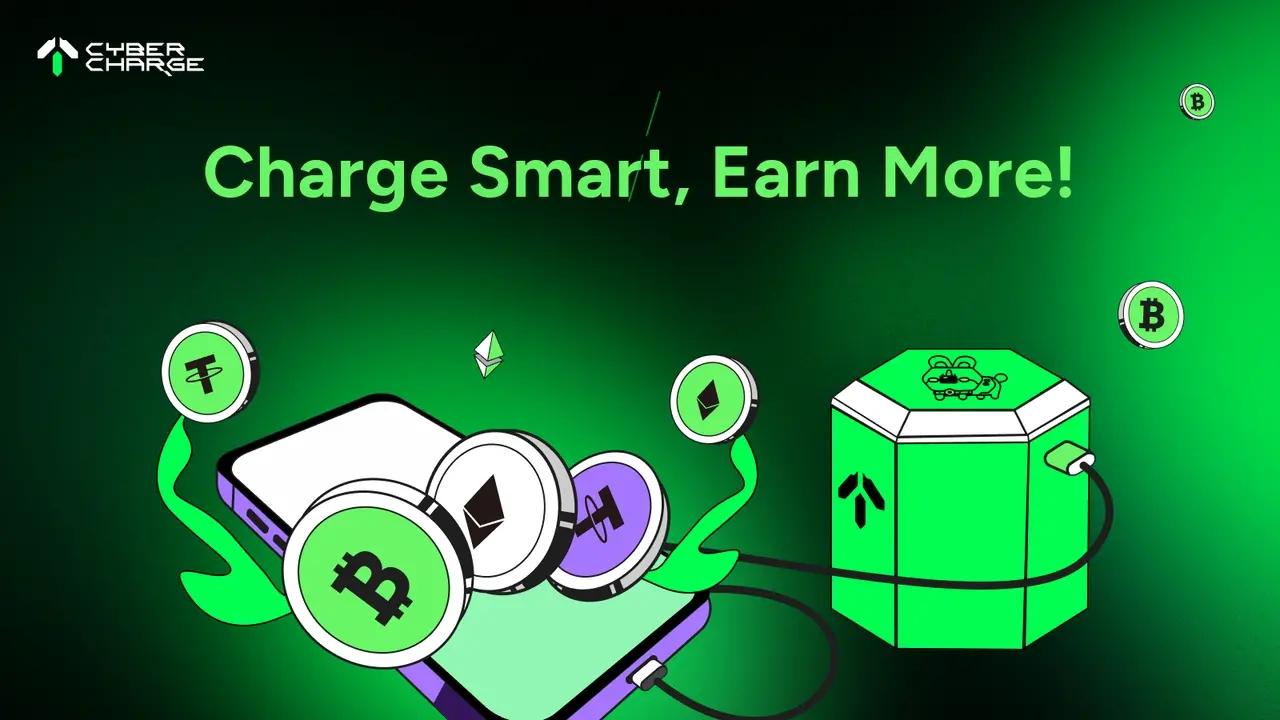
CyberCharge abandons the traditional DePIN idea of "purchase and access" and instead transforms the smallest unit of network contribution into a verifiable and accumulative behavior: charging the terminal device. Users do not need to deploy large equipment or have professional knowledge. They only need to use CyberCharge's smart charger to complete an effective charge, which is regarded as a network behavior submission and automatically obtain asset feedback. This model, called Charge-to-Earn (C2E) , greatly reduces the threshold for participation and expands the DePIN participant population from device deployers to all electricity users. Users are no longer "miners" but behavioral nodes.
(2) The authenticity of behavior can be verified, and the incentive mechanism is more trustworthy
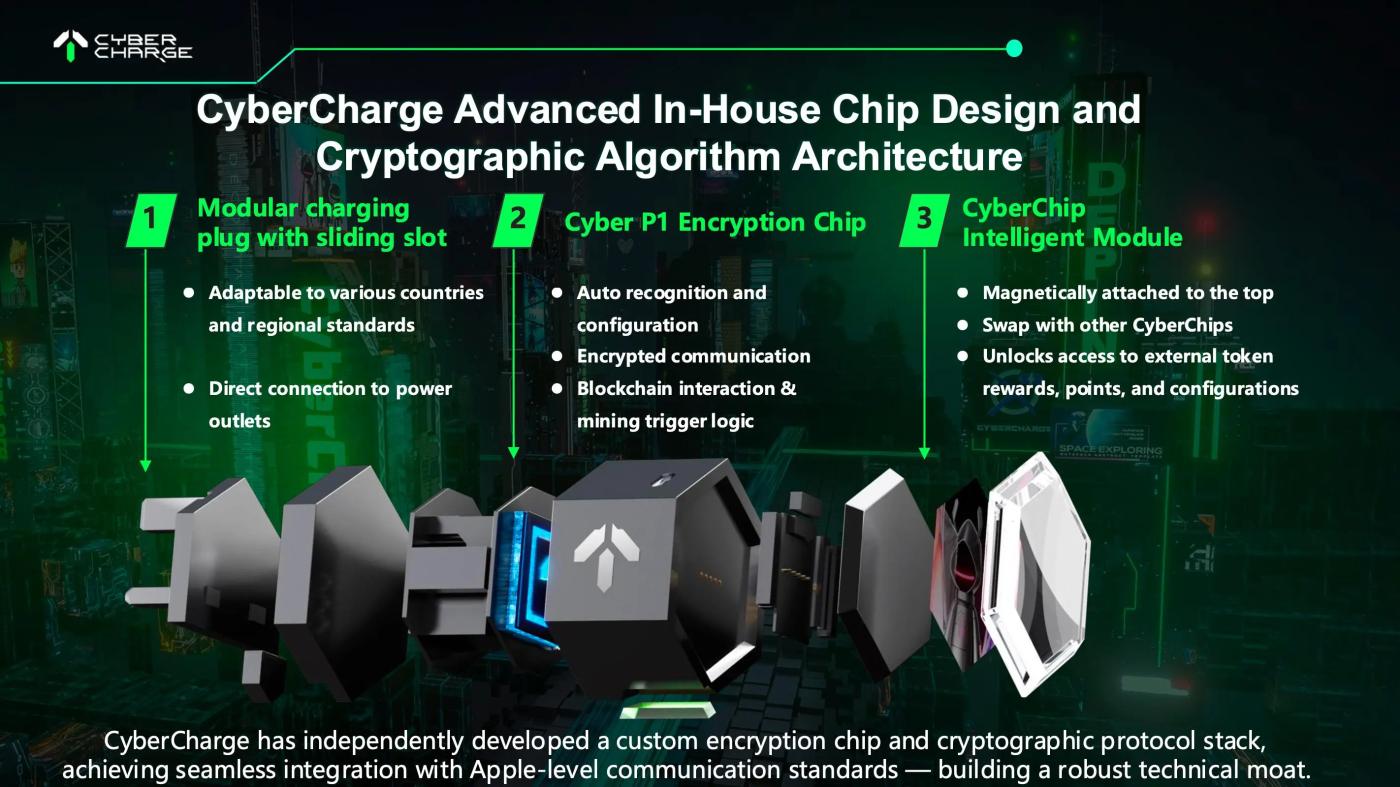
At the system level, CyberCharge has a built-in "CyberChip" security module in each charging device, which uses AI energy consumption identification and on-chain verification algorithms to ensure that each charge has actual current flow and duration records. Compared with the traditional DePIN network that relies on GPS, IP, and registration signatures, this verification mechanism based on energy consumption and physical behavior has higher anti-cheating capabilities and behavioral accuracy. This mechanism solves the problems of weak node behavior authenticity and large incentive distribution errors in the past DePIN network, laying a trust foundation for the launch of the behavioral flywheel.
(3) Building an internal ecological cycle, and self-amplifying the network effect triggered by behavior
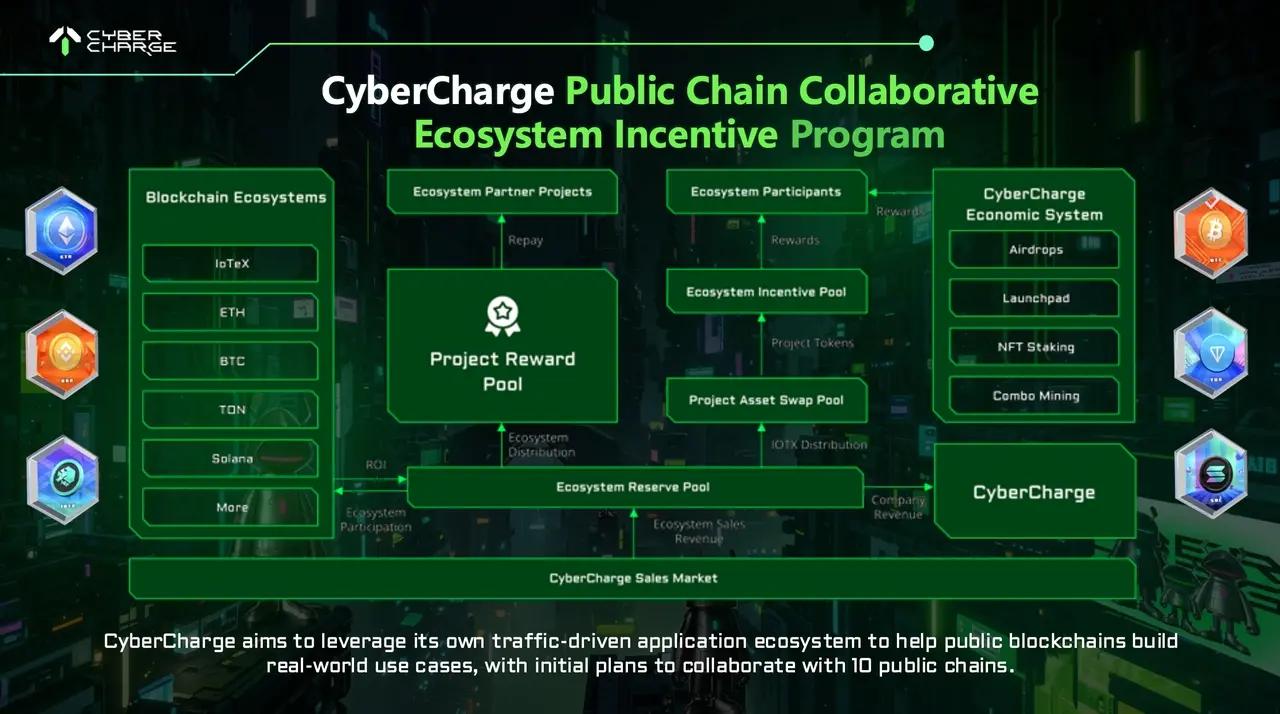
CyberCharge not only provides one-time behavioral incentives, but also transforms every "charging" behavior into an entry point for participating in the ecosystem by designing a multi-level ecological structure.
For example:
- Users can earn GEM (behavior assets) by charging, which can be used to feed "AI Doggy" (pet system)
- Pet growth in turn improves the efficiency of user token acquisition and strengthens user retention
- Different component gameplays (such as mini-games, digging holes, and level growth) form a feedback loop of behavior-return-behavior
- Ecological assets CPT/EST introduce growth and diversity of use, further supporting demand generation within the system
This mechanism of behavior incentive → asset use → further behavior naturally forms a two-way drive of platform network effect and currency flow moat in DePIN Flywheel . That is, behavior drives assets, assets drive ecology, and ecology drives more behaviors in reverse, so that user behavior is no longer limited to "mining", but transformed into a continuous interactive identity growth process.
(4) Users are terminals, supply and demand are initiated on the same side
The most noteworthy point is that CyberCharge's behavioral model breaks the traditional DePIN bilateral structure of "nodes are supply, users are demand", and is more focused on making "users are nodes, and behavior is supply and demand" . This means that every user is both a service contributor and an end user. And the network no longer relies on "it has to be built before someone uses it", but "the process of using it is building it". This is exactly the "break" where the DePIN flywheel is difficult to start under the traditional model, and what CyberCharge does is to open up this breakpoint.

Behavioral structure will determine the next stage of DePIN
From equipment online to behavior on-chain, from supply-driven to structural self-ignition, the DePIN paradigm is undergoing a fundamental reconstruction. The traditional model has proven its efficiency in node deployment and scale construction, but there are still obvious structural breaks in the three core links of user participation, service use and value realization. In the final analysis, no matter how large the network is, if there is a lack of continuous drive of real behavior, it will eventually fall into the dilemma of "more coverage, less use".
The emergence of CyberCharge is a specific response to this proposition. What it builds is not a lower-cost mining method, but a new paradigm that uses behavior as the basis of node structure. This paradigm allows the network to no longer rely on pre-construction, but to grow naturally with user behavior; it also allows "contributions" to no longer rely on registration and binding, but to come from real use that can be recorded.
We can perhaps say that the future of DePIN does not belong to a certain project, but to those mechanism designers who can find a sustainable bridge between real-world behavior and on-chain structural incentives. The platform may change, the hardware may iterate, but as long as the logic of "behavior is value" holds true, the flywheel may really turn.