


On July 21, according to the official announcement from BitGo and multiple media confirmations, this long-established crypto asset custody company has secretly submitted a draft A-class common stock IPO registration statement to the U.S. Securities and Exchange Commission (SEC), planning to list on a major U.S. exchange. According to informed sources, BitGo's choice of confidential filing aims to control information disclosure pace and avoid triggering valuation speculation or prematurely exposing sensitive operational data during market volatility.
Once the IPO is successful, BitGo will become another listed crypto enterprise focusing on "compliance services + institutional-level custody" after Coinbase and Circle. As more crypto infrastructure is accelerating market entry, what impact will BitGo's IPO have on this unique "bull market"?
BitGo's Capital Path as Custody King
BitGo co-founder and CEO Mike Belshe is an early Chrome browser architect, one of the first 10 engineers in the Google Chrome team, and also participated in designing the web security protocol SPDY. As a technology-originated serial entrepreneur, he created the world's first multi-signature network wallet for Bitcoin. After entering the crypto industry in 2013, Belshe founded BitGo, believing that "compliance, security, and institutions" are the only direction for long-term industry development.
BitGo is one of the earliest service providers offering crypto asset custody, multi-signature security architecture, and on-chain settlement solutions for institutional investors. It has received investments from institutions like Founders Fund, Galaxy Digital, Goldman Sachs, and Pantera Capital, the main driving force behind this round's "ETH micro-strategy". Headquartered in Palo Alto, California, it has obtained digital asset custody and trust licenses in the United States, Germany, Singapore, and other locations. Its customer base covers over 1,500 mainstream platforms and funds, including Pantera Capital, Bitstamp, and Swan Bitcoin, making it the largest institutional custodian of Solana.
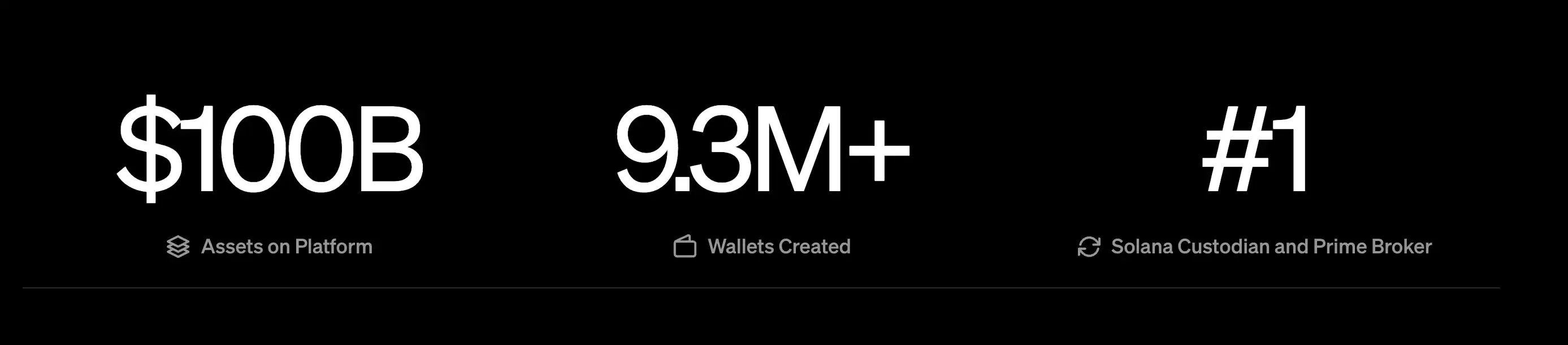
BitGo previously planned to be acquired by Galaxy Digital but terminated the transaction in 2022 due to accounting issues. Subsequently, BitGo shifted to an independent development route, launching insurance-enhanced custody services, stablecoin settlement solutions, and planning to start CaaS (Crypto-as-a-Service) business in the second half of 2024, expanding API-level custody and trading integration modules to provide crypto underlying access capabilities for TradFi institutions.
According to public information, as of the second quarter of 2025, BitGo's custodied crypto assets exceed $100 billion, making it one of the few companies with "fully compliant + full-chain custody" capabilities. In fact, Pantera chose BitGo as one of the three custodians in its private fund's compliance custody arrangement, alongside Coinbase Custody and Silicon Valley Bank (SVB), providing asset security guarantees for the fund. Additionally, BitGo's board and advisory team include numerous traditional financial executive backgrounds. In recent years, the company has continuously strengthened cooperation with audit institutions, insurance companies, and bank custody departments, intending to build a neutral infrastructure platform that serves both crypto native markets and can connect with traditional funds.
In multiple interviews with American Banker, Belshe has publicly opposed "speculation-driven crypto platforms", advocating for pushing the industry into mainstream financial markets with bank-level custody standards. BitGo's renewed independent listing plan clearly sees an opportunity for valuation reconstruction of "compliant infrastructure" against the backdrop of stablecoin bill regulation and U.S. crypto policy shift.
Convergence of Regulatory Clarity and Capital Revaluation: Infrastructure Companies Queuing for Listing
From BitGo's IPO trends, it is precisely at the pivot point where "regulatory clarity + capital revaluation" narratives converge. In June this year, Circle, the issuer of stablecoin USDC, successfully listed on the New York Stock Exchange, becoming the world's first stablecoin platform to go public. In July, the U.S. passed the GENIUS Act, establishing a federal regulatory framework for stablecoins and granting licensed trust institutions and banks legal custody status. As one of the earliest crypto enterprises holding a New York trust license, BitGo has regulatory advantages.
Simultaneously, President Trump recently signed an executive order encouraging retirement accounts to allocate Bitcoin and stablecoins, further driving compliance demand for custody and insurance mechanisms. Bitcoin prices briefly exceeded $120,000 in July, driving surges in trading platform transactions and on-chain asset transfer volumes, and consequently rapidly increasing custodian revenues.
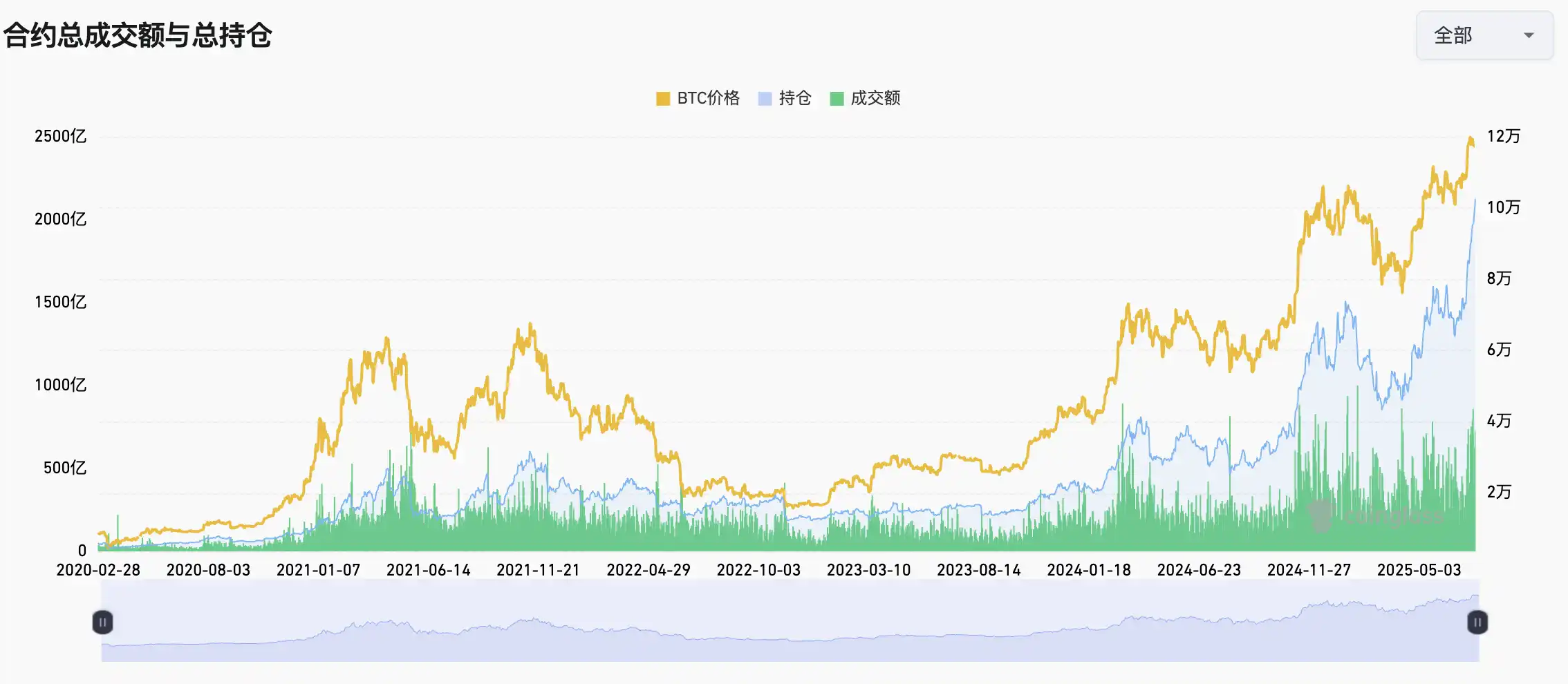
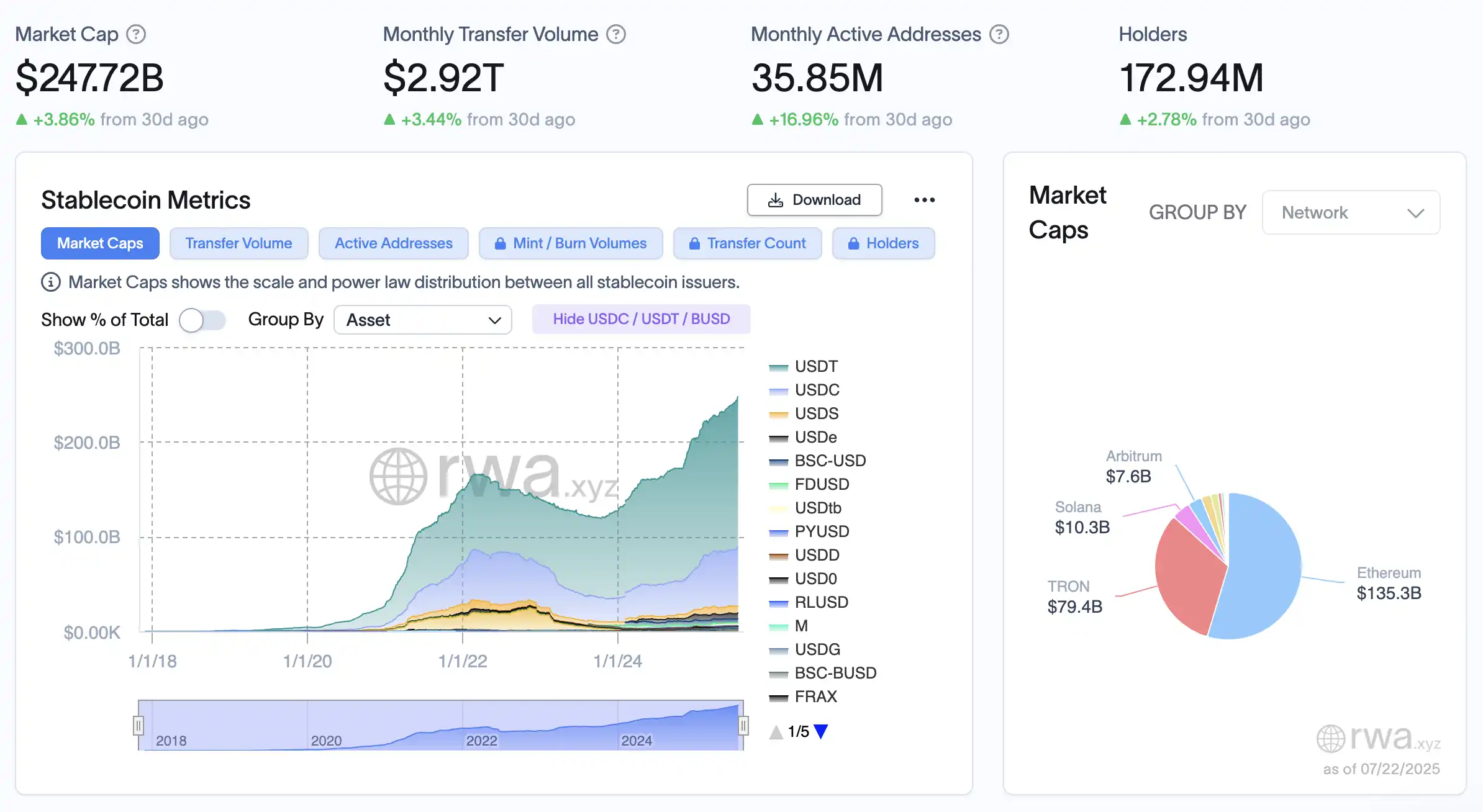
Simultaneously, on-chain stablecoin circulation continues growing, almost creating new highs daily since the Genius Act's passage, driving synchronized custody demand. This year, the total crypto market capitalization has exceeded $4 trillion, with stablecoin total supply surpassing $240 billion. As one of the largest custodians, BitGo's listing can release valuation.
The "crypto infrastructure enterprises" represented by Circle and BitGo possess stronger stability, focusing on low-volatility, high-regulatory-requirement services like custody, payment, clearing, settlement, and stablecoin issuance, making them more likely to gain acceptance and valuation support from regulatory agencies, traditional investment banks, and retirement funds.
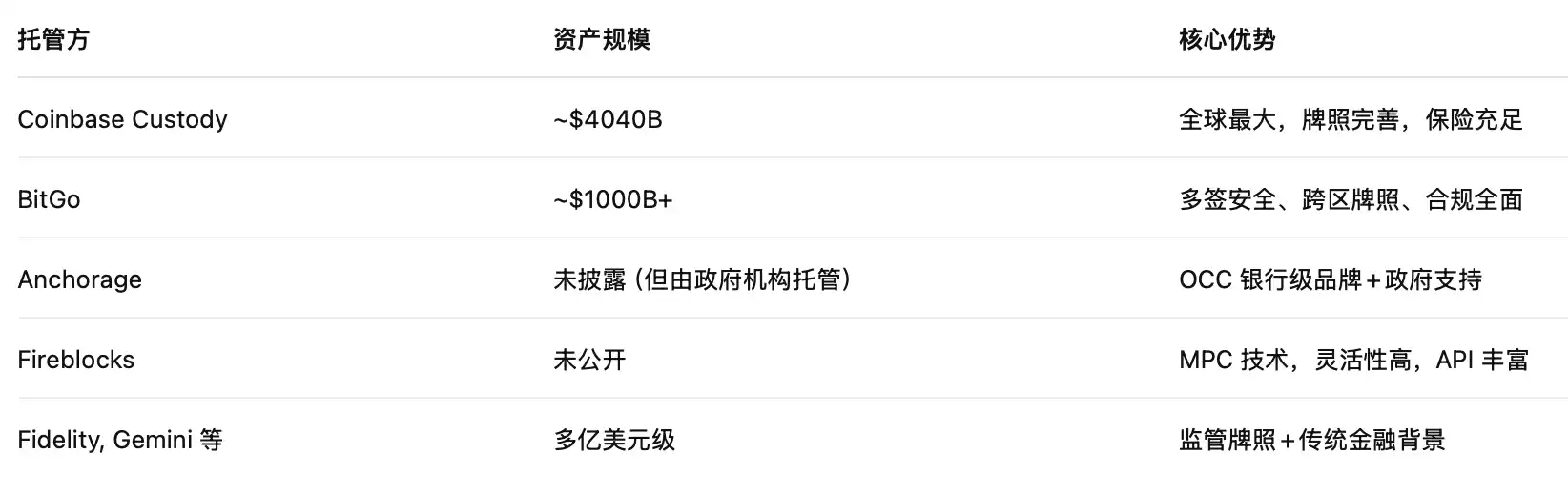
With RWA, stablecoin, and Bitcoin financialization trends accelerating, the "underlying clearing logic" of on-chain value is gradually moving up to custody, audit, and clearing modules. Projects like BitGo, Anchorage, and Fireblocks are also consecutively strengthening compliance paths and insurance capabilities to adapt to continuously growing institutional fund inflows.
Market participants indicate that if BitGo successfully lists, it will form a "compliance triangle" with Circle and Coinbase, becoming the technical infrastructure for mainstream financial systems to access the crypto market. Global Macro Investor founder and CEO Raoul Pal has frequently mentioned the "Banana zone" concept on social media, describing the steepest, most explosive growth stage in crypto market cycles.
Two months ago at 2025 Sui Basecamp, multiple data points suggested this cycle has arrived. He also emphasized that "crypto is not an asset, but a systemic reconstruction", with Crypto's underlying meaning being not speculation, but global financial architecture reshaping. The IPO of custody and financial infrastructure like BitGo represents a trend of "fully compliant" and "lower fund risk", potentially becoming one bridge for more institutional funds to enter this bull market.

More Important Than "On-Chain" is "Underlying Support"
As market narrative shifts from "Token is the new stock" to "Custody is the new infrastructure", BitGo's IPO might not just be the company's valuation leap, but potentially a footnote for the entire industry entering the "compliant asset internet" era. If the IPO succeeds, it will be not just a small step in the crypto market, but a fundamental bridge between Web3 and Wall Street.
We are all in the Banana Zone.
Click to learn about BlockBeats job openings
Welcome to join BlockBeats official community:
Telegram Subscription Group: https://t.me/theblockbeats
Telegram Discussion Group: https://t.me/BlockBeats_App
Twitter Official Account: https://twitter.com/BlockBeatsAsia






