


Summary
● Stablecoins have gained regulatory legitimacy in both China, Hong Kong, and the United States, ushering in a surge of interest. Unlike offshore stablecoins, which are primarily used for cryptocurrency speculation and the informal economy, we believe that onshore stablecoins will primarily play two roles: as "open-source digital wallets" in payments and as "open clearing houses" for inter-institutional settlements.
● Compared to centralized digital wallets in the Web2 era, digital wallets using stablecoins and blockchains offer significantly lower barriers to adoption, both technically and commercially. Technically, stablecoin payments can be fully based on existing blockchain technology, token standards, and crypto wallets. Commercially, consumer platforms like retailers, e-commerce platforms, and social networks can promote stablecoin payments for their own benefit without requiring coordination, while also fostering a collaborative effort to promote stablecoins. Based on these two points, stablecoin payments can be considered "open-source digital wallets."
● Based on these advantages, stablecoins could pose a significant challenge to the credit card-dominated payment system, undoubtedly impacting card issuers, who primarily collect transaction fees. Meanwhile, bank card networks like Visa and Mastercard, and payment terminals like Stripe, stand to benefit from the increased variety of currencies in the payment network, solidifying their role in the system.
● For fund transfers, stablecoins will serve as an "open clearing house." Interbank settlements using stablecoin deposits and withdrawals and on-chain transfers are highly similar in architecture to traditional interbank transfers conducted by clearing houses. Furthermore, stablecoin-based systems can further enhance real-time performance, scalability, and cross-regional capabilities. The long-standing inefficiency of cross-border settlements stems from the lack of a global clearing house. Therefore, stablecoins, as open, cross-regional clearing services, are crucial for addressing these inefficiencies.
● Existing remittance operators, such as Wise and AirConnect, improve remittance efficiency by acting as cross-border clearinghouses. These operators use their own ledgers and local fund pools to bridge the gap with banks in various countries, avoiding the actual cross-border transfer of funds. However, if banks achieve comparable efficiency through stablecoin clearing, this model may face challenges. Furthermore, it should be noted that not all blockchain companies' remittance solutions truly leverage the core capabilities of stablecoins. For example, cross-border transfers conducted through centralized cryptocurrency exchanges only involve the exchange's internal ledgers, not blockchain transactions. Therefore, they should be considered remittance operator services rather than stablecoin-based solutions.
Stablecoins going mainstream
In the past two months alone, stablecoin legislation has been passed in both the United States and China (via Hong Kong), the world's largest economies. This legislation marks the transformation of stablecoins from a tool primarily used within a small virtual currency community to a new fintech innovation recognized by the mainstream economy.
In the United States, the GENIUS Act was officially signed on July 18th, clarifying the path for the compliant use of stablecoins. Over the past few months, the bill has been reviewed and debated by both the Senate and the House of Representatives. As the likelihood of passage grows, various institutions and large corporations are beginning to participate in the issuance and use of stablecoins, including:
● Payment service providers begin to support stablecoins: Stripe, Visa, Shopify, PayPal, etc.
● Social media and e-commerce platforms are considering adopting stablecoin payments: Meta, Amazon, Walmart, etc.
● The four major U.S. banks plan to form an alliance to issue stablecoins: including JPMorgan Chase, Bank of America, Wells Fargo and Citigroup.
Hong Kong also passed the Stablecoin Ordinance in May 2025, which came into effect on August 1, 2025. This demonstrates that Hong Kong, as China's financial gateway, is open to stablecoin-related financial activities. The bill also allows licensed issuers to issue stablecoins in currencies other than the Hong Kong dollar, thus impacting international currency circulation far beyond Hong Kong. Interestingly, the types of institutions most actively responding to this opportunity are very similar to those in the United States, including:
● Payment service providers: Ant Financial (including Ant International and Ant Digits), LianLian International, etc.
● E-commerce platforms: JD Digits plans to launch a stablecoin, while Alibaba can do so through Ant Financial.
● Large banks: Standard Chartered Bank plans to apply to issue stablecoins through a joint venture with Animoca Brands and Hong Kong Telecom.
Against this backdrop, this article aims to provide readers with a framework for understanding the main scenarios in which onshore stablecoins can play a role in the economy and explain the main purposes for which the aforementioned institutions are involved. We will divide the discussion into two main application categories:
● Payment, which is when consumers pay merchants
● Transfer, i.e. the remitter transfers money to the recipient across banks
Strictly speaking, payments can also be considered transfers. We discuss these two use cases separately because the current mainstream approaches to cashless payments and transfers differ, and therefore present different pain points. The former primarily involves credit card payments backed by card networks, while the latter primarily involves bank transfers. Below, we will explore the key issues with existing approaches, existing alternatives, and the new opportunities presented by stablecoins.
Payment
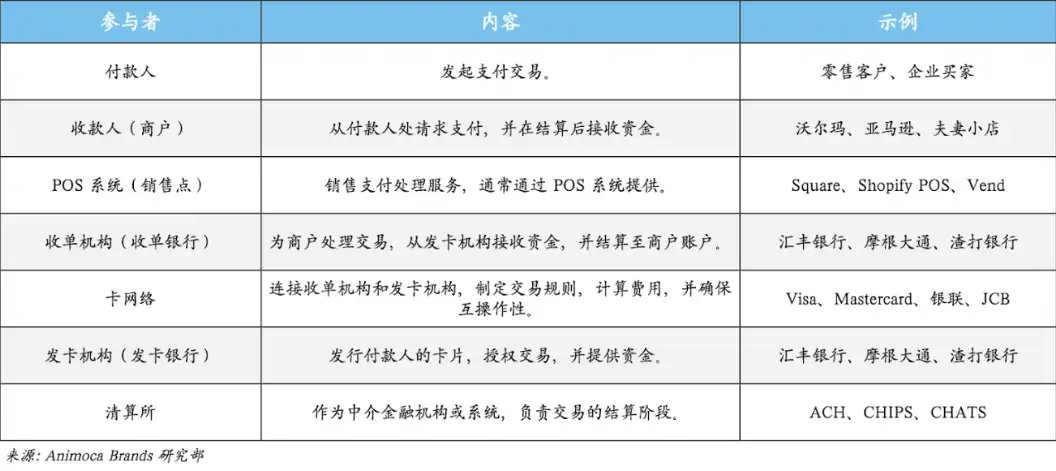
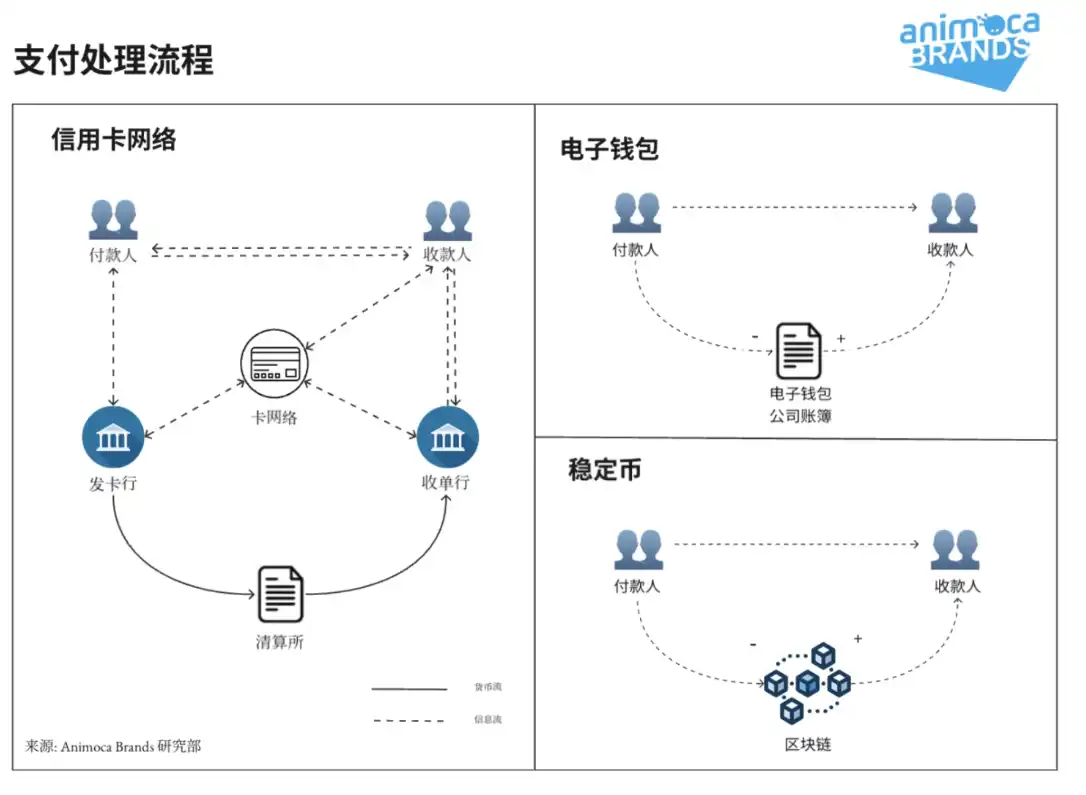
Cash and credit cards remain the primary payment methods in most regions. Credit card transactions, the primary non-cash option, are processed through bank card networks such as VISA and MasterCard (hereinafter referred to as card networks). Payments made through card networks generally follow these steps:
1. Merchant-initiated: The merchant requests payment information from the customer through its POS terminal, and the customer provides it by swiping the card offline or filling in the credit card information online.
2. Request authorization: The POS system selects the corresponding card network based on the information provided by the customer and sends a payment authorization request to the card issuer through the network.
3. Authorization Approval: The card issuer approves the transaction after verifying the customer's balance or credit limit. This confirmation is relayed back to the POS terminal through the card network and ultimately returned to the customer for confirmation, completing the payment authorization.
4. Clearing and Settlement: For authorized payments, the PoS terminal initiates the clearing and settlement process with the acquirer (e.g., the merchant's bank). The acquirer sends the batched total amount of the incoming payments to the issuer via the card network. The issuing bank completes the settlement via traditional interbank transfers.
5. Foreign currency transactions: When foreign currency is involved in the transaction, the card issuer will exchange the currency and complete the settlement through SWIFT transfer and other methods.
In this process, the card network acts as a messaging layer to ensure that the financial service providers used by customers and merchants, no matter how different they are, can complete communication and settlement.
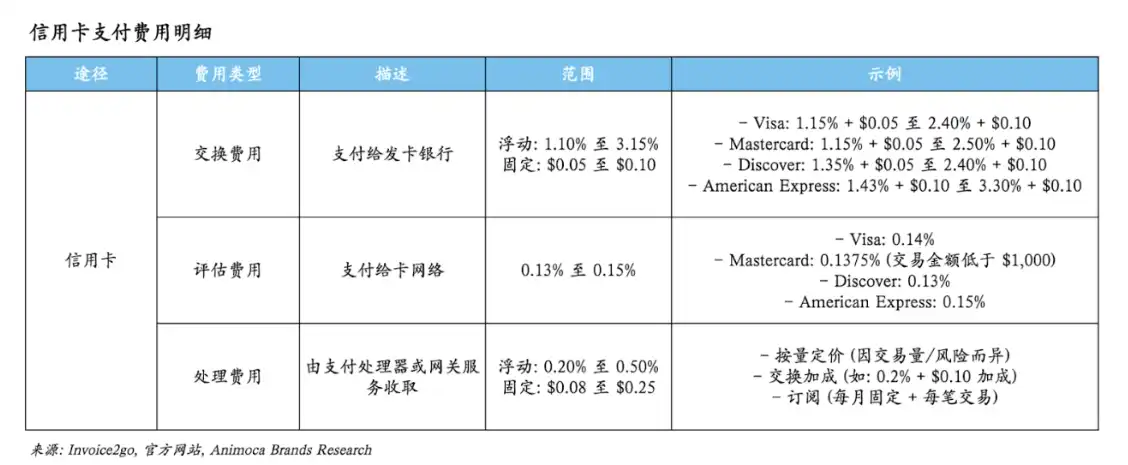
While credit cards and card networks have greatly increased the convenience of cashless payments, they are also often criticized for their high transaction fees. Each credit card transaction automatically deducts 2-3% or more from the customer's payment as a processing fee. This fee is a heavy burden for businesses with slim margins.
However, a closer look reveals that the card networks themselves aren't the primary cause of high fees. Credit card transaction fees can be broadly divided into three components: assessment fees paid to the card network, processing fees at the point-of-sale (POS), and interchange fees paid to the issuing bank. Of these three, the card networks charge the least, at just 0.15% of the transaction. For example, Visa processes $16 trillion in transactions annually, yet its annual revenue accounts for only 0.2% of total transaction volume. The bulk of transaction fees comes from interchange fees (1-3%) paid to the issuing bank. This fee primarily covers the costs and risks of providing services, such as credit default risk and consumer protection. For consumers who need credit, this fee isn't excessive. For issuing banks, given that credit cards carry the risk of default, a 2% fee demonstrates the professionalism of their risk management, not inefficiency.
Therefore, the crux of the credit card fee problem isn't their high fees, but rather the fact that consumers have made them the default option. Regardless of whether they need a line of credit, they will choose credit cards over other options. The root cause of this consumer preference is a mismatch between who chooses the payment method and who bears the costs: consumers choose the payment method, while merchants bear the transaction fees. This mismatch provides card issuers with leverage, allowing them to "bribe" consumers with rewards and points to gain their preference. This strategy is highly effective, with a large number of consumers preferring credit cards due to their better cashback and points benefits over debit cards, cash, or digital wallets, which offer no points but lower transaction fees, even when they don't need credit.
In addition to high transaction fees, card networks also incur significant cross-border fees when making cross-border payments, further driving up transaction costs. This issue stems from the reliance on traditional interbank settlement channels between card issuers and acquiring banks. We'll explore cross-border settlement in the section on remittances.
From the above discussion, we can roughly understand the attitudes of all parties involved in the payment system towards stablecoins:
1. Merchants suffer the most from the credit card system and therefore have the strongest incentive to find alternatives. Companies like Walmart, Amazon, and JD.com, due to their extensive sales networks, have shown strong interest in stablecoin payments as an alternative.
2. Card networks like Visa and Mastercard don't contribute significantly to transaction fees and support a wide range of currencies, including stablecoins. Therefore, card networks themselves are not inherently opposed to stablecoins. On the contrary, as more stablecoins become part of everyday transactions, card networks may become even more important due to their bridging capabilities. Furthermore, stablecoins can streamline the payment network settlement process, allowing card networks to further participate in settlement and thus play a larger role in the overall payment process. Visa demonstrated the potential of cross-border settlement with issuers through stablecoins as early as 2021.
3. POS solution providers can expand their product lines by supporting new payment methods. Stablecoins will not disrupt their current role, but rather allow them to enter into services such as acquiring and deposits and withdrawals. Stripe's acquisitions of Bridge and Priv (a wallet service) exemplify this trend.
"Open Source Digital Wallet" Based on Stablecoin
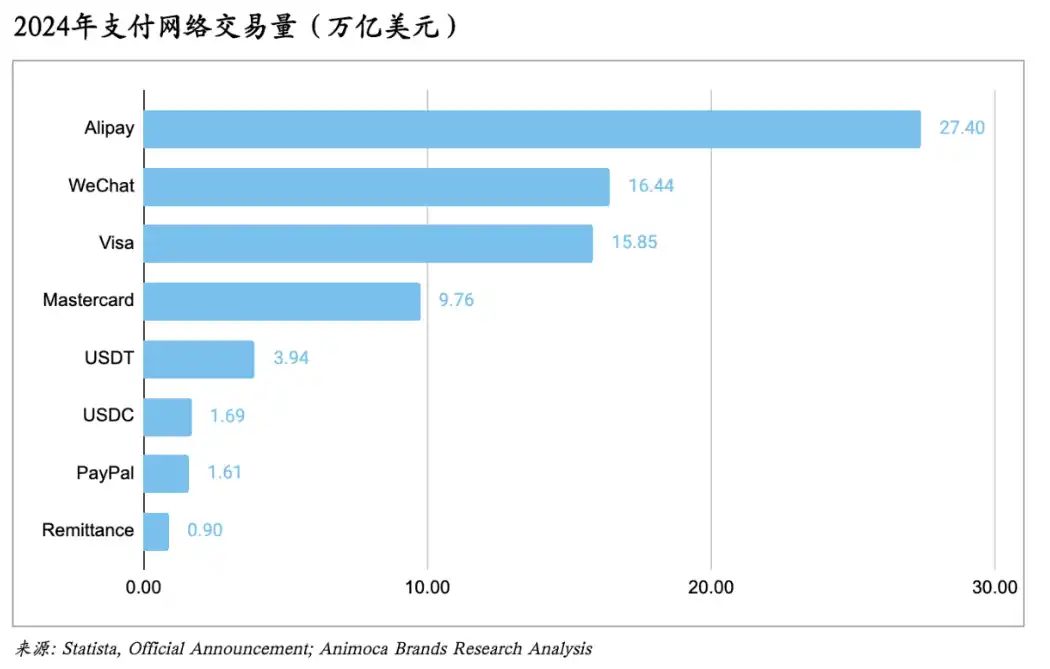
Digital wallets were pioneered by PayPal in the US and have since become a dominant payment method in China and many developing countries in Southeast Asia and Africa. Compared to bank card payments, digital wallets offer several advantages, including:
● Registering for a digital wallet is much easier than opening a bank account. Users simply register online, just as they would on a website, to start using a digital wallet. Some digital wallet services offer offline channels for deposits and withdrawals.
● As a product of the Web2 era, digital wallets are inherently compatible with online transactions, which has led to their rapid growth in the mobile era and gradual expansion to offline merchants.
● Because there are fewer nodes involved in the payment process, digital wallet transactions are cheaper than card-based transactions. For example, Alipay charges merchants a 0.6% fee, and peer-to-peer transfers between users are free.
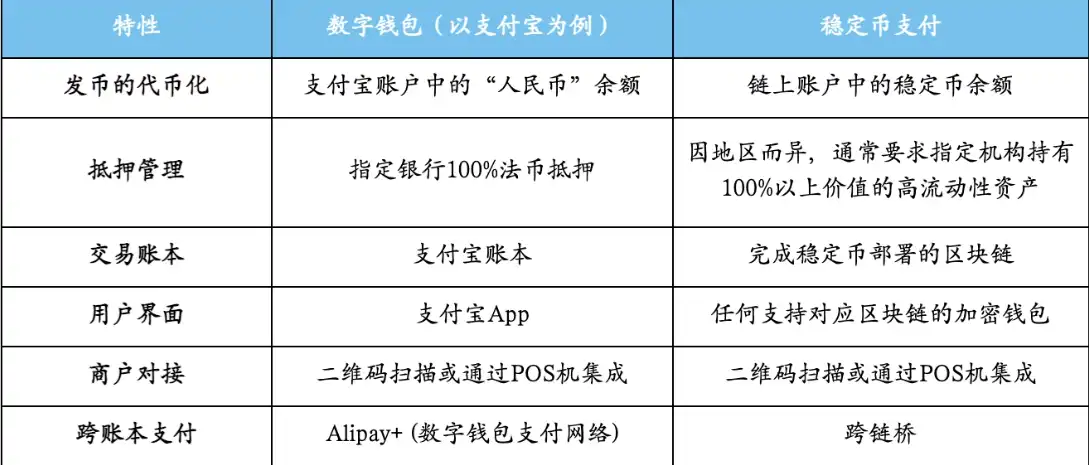
Stablecoin payments have many similarities with digital wallets and can therefore be considered a new form of digital wallet service. These similarities include:
● The “funds” in the wallet account are tokenized representations of legal tender on the ledger and must maintain 100% collateral in accordance with regulatory requirements.
● Payments between digital wallets are simply a transaction record on the ledger. However, digital wallet transactions are recorded on the proprietary ledger of the company to which they belong (such as Alipay), while stablecoin payments are recorded on a decentralized blockchain ledger.
● In terms of user interface, the user interface and interaction methods of digital wallets and digital currency wallets are basically the same. For example, both support functions such as "scan code payment" and "payment code".
At the same time, due to its decentralized architecture, stablecoin payments are a more open "open source digital wallet" compared to products in the Web2 era. For example:
● The issuance of stablecoins, that is, providing compliance, collateral and contract deployment, can come from multiple institutions, such as Tether, Circle, etc.
● Stablecoin deposits and withdrawals are provided by independent licensed institutions, such as Transak.
● The ledgers for stablecoin transactions can use different blockchains, such as Ethereum, Solana, TON, etc.
● Users can pay and receive money using any wallet that supports these blockchains.
● Cross-ledger (wallet) payments can be processed through cross-chain protocols on multiple chains, such as LayerZero.
Therefore, in the process of popularizing stablecoin payments, on the one hand, they can learn from the successful strategies of digital wallets, and on the other hand, through their more open features, they can enter areas that digital wallets have not been able to conquer before. For example:
● Dominating consumer scenarios: Digital wallets have gained significant customer acquisition by targeting applications with large user bases and consumer demand. Examples include Alipay (e-commerce), WeChat Pay (social networking), Grab Pay (ride-hailing), and public transportation payments such as Suica, EasyCard, and Octopus. Stablecoin payments are likely to follow a similar path.
● Opportunities for Developed Economies: Stablecoin payments offer developed economies like the United States another opportunity to challenge the dominance of credit cards. The open-source nature of stablecoins allows merchants, stablecoin issuers, blockchain operators, cryptocurrency wallets, and payment service providers to independently develop stablecoins without requiring coordination, creating a synergistic force. This approach is far more powerful than simply promoting a single digital wallet service (such as PayPal). Considering that 28% of the US population already owns cryptocurrency, once major consumer platforms begin supporting stablecoins, the user base will grow rapidly.
● Financial inclusion: Digital wallets are driving financial inclusion by facilitating the transition from cash to online payments and providing services like deposit and loan transfers to underbanked populations. Stablecoins, as open-source digital wallets, can further this trend by lowering the technical barrier to entry. Payment service providers in various countries can simply integrate their local stablecoins into existing blockchain infrastructure and applications without having to undertake extensive technical development.
● Marketing Advantages: Stablecoin payments require significant marketing efforts. This includes convincing merchants to accept new payment methods, upgrading point-of-sale (PoS) systems, and attracting users through incentives such as discounts and rewards. In this regard, stablecoins, due to their inherent collateralization, can generate interest, providing the necessary funds for marketing activities.
● Card networks remain important: The proliferation of digital wallets will not eliminate the need for transaction intermediaries. For example, digital wallets will still rely on Alipay+ to connect merchants with different wallets; the Octopus App supports payments through UnionPay Point-of-Sale (PoS). Stablecoins will also require support from various payment networks. Existing payment infrastructure (such as Visa and Stripe) can expand their service offerings by adding support for stablecoins. For example, Stripe has acquired several crypto services to support growing merchant demand. Visa has also clearly stated its commitment to supporting digital currencies.
● On-chain payment networks: The on-chain portion of stablecoin payments will also require routing and exchange services to support payments between stablecoins from different issuers, or for the same stablecoin on different blockchains. Circle's CPN (Circle Payment Network) already enables cross-chain routing and settlement for its own USDC. The further development of this demand will create new opportunities for traditional networks and on-chain native protocols.
transfer
Interbank transfers are a pillar of the modern economy. Even though digital wallets can handle a large number of small transfers between individuals, the majority of funds still flow through banks. Due to its importance, every country and region has developed the necessary infrastructure (such as clearing houses) to facilitate efficient domestic transfers. However, due to the lack of international clearing houses, cross-border transfers remain relatively inefficient. The SWIFT telegraph network, established in the 1970s, remains the cornerstone of cross-border interbank transfers 50 years later.
Domestic transfers
Domestic transfers are the most common form of capital flow. In 2024, China's domestic payment system processed 12.45 trillion yuan (approximately $1.8 trillion) in transfers. The United States processed a similar amount.
These interbank transfers are typically facilitated through clearinghouse services provided by central banks or banking associations. Under a clearinghouse framework, banks do not settle directly with each other. Instead, participating banks open accounts with the clearinghouse, and transfers are effected through transactions on the clearinghouse's ledger. In this process, there is no direct flow of funds between banks; rather, funds are deposited and withdrawn between banks and the clearinghouse. Take the US and Chinese systems as examples:
US banks use multiple clearing services. The Federal Reserve offers FedWire and FedNow for both large and small transfers. The Clearing House Association offers CHIPS and RTP as parallel products. Furthermore, the ACH system, over 50 years old and managed by NACHA (a nonprofit banking association), remains the most widely used by US banks due to its compatibility with older systems.
Chinese banks rely on the clearing systems provided by the People's Bank of China, including the High Value Transfer System (HVPS), the Basic Payments System (BEPS), and the International Banking and Public Sector (IBPS), to manage transfers of varying sizes and timeframes. In Hong Kong, the Hong Kong Monetary Authority provides the Clearing House Automated Transfer System (CHATS) for large-value interbank transfers and the Faster Payment System (FPS) for instant funds transfers. Just this year, the "Cross-border Payment Pass" was launched, connecting the PBOC's IBPS and the HKMA's FPS to enable instant funds transfers between mainland China and Hong Kong, as well as exchange rates between Hong Kong dollars and RMB.
The People's Bank of China also provides the Cross-Border Interbank Payment System (CIPS) for offshore RMB (CNH) transactions. Through CIPS, overseas banks can transfer RMB directly with banks in China or other CIPS participating banks overseas, without relying on the SWIFT system. In contrast, cross-border USD transfers are primarily facilitated through CHIPs, which clear only in New York. All cross-border USD transfers require each bank to first send the USD to its New York branch via internal or external transfers before proceeding.
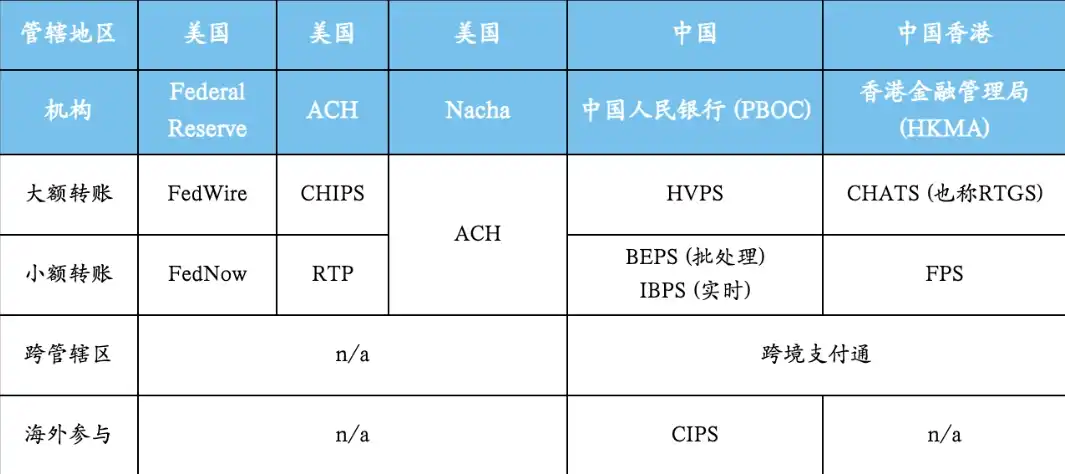
From the above analysis, we can see that the existing clearing system can cover a wide range of transfer application scenarios, but it still has its limitations:
● System fragmentation: It is difficult to maintain the old system and coordinate across banks, resulting in the coexistence of multiple clearing services.
● Barriers to entry: Clearing houses are usually limited to banks in a country and only support local fiat currencies. This is obviously insufficient for currencies that require global liquidity.
● System availability: Many clearing systems are not available 24/7/365. They are often shut down on weekends and evenings. Even 24/7 systems still require time for maintenance and upgrades.
● Cost and speed: Most clearing services are batch processed, which requires a trade-off between cost and time.

An "open clearing house" stablecoin can improve transfer efficiency in two ways. The first is the aforementioned digital wallet transfers, primarily for small transfers between users. The other is providing "open clearing house" services for interbank transfers. Let's elaborate on the concept of "open clearing house."
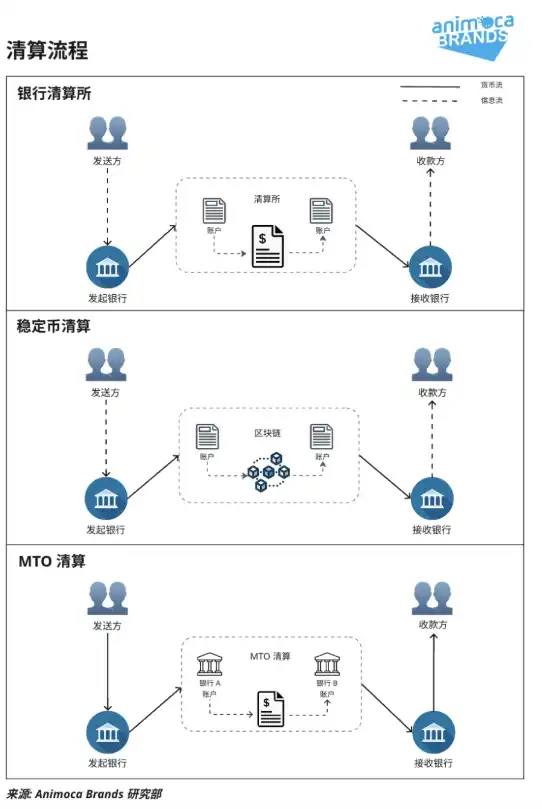
Transactions conducted via stablecoins share many similarities with clearinghouse processes. As shown in the flowchart, under a clearinghouse architecture, banks create accounts and deposit funds into the clearinghouse's ledger. Settlements between banks then become transactions on the clearinghouse's ledger. In contrast, clearing via stablecoins is equivalent to banks establishing on-chain accounts and "depositing" funds in stablecoins. Interbank transfers then become transactions on the blockchain ledger. In this light, interbank payments facilitated by stablecoins can be viewed as a clearing service provided by blockchain and stablecoins.
Furthermore, clearing services enabled by stablecoins are more open than traditional clearing houses. Stablecoin clearing can be conducted in a self-organized manner between banks, unrestricted by jurisdiction or currency. Furthermore, stablecoin clearing can integrate with various DeFi features on the blockchain, enabling the continuous expansion of clearing-related functionality.
Using stablecoin “open clearing houses”, the interbank transfer process can be improved in many ways:
● Cost: Traditional clearing services incur high fees. For example, FedWire charges $0.20 per transaction, while FedNow charges an average of approximately $0.045 per transaction. This is a significant amount for large-scale adoption. In contrast, stablecoin transfer fees on most blockchains are typically less than $0.01.
● Speed: On-chain transfers are settled in real time by default, with processing speed limited only by block generation time. This time varies across blockchains, but is generally between 0.1 and 10 seconds. ● Availability: Major public chains are available 24/7 by default, with no downtime required for maintenance.
● Access rights: All major public chains require no permission, meaning clearing services are no longer restricted by country or currency. As more fiat currencies are added to the chain, the types of supported currencies can be continuously expanded.
● Functionality Expansion: Traditional clearing houses are typically managed by central banks or banking associations, with functional decisions made in a top-down manner. This often prioritizes new features over commonly used ones, and decision-making is slow. Blockchain, in contrast, is naturally open to the features banks need, essentially adding an "app store" for clearing services.
The role of stablecoins as "open clearing houses" may be one of the primary motivations for the Big Four US banks to explore stablecoins. First movers can enjoy a first-mover advantage in setting standards, such as in selecting blockchains and stablecoin types. Furthermore, given the immense influence these banks hold within the US dollar ecosystem, their actions will influence the direction of subsequent innovation within that ecosystem. Given the global role of the US dollar, this dominant advantage could have a global impact beyond the US.
Cross-border transfers
Cross-border transfers, or remittances, are smaller in scale than domestic transfers, but are often criticized for their high costs (approximately 5-6% of the transaction value), long processing times (approximately 5-7 business days), and unpredictable results (transfers may fail for unknown reasons).
As mentioned earlier, the root cause of this inefficiency is the lack of cross-border clearing house services. This means that two key functions of money transfer are missing:
1. Communication, where the remitting bank informs the beneficiary bank of the transfer information.
2. Settlement, which is the transfer of funds from the remitting bank to the receiving bank.
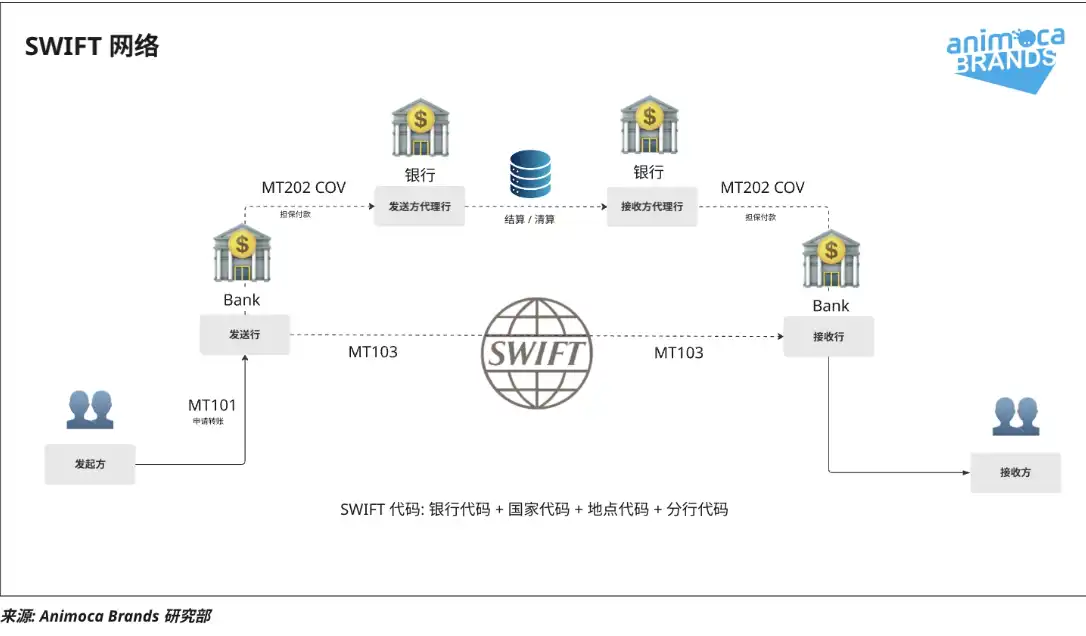
In the absence of clearing services, the current mainstream solution is wire transfer, also known as SWIFT transfer. This method implements the above two functions separately:
● Communications: Interbank communications are handled by SWIFT, which transmits transfer requests between the remitting bank, the receiving bank and the intermediary bank.
● Settlement: relies on interbank transfers, which are achieved through internal bank transfers and domestic clearing services in various countries (such as US dollars through CHIPs).
Taking the example of transferring US dollars from Hong Kong to Brazil, the general steps are as follows:
1. Send a message: The bank in Hong Kong sends a SWIFT telegram to the bank in Brazil to inform it of the transfer information.
2. Select routing: The remitting bank in Hong Kong selects the settlement route and sends a SWIFT message to the intermediary bank.
3. Fund Settlement:
-The remitting bank transfers US dollars from its Hong Kong branch to its New York branch through internal settlement.
-The New York branch sends the funds to the New York branch of the beneficiary bank via CHIPS.
-The beneficiary bank transfers the funds to Brazil via internal settlement.
Even in this simple case, since each step requires daily settlement and each transfer point incurs a fee, the entire process takes 3-5 business days, and fees are accumulated at each transfer step.
This transfer can be further complicated by other factors, such as:
● Use local currency: If the recipient in Brazil only accepts Brazilian reals and the remitter only has Hong Kong dollars, the remitter must first convert the Hong Kong dollars into US dollars to use the above-mentioned funds transfer route, and then go to a Brazilian bank to convert them into Brazilian reals.
● Small banks: Banks without a New York branch need to go through a larger bank with US dollar processing capabilities, which further adds steps and costs.
Under the traditional clearing house model, a country can establish an offshore clearing bank to allow non-national banks to participate in cross-border currency clearing (for example, CIPS for RMB transfers). However, these efforts remain constrained by a single currency and a slow, top-down expansion process. For example, the vast majority (73%) of offshore RMB transfers still rely on Hong Kong (equivalent to CHIPs going through New York), and SWIFT is still often used rather than relying solely on CIPS.
Remittance Operators: Improving existing cross-tier payments
Money Transfer Operators (MTOs) are one innovative approach to addressing the inefficiencies of cross-border remittances. MTOs are widely used in international e-commerce and personal remittances. Companies like Western Union, Wise, and AirTransit are well-known brands in their respective regions and customer bases.
The MTO acts like a user-serviced, cross-border clearing house. The remitter transfers local currency to the MTO's local bank account and notifies the MTO, creating a "deposit" into the MTO's ledger. The MTO then calculates the equivalent amount in the recipient's currency and pays the corresponding amount from its bank account in the recipient's country to the recipient's local account, completing the "withdrawal."
This approach improves efficiency by effectively avoiding actual cross-border capital movement. The "cross-border" portion of each transaction is simply recorded on the MTO's ledger, then processed through the MTO's account in the payee's or payee's country. Therefore, the MTO's primary cost is not related to cross-border transactions but rather to maintaining the liquidity pool within the region it serves. For regions with balanced capital flows (for example, between Singapore and Hong Kong), the liquidity pool is largely balanced and requires minimal maintenance. When the liquidity pool is unbalanced (for example, from the United States to Mexico), the MTO reduces the cost per unit transfer through batch transfers and currency conversions.
However, despite their high efficiency, MTOs still only handle a small fraction of total cross-border remittance volume. Leading MTOs like Wise or AirTransfer process less than $200 billion in transactions annually, generating approximately $1 billion in revenue. Given that the entire MTO industry reportedly generates $42 billion in annual revenue, we estimate that MTO transfers account for approximately 3-5% of total cross-border remittances.
Several factors may have contributed to MTOs’ failure to dominate the cross-border remittance market:
● Large organizations often prefer bank transfers due to security concerns.
● Traditional wire transfer networks offer wider coverage, while MTOs typically only support popular destinations and currencies.
● Limited liquidity pool size may restrict MTO from processing large transfers.
In addition, MTOs incur additional operating costs, such as maintaining retail stores or corporate sales teams, which banks can amortize across their broader services.
It's worth noting that cross-border transfers through cryptocurrency exchanges (such as Bitso) are more often based on a MTO model, meaning the core transfer occurs on the exchange's own ledger rather than leveraging the blockchain-based transfer capabilities of cryptocurrencies. The remitter deposits US dollars into their account at the cryptocurrency exchange, which then sends stablecoins to the recipient's exchange account. The funds are then withdrawn to the recipient's local bank account. During this process, the cryptocurrency exchange only updates its centralized ledger and manages deposits and withdrawals to and from local bank accounts. Cryptocurrencies exist primarily to provide an alternative method for funding accounts, rather than as an integral part of the underlying transfer mechanism.
Stablecoins for cross-border transfers: A new way to integrate MTOs and banks
Stablecoins can integrate the MTO model into cross-border bank transfers. As mentioned earlier, stablecoins enable the establishment of an "open clearing house," transcending geographical restrictions and enabling direct, single-currency transfers between any banks. For example, a US dollar transfer from Hong Kong to Brazil, which would require a three-phase relay for a wire transfer, can now be accomplished through a direct on-chain stablecoin transfer between two banks, taking only seconds and costing less than $1.
For transfers requiring currency conversion (for example, Hong Kong dollars to Brazilian real), a simple solution is to first convert the Hong Kong dollars into US dollars or RMB for cross-border stablecoin settlement. The funds can then be converted into reals upon local withdrawal. This model is a significant improvement over wire transfers. A more advanced approach for cross-border transfers would be to integrate currency exchange into an "open clearing house." Once both the Hong Kong dollar and the Brazilian real have their own stablecoins, banks would simply deposit and withdraw funds into the blockchain in local currency, while exchanges between Hong Kong dollars and Brazilian real could be conducted through an on-chain transaction pool. This approach would allow banks to participate in cross-border transfers without the need for currency exchange capabilities, thereby expanding the range of participating banks. Of course, this model requires that all participating currencies be compliant stablecoins accepted by all countries, a reality that remains to be seen.
It's worth noting that SWIFT, as the most widely accepted communication platform among global banks, will continue to play a key role in cross-border remittances. While stablecoins could significantly improve the settlement process, transactions still require a shared platform to communicate transfer details. Just as card networks will continue to exist and facilitate stablecoin payments, SWIFT's role in interbank communication will remain relevant in a world of stablecoins.
After stablecoins, where will banks go?
Open-source digital wallets enabled by stablecoins could potentially divert some retail banking business. In the credit card market, which is primarily bank-issued, a shift in market preference toward stablecoin payments could reduce credit card usage, thereby reducing banks' revenue from issuing cards. This could prompt banks to shift from issuing credit cards to providing consumer credit and protection services through integration with retailers or wallet applications. Furthermore, individual deposits may increasingly appear on-chain in the form of stablecoins, rather than bank account balances, prompting banks to explore new ways to attract deposits, such as on-chain custody or Reliable Warrants (RWAs).
At the same time, banking infrastructure still has its advantages. For example, central bank-backed clearing houses provide ample liquidity for large-value instant settlements. In contrast, stablecoin transfers require pre-funding of on-chain accounts, so traditional clearing houses may still have an advantage in capital efficiency for large-value transfers. Furthermore, key banking capabilities, such as lending, combined with strong risk management capabilities, remain indispensable to the modern economy. Finally, banks can still serve as a gateway for users to access a wider range of financial and property services.
A potential shift is that banks will gradually migrate their capabilities to the blockchain, either through their own transformation or the emergence of new banks, much like how banks shifted operations from physical stores to online banking in the internet era. Users' bank accounts may evolve into on-chain IDs, with banks acting solely as custodians of on-chain assets. Bank-recommended wealth management products could also shift from funds and wealth management products to tokenized real-world assets (RWAs). Similarly, lending services may be integrated into on-chain DeFi, augmented with banks' risk management and compliance capabilities.
Ultimately, the modern financial system is built around banks. Central banks are responsible for creating money, while commercial banks, under regulation, distribute and amplify the money supply. Stablecoins offer new possibilities for banking services, forcing banks to adapt to new business models. Banks that fail to keep up may be eliminated, but the banking industry as a whole will continue to play a vital role in the world.
Conclusion
This article focuses on the key scenarios and potential for onshore stablecoin use, given established regulatory frameworks in major economies. There are many other topics regarding stablecoins, including on-chain native stablecoins, interest-bearing stablecoins, competing stablecoins (such as central bank digital currencies (CBDCs) or tokenized deposits), and the political forces driving the adoption of stablecoins. We will explore these topics in future articles.
Click here to learn about BlockBeats' BlockBeats job openings.
Welcome to join the BlockBeats official community:
Telegram group: https://t.me/theblockbeats
Telegram group: https://t.me/BlockBeats_App
Official Twitter account: https://twitter.com/BlockBeatsAsia






