


On Thursday local time, just before Wall Street's close, US President Trump announced on Truth Social the appointment of Stephen Miran, Chairman of the White House Council of Economic Advisers (CEA), as a Federal Reserve Board member, succeeding Adriana Kugler who recently left, with a tentative term until January 31, 2026.
According to Politico, the White House was not yet prepared to announce a successor to the current Fed Chair Powell, and Miran's appointment serves both as a "gap filling" and a "political signal".
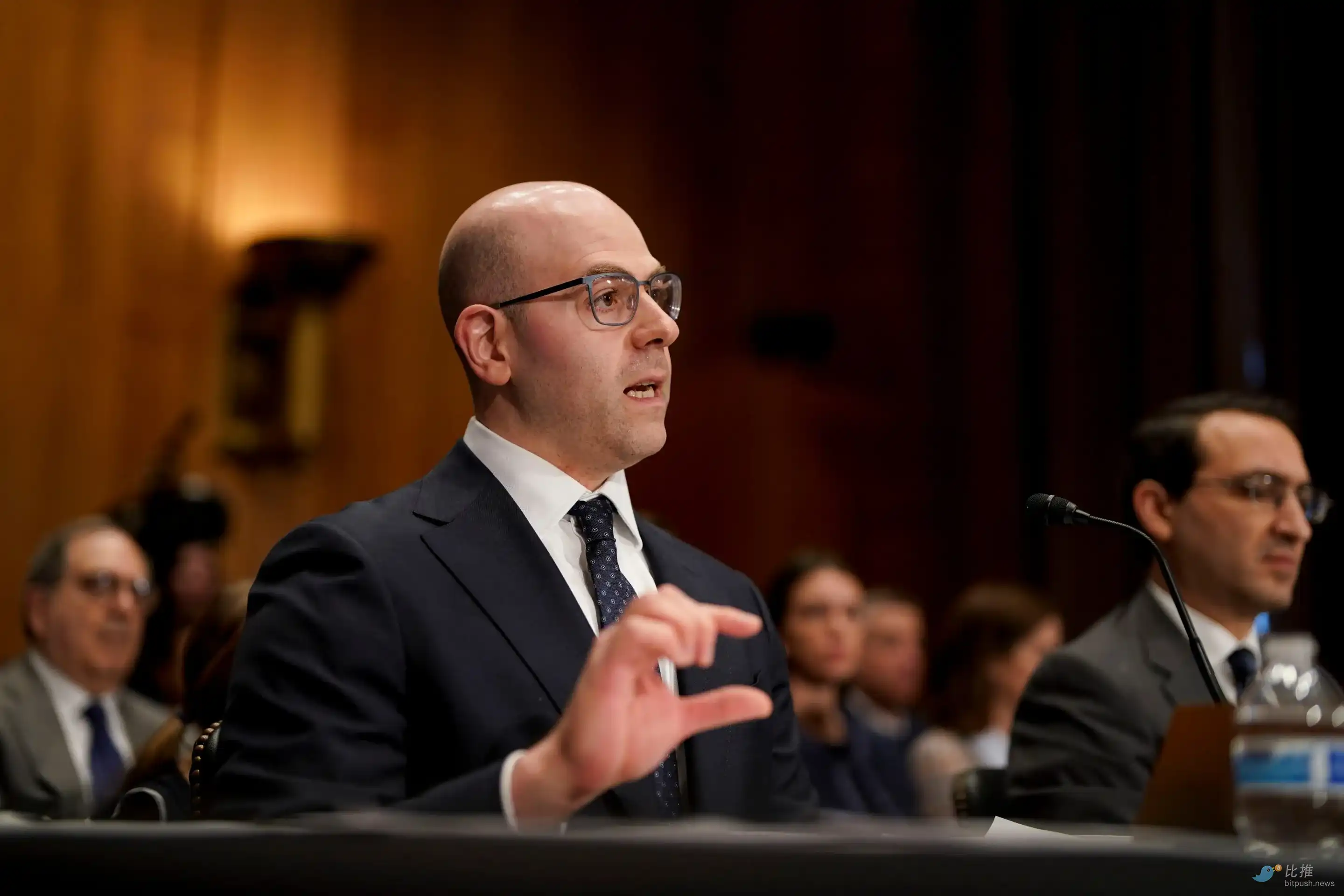
Will this brief "Fed audition" become an unexpected booster for the crypto industry? And what does Trump's appointment of Miran mean under the current backdrop of Fed rate cut expectations and US dollar weakness?
Who is Stephen Miran? A Crypto "Ally" from Harvard to the White House
Stephen Miran has a Harvard economics background and a career spanning investment and policy domains. Before joining Trump's team, he was an investment partner at Amherst Peak Advisors and a senior strategist at Hudson Bay. Notably, Hudson Bay was deeply involved in debt trading after FTX's bankruptcy—the crypto exchange went bankrupt in late 2022, and its founder Sam Bankman-Fried was sentenced to 25 years in prison in November 2023 for seven charges including wire fraud.
After joining Trump's camp in 2023, Miran quickly rose to prominence, becoming CEA Chairman in March 2025. As a typical conservative economist, he firmly supports Trump's tariff policies and has repeatedly advocated for "lowering interest rates" and "reassessing the strong dollar policy".
In the cryptocurrency realm, Miran has shown a rare openness. In December 2024, as CEA Chairman, he was invited to the famous financial podcast 'Forward Guidance', where he discussed the problems caused by crypto regulatory chaos, stating:
"Perhaps we really should simplify a lot of regulations and let innovative industries like crypto truly take root."

At the time, US crypto regulation was in chaos, with SEC and CFTC disagreeing on token classification, and Coinbase and Binance cases unresolved. Many industry insiders viewed his statement as the "White House's first friendly signal". As CEA Chairman, his views lack legislative power but carry significant "trend-setting" meaning in policy trends and regulatory discussions.
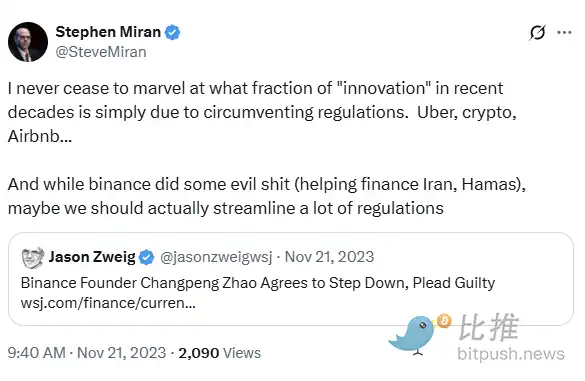
Importantly, Miran is not blindly supporting the crypto industry, but opposes the current fragmented, redundant, and legally ambiguous regulation. He pointed out in the program:
· The current dispute between SEC and CFTC on crypto asset properties (securities vs. commodities) severely affects compliant operations of innovative companies;
· The White House should promote a more coordinated regulatory framework to "clearly show entrepreneurs the compliance roadmap";
· Truly innovation-friendly regulation is not "no regulation", but "clear rules with clear responsibilities".
This perspective differs from traditional crypto extremists and is closer to the path advocated by institutional compliance-oriented crypto supporters like Coinbase CEO Brian Armstrong.
According to Coindesk, Miran has privately discussed the ambiguity of SEC and CFTC token regulation classification.
If Miran continues to publicly express attitudes towards rationalizing crypto regulation during his Fed term, even without directly influencing policy-making, he could become an important market sentiment catalyst and potentially accumulate "potential board candidate" momentum after 2026.
Federal Reserve Policy: A "Rate Cut Advocate" Enters
[Rest of the text continues in the same professional translation style]
Click to learn about BlockBeats job openings
Welcome to join the official BlockBeats community:
Telegram Subscription Group: https://t.me/theblockbeats
Telegram Communication Group: https://t.me/BlockBeats_App
Official Twitter Account: https://twitter.com/BlockBeatsAsia






