


CZ (Founder of Binance):
Liang Xinjun (Co-founder of Fosun Group):
"I have been cooperating with the Hash Global team for many years. What I appreciate about the team is that although their investments may sometimes have mistakes, their decisions are always made based on rational analysis and judgment, rather than blind faith. They communicated with me early on about the Binance ecosystem and the value of BNB, and I also participated in their node staking and BNB fund investments quite early, with good returns. I have seen many institutional analysis reports on Bitcoin and Ethereum; for BNB, I believe Hash Global's analysis is the earliest and best in the industry."
Chen Long (Secretary-General of Luohan Hall, Founder of Xichu, Former Chief Strategy Officer of Ant Financial):
"Although Web3 is increasingly becoming a new pillar of the financial system, there is a lack of consensus on how to value digital assets. Hash Global has proposed a very valuable perspective based on the monetary equation analysis framework.
If a country's currency growth rate is synchronized with economic growth, it will not cause inflation, which is the well-known seigniorage. This means that economic transaction activities require the lubrication of monetary functions. With a stable velocity of money, the overall monetary value will be synchronized with the volume of economic transactions.
It is precisely based on this principle that the monetary equation analysis framework can estimate the total value of ecosystem tokens around transaction volume. This method is based on many assumptions, but its logic is fundamentally sound, which is a clear improvement over the valuation logic of most digital assets and worth continuous exploration and refinement. Returning to the first principles of value creation is a good starting point."
Wang Jingbo (Founder of Noah Wealth):
"As the largest wealth management platform serving global Chinese, Noah has always paid attention to the emergence and value of new types of assets. We have observed that digital assets are being accepted by mainstream markets as the United States and Hong Kong are vigorously improving the digital asset regulatory framework. We place great importance on guiding and helping investors learn and understand the value of digital assets as soon as possible. In the past two years, we have invited the Hash Global team multiple times to share with our investors. Their research and analysis of 'value functional tokens' have brought us many fresh perspectives and insights. Their attitude and method are worth paying attention to and learning from."
Wei Zhijie (Managing Director of Cathay International Wealth Management):
"I have worked in the wealth management industry for many years, always helping various family offices with intergenerational inheritance and asset allocation. Cathay has noticed the optimization effect of digital assets on portfolio risk-return ratio and is guiding clients to rationally recognize and accelerate the allocation of digital assets. We are particularly focused on functional tokens with clear economic models and real application scenarios. The innovative research work done by Hash Global in this type of new asset field has given us many inspirations. We are discussing the value of such assets with them and jointly promoting traditional financial investors' understanding of the value of these assets."
I. Introduction
In recent years, the rapid development of Web3 financial infrastructure is reshaping the operating rules of capital markets, and its programmability and openness are reconstructing the sources of asset value, driving the emergence of a new type of asset. These new assets not only carry traditional equity value, serving as value mappings for platforms, protocols, or ecosystems, but also possess clear use value, such as paying transaction fees, obtaining service discounts, and unlocking access rights. This report refers to such new assets as "value functional tokens", representing composite asset carriers with dual values of "asset attributes" and "usage rights".
The emergence of new assets is driving the evolution of the concept of "value" itself, and the valuation methodology of value investors must also evolve accordingly, just as the Internet revolution in the early 21st century brought a new logic for valuing Internet stocks. Early advocate of crypto asset value investing, John Pfeffer, proposed: "The first principle of value investing is to think independently based on reliable valuation logic. When new assets first appear, there is no corresponding valuation logic; value investors should strive to discover new valuation logic."
We believe that the most representative value functional token currently is BNB, the platform token of the world's largest crypto exchange, Binance. BNB maps platform value on one hand and has actual use value in the ecosystem on the other, making it the earliest and most mature example of such assets. Binance completed BNB's token economic design as early as 2017, pioneering the definition of this asset category. In 2019, we also proposed a valuation framework based on the monetary equation (MV = PQ) using BNB as a template, following the first principles of value investing, to assess the value generation logic of BNB and value functional tokens.
Over the past six years, we have successively published five reports, receiving inquiries and feedback from many investors and institutions. We have continuously optimized our model, which has been preliminarily validated by the market. We now organize this methodology for sharing, hoping to help asset management institutions, investors, industry researchers, and project parties in analyzing, evaluating, pricing assets, and designing token economics for value functional tokens.
Web3 distributed ledger technology has and will permanently change the foundations of capital markets. A more efficient and transparent Web3 financial system will undoubtedly become the core of future financial infrastructure. As the global crypto asset regulatory system continues to improve, such as the recent US "CLARITY Act" and the introduction of stablecoin legislation in the US and Hong Kong, we believe we will see the emergence of many value functional tokens represented by BNB, similar to Tesla issuing new "stocks" on Ethereum or Binance Chain that not only have "equity value" but can also be used for discounted charging at charging stations using ecosystem tokens. We look forward to value functional tokens becoming the primary asset carrier in future capital markets!
II. Definition and Characteristics of Value Functional Tokens
The value functional tokens defined in this report refer to crypto assets that simultaneously possess the following two value foundations:
1. Asset Attributes / Equity-like Attributes: Representing the value mapping of a platform, protocol, or ecosystem. Its value is typically driven by macro factors such as ecosystem scale, user growth, and transaction activity, logically similar to company equity.
2. Functional Attributes / Monetary-like Attributes: Playing an actual role in specific use scenarios, such as paying transaction fees, fuel fees (gas), staking, participating in governance, exchanging services, or enjoying platform discounts. For this type of asset, the report chooses to build a valuation model based on the monetary equation (MV = PQ), mainly considering the following two points:
First, although value-functional tokens have certain "quasi-equity" characteristics, their asset attributes still differ from traditional securities. Taking BNB as an example, this token does not represent any form of equity or cash flow rights in Binance. From the perspective of ecosystem development, the Binance founding team, from the project's inception, has bound the interests of all ecosystem participants (shareholders, management, users, and other ecosystem stakeholders) together, placing the growth of ecosystem value on the sole token BNB, achieving the spirit of ecosystem co-construction and sharing advocated by Web3. Since 2021, Binance has further adjusted the BNB destruction mechanism from "profit-linked buyback and destruction" to "automatic destruction based on on-chain transaction volume", actively disconnecting the direct correlation between token value and platform financial performance to mitigate securities risks.
In 2025, the CLARITY Act issued by the United States clearly distinguished between "digital commodities" and "security tokens". Under this regulatory direction, we believe that future value-functional tokens will lean towards "digital commodities" in design. Although they may derive value support from traditional equity value, they avoid the standards of security tokens under "investment contracts" and the Howey Test. Therefore, such tokens do not possess the legal characteristics of traditional equity-like assets; in valuation methodology, they cannot be directly assessed using enterprise valuation models based on discounted cash flow.
On the other hand, the value of functional tokens primarily stems from their actual use cases within the ecosystem. They serve functions such as payment, gas, staking, token issuance, and governance participation, essentially playing a role similar to circulating currency within an economic system. Their value is influenced by multiple factors including ecosystem economic activity scale, token usage frequency, and supply regulation mechanisms. Therefore, compared to securities valuation methods, the monetary equation is more suitable for capturing the "quasi-monetary" attributes of such tokens and modeling their diverse value sources within a unified logical framework.
In summary, the core advantage of valuing value-functional tokens using the monetary equation is that this model provides a structurally clear, quantifiable variable, and highly adaptable analytical framework that can comprehensively cover all value sources of such tokens.
III. Valuation Model Construction
This methodology combines the Monetary Equation (MV = PQ) with Discounted Cash Flow (DCF) to construct a systematic valuation model applicable to value-functional tokens:
MV = PQ: Used to build a structural logical framework for token value generation
+
DCF: Discounting and totaling the "monetary appreciation" brought by future ecosystem expansion, converting it to the current theoretical token price
In summary, BNB, as a circulating currency in the ecosystem, its value primarily depends on the monetary supply and demand relationship (MV) and the economic value of the ecosystem (PQ), therefore, the monetary equation can comprehensively capture the core value drivers of BNB, making it the optimal valuation model.
4.2 BNB Valuation Calculation
The analysis will unfold around the following three core steps:
1. Define and predict key variables PQ, M₀, V
2. Calculate the annual token value increment ΔPt
3. Discount and sum the future incremental value using the Discounted Cash Flow method
1. Define and Predict Key Variables: PQ, M₀, V
Ecosystem Economic Total Value PQ
Binance's ecosystem mainly includes the Binance exchange and BNB Chain, so PQ is the total economic activity driven by BNB in these two parts, primarily comprising:
1. The portion of spot and derivative trading fees paid in BNB on the Binance centralized exchange (transaction amount × fee rate × proportion paid in BNB (assumed 50%));
2. BNB Chain gas fees (total gas income on the chain).
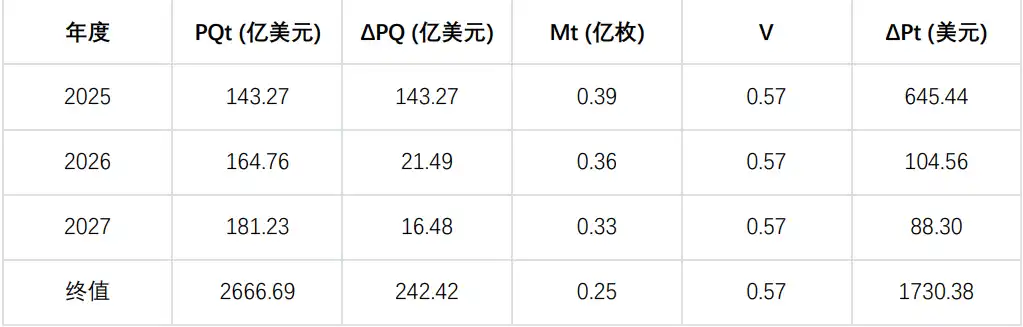
In the calculation, the ecosystem economic annual growth rate is assumed to be the following values, summarizing the future annual nominal economic total value PQt.
• 2025–2027: 25%, 15%, 10% respectively;
• 2028 and beyond: long-term stable growth rate of 3%.
Circulating Token Total Supply M₀
According to the Binance white paper and on-chain data, BNB's initial total supply was 200 million. After deducting team-locked positions (approximately 80 million) and historical cumulative burns (approximately 11.65 million), the current theoretical circulating supply is about 108 million. Combining Binance's current burn mechanism and future burn predictions, the circulating volume is expected to remain at this level during 2025–2027 and gradually stabilize to 100 million in the long term. This is the maximum supply available for secondary market trading without ecosystem usage occupation.
On this basis, further excluding four major ecosystem lock-up scenarios (fee payment, node staking, financial products, long-term value holding), the actual circulating supply M₀t can be obtained.
Circulation Rate V
BNB's circulation rate is difficult to measure directly. We use a reverse calculation method: by using the actual market price, PQ, and M₀ in 2024, the benchmark value of V is calculated as 0.57. For future years, a ±10% range can be set, and its impact on valuation will be verified in subsequent sensitivity analysis.
2. Calculate Annual Value Increment ΔPt
Based on the formula from the previous section: 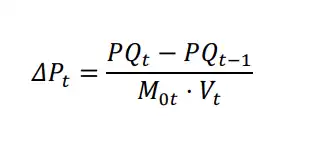
We calculate the ecosystem's new value year by year and divide it by the actual circulation scale and circulation rate of BNB that year to obtain the theoretical value increment per token each year.
Based on 2024 actual data, assuming future growth of 25%, 15%, 10%, and 3% long-term:
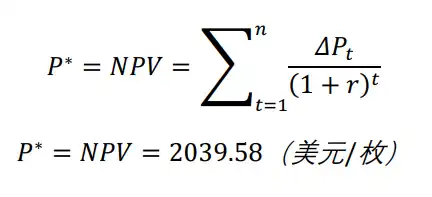
3. Value Discounting and Summation: Calculate Theoretical Valuation
Using a 10% discount rate, discount each year's value increment ΔPt to obtain the present value of all future "monetary appreciation":
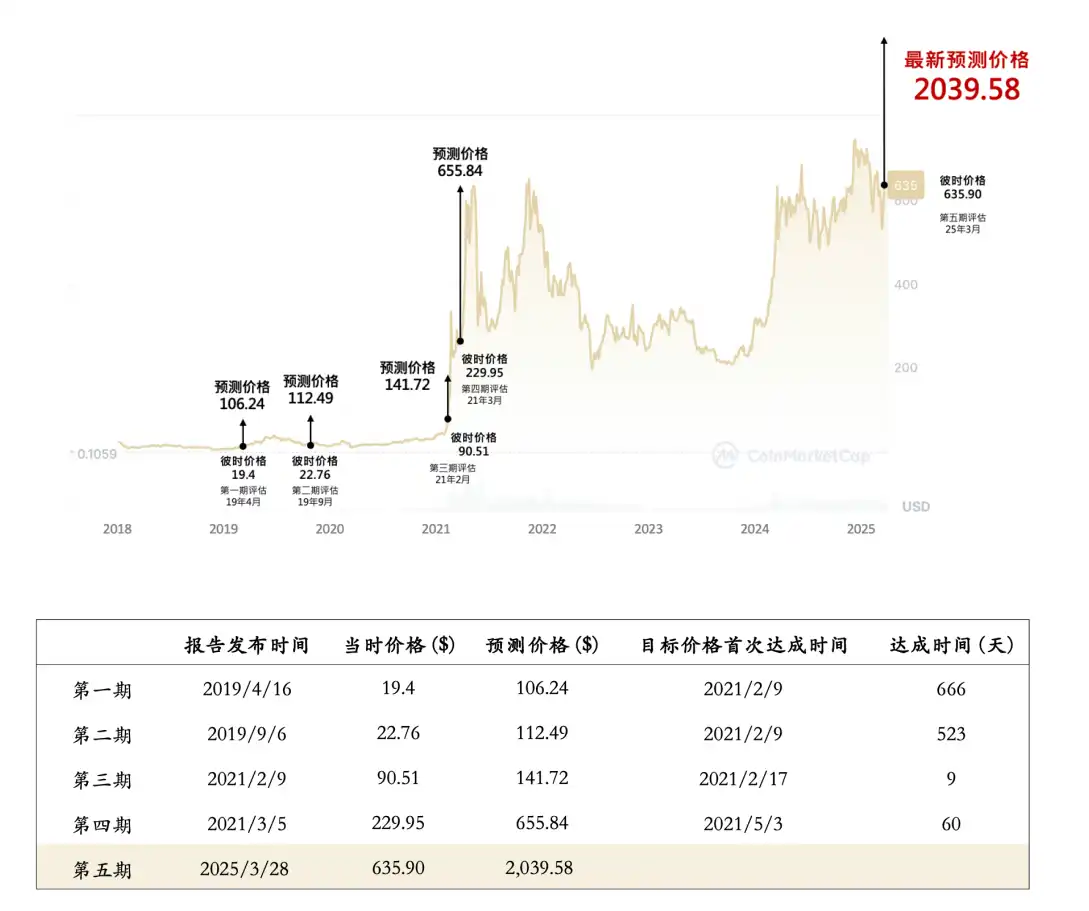
4.3 Hash Global's Past Four Reports - BNB Target Price Achievement Timeline
V. Conclusion
This report proposes the concept of "value functional tokens" using BNB as a case study and constructs a systematic valuation framework based on the monetary equation. We hope this framework can provide reference and inspiration for token economic design by project parties, value judgment by investors, and model evaluation by researchers.
As the Web3 industry is still in a rapid evolution stage, we will continue to update our models and research results, and welcome investment institutions, researchers, and developers to discuss and provide feedback on the report content.
To obtain report updates, model details, or engage in further communication, please visit our official website or contact team members. We look forward to receiving your feedback and suggestions:
• Official Website: www.hashglobal.io
• Author Twitter: @longwinsk, @Jf4172
• Contact Email: contact@hashglobal.net
Disclaimer
This report aims to share information and does not constitute any investment advice, nor should it be viewed as a guarantee of future market performance. The report is based on independent research by Hash Global and public information, and we have tried our best to ensure the accuracy and completeness of data and analysis. However, we make no promises or guarantees about the applicability of the final results or views. Investing in crypto assets involves high uncertainty and volatility. Readers should fully understand the related risks and bear full responsibility before making any investment decisions. Hash Global and its related personnel shall not be liable for any direct or indirect losses arising from the use of the report content. As of the report's publication date, Hash Global and its managed funds hold some BNB assets, and the analysis and views may be influenced by the holdings. We will continue to track related assets based on market dynamics and update research content when necessary.
Click to learn about BlockBeats job openings
Welcome to join the official BlockBeats community:
Telegram Subscription Group: https://t.me/theblockbeats
Telegram Discussion Group: https://t.me/BlockBeats_App
Official Twitter Account: https://twitter.com/BlockBeatsAsia






