Table of contents
Preface
1. What is a stablecoin public chain?
1.1 Motivation for Proposing a Stablecoin Public Chain
1.2 Value Distribution of Stablecoins on Public Chains
1.3 The Concept of Stablecoin Public Chain
1.4 Stablecoin Public Chain vs. Traditional Public Chain
2. Typical projects
2.1 Plasma
2.2 Stable
2.3 Arc (Circle)
2.4 Tempo (Stripe)
2.5 Comparative Analysis of Ecosystems Driven by Mainstream Stablecoins
3. Economic Model and Ecosystem Design of Stablecoin Public Chain
4. Payment system evolution and analysis of stablecoin public chains
5. The impact of regulation and compliance on stablecoin public chains
6. Competitive landscape and development
6.1 Current Status of Stablecoin Public Chain
6.2 On-chain competition between Tether, Circle and payment giants
6.3 Competitive Landscape between Stablecoin Public Chains and Traditional Public Chains
6.4 Development Deduction
7. Challenges and Prospects
refer to
Preface
In recent years, stablecoins have become one of the most core asset classes in the crypto-financial system. US dollar-denominated stablecoins, represented by USDT and USDC , have a total market capitalization exceeding $100 billion. They not only serve as the primary settlement and quotation assets in secondary market transactions, but are also increasingly permeating a wider range of scenarios, including cross-border payments, on-chain finance, and corporate treasury management. Coupled with the recent introduction of stablecoin-related policies, the importance of stablecoins will only grow further in the future.
Therefore, stablecoins not only serve as a crucial bridge between Web3 and traditional finance, but may also significantly determine the future shape and direction of Web3. In the competitive landscape of public chains, the chains that attract and retain the most stablecoins typically develop the strongest financial ecosystems, thereby gaining an advantage in application innovation, capital flow, and user engagement.
However, within the existing public blockchain ecosystem, stablecoins play a crucial role. Whether serving as collateral and settlement in DeFi protocols, serving as primary trading pairs on centralized exchanges, or serving as a medium of exchange for on-chain payments, stablecoins are at the core of value transmission. However, the public blockchains currently supporting stablecoins, such as Ethereum, TRON, and Solana, were not originally designed specifically for stablecoins, and therefore may have limitations in terms of performance, compliance, and ecosystem compatibility. Historical experience shows that the key to stablecoin success lies not in complex financial design but in simple, stable, low-cost, high-performance, scalable, and compliant infrastructure.
Against this backdrop, the stablecoin public blockchain sector carries the promise of providing tailored infrastructure for stablecoins. Its goal is to address the shortcomings of existing public chains in terms of cost, efficiency, compliance, and ecosystem integration, thereby promoting the widespread adoption of stablecoins. However, ensuring asset stability, sustainable liquidity, and building a truly viable ecosystem within regulatory frameworks are crucial considerations for stablecoin public blockchains. The stablecoin public blockchain sector faces both enormous opportunities and significant challenges.
1. What is a stablecoin public chain?
1.1 Motivation for Proposing a Stablecoin Public Chain
The proposal for public stablecoin chains stems from a variety of practical needs and development motivations. The public chains currently used by mainstream stablecoins, such as Ethereum and TRON, are not tailor-made for stablecoins. This external dependency presents several challenges: high gas costs, transaction performance bottlenecks, fragmented cross-chain experiences, and uncertainty regarding regulatory compliance. Consequently, the design of public chains specifically for stablecoins has become a trend, aiming to create a more stable and reliable infrastructure.
Stablecoin public chains attempt to build an integrated, closed-loop ecosystem, enabling the issuance, circulation, settlement, and application of stablecoins to be completed entirely on a single chain. This not only improves efficiency but also enhances the ecosystem's self-consistency and security. This development is also driven by the needs of financial institutions and payment giants, who desire a compliance-compliant chain with a comprehensive identity system and regulatory interfaces to meet the requirements of compliant operations.
Overall, the core objectives of stablecoin public chains can be summarized into three aspects. First, they must provide stable, low-cost, and high-speed payment capabilities, addressing the performance and cost pain points of existing public chains. Second, they must ensure compliance and traceability to meet the needs of financial institutions and payment giants in regulated environments. Third, they must possess programmable financial capabilities, enabling them to simultaneously host applications such as DeFi, RWA, and compliant payment APIs on-chain. With these characteristics, stablecoin public chains are expected to become a vital bridge connecting crypto finance and the real financial system.
1.2 Value Distribution of Stablecoins on Public Chains
Stablecoins are not only core pricing and settlement tools in the Web3 ecosystem, but also create significant economic value on public chains. For example, USDT (USDT) has the largest circulation on Ethereum and TRON. According to statistics, gas fees generated by USDT transactions on Ethereum over the past year amounted to approximately 50 to 100 million USD. These fees directly contribute to the revenue of blockchain validators and indirectly contribute to the value of the public chain ecosystem.
Similarly, USDC's circulating supply on Ethereum accounts for over 60%, and gas fees generated by USDC transactions on Ethereum totaled over $50 million annually. This further demonstrates the significant on-chain economic activity generated by large stablecoins on mainstream public chains, and the significant significance of their transaction fees to both the public chains and the entire ecosystem.
However, despite this massive fee revenue, Tether and Circle, the issuers of USDT and USDC, are unable to profit from it; all fees flow to their public chains. Therefore, stablecoin issuers are eager to build their own public chains, not only to establish their own closed-loop ecosystems but also to reclaim their own traffic and wealth.
1.3 The Concept of Stablecoin Public Chain
A stablecoin public chain refers to a blockchain network designed specifically for the issuance, circulation, and application of stablecoins. Unlike traditional general-purpose public chains, it is not designed to support all types of applications, but rather focuses on the efficient circulation and sustainable operation of stablecoins.
Currently, stablecoin public chains mainly show two types of development paths:
• Stablecoin-driven chains: These are driven by stablecoin projects or related teams, using stablecoins as the core driver of the on-chain economy. These chains include projects like Plasma and Stable. Their design focuses on reducing transaction costs, increasing TPS, and tailoring infrastructure for stablecoins.
• Stablecoin issuer-led chains: These are led by large stablecoin issuers or payment giants, such as the one that Stripe may launch in the future. The advantage of these chains is that they can directly integrate compliance frameworks, identity systems, and payment interfaces, naturally meeting the needs of institutional users and cross-border payments.
The stablecoin public chain is different from the general public chain in its wide coverage. Instead, it focuses on and deeply cultivates the key asset of stablecoin.
1.4 Stablecoin Public Chain vs. Traditional Public Chain
In the existing blockchain ecosystem, general-purpose public chains like Ethereum, TRON, and Solana carry the majority of stablecoin circulation and settlement. However, these public chains are designed to build a comprehensive ecosystem encompassing multiple assets and applications, with stablecoins serving as just one core asset. Consequently, the development of stablecoins is inevitably constrained by external factors, such as high gas fees, limited transaction throughput (TPS), cross-chain fragmentation, and uncertainties regarding regulatory compliance.
Compared to general-purpose public chains like Ethereum and TRON, the unique value of stablecoin public chains lies in their fundamental optimization of the stablecoin operating environment. First, in terms of cost, stablecoin public chains can support small-value payments and high-frequency transactions, significantly lowering the barrier to entry for users. Second, some stablecoin public chains are designed with authentication and regulatory interfaces in place, naturally meeting the compliance requirements of financial institutions and payment companies. More importantly, stablecoin public chains can integrate issuance, circulation, settlement, and application on the same chain, forming a complete closed-loop ecosystem, reducing cross-chain friction and improving overall efficiency and security.
These characteristics clearly define the potential user base of stablecoin public chains. Payment companies and financial institutions are the most direct beneficiaries, hoping to integrate stablecoins into payment and clearing networks in a compliant environment. Stablecoin issuers can thus reduce their reliance on external public chains, gaining greater control over transaction experience and compliance. For exchanges and financial applications, stablecoin public chains offer a more efficient and cost-effective settlement infrastructure, enhancing user experience.
2. Typical Projects
2.1 Plasma
Layer 1 infrastructure designed specifically for stablecoins
Plasma is a Layer 1 blockchain infrastructure designed specifically for stablecoin payments. Its core design goal is to achieve efficient and low-cost stablecoin transfers. It is deeply integrated with the Tether/USDT ecosystem, receiving official support and resources from the Tether ecosystem.
Functionally, Plasma places USDT at its core, supporting fee-free USDT transfers and high throughput to meet the demands of large-scale payments and applications. This distinguishes it from traditional public chains like Ethereum and Tron: the former is geared towards general-purpose assets and diverse applications, while the latter focuses on the efficient circulation of stablecoins and institutional-grade payment scenarios.
In terms of underlying architecture, Plasma, as an independently operated Layer 1 public chain, has its own consensus and security mechanisms. The PlasmaBFT consensus mechanism it uses is a hybrid model based on the combination of PoS Proof of Stake and BFT Byzantine Fault Tolerance:
• Select validators and maintain incentive mechanisms through PoS;
• Achieve transaction finality in seconds through the BFT protocol, avoiding block rollbacks, and is particularly suitable for payment and settlement scenarios.
At the same time, Plasma is fully compatible with EVM. Developers can directly use Solidity to deploy smart contracts and use existing Ethereum tool chains such as MetaMask, greatly reducing migration and integration costs.
Furthermore, Plasma periodically anchors its state root (or checkpoint, or digest) to the Bitcoin network, leveraging Bitcoin's immutability and decentralization to enhance trust. This anchoring mechanism doesn't require all transactions to be on-chain, but rather provides an external "verification endorsement," thereby enhancing the system's resilience to attacks and disputes while maintaining the flexibility of an independent public chain. By embedding the state root on the Bitcoin chain, even if issues arise with Plasma's validators or the network itself, verification, dispute resolution, and traceability can be performed using the anchored record on the Bitcoin chain. This "anchoring" design leverages Bitcoin's tamper-resistant security properties to a certain extent.
Plasma Feature Highlights: Zero Gas Fee USDT Transfer, Accept USDT, BTC and XPL to Pay Gas
Among its key features, Plasma enables zero-gas USDT transfers. Other operations, such as smart contract interactions, DeFi applications, and NFTs, are not completely free. Users still need to pay for gas for contract calls and complex operations.
However, Plasma supports gas payments with USDT or BTC, eliminating the need for users to hold additional native tokens for transactions and significantly lowering the barrier to entry. The BTC used here isn't directly from the Bitcoin mainchain. Instead, BTC is imported into the Plasma chain via a cross-chain bridge, generating a mapped asset (such as pBTC). The Paymaster contract then converts this into the required gas (XPL) for network payment at real-time prices. This allows users to complete transfers, DeFi, and contract interactions on Plasma simply by holding BTC. Plasma also supports gas payments with its native XPL token, providing users with diverse options.
Its proprietary PlasmaBFT consensus mechanism enables a throughput of thousands of transactions per second (TPS) and transaction confirmation times of less than one second, meeting the performance requirements of high-frequency payments and cross-border settlements. The platform also incorporates a regulated confidential transaction feature, enhancing privacy while balancing regulatory compliance.
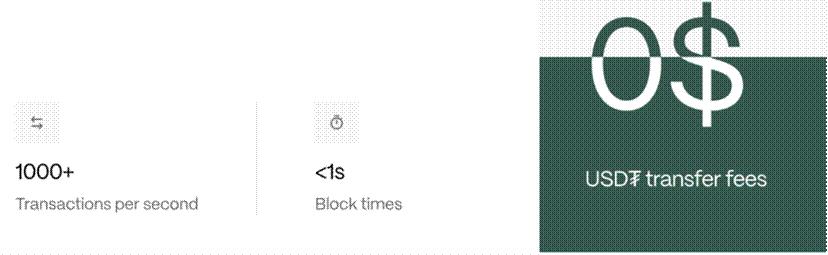
Figure 1. Plasma performance. Source: https://www.plasma.to/
USDT’s strategic position in Plasma
Plasma is a public chain tailored for USDT, positioning USDT as its core asset from the outset. Its core functions, including payments, transfers, TVL lock-up, and the entire on-chain ecosystem, are almost all centered around USDT. In particular, Plasma's gas-free USDT transfer functionality significantly lowers the barrier to entry for users and has become a key selling point for attracting traffic. In this model, USDT is no longer just another asset within the network; it becomes a key hub supporting Plasma's operations and ecosystem expansion. Furthermore, Plasma is backed by Tether, the issuer of USDT. Leveraging USDT's massive user base and global liquidity, Plasma aims to achieve a complete closed-loop system from user acquisition to liquidity accumulation to application expansion, ultimately establishing itself as a leading stablecoin.
Plasma native token XPL
Plasma's native XPL token is the core asset of the entire network. XPL serves as one of the primary gas tokens for paying transaction fees, a staked asset in the network's consensus mechanism, and also plays a role in governance and ecosystem incentives. The initial supply of XPL is 10 billion, with a distribution structure encompassing public sales, ecosystem funds, team members, and investors. A phased unlocking mechanism is designed to balance early development with long-term incentives.
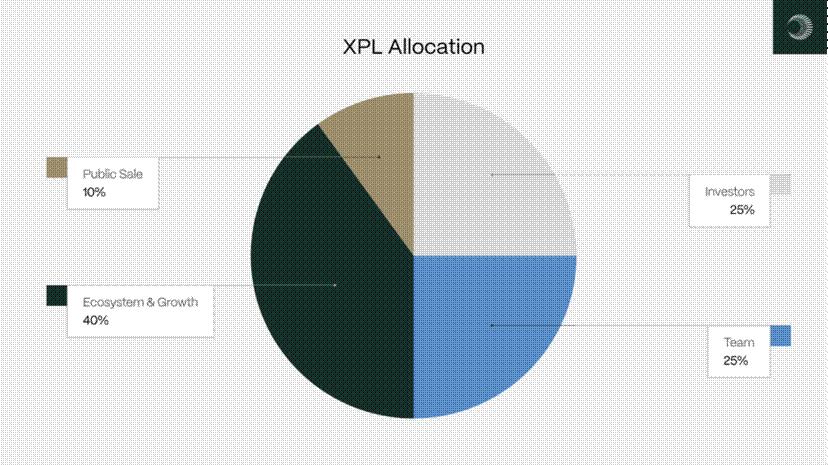
Figure 2. Plasma native token XPL. Source: https://www.plasma.to/insights/xpl-the-public-sale-and-its-role-in-the-plasma-ecosystem
Compared to traditional public chains, Plasma's major innovation is its introduction of a multi-asset gas model. In addition to native XPL, users can also pay fees directly with BTC and USDT when transferring funds or interacting with contracts on the network. This design significantly lowers the barrier to entry for users, allowing holders of mainstream assets to seamlessly experience DeFi, cross-chain transfers, and other features without the need for XPL, thereby enhancing Plasma's connectivity and usability within the Bitcoin and stablecoin ecosystems.
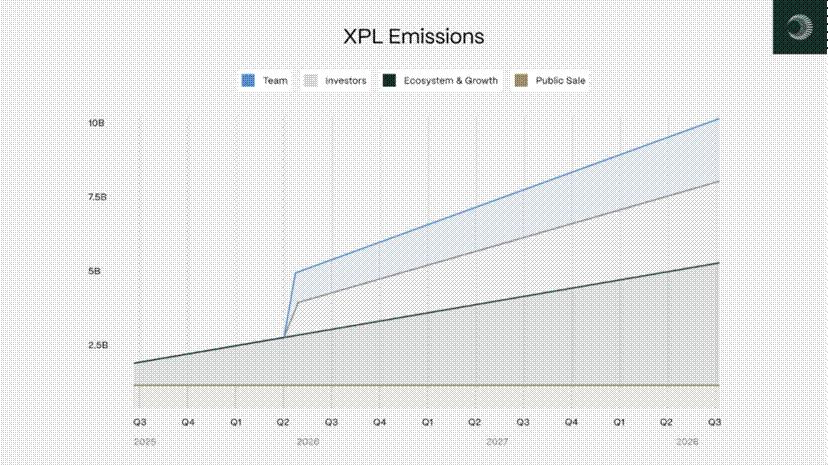
Figure 3. Plasma XPL emissions. Sou. Source: https://www.plasma.to/insights/xpl-the-public-sale-and-its-role-in-the-plasma-ecosystem
In August 2025, Plasma partnered with Binance to launch the "Plasma USDT Locked Product," an on-chain yield product for users who lock USDT on the Binance Earn platform. Users receive daily USDT returns and a share of a 100 million XPL airdrop (1% of the total supply). Upon launch, the initial 250 million USDT allocation sold out in less than an hour. Binance subsequently expanded the total allocation to 1 billion USDT, offering multiple rounds to meet market demand, demonstrating strong market interest in this stablecoin ecosystem token.
On September 25, 2025, Plasma's native token, XPL, was listed on several top exchanges, including Binance and OKX, immediately attracting significant market attention. Less than a week after its launch, its market capitalization exceeded $2.7 billion, placing it in the top 50 of the CMC market capitalization rankings, confirming strong market expectations for its "stablecoin public chain + low-cost payment" proposition. However, it's important to note that XPL's initial growth is highly dependent on market sentiment, liquidity injections, and exchange listing momentum. Uncertain factors such as short-term selling pressure, unlocking of locked-up positions, and new user selling could all exert downward pressure on prices.
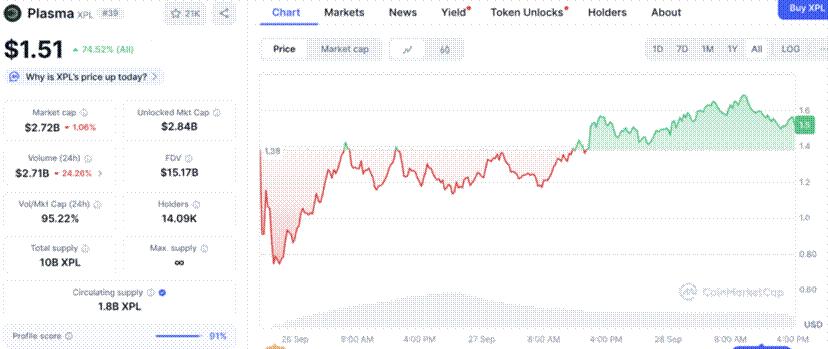
Figure 4. XPL price. Source: https://coinmarketcap.com/currencies/plasma-xpl/
Plasma’s potential advantage: locking in the world’s largest stablecoin user traffic
Plasma has received significant institutional backing, including Tether, Bitfinex, Founders Fund, Framework Ventures, Flow Traders, and DRW. In February 2025, it raised approximately $24 million in its Series A funding round, bringing its total funding to $27.5 million. During the public sale of its XPL token, Plasma demonstrated strong market traction. Plasma successfully completed its public token sale (XPL) in July 2025, raising approximately $373 million, far exceeding its original $50 million target and achieving over 7 times oversubscription. This valued the project at approximately $500 million.
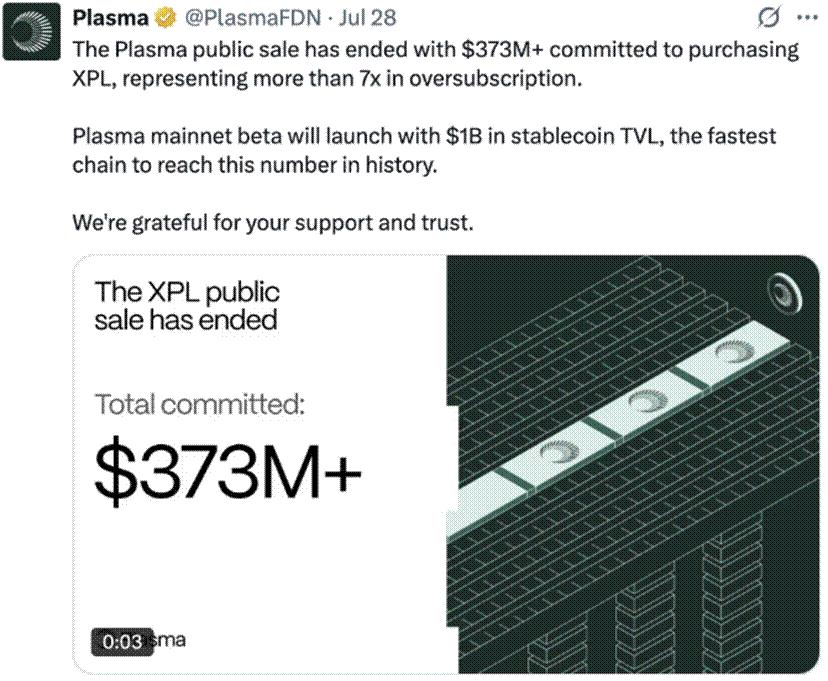
Figure 5. Plasma public sale data. Source: https://x.com/PlasmaFDN/status/1949826471238783140
The Plasma testnet officially launched on July 15, 2025, marking the project's critical implementation phase. The testnet utilizes the high-performance PlasmaBFT consensus mechanism and a Rust-based EVM execution layer. It is compatible with Solidity contracts and mainstream development tools, allowing developers to access the network directly through wallets like MetaMask. The network supports transaction fees paid with tokens such as BTC and USDT, and offers a faucet for distributing the test token XPL for contract deployment and transaction testing. Several wallets, including OKX Wallet and Bitget Wallet, have already integrated the testnet, further lowering the barrier to entry for developers and users.
On September 25, 2025, Plasma officially launched mainnet Beta and simultaneously completed the Time-Generation (TGE) of its native XPL token. Officials announced that over $2 billion in stablecoin liquidity would be activated on launch day and deployed across protocols like Aave. This included a $1 billion USDT liquidity stress test to establish a market benchmark and verify stability. Initially, Plasma distributed 25 million XPL to small depositors and validators, reserving 2.5 million for the "Stablecoin Collective." Zero-fee USDT transfers were also implemented as a key ecosystem feature. As of September 28, less than a week after launch, according to Deflama data, the TVL on the Plasma mainnet Beta had reached $4.9 billion, with AAVE accounting for the largest share. This reflects the massive migration of stablecoins onto the Plasma network and the real demand for them.
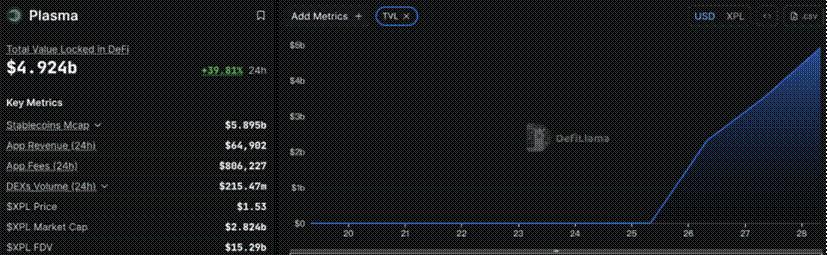
Figure 6. Plasma TVL data. Source: https://defillama.com/chain/plasma
By enabling gas-free USDT transfers, Plasma addresses the core needs of the world's largest stablecoin user base: low cost and high efficiency. Driven by both locked-in funds and user traffic, Plasma is poised to form a closed-loop ecosystem around stablecoins, further solidifying its position in cross-border payments, on-chain settlement, and financial applications.
Plasma Ecosystem Collaboration
According to official Plasma announcements and multiple media reports, Plasma has announced strategic partnerships with African payment platform Yellow Card and Turkey's BiLira Kripto. These partnerships aim to promote gas-free USDT transfers and facilitate interoperability between local fiat currencies and stablecoins. If implemented, these collaborations will support the expansion of Plasma's application scenarios in emerging markets. However, it should be noted that, to date, no publicly verifiable on-chain transaction data has been found to confirm that these collaborations are in operation or have generated actual capital flows.
Plasma is reportedly also developing a deeper partnership with DeFi leader Curve Finance, with plans to support the StableSwap AMM mechanism upon mainnet launch to enable low-slippage, capital-efficient stablecoin exchange services. StableSwap is Curve's automated market-making protocol, designed specifically for stablecoins or similarly priced assets, ensuring minimal price volatility and manageable transaction costs during large-scale exchanges. Using this mechanism, Plasma can connect assets like USDT to StableSwap pools, improving cross-asset liquidity and efficiency. Tether CEO Paolo Ardoino has publicly stated that this integration offers "unparalleled growth opportunities." Currently, there is no on-chain transaction or contract data indicating that this integration has been fully implemented, and further verification is required through subsequent technical disclosures and on-chain monitoring.
With the launch of the Plasma mainnet beta, Plasma's collaboration with Ethena Labs officially began on September 25, 2025, integrating Ethena Labs' synthetic stablecoin, USDe, and its staking counterpart, sUSDe, into Plasma's DeFi ecosystem. Users can earn USDe rewards for participating in specific activities on the Plasma network, boosting network activity and engagement. Plasma integrates with DeFi protocols such as Aave, Curve, Balancer, and Fluid, supporting liquidity provision and lending for USDe and sUSDe. Users can also bridge USDe to the Plasma network through the Plasma native interface or Stargate Finance.
On Plasma, USDe and sUSDe are used as core DeFi assets. For example, on the Aave platform, users can deposit USDe or sUSDe to earn Ethena points and participate in Liquid Leverage strategies, which recycle stablecoins to increase yields. Furthermore, users who provide liquidity on platforms like Curve, Balancer, and Fluid can also earn points, which can be used to participate in Plasma network governance or redeem other incentives. In this way, Plasma has deeply embedded USDe and sUSDe into its DeFi ecosystem, significantly enhancing network liquidity and user engagement.
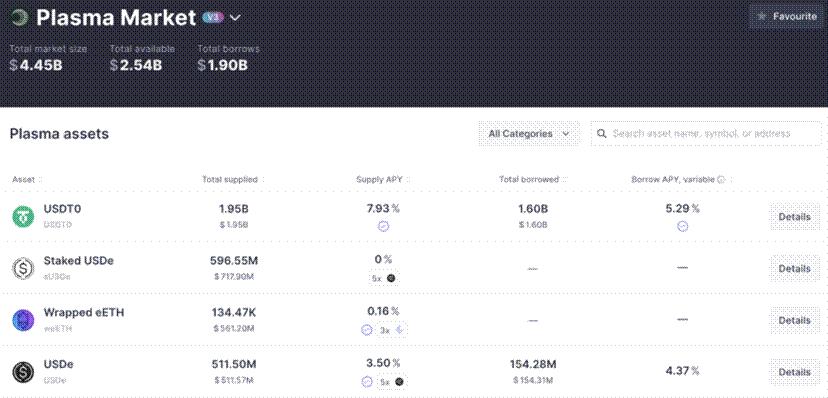
Figure 7. AAVE Plasma Market. Source: https://app.aave.com/markets/?marketName=proto_plasma_v3
Furthermore, Plasma has become an on-chain infrastructure partner for Uranium Digital, providing on-chain settlement and transparency support for the world's first 24/7 uranium trading platform. By integrating these regional payment chains with DeFi applications, the Plasma ecosystem is building a complete closed loop from payment users to on-chain financial applications.
The Plasma ecosystem is currently focused on DeFi.
Since the launch of the Plasma mainnet Beta on September 25, 2025, the ecosystem has grown rapidly, surpassing $5 billion in TVL in less than a week. Over $4.5 billion of this funding came from Aave, with USDT remaining the primary asset. Furthermore, DeFi protocols such as Fluid, Euler, and Balancer have also contributed significant liquidity to the ecosystem.
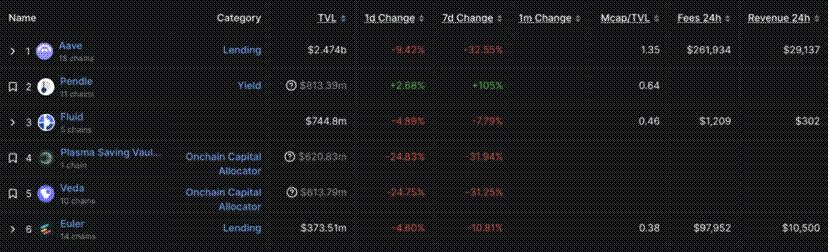
Figure 8. Plasma protocol ranking. Source: https://defillama.com/chain/plasma
As can be seen, Plasma's current ecosystem primarily revolves around DeFi protocols, such as stablecoin liquidity, payments, and lending. According to official Plasma disclosures, it has reached partnership agreements with over 100 DeFi protocols. Despite this plethora of partners, the Plasma ecosystem is still in its early stages, with assets heavily concentrated in USDT. Further development and improvement are needed to enrich the ecosystem.
In addition to DeFi protocols, as of the end of September 2025, Trillions (TRILLIONS), a meme coin project on the Plasma chain, has become a highlight of the ecosystem, attracting widespread attention for its market performance. Initially a joke project with a "trillion-dollar market capitalization dream," Trillions quickly captured attention in the crypto community. Its official slogan was "Charge towards a trillion," and the TRILLIONS token was deployed on the Plasma chain. Within a few days, Trillions' market capitalization exceeded $50 million, with a 24-hour trading volume exceeding $25 million and over 4,500 participating addresses. This also represents the initial development of the meme coin ecosystem on the Plasma chain, attracting a large number of users.
Overall, Plasma's ecosystem is expanding rapidly. Through cooperation with multiple core DeFi projects, it is expected to play an important role in stablecoin payments and DeFi applications, providing users with a comprehensive experience of liquidity, returns and payments.
Potential risks
Although Plasma's core selling point is USDT's native gas-free transfers, its operating costs ultimately need to be borne by the foundation or token subsidies. Whether it can form a sustainable economic model in the long run is a key issue.
Regarding compliance, Plasma's core advantage lies in its ability to bind USDT traffic, but this also means it relies heavily on Tether's robust compliance. If USDT encounters regulatory crackdowns in certain jurisdictions, Plasma will inevitably be affected. Furthermore, while Plasma emphasizes targeting payments and institutional users, its identity verification, anti-money laundering, and compliance interface development remain opaque.
Plasma's technical architecture explicitly mentions support for developers deploying compliance-oriented smart contracts, including features like a KYC layer and transfer restrictions. This demonstrates that Plasma possesses the technical capabilities to support compliance. However, Plasma's official social media channels have yet to publicly announce partnerships with dedicated KYC/AML or payment compliance projects. This suggests that while Plasma's technical capabilities support compliance, the compliance infrastructure within its ecosystem is still being refined and requires further disclosure and development.
Ecosystem and liquidity risks also warrant attention. Currently, Plasma's total locked-in value primarily consists of USDT, resulting in excessive asset concentration and a lack of diversification. Fluctuations in USDT liquidity would directly impact Plasma's on-chain activity. Although Plasma has partnered with DeFi protocols like AAVE and Ethena, its ecosystem application layer is currently primarily focused on DeFi protocols. The richness of its application layer still lags behind mainstream public chains like Ethereum and Solana, and further development of its ecosystem and application diversity will take time.
Finally, Plasma received significant funding in its public offering, but the value capture logic of its token in a gas-free model remains unproven. Without a clear value proposition, the token could be more susceptible to speculative investment, leading to significant price fluctuations.
2.2 Stable
Layer 1 public chain designed specifically for USDT
Stable is a high-performance Layer 1 public blockchain built specifically for USDT, aiming to provide a high-speed, low-cost, and low-latency stablecoin trading network. Rather than targeting multiple tokens, it focuses on USDT trading and settlement scenarios, balancing enterprise-specific block space with compliant and private transaction solutions to support enterprise-level payment and clearing needs.
Regarding the consensus mechanism, Stable's official documentation indicates that it will utilize StableBFT, a customized PoS protocol based on CometBFT, compatible with the Ethereum EVM and designed to provide a high-throughput, low-latency, and highly reliable network experience. StableBFT utilizes Byzantine Fault Tolerance (BFT) to ensure security and allows nodes to process proposals in parallel, breaking away from the traditional single-leader model and increasing transaction confirmation speed. To further optimize performance, Stable plans to decouple data dissemination from the consensus process, allowing transactions to be broadcast directly to block proposers, accelerating finality. Official information regarding the staked assets on Stable has not yet been provided.
Stable achieves sub-second block confirmations, supporting high throughput, low costs, and fast settlements. It also offers dedicated enterprise block space and compliant, private transaction solutions. By optimizing transaction execution, state storage, and batch processing, Stable ensures efficient and low-latency on-chain transactions.
On Stable, USDT can be used natively for gas payments and on-chain settlements, eliminating the need for users to hold other tokens and avoiding the high fees and transaction delays associated with traditional public blockchains. This public blockchain has been optimized for stablecoin use cases, addressing issues such as fluctuating fees, limited transaction speeds, high enterprise integration costs, complex user experiences, and the lack of dollar-denominated financial services in some regions.
Stable is an independent Layer 1 public chain that builds a complete ecosystem from the bottom up, focusing more on the actual payment and settlement functions of stablecoins, allowing USDT to circulate on the chain as efficiently and securely as cash.
Stable’s USDT-specific features
The core design of Stable is to allow USDT to circulate on the chain like cash. Its functions revolve around reducing transfer friction, improving throughput and transaction predictability.
It utilizes a dual-token mechanism: USDT0 and gasUSDT. GasUSDT is the native gas token on the blockchain, specifically used to pay for blockchain operational fees; while USDT0 is primarily used by users in daily life. USDT0 is a LayerZero-based cross-chain stablecoin asset, pegged 1:1 to standard USDT. Leveraging the OFT (Omnichain Fungible Token) standard, USDT0 can circulate directly across different blockchains without the need for traditional bridging or multi-pool liquidity splitting, thereby integrating USDT liquidity from different chains.
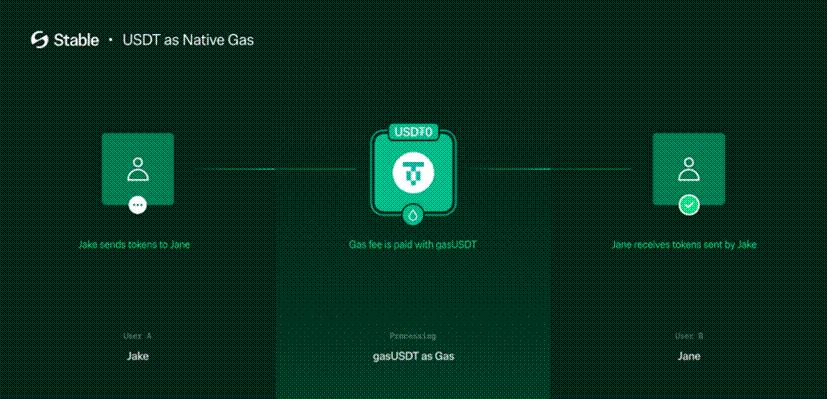
Figure 9. gasUSDT & USDT0 on Stable. Source: https://docs.stable.xyz/en/architecture/usdt-specific-features/usdt-as-gas-token
On Stable, users only need to hold USDT0 to complete most operations. The protocol automatically converts gas to USDT through account abstraction, simplifying the user experience. Furthermore, peer-to-peer USDT0 transfers are completely fee-free, lowering the payment threshold.
Stable has designed a dedicated block space for enterprise users, ensuring transaction stability and predictability even during network congestion. Furthermore, the USDT Transfer Aggregator can batch process large numbers of USDT0 transfers, increasing overall throughput without impacting other transactions. In the future, Stable plans to introduce a confidential transfer feature, utilizing zero-knowledge encryption to conceal transfer amounts while maintaining necessary compliance auditability, providing businesses with enhanced privacy protection.
Overall, Stable's USDT-specific features not only optimize daily payments and cross-chain efficiency, but also provide a controllable on-chain environment for enterprise-level applications, enabling USDT to circulate more efficiently and securely on the chain, while reducing the complexity of use for users and developers.
Stable Roadmap: Phased Performance Improvements
Stable's core goal is to make USDT use on-chain faster, more convenient, and more stable. To this end, it proposes a phased technical roadmap, progressing from basic usability to performance optimization and then to extreme expansion.
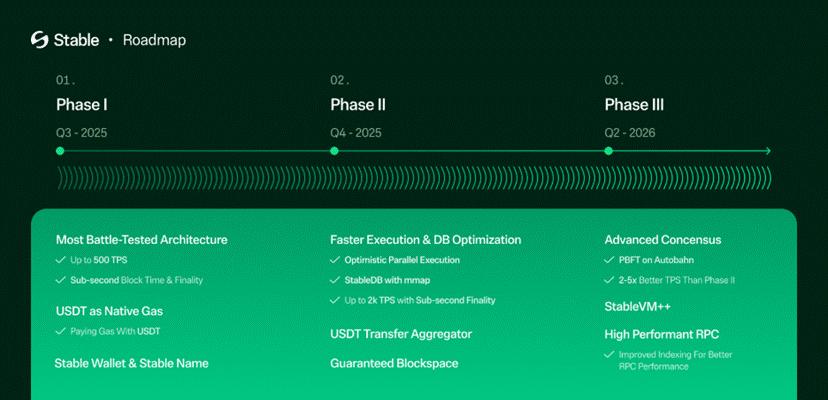
Figure 10. Stable Roadmap. Source: https://docs.stable.xyz/en/introduction/technical-roadmap
In its first phase, Stable focused on lowering the barrier to entry. By allowing USDT to be used directly as on-chain gas fees, it reduced the complexity of fees and token swaps for users. Furthermore, its accompanying wallet and user-friendly address system made it easier for users to transfer and receive funds, just like using everyday payment tools.
Entering its second phase, Stable will begin improving transaction efficiency. It aims to enable parallel processing and batch execution of transactions, maintaining low latency and low costs for high-frequency payments and large-value corporate settlements. Furthermore, it will provide dedicated channels for institutional users, ensuring stable processing of critical transactions even during network congestion.
Finally, Stable plans to achieve comprehensive high performance in Phase 3. By upgrading its underlying consensus mechanism and execution engine, it aims to achieve throughput levels far exceeding those of traditional public chains. Simultaneously, with efficient access interfaces, it will provide reliable infrastructure support for developers and businesses.
Overall, Stable's approach is to first ensure usability, then gradually improve efficiency, and finally pursue ultimate performance. This phased approach not only meets the current application needs of stablecoins, but also lays the foundation for larger-scale payment and financial scenarios in the future.
Stable Development Status
Currently, Stable's core technical framework is essentially complete, with neither the testnet nor the mainnet launch dates yet announced. Key features will be implemented, including native USDT payments, sub-second transaction confirmations, EVM compatibility, and gas-free USDT0 transfers. These capabilities under development lay the foundation for Stable's future development in payment, consumption, and settlement scenarios.
In terms of marketing, Stable has received investment support from institutions including Bitfinex, Hack VC, and Franklin Templeton, as well as endorsement from Tether, with Tether CEO Paolo Ardoino also supporting the project. These funds will be used to build network infrastructure, expand the workforce, and increase the global distribution of USDT.
From an application perspective, Stable is positioned as a dedicated infrastructure for USDT payments. Its native gas architecture and gas-free model lower the barrier to entry for users and improve integration efficiency for merchants and institutions. However, the ecosystem is still in its infancy, with no public user data or actual implementation cases. This means that while Stable's payment chain has technical potential, whether it can achieve "USDT circulation on-chain like cash" remains to be seen in its implementation and market adoption.
The difference between Plasma and Stable
Both Plasma and Stable are public chains backed by Tether, with USDT as their core asset. However, they differ in their technical architecture and objectives. Plasma is an independent, EVM-compatible Layer 1 public chain, leveraging a high-performance consensus mechanism and a Rust execution engine, delivering extremely high throughput and low latency. It also periodically anchors its on-chain state root (or checkpoint, digest) to the Bitcoin network, leveraging Bitcoin's immutability and decentralization to enhance trust. It was designed to address performance bottlenecks in high-frequency trading, cross-border payments, and DeFi applications, balancing security and efficiency.
In contrast, Stablechain is a new, independent Layer 1 blockchain that uses USDT as its native gas token and focuses on payment and settlement scenarios. With sub-second confirmations and extremely low transaction costs, it optimizes the everyday payment experience and is more targeted at enterprise and compliance-focused applications.
While both chains are centered around USDT, their practical applications present a mix of complementarity and competition. Plasma, promoting security and integration with the Bitcoin ecosystem, is likely to capture market share in high-frequency use cases like DeFi, merchant settlements, and cross-chain transactions. Stable, on the other hand, focuses on payment experience, making it suitable for scenarios like small-value payments, corporate settlements, and cross-border clearing. While competition between the two is inevitable in some application areas, such as merchant payments and cross-border remittances, their technological approaches and ecological goals do not fully overlap.
Stable Potential Risk
As we've mentioned before, Plasma, backed by Tether, is inevitably subject to regulatory compliance restrictions. Similarly, Stable is also backed by Tether, and its core value is highly dependent on USDT. If Tether faces regulatory restrictions in certain jurisdictions or experiences a decline in market share, Stable's ecosystem activity and overall value will be directly impacted.
Currently, Stable's testnet and mainnet are not yet live, and its public chain performance remains unproven by the market, raising uncertainty about its future development. While Stable utilizes a PoS consensus mechanism, the official token issuance plan has not yet been confirmed, which poses certain risks. It's important to note that PoS consensus itself doesn't necessarily require an on-chain economic token. For example, some enterprise-level or consortium chains use PoS to secure transactions and consensus, but their nodes are operated by institutions and don't issue tokens. Simply lacking a token could impact network incentives and ecosystem growth.
In contrast, Base Chain, Ethereum's Layer 2 Rollup scaling chain, uses a sequencer model to order transactions and submit state to Ethereum's Layer 1. Base is not a PoS chain and does not have a native token. Its security relies on the Ethereum mainchain, without requiring node staking or token issuance. Whether Stable, a PoS public chain, will adopt Base's model in the future or follow Plasma's lead in issuing its own independent token remains to be seen.
At the same time, as traditional payment giants such as Visa and PayPal accelerate their entry into the blockchain payment field, other compliant stablecoin public chains (such as Arc and Tempo) are also actively deploying their strategies. The competitive pressure on Stable in the market will become increasingly fierce.
2.3 Arc (Circle)
Arc: An open Layer 1 blockchain built specifically for stablecoin finance
In August 2025, Circle announced the launch of its proprietary Layer 1 public blockchain, Arc, signaling its strategic evolution from a stablecoin issuer to a blockchain infrastructure provider. Arc is a Layer 1 public blockchain designed specifically for stablecoins, aiming to provide efficient and secure technical support for payments, cross-border settlements, and financial market applications.
On Arc, users can use USDC to pay gas fees, eliminating the uncertainty associated with volatile tokens on traditional public chains. In addition to USDC, Arc natively supports multiple stablecoins, including EURC and USYC1, which can be used as payment and settlement media on-chain, facilitating multi-currency financial applications. As a Layer 1 public chain launched by Circle, Arc aims to provide infrastructure for stablecoin finance and build a multi-currency clearing network. Arc utilizes a high-performance consensus mechanism for fast transaction confirmation, processing thousands of transactions per second to meet enterprise-level requirements. Arc's built-in institutional-grade foreign exchange quote (RFQ) engine and 24/7 on-chain settlement capabilities provide businesses and financial institutions with reliable payment and trading tools. Transactions are nearly instantaneous, with deterministic finality guaranteed by the high-performance Malachite consensus mechanism, and optional privacy features allow users and businesses to mask transaction or balance information based on their compliance needs.
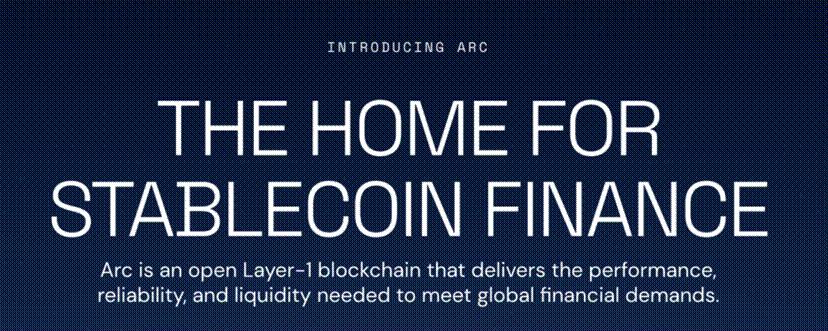
Figure 11. Arc website page. Source: https://arcnetwork.xyz/
Arc’s Core Feature: Cross-Chain Settlement Layer
Unlike traditional public chains that only serve a single stablecoin or chain, Arc is designed to be a cross-chain stablecoin settlement layer. Rather than simply serving as a stablecoin payment channel, it provides a unified clearing and settlement infrastructure for funds flowing between multiple stablecoins and multiple blockchains.
On Arc, stablecoins can be transferred across chains through direct minting and burn-and-minting. This mechanism avoids the complex process of relying on third-party cross-chain bridges, enabling users to settle funds across different chains faster and more securely. Arc also introduces a unified balance view and sub-second deterministic finality. This means that regardless of which chain a user or institution holds stablecoins on, they can see the overall balance on Arc's settlement layer and complete settlements in near real time. This design significantly reduces payment friction in the multi-chain ecosystem, providing underlying support for cross-border payments, institutional settlement, and multi-chain DeFi applications.
In contrast, single-stablecoin public chains like Plasma and Stable operate on a different logic. Their settlement objects are primarily limited to a single stablecoin, such as USDT. Their advantages lie in intra-chain payment and liquidity efficiency, but cross-chain transfers require the additional reliance on cross-chain bridges or third-party tools. In terms of user experience, Plasma or Stable are relatively convenient for intra-chain operations, but when cross-chain payments are involved, they often face the dilemma of asset fragmentation and multi-step operations. Arc, on the other hand, brings multi-chain asset management closer to a single-chain experience through unified balances and fast finality. At the application level, Plasma and Stable are more like dedicated highways built for a specific stablecoin, suitable for forming a local closed-loop ecosystem. Arc, on the other hand, is positioned as a multi-chain stablecoin clearinghouse, capable of accommodating a wider range of application scenarios, including cross-border payments, institutional settlement, and multi-chain DeFi.
In other words, Plasma and Stable emphasize on-chain efficiency, while Arc emphasizes unified settlement across multiple chains. The former is a fast lane serving a specific stablecoin, while the latter is more like a cross-chain clearinghouse, connecting multiple highways.
Arc Application Scenarios and Potential Ecosystem: Not Just Stablecoin Infrastructure, But Also Promoting the Development of Stablecoin Native Applications
Arc's design goal is not only to serve as the underlying infrastructure for stablecoins, but also to drive the development of a class of native stablecoin applications. With its low-cost settlement, built-in foreign exchange engine, and deterministic, second-level transaction confirmations, Arc aims to unlock its potential in multiple areas.
First, in the cross-border payments space, Arc offers an instant, low-cost settlement experience, making it particularly well-suited for businesses that require global capital flows. Through integration with the Circle Payments Network (CPN), Arc can serve as an on-chain settlement layer for cross-border payments, while its foreign exchange engine lays the foundation for automated conversions between different stablecoins and deposits and withdrawals in local fiat currencies.
Secondly, in terms of stablecoin foreign exchange derivatives, Arc supports a perpetual contract market centered around stablecoin pairs. Traders can conduct leveraged trading based on stablecoins in different currencies, while the built-in FX engine provides real-time quotes and atomic settlement.
In on-chain credit scenarios, Arc provides a foundation for developing credit applications that integrate off-chain trust signals. Developers can combine identity, cash flow history, or external risk control models with stablecoins to build more compliant and auditable lending protocols, serving users and businesses that are difficult to reach through traditional credit systems.
For the capital markets, Arc is committed to migrating traditional financial market settlement models (such as Deliverable vs. Profit (DvP) settlement and margin collateralization) to the blockchain. Leveraging native assets like USDC and USYC, Arc can provide instant settlement and regulatory compliance support for tokenized transactions of securities, government bonds, commodities, and structured products.
Finally, Arc aims to enable smart commerce and programmatic payments. Because transaction fees are denominated in USDC and feature second-level confirmation and privacy controls, developers can embed logic and authentication into payment flows, enabling automated subscriptions, programmable purchasing, and even AI-driven on-chain marketplaces.
Arc's application is not limited to payment and settlement, but also covers multiple dimensions such as derivatives, credit, capital markets and smart payments. This also reflects Circle's hope to use Arc to expand stablecoin finance to a wider range of scenarios combining digital assets and traditional finance.
Deeply integrated with the Circle ecosystem, with strong regulatory attributes
Arc isn't a public blockchain built from scratch, but rather an extension of Circle's long-term ecosystem strategy. As the issuer of stablecoins like USDC and EURC, Circle has built a comprehensive product portfolio, including its Central Payment Network (CPN), Cross-Chain Transfer Protocol (CCTP), wallet and contract tools, and custody and settlement services. The launch of Arc provides a native on-chain hosting environment for these services.
On the one hand, Arc can enhance synergies across Circle products. USDC can be used directly as a native asset on Arc, reducing transaction friction. Arc's deep integration with services like CPN, Mint, and Paymaster enables Circle to perform payment, settlement, and foreign exchange functions on-chain, forming a closed-loop ecosystem. EVM compatibility ensures developers can build applications in a familiar environment, while inherently relying on Circle's underlying infrastructure, thus locking in ecosystem stickiness.
On the other hand, Arc comes with inherent regulatory oversight. First, as a regulated stablecoin issuer, Circle already meets the compliance requirements of the US and multiple other countries. This necessitates that Arc support compliance and auditability features. For example, Arc includes built-in optional privacy protection, allowing for limited privacy while meeting regulatory requirements, rather than complete anonymity. Furthermore, due to its direct connection to Circle's payment and clearing network, Arc is more easily integrated with regulated financial entities such as banks and institutions, making it a compliance-friendly blockchain infrastructure.
Arc tightly integrates stablecoin infrastructure with the regulatory environment, providing a high-performance, secure, and controllable enterprise-grade blockchain platform. This not only strengthens the competitiveness of USDC and Circle in regulated financial markets, but also builds an application infrastructure that is both open and regulated.
Arc’s potential value: Directly connecting to the US dollar clearing system, creating a compliant version of “Swift on the chain”
From a strategic perspective, Arc's core value lies not in competing with public chains like Bitcoin and Ethereum for a decentralized ecosystem, but rather in its goal of providing an on-chain upgrade for the global US dollar clearing system. As the native carrier chain for USDC, Arc deeply integrates payment, settlement, foreign exchange, and native stablecoin support, directly linking to Circle's payment network and custody system. This can be understood as Arc's design being closer to a "compliant on-chain Swift." Rather than an infinitely open, completely deregulated blockchain, Arc is an on-chain settlement network capable of directly connecting with banks, payment institutions, and multinational corporations.
Arc won't directly replace traditional clearing networks, but it can offer greater efficiency in cross-border payments and real-time settlement, complementing Swift on-chain. As a regulated stablecoin issuer, Circle's on-chain system is inherently tied to regulatory compliance frameworks. Arc's built-in privacy protection, audit support, and institutional-grade foreign exchange engine are designed specifically for regulatory scenarios.
Arc also announced that it will integrate with Fireblocks, a custody and settlement provider, upon launch. This means that over 2,400 banks, asset managers, and fintech companies already using Fireblocks will be able to directly access the Arc network without having to develop additional compliance and custody infrastructure. This strategy is in stark contrast to typical public chains that primarily attract retail developers, and reflects Arc's strategic focus on building global financial infrastructure.
Arc retains the openness and composability of blockchain, but is intentionally tailored to the needs of financial institutions in terms of compliance, security, and settlement certainty. Long-term, if Circle can leverage Arc to establish a clearing channel covering multi-currency stablecoins and compliant assets, it could truly become the "Swift on Chain" for financial institutions.
Arc potential challenges
Despite Arc's advantages in native stablecoin support, high-performance settlement, and compliant design, it still faces numerous challenges. Technically, achieving sub-second transactions and cross-chain interoperability requires a trade-off between security, decentralization, and complexity. Ecologically, cold start times for developers and applications, as well as compatibility with non-USDC applications, may be limited. Regulatoryly, cross-border compliance and privacy protection require balancing audit requirements with user data security. Market acceptance remains uncertain, and institutional adoption of the new on-chain clearing system will likely take time. Furthermore, the system may face future competition from other stablecoin chains.
2.4 Tempo (Stripe)
Tempo: Stripe's enterprise-level on-chain payment layout
Stripe is actively expanding its presence in stablecoins and digital payments, with plans to collaborate with Paradigm to launch Tempo, its proprietary Layer 1 public blockchain. Tempo's core goal is to provide efficient, low-cost on-chain settlement infrastructure for enterprise payments, while balancing compliance and privacy requirements to create a secure, auditable transaction environment for businesses and financial institutions.
The Tempo public chain's design focuses on optimized payment performance, stablecoin settlement support, Ethereum Virtual Machine (EVM) compatibility, and a high-throughput architecture to meet the payment needs of global enterprises. Through these technical features, Tempo aims to become an enterprise-grade on-chain payment network, providing Stripe with a new competitive advantage in the global payments market while also promoting the practical application of stablecoins in real-world business scenarios.
Tempo is currently under development and has yet to officially launch. Stripe has appointed Matt Huang, co-founder of Paradigm, to lead Tempo's development and operations. While project details are limited, its launch is expected to further strengthen Stripe's market presence in enterprise payments and stablecoin applications.
Stripe's business foundation and stablecoin layout
Stripe is a leading global payment infrastructure provider, offering online payment, settlement, and financial services to businesses. Its core business includes e-commerce payment processing, subscription billing, and invoice management. As demand for digital payments continues to grow, Stripe is actively expanding its presence in stablecoins and blockchain, and plans to further enhance its competitiveness in the enterprise payments market through the Tempo public blockchain.
Regarding stablecoins, Stripe has launched a Stablecoin Financial Account, allowing businesses to store, transfer, and pay using USD-denominated stablecoins in 101 countries worldwide. This account is powered by Bridge, a stablecoin platform acquired by Stripe, and is partnered with MetaMask to issue MetaMask USD (mUSD), providing businesses and individual users with a convenient way to store, trade, and spend within the Web3 ecosystem. This strategy reflects Stripe's efforts to integrate traditional payment networks with the blockchain financial ecosystem, providing corporate clients with more direct and efficient on-chain fund management tools.
Tempo's Value: Promoting the Implementation of Web2 Payment Scenarios
For Stripe, the launch of the Tempo public chain represents not only technological innovation but also a direct service to its core Web2 enterprise clients. Leveraging native stablecoin settlement capabilities and a high-performance architecture, businesses can achieve on-chain settlement directly within their existing payment systems, eliminating the need to frequently convert assets between traditional payment networks and the blockchain. This significantly reduces cross-border payment costs and settlement times while supporting large-scale, high-frequency transactions. Tempo is compatible with the Ethereum Virtual Machine (EVM) and Stripe's payment interface, enabling businesses to access on-chain payments within their familiar development and operational environments, achieving "on-chain settlement and Web2-enabled implementation." In other words, Tempo enables blockchain payments to truly serve the payment and settlement needs of traditional businesses, providing a practical path for the application of stablecoins in real-world business scenarios.
Tempo's development challenges: ecosystem construction and developer attraction
While Tempo possesses clear advantages in enterprise payments, its long-term development still faces challenges in ecosystem development. As a public chain optimized for enterprise payments, limiting itself to payment functionality alone may hinder its ability to attract developers to build diverse applications. Compared to Ethereum or Arc public chains, the high migration and learning costs for developers, coupled with a lack of comprehensive tools and incentives, may lead to a lack of ecosystem activity.
Furthermore, the long-term value of a public blockchain depends not only on payment transaction volume but also on the diversity and innovation of its ecosystem. If Tempo were merely an on-chain payment tool, lacking support from financial applications, DeFi, or enterprise-level tools, its network effects and growth potential would be limited. Stripe needs to ensure the success of enterprise-level payments while providing open interfaces, smart contract capabilities, and compliance tools to support developers in innovating and building applications on it.
2.5 Comparative Analysis of Ecosystems Driven by Mainstream Stablecoins
Currently, the stablecoin public chain market is primarily centered around USDT and USDC. These public chains aim to leverage the massive traffic of mainstream stablecoins to rapidly build infrastructure for transactions, payments, and DeFi, becoming the underlying networks for high-frequency stablecoin settlement and circulation. Projects such as Plasma, Stablechain, Arc, and Tempo, mentioned above, despite their distinct positioning, share the common goal of vying for a dominant position in payment and settlement infrastructure driven by stablecoins. They all focus on stablecoin transactions, payments, and settlements, aiming to become the infrastructure for the circulation and application of next-generation stablecoins. However, due to differences in underlying technology and the institutions behind them, their application scenarios and focus vary.
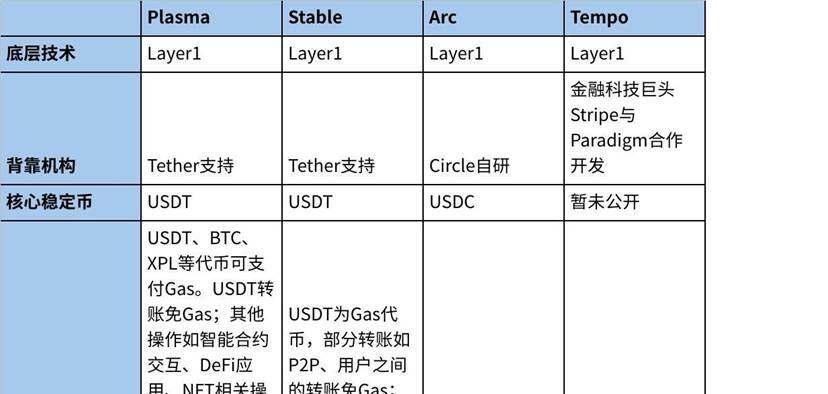
Click the image to view the sheet.
Plasma, backed by Tether, is positioned as a high-performance USDT payment and settlement network. Leveraging the security of the Bitcoin blockchain, it supports zero-fee USDT transfers, low-latency settlement, and private payments, making it particularly well-suited for high-frequency scenarios such as exchange fund flows and cross-border payments. In contrast, Stable, also backed by Tether, was designed to serve as the final settlement channel for USDT. As an independent, high-performance Layer 1, it is geared more towards enterprise-level payment and fund clearing scenarios, emphasizing stability and large-scale throughput.
Unlike Tether's Plasma and Stable blockchains, Arc is a public blockchain launched by Circle. With USDC at its core, it focuses on cross-chain interoperability and liquidity. Its goal is to enable the free settlement and circulation of USDC across multiple chains, becoming a key infrastructure for the DeFi ecosystem and cross-border payments. Tempo, a collaboration between Stripe and Paradigm, focuses on retail payments and merchant settlements while maintaining EVM compatibility to attract developers to build more stablecoin-based payment and application scenarios.
The fundamental reason for these differences lies in the differences in issuers and underlying technologies. Tether's Plasma and Stable both revolve around USDT, but Plasma relies on the Bitcoin ecosystem, emphasizing payment and security; Stable independently builds Layer 1, making it more suitable for institutional settlement. Circle's Arc focuses on USDC's cross-chain liquidity, inheriting its position in compliance and international payments. Tempo, with its Stripe background, naturally focuses on payment implementation and hopes to promote the popularization of stablecoins among merchants.
3. Economic Model and Ecosystem Design of Stablecoin Public Chain
Supporting stablecoins to pay for Gas is the core mechanism of the stablecoin public chain design
Among the leading public stablecoin chains, most choose to support stablecoins such as USDT and USDC as gas fees. Their economic and ecological role is at the core of their design. By allowing users to pay transaction fees directly with USDT or USDC, they lower the barrier to entry for users, increasing trading activity and payment volume, which is crucial for the initial ecosystem launch. At the same time, different projects must strike a balance between incentive mechanisms, traffic aggregation, and regulatory compliance when designing their economic models. For example, Plasma, in addition to allowing stablecoin payments, also offers its native token, XPL, as a gas payment option. This ensures on-chain incentives and network security while providing greater user flexibility. Projects like Stable currently rely primarily on USDC payments, strengthening their compliance and institutional partnership advantages. It remains to be seen whether future incentive designs will further consider how to attract developers and users to participate in the ecosystem.
The difference between a single stablecoin chain and multiple stablecoin chains determines the ecological construction strategy and initial competition model
Single-stablecoin chains (such as Plasma) primarily use a core stablecoin (e.g., USDT) as a medium for circulation and settlement. This allows for centralized liquidity, rapid network effects, and relatively easy initial ecosystem launch, but their cross-chain capabilities and adaptability to multiple scenarios are limited. In contrast, multi-stablecoin chains (such as Arc or other multi-currency clearing networks) support the circulation of multiple stablecoins on-chain, improving cross-chain and multi-scenario adaptability. However, due to the fragmentation of traffic and liquidity, initial ecosystem launch costs are higher. This design difference directly impacts the strategic layout of public chains in scenarios such as payments, DeFi, and cross-chain clearing. Single-stablecoin chains are suitable for quickly establishing an initial ecosystem, while multi-stablecoin chains are more suitable for building long-term, cross-currency, and multi-scenario financial infrastructure.
Ecological cold start and application closed loop are the key