Author: zhou, ChainCatcher
On December 1st , HashKey , a Hong Kong-licensed digital asset trading platform, passed the listing hearing of the Hong Kong Stock Exchange, just one step away from listing. The joint sponsors for this IPO are JPMorgan Chase and Guotai Junan Securities.
1. Explosive Revenue Growth: Transaction Facilitation Services Account for Nearly 70 %
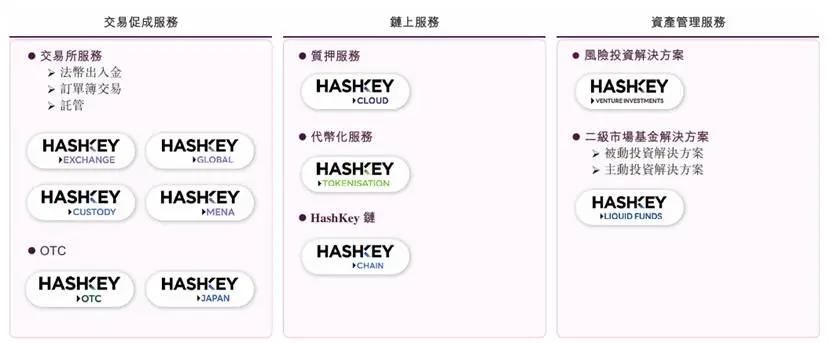
According to its prospectus, HashKey is a comprehensive digital asset platform whose core businesses include transaction facilitation services, on-chain services, and asset management services. The platform has the capability to issue and circulate tokenized real-world assets ( RWAs ) and has launched the HashKey Chain—a scalable and interoperable Layer 2 infrastructure to support on-chain migrations.
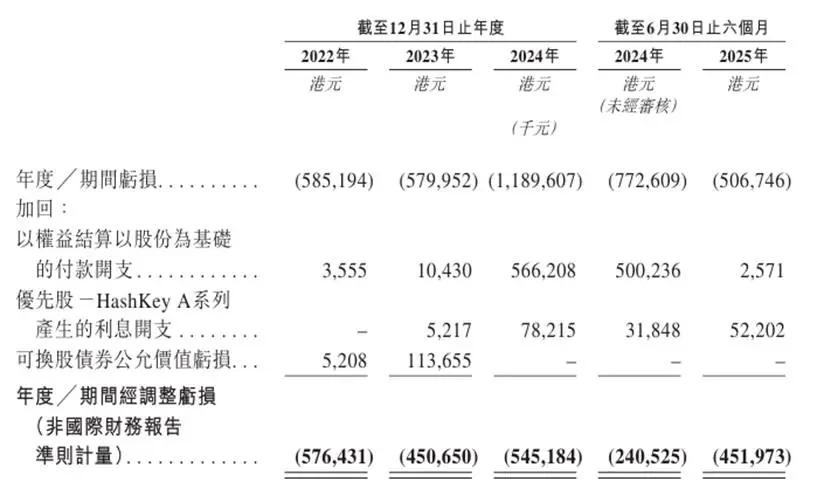
During the reporting period, the company's total revenue experienced explosive growth, increasing from HK$ 129 million in 2022 to HK$ 721 million in 2024 , a nearly six- fold increase in two years. However, despite the rapid revenue growth, the company remained in a state of continuous adjusted net loss (cumulative loss of HK$ 1.57 billion from 2022 to 2024 ).
The company's revenue primarily comes from three segments: transaction facilitation services, on-chain services, and asset management services. Among these, transaction facilitation services are the core driver of revenue growth.
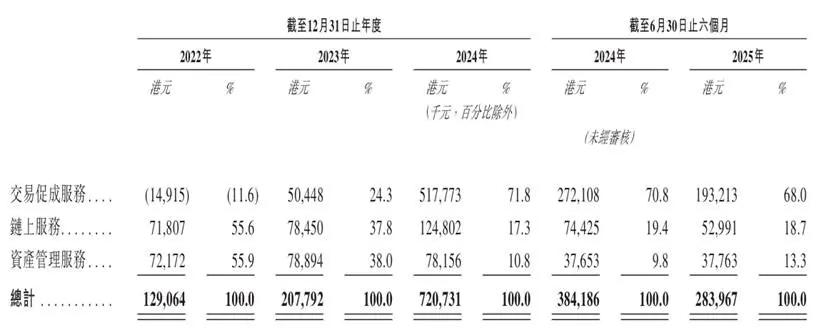
This business has successfully turned from loss to profit, jumping from a loss of HK$ 14.915 million in 2022 to a positive revenue of HK$ 518 million in 2024 , and accounting for 68% of total revenue in the first half of 2025. This growth is mainly due to HashKey's first-mover advantage in compliance gained through licensed operation in Asia (especially the Hong Kong market).
According to Sullivan data, HashKey holds a market share of over 75% in the Hong Kong onshore digital asset platform market, maintaining an absolute leading position. As of September 30 , 2025 , the platform's assets exceeded HK$ 19.9 billion, supporting trading of 80 digital asset tokens.
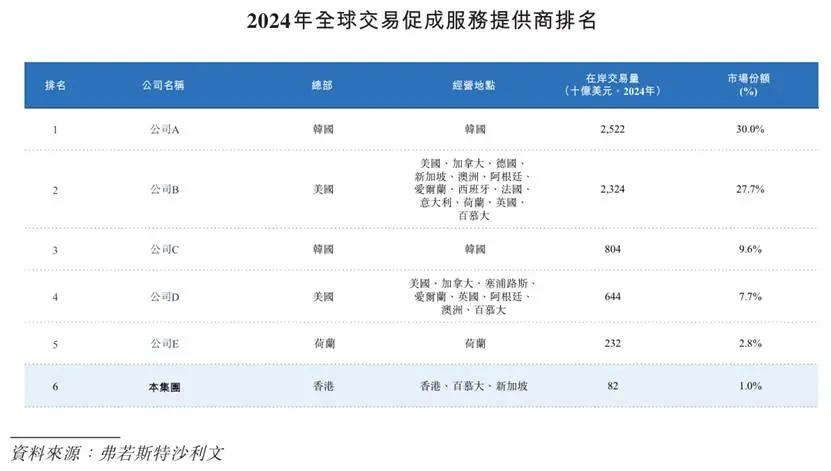
Another portion of HashKey's revenue comes from on-chain services, which have a compound annual growth rate of 32% . The company provides a comprehensive suite of on-chain services, integrating blockchain staking infrastructure, tokenization capabilities, and native blockchain development.
As of September 30, 2025 , it held HK$ 29 billion in pledged assets, and the total real-world asset value of the HashKey chain reached HK$ 1.7 billion. The company has become the largest staking service provider in Asia and the eighth largest globally.
In asset management services, HashKey provides institutional clients with digital asset investment opportunities, covering venture capital and secondary fund investments. As of September 30 , 2025 , the company's assets under management had reached HK$ 7.8 billion since its inception. As of December 31, 2024 , the company was the largest asset management service provider in Asia in terms of assets under management.
HashKey claims its fund investment returns exceed 10 times, more than double the industry average. However, as the trading business expands, asset management revenue has decreased from 55.9% to 10.8% of the overall business, indicating a shift in the company's profit focus from management fees and investment returns to relying on trading volume.
2. Transaction volume, user expansion and equity control
As of August 31 , 2025 , HashKey held HK$ 1.657 billion in cash and cash equivalents, and HK$ 592 million in digital assets. Of these HK$ 592 million in digital assets, mainstream tokens accounted for 84% , including ETH , BTC , USDC , USDT , and SOL .
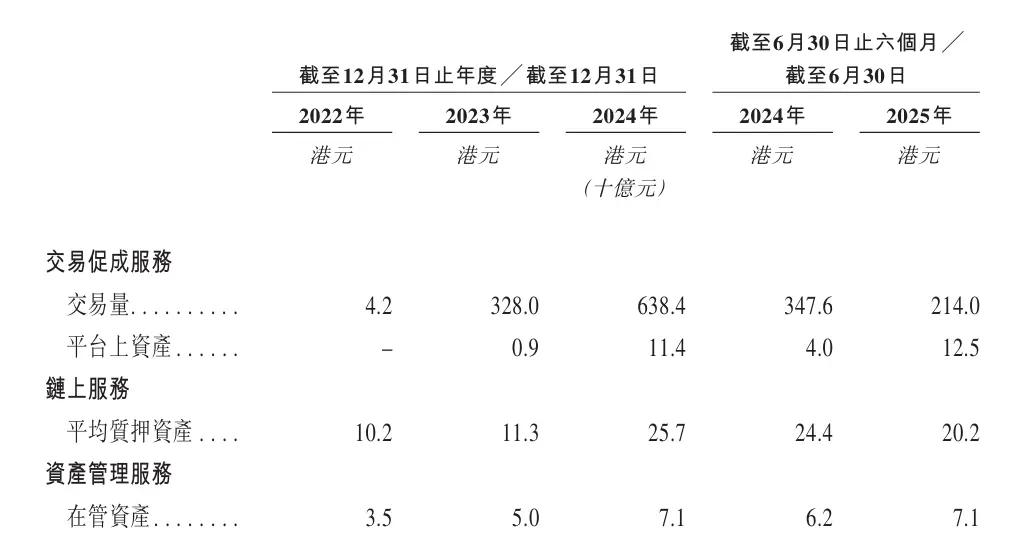
HashKey 's transaction volume surged from HK$ 4.2 billion in 2022 to HK$ 328 billion in 2023 , and further increased to HK$ 638.4 billion in 2024. This growth was driven by the increased volume resulting from the launch of its Hong Kong digital asset trading platform in the second half of 2023 and its Bermuda digital asset trading platform in 2024 .
However, looking at the first half of the year, the company's transaction volume decreased from HK$ 347.6 billion for the six months ended June 30 , 2024 to HK$ 214 billion for the six months ended June 30 , 2025. The company explained that this was mainly due to strategic adjustments made in the context of a sluggish market, which led to a reduction in transaction activity by retail clients, as reflected in the decrease in monthly transaction volume by retail clients during the same period.
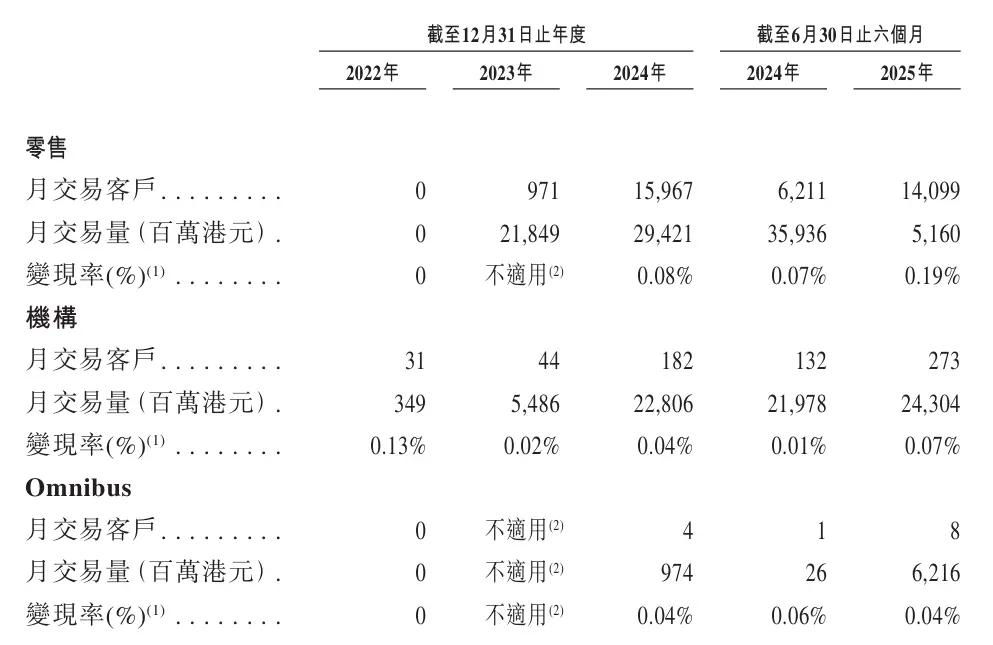
Looking at monthly trading clients, there were 15,967 retail monthly trading clients in 2024 , with both monthly trading volume and the number of trading clients shrinking in the first half of 2025. On the other hand, the number of institutional monthly trading clients increased from 31 in 2022 to 273 in the first half of 2025 , and the number of Omnibus monthly trading clients expanded from 1 in the first half of 2024 to 8 in the first half of 2025 , indicating that institutional and Omnibus clients are becoming more sticky and engaged with the platform.
In terms of user volume, the number of registered customers surged from 18 in 2022 to approximately 1.447 million as of June 30, 2025 ; among them, customers with assets jumped from 3,753 in 2023 to 120,700 in 2024 , and reached 138,500 as of June 30, 2025. Despite a temporary contraction in trading volume, the platform saw expansion in both registered and deposited users; the prospectus also disclosed that the platform's customer retention rate with assets reached 99.9% .

In terms of shareholding, after the listing, HashKey will be jointly controlled by four parties: non-executive director Lu Weiding (referred to as " Mr. Lu " in the prospectus), GDZ International Limited , HashKey Fintech III , and Puxing Energy Co., Ltd. (stock code: 00090 ). Among them, Mr. Lu also serves as the chairman and actual controller of Wanxiang Group, which is one of China's largest private auto parts suppliers.
Prior to the IPO , Mr. Lu held 42.47% of HashKey's shares through GDZ International , 0.7% through HashKey Fintech , and 0.02% through Puxing Energy Co., Ltd. , indirectly controlling approximately 43.19% of HashKey's equity in total. He also had the right to exercise approximately 22.92% of the voting rights through the employee stock ownership plan platform. In other words, the company's controlling shareholder directly held shares while indirectly locking up a considerable amount of voting rights through the employee stock ownership platform, resulting in a highly concentrated controlling stake in the company.
In terms of customer structure, the revenue share of the company's top five customers dropped rapidly from nearly 80% in 2022 to 18.5% in 2024 , indicating a significant decrease in customer concentration. However, the early business was highly dependent on related parties. During the track record period, HashKey Fintech III , GDZ International Limited , and HashKey Fintech II were all among the company's top five customers, and were the controlling shareholder or its related parties.
On the supply side, Wanxiang Blockchain entity was one of the top five suppliers in 2022 , 2023 , 2024 , and the six months ended June 30, 2025 , and is also an affiliate of one of the company's shareholders. This means that in its early stages, HashKey's customers and suppliers were heavily tied to affiliates, and it lacked independent commercialization capabilities.
3. Future Growth Story: Building a "Super App + Infrastructure Output"
According to the plans disclosed in the prospectus, HashKey's future growth story revolves more around adding to the main line of transactions, expanding its existing matching business through super applications, infrastructure output, and self-built public chains.
On one hand, the company plans to build a SuperApp , gradually introducing more exchange products and services on top of its existing spot business, including derivatives, perpetual contracts, and the tokenization and trading of stocks/bonds, to improve market liquidity, expand exchange functionality, and allow high-net-worth and institutional clients to complete more complex asset allocation and trading strategies on a single platform. Coupled with the proposed launch of a crypto bank card and an OTC marketplace for institutions, HashKey aims to keep users' funds and trading needs within its own ecosystem as much as possible, improving capital retention and turnover rates.
On the other hand, HashKey is packaging its compliance and technological capabilities and offering them as infrastructure. The company's Crypto-as-a-Service ( CaaS ) solution provides enterprise clients with a complete set of standardized tools, including APIs and smart contract protocols, allowing banks, securities firms, or other platforms to directly access its matching, custody, and clearing capabilities. Theoretically, this could generate revenue from technology services and potentially attract more institutional orders and trading volume, thus supporting its core matching business.
To complement the above strategy, HashKey also launched the HashKey Chain, a Layer 2 infrastructure for Real-World Assets ( RWA ), to support on-chain asset listing and tokenized trading. As of September 30 , 2025 , the on-chain RWA value was approximately HK$ 1.7 billion. The company plans to monetize this infrastructure through gas fees, staking, and other methods, while simultaneously integrating on-chain assets with trading platforms to form a closed loop of " public chain + exchange + institutional services, " thereby adding a medium- to long-term growth curve to trading revenue.
4. Persistent Losses and Financial Leverage: Hidden Concerns Behind Growth
Despite its outstanding market share and revenue growth, HashKey 's financial statements also reveal structural challenges and potential risks it faces during its rapid expansion.
Profitability dilemma and high operating costs
In 2024 , the company's adjusted net loss widened to HK$ 545 million, primarily due to a significant increase in operating costs and expenses related to the HSK token, rising from HK$ 70.8 million in 2023 to HK$ 177 million in 2024. Besides HSK- related costs, the increasingly stringent regulatory environment, while constituting a competitive advantage, also brings high compliance costs. In the first half of 2025 , the company's compliance costs are estimated at approximately HK$ 130 million, a virtually unavoidable rigid expenditure in a complex regulatory environment with multiple jurisdictions.
It's worth noting that the price of HSK tokens has experienced a significant drop this year. The company pledged to repurchase and burn 20% of its net profit from HSK tokens , but no repurchases were conducted during the reporting period as the repurchase conditions were not yet met. As of June 30, 2025 , the usage rate of HSK tokens was only 0.49% . This means that the vast majority of tokens have not yet been used for actual on-chain activities, and their real on-chain demand is still in a very early exploratory stage. In other words, currently, HSK is more of a cost and burden in the financial statements than a mature ecosystem token that can contribute to profits.
High debt and reliance on financing
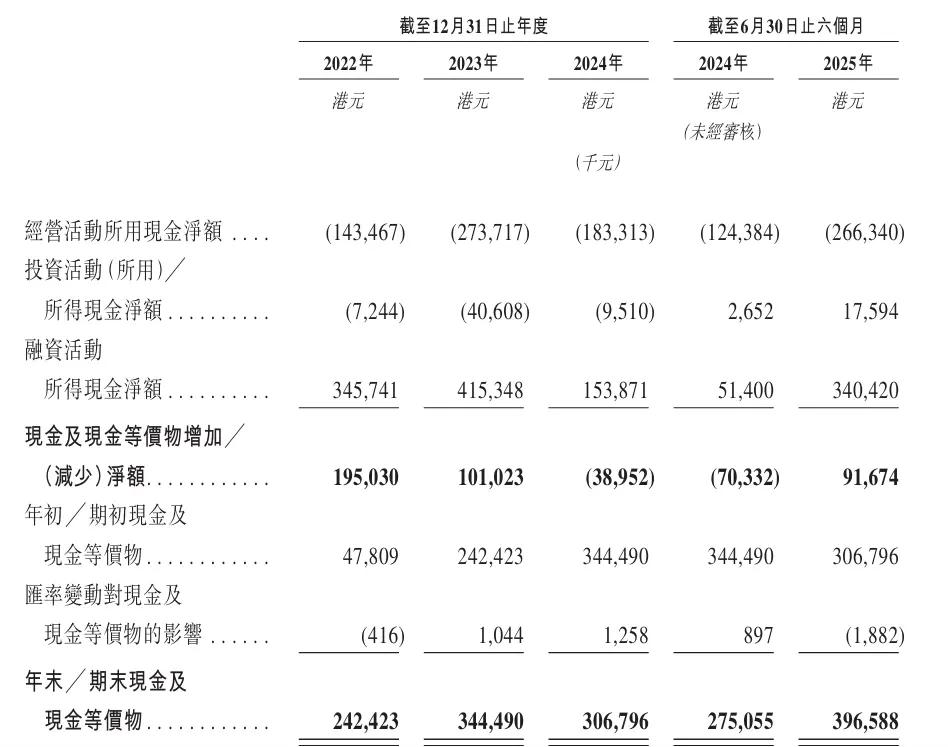
From the cash flow statement, HashKey 's expansion is highly dependent on external funding. From 2022 to 2024 , the company's net cash outflow from operating activities was approximately HK$ 143 million, HK$ 274 million, and HK$ 183 million respectively, with a further outflow of HK$ 266 million in the first half of 2025. Its core business has yet to achieve self-sustaining cash generation. In contrast, the company has consistently generated strong net cash from financing activities: HK$ 346 million, HK$ 415 million, and HK$ 154 million from 2022 to 2024 , reaching HK$ 340 million for the six months ended June 30, 2025 , primarily from convertible bonds, preferred shares, and related-party loans. As of June 30 , 2025 , the company's net debt had risen to HK$ 1.582 billion, with redeemable liabilities reaching HK$ 1.725 billion, indicating that its business expansion remains highly dependent on external financing.
The business is highly sensitive to market cycles, and gross profit margins have been declining.
HashKey 's total revenue is highly correlated with its platform's transaction volume, making its business extremely sensitive to factors such as digital asset price fluctuations and market sentiment. Meanwhile, the company's overall gross profit margin has continued to decline, from 97.2% in 2022 to 65.0% in the first half of 2025. This decline is primarily due to the increasing proportion of revenue from transaction facilitation services, which have relatively low gross margins, thus diluting overall profitability.
Conclusion
In terms of exchange valuations, Coinbase has a market capitalization of approximately $ 70 billion on the US stock market, Kraken's latest valuation is approximately $ 20 billion, Upbit's parent company is valued at $ 10.3 billion, and Gemini currently has a market capitalization of approximately $ 1.16 billion. Looking at HashKey on this valuation axis, it completed a strategic financing round in February of this year, valuing the company at approximately $ 1.5 billion.
Previous reports indicated that HashKey's IPO was expected to raise $ 500 million, potentially raising its overall valuation to approximately $ 2 billion. While compliance benefits and a high-growth narrative have brought HashKey to the forefront of the capital market, its ability to achieve and maintain this valuation range ultimately depends on its fundamentals.
Passing the listing hearing is only the first step. Next, HashKey needs to complete a series of capital market procedures, including post-hearing information disclosure, publication of the prospectus, public offering and international placement, book-building and pricing. If everything goes smoothly, it usually takes several weeks before it can be officially listed and traded on the Hong Kong Stock Exchange.