


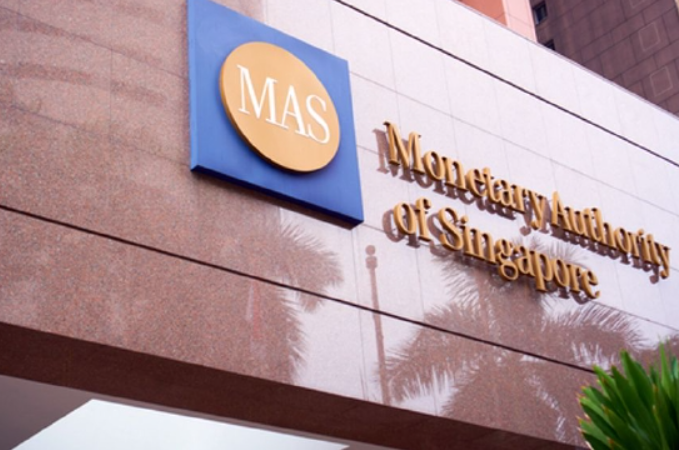
On November 4, 2025, the Monetary Authority of Singapore (MAS) ushered in a new chapter in the regulation of real-world asset (RWA) tokenization. The "Guideline on Tokenization of Capital Market Products," through 17 case studies, systematically defines the boundaries of tokenized assets for the first time, marking a significant step in the global regulation of RWAs from vague exploration to rule-based implementation. This brings unprecedented clarity to a market long shrouded in a "grey area." This not only signifies that Singapore has completed a crucial leap from "regulatory vacuum" to "compliant implementation," but also provides a replicable paradigm for global RWA exploration.
In this transformation intertwined with institutional and technological advancements, MAS emphasizes the principles of "economic substance over form" and "technological neutrality," allowing traditional finance and blockchain innovation to operate under the same regulatory framework. From bank capital allocation to cross-border asset flows, from institutional pilot programs to retail market expansion, Singapore's practices are reshaping market trust, optimizing risk control, and becoming a window into RWA compliance in the Asia-Pacific region and globally.
I. Regulatory Turning Point: From Policy Evolution to Market Response
On November 14, 2025, the Monetary Authority of Singapore (MAS) released the "Guideline on Tokenization of Capital Market Products," providing the first comprehensive regulatory framework for the RWA (Real Asset Token) sector. This move is not an isolated event, but a key milestone in the evolution of digital asset regulation in Singapore. According to the MAS's publicly available policy timeline, its regulatory system began with the Payment Services Act of 2019, gradually expanding to the "Guideline on Digital Token Issuance" in 2020 and the "Consultation Paper on Digital Assets" in 2022, ultimately forming the current comprehensive system covering issuance, trading, and custody.
The market's demand for regulatory clarity has been building for years. Chainalysis's "Global Crypto Asset Adoption Index 2025" shows that 24.4% of Singapore's adult population holds digital assets, ranking first in the Asia-Pacific region. Meanwhile, Capgemini's "Global Wealth Report 2025" indicates that Asian family offices allocate 3%-5% of their assets to digital assets, but regulatory uncertainty has long constrained further growth. The MAS's release of this guidance directly addresses the market's urgent need for clearer rules.
It is worth noting that Singapore's decision to release these guidelines at this time is closely related to international regulatory coordination. In June 2025, the Basel Committee on Banking Supervision formally implemented capital requirements for crypto assets, incorporating tokenized traditional assets into the bank capital framework; in October of the same year, the EU's Crypto-Asset Market Regulation completed key legislative procedures. Singapore's guidelines, in both timing and content, echo global regulatory trends, reflecting its intention to establish international compliance standards.
II. Regulatory Philosophy: The Principle of Technological Neutrality and Economic Substance Analysis
The MAS explicitly states in its guidelines that its regulatory philosophy is based on the principle of "same activity, same risk, same regulatory outcome." This statement originates from the International Organization of Securities Commissions' (IOSCO) Principles for the Regulation of Fintech, but Singapore has transformed it into an operational standard through specific cases. According to Article 2.3 of the guidelines, the core of determining whether a token is a capital market product is "economic substance analysis," which requires a comprehensive assessment of the token's characteristics, the issuer's intent, the overall structure, and the bundle of associated rights.
Compared to the "Howey Test" relied upon by the US SEC, the Singapore framework places greater emphasis on a comprehensive consideration of multiple factors. For example, in Case 3, a platform issued diamond tokens with buyback clauses. Although advertised as "utility tokens," they were classified as bonds due to the fixed-price buyback commitment. This approach is similar to the "token classification framework" of Switzerland's FINMA, but Singapore significantly enhances regulatory predictability through case studies.
The guidelines also explicitly exclude the legal validity of industry terms such as "security tokens" and "utility tokens." The MAS explains in the appendix that such labels could obscure the economic substance of tokens, leading to regulatory arbitrage. This stance contrasts with the Hong Kong Securities and Futures Commission's 2024 "Guideline on Virtual Asset Trading Platforms"—which retains the "security token" classification but requires platforms to assess the nature of tokens on a case-by-case basis.
III. Compliance 3D Map: Asset Types, Rights Attributes, and Legal Structure
The Singapore framework provides project owners with a clear map of compliance pathways across three dimensions:
The asset class determines the basic compliance costs. Highly liquid, standardized assets such as government bonds and stocks are relatively easy to tokenize, while non-standard assets require complex legal structures. For example, in Case 6, the tokenized fund, because it pools investor funds and entrusts them to professional management, is considered a collective investment scheme and must comply with requirements regarding authorization, disclosure, and investment restrictions. In contrast, NFTs representing digital artworks in Case 16, primarily imbued with intellectual property rights, are not subject to regulation.
The rights dimension is the core of regulatory characterization. The guidelines clarify the boundaries through a comparison of Case 1 and Case 13: tokens representing company ownership and entitled to dividends are considered shares, while tokens that only grant voting rights in platform governance are not considered capital market products. The closer the connection between rights and financial attributes, the stricter the regulatory requirements.
The architectural dimension is crucial for compliance implementation. Project teams need to assess whether a special purpose entity (SPO) is required, whether custodian arrangements are necessary, and what auditing requirements apply. In Case 5, tokens packaged as bonds through a trust structure were deemed independent financial products, and the issuer was required to make separate disclosures. While complex structures can partially isolate risks, they cannot alter the economic substance of the underlying assets.
IV. Impact on the Banking Sector: Capital Requirements and Business Model Restructuring
In a consultation document released in March 2025, MAS clarified that it would fully implement the Basel Committee's capital standards for banks' crypto assets. This framework divides crypto assets into two categories: Group 1 includes tokenized traditional assets and eligible stablecoins, with capital treatment based on the underlying assets; Group 2 includes permissionless blockchain assets, subject to a risk weight of 1250%.
This classification has a profound impact on banks' participation in the RWA market. For example, DBS Bank's tokenized notes issued on Ethereum, due to their permissioned blockchain structure, may be classified into Group 1; while similar products deployed on permissionless blockchains face significantly higher capital requirements. JPMorgan Chase's "Tokenization 2025 Report" points out that some European banks have already adjusted their technology roadmap, prioritizing permissioned blockchains or hybrid architectures.
The banking business model has also been restructured accordingly. The head of Standard Chartered's innovation department pointed out that its tokenized bond issuance has shifted from an "investor-oriented" to a "capital efficiency-oriented" approach, optimizing risk weighting through structural design. This shift demonstrates the direct shaping power of regulatory rules on market behavior.
V. Competition and Cooperation Between Two Cities: Regulatory Paths and Market Practices in Hong Kong and Singapore
Hong Kong and Singapore exhibit distinct differences in their RWA regulations, primarily in three aspects:
At the legal framework level, Hong Kong relies on the Securities and Futures Ordinance and the VASP licensing system to form a license-centric regulatory model; Singapore, on the other hand, constructs a functional regulatory system based on the Securities and Futures Act, the Payment Services Act, and the DTSP rules. The former focuses more on institutional access, while the latter pays more attention to the substance of economic activities.
At the regulatory culture level, the Hong Kong Monetary Authority (HKMA) spearheads the tokenization of government green bonds through the "Evergreen Scheme," reflecting a top-down approach to promotion; while Singapore's "Guardians Scheme" unites over 40 international institutions to build an industry-wide governance ecosystem. This difference reflects the different market structures of the two places—Hong Kong is backed by mainland asset pools, while Singapore faces global liquidity.
In terms of technology integration, Hong Kong requires sandbox projects to connect to the Hong Kong dollar stablecoin settlement layer to strengthen its sovereign currency status; Singapore released the Asset Tokenization Technology White Paper 2.0 to promote cross-chain interoperability standards. These two represent the technological philosophies of "closed-loop controllability" and "open interconnectivity," respectively.
These institutional differences directly shape the strategic deployment of financial institutions. HSBC adopts a dual-headquarters model, issuing tokens for mainland local government financing vehicle (LGFV) bonds in Hong Kong and expanding its retail REITs tokenization business in Singapore; Ant Financial obtained licenses 1, 4, and 9 in Hong Kong to handle mainland-related assets and applied for a payment license in Singapore to build the XSGD settlement channel; JPMorgan Chase's Onyx chose Singapore to conduct retail REITs because its regulatory standards are easier to replicate globally.
Market practice clearly reflects the comparative advantages of the two places: Hong Kong has a unique position in connecting mainland assets, while Singapore leads in rule export and technology standardization. CMB International has achieved the tokenization of the first Hong Kong-Singapore mutual recognition fund through multi-chain deployment, providing a new paradigm for cross-market collaboration.
VI. Regulatory Innovation: Expanded Disclosure, Delineation of Control, and Extraterritorial Jurisdiction
The MAS framework includes three groundbreaking innovations:
Disclosure requirements have expanded from financial to technical aspects. Guideline 3.7 requires issuers to disclose technical details such as DLT type, smart contract auditing, and private key management, and to clearly define the mapping between on-chain records and legal ownership. This principle of "technological transparency" could become a global model.
The definition of control is reshaping the boundaries of custody. MAS defines "control" as "the ability to access or transfer tokens," without requiring exclusivity. This means that multisignature wallet service providers and DeFi protocol administrators may be considered custodians and would need to apply for the appropriate licenses.
Extraterritorial jurisdiction blocks regulatory arbitrage. Under Section 339 of the Securities and Futures Act, the MAS can exercise jurisdiction over offshore activities that "have a material impact on Singapore." Combined with the broad interpretation of "in or from Singapore" in the DTSP rules, the regulatory exemption space for offshore structures is significantly narrowed.
The release of the Singapore guidelines has accelerated global regulatory coordination for RWA. The EU is incorporating tokenized assets into existing financial instrument regulations based on the MiCA framework; Japan's Financial Services Agency will revise the Financial Instruments Exchange Act in 2025 to clarify that tokenized securities are subject to traditional rules; and the Abu Dhabi Global Market is building a flexible system under common law jurisdiction through the FSRA digital asset framework.
Technology-driven development is becoming increasingly evident. Ant Financial's Layer 2 chain achieves 100,000 TPS, providing a foundation for millisecond-level settlement; Chainlink's DECO protocol verifies off-chain assets through zero-knowledge proofs, solving the problem of information asymmetry. These innovations are propelling RWA from "proof of concept" to "large-scale application".
The future landscape may evolve along two tracks: Hong Kong will become the digital issuance center for high-quality mainland assets, while Singapore will focus on exporting rules and cross-chain standards. However, the competition between the two is essentially a practice of balancing "compliance and innovation"—regulation must both prevent risks and avoid stifling innovation. As the Chief Fintech Officer of MAS stated, "Our goal is not the strictest rules, but the clearest rules."
Some of the information comes from the following sources:
• The Monetary Authority of Singapore (MAS) releases guidance framework for RWA issuance! Seventeen token case studies explained! Can Hong Kong follow suit?
• Singapore's new tokenization rules "surprise" the competition for Asia-Pacific financial centers.
• "Understanding: The Monetary Authority of Singapore's Commercialization Plan for Asset Tokenization"
Author: Liang Yu; Editor: Zhao Yidan





