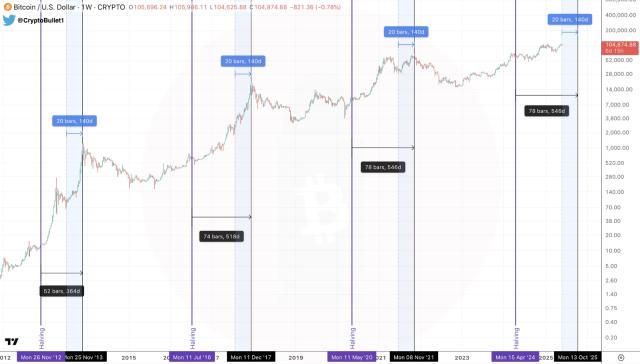
As of the beginning of this week, Bitcoin ETFs and listed companies held a total of approximately 2.57 million Bitcoins, far exceeding the 2.09 million held by exchanges. This data signifies that price-sensitive inventory in the circulating supply of Bitcoin has shifted from exchanges to the institutional system, fundamentally reshaping the market's liquidity characteristics and risk transmission pathways.
Currently, Bitcoin liquidity has formed three new "pools," each with a different operating logic.
First, exchange pools react the fastest. More than 2 million Bitcoins on platforms such as Coinbase can be traded within minutes, making them the main source of short-term selling pressure. However, the size of these pools has been shrinking since 2021.
Second, the ETF pool holds approximately 1.31 million Bitcoins (777,000 of which are held by BlackRock IBIT). These shares are traded through the secondary market and require T+1/T+2 settlement processes. They will only flow into the spot market after authorized participants redeem them. While this friction may suppress intraday volatility, it may also accumulate the risk of a redemption wave.
Third, the enterprise pool holds more than 1 million Bitcoins (accounting for 5.1% of the circulating supply), with Strategy being the main holder. This type of fund is affected by factors such as market value loss and debt maturity, and its stickiness is lower than that of long-term holders, but it is more sensitive to the capital environment.
Further Reading: MicroStrategy spends $960 million to buy 10,624 Bitcoins, bringing total holdings to over 660,000! MSTR rises 2% pre-market.
Restructuring of the Derivatives Market
The rise of ETFs has also reshaped the derivatives market. Institutions are engaging in basis arbitrage by "buying ETFs and selling futures," driving up open interest in CME Bitcoin futures contracts. Basis has become an arbitrage signal rather than a directional indicator.
Research institutions pointed out that the large-scale outflow of funds from ETFs in mid-October was actually due to basis arbitrage liquidation, not institutional withdrawal. This mechanical operation makes the interpretation of fund flows more complicated.
Meanwhile, market volatility has been significantly reduced, with Glassnode data showing that Bitcoin's long-term real volatility has dropped from 80% to 40%.
ETFs' daily trading volume of billions of dollars has attracted compliant funds, and institutions are balancing their funds according to plan rather than panic selling. Coupled with narrowing market maker spreads, spot liquidity has increased.
However, reduced volatility does not mean the elimination of risk. With shares concentrated in ETFs and corporate entities, the impact of a single large-scale redemption or liquidation is far greater than that of retail trading.
The new structure also harbors new risks. Most companies allocate BTC through bond issuance. If the price falls below the cost line and credit tightens, it may trigger a forced sell-off. Although ETFs do not have refinancing pressure, continuous redemptions will still guide Bitcoin back to exchanges, only delaying rather than eliminating the selling pressure.
Today, the largest holders of Bitcoin have changed from whale to listed companies and compliant funds, and the selling pressure has shifted from retail investors' market reactions to institutional capital shocks.
This shift has compressed daily volatility but has also created new tail risks, meaning that the Bitcoin market has entered a new phase dominated by institutions. Trading logic needs to be completely updated, and we also need to refocus on certain data.