Hi everyone, these past two days every time I browse the news...
It seems like everyone in the tech and crypto is talking about the same thing:
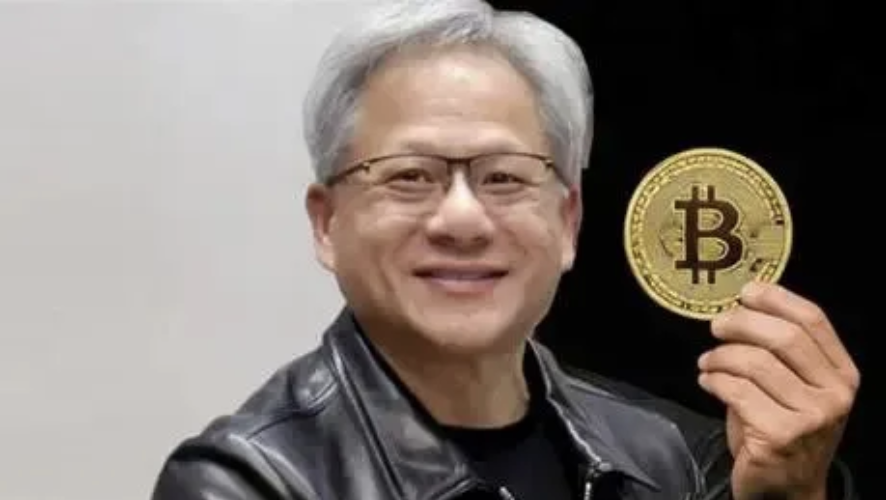
Jensen Huang, the founder of Nvidia, recently said something quite interesting when discussing Bitcoin.
He didn't say whether the price would rise or fall, but instead used an analogy. He said that Bitcoin is actually storing "excess energy" as a new currency.
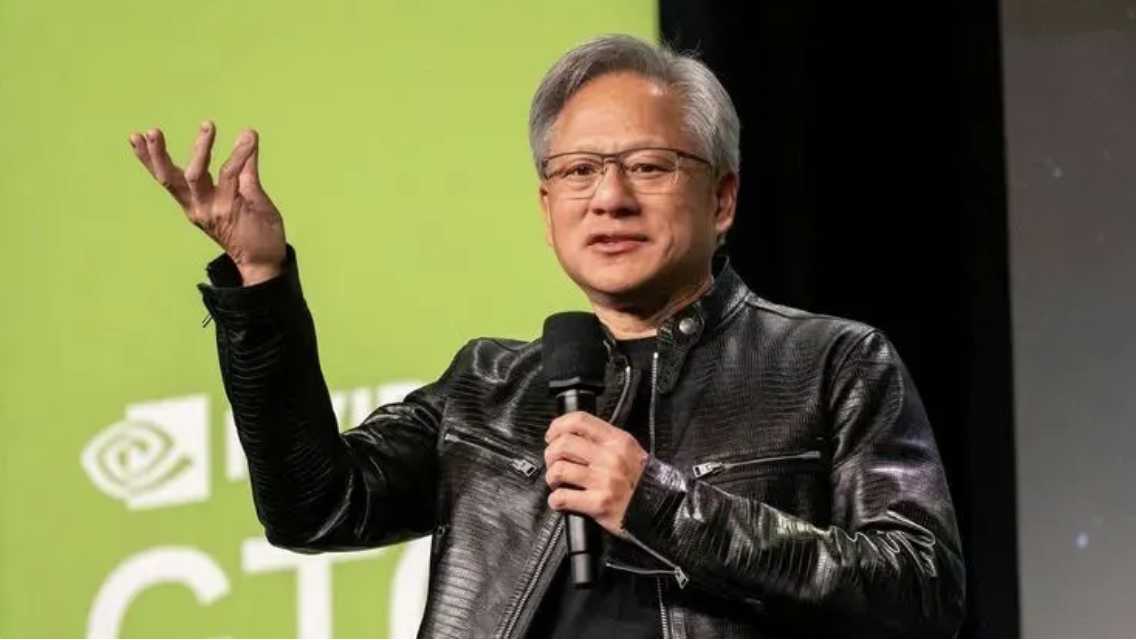
This statement went viral among many people working in the field of encryption.
I wondered, why do these words carry so much weight?
Upon closer reflection, the key is the person who said those words.
Who is Huang Renxun?
He is one of the people in the world who understands best how to turn "computing power" and "energy" into "value".
The GPU chips he sells are the "electricity" that powers AI worldwide; most of the electricity burned in data centers passes through his hands.
What he thinks about every day is how to turn electricity into intelligence, and then turn intelligence into money.
So when he looks at Bitcoin, what he sees may not be the candlestick chart.
Rather, it's a complete system:
By converting real-world electricity through mining machines...
"Packaging" has become a kind of "value package" that can travel online at lightning speed.
Following this line of thought,
Bitcoin mining farms are somewhat like “energy packaging stations” for the digital age.
The unused hydropower from Sichuan during the rainy season, the wind power from Texas, or the unused solar power from the Middle East can be "solidified" through computing power and transformed into assets that anyone can hold, divide, and transmit to the other side of the earth.
That's a pretty cool idea, right?
But then, a very practical problem arose:
We went through all that trouble to "store" electricity as Bitcoin, and then what?
This is like building a state-of-the-art oil refinery in a very remote place and refining crude oil into gasoline with the highest purity.
The technology is impressive, but looking around, it's desolate, with no cars, no roads, and no gas stations.
Your premium gasoline has value, but how do you use it?
It can only be left quietly.
Bitcoin's current situation in the crypto world is somewhat like this. It has been very successful as a "store of value." But it has stalled when it comes to "making money with it."
Look at all the blockchains now, lending, trading, mining, and so on, they're all thriving, but Bitcoin's participation is actually not that high amidst all this excitement.
It's like a top-tier asset "sealed" on its own blockchain. Everyone knows it's valuable, but it's difficult to make it generate more money on its own.
Previous methods, such as creating wBTC to move Bitcoin across chains, were somewhat like putting wheels on gasoline tanks and hauling them to the outskirts of the city.
But when they arrived at the destination, they found that the fuel nozzles at the city gas stations didn't match the car's interface, so they still couldn't get fuel in.
So, we might need to change our approach.
Can we design it at the underlying level so that "valuable things stay here" and can itself become "productivity"?
I noticed a new public blockchain called Berachain that is testing a mechanism called "Proof of Liquidity" (PoL) .

Simply put, blockchain security used to rely on "Proof-of-Work" (PoW).
Whoever consumes the most electricity, has the greatest computing power, and maintains the network will receive a reward.
The current logic of PoL is: who provides real "liquidity" (i.e., real money assets) for this network?
Whoever lays the foundation for the economic activities of the entire ecosystem should be directly rewarded by the network.
This is somewhat like shifting from a model that encourages "contributing labor to build roads" to a model that encourages "bringing money to open shops."
The foundation for cybersecurity and prosperity is gradually shifting from physical "computing power barriers" to the "depth of economic activity."
Okay, if we accept the premise that "Bitcoin is a stored form of energy," then following Huang's line of thought, the next question naturally becomes:
How can we build a "power generation and supply" system for these "stored energy" in the digital economy so that it can work continuously and generate revenue?
This is exactly the problem that chains like Berachain are trying to solve.
On top of that, a team called the Batoshi Foundation has already built a whole system, and the name is quite straightforward: "On-Chain Micro Strategy" .
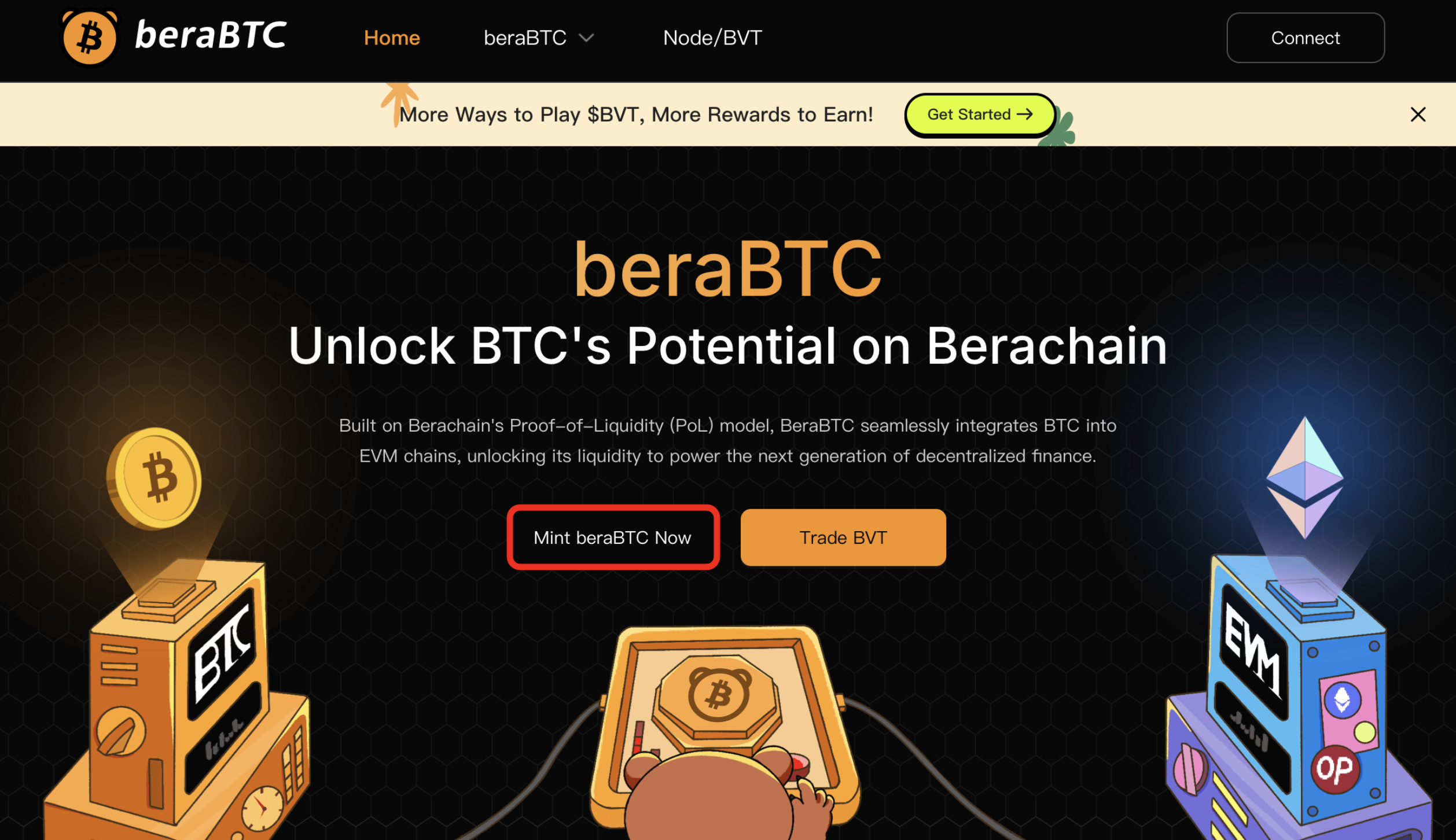
The first key component of this system is called beraBTC .
You can think of it as Bitcoin's "standard plug" on the Berachain chain. One beraBTC corresponds to one real Bitcoin, and the total number of coins stored on the chain is clearly visible and can be checked at any time. This ensures that the source of the "energy" is transparent.
But beraBTC is more than just a "converter". Its ingenious design allows Bitcoin to "generate" power from the moment it enters the market .
When you exchange your Bitcoin for beraBTC and put it into the Berachain ecosystem, whether you simply hold it or use it in lending protocols or trading pools, you will receive the chain's native rewards (called BGT).
This means that for the first time in a mainstream, programmable blockchain environment, Bitcoin has transformed from a simple "hoarder" into a means of production capable of "producing its own eggs."
The "energy" source is finally connected to the "grid".
Having power generation capacity alone is not enough. How are the profits generated by a power plant distributed? How can we attract more people to invest in and maintain the power plant in the long term? This is where the second component comes in: BVT (Building Dynamics ).
BVT is the governance token of this entire system. You can think of it as the "equity certificate" and "value collector" of this "on-chain power station".
Its operating mechanism is very clear, mainly consisting of two cycles:
- External revenue cycle : The more beraBTC is used within the ecosystem, the more transaction fees and protocol revenue it generates. The system periodically uses a portion of these real profits to buy back BVT on the market and then burns it. This is similar to a profitable company using its profits to buy back its own stock; each remaining share naturally has a higher intrinsic value.
- Internal interest-bearing cycle : If you hold BVT, you can choose to stake it. After staking, you don't need to worry about it anymore; it will automatically participate in the overall system's profit distribution, continuously generating returns through pre-defined on-chain paths. This is equivalent to your "equity" enjoying compound interest on its own.
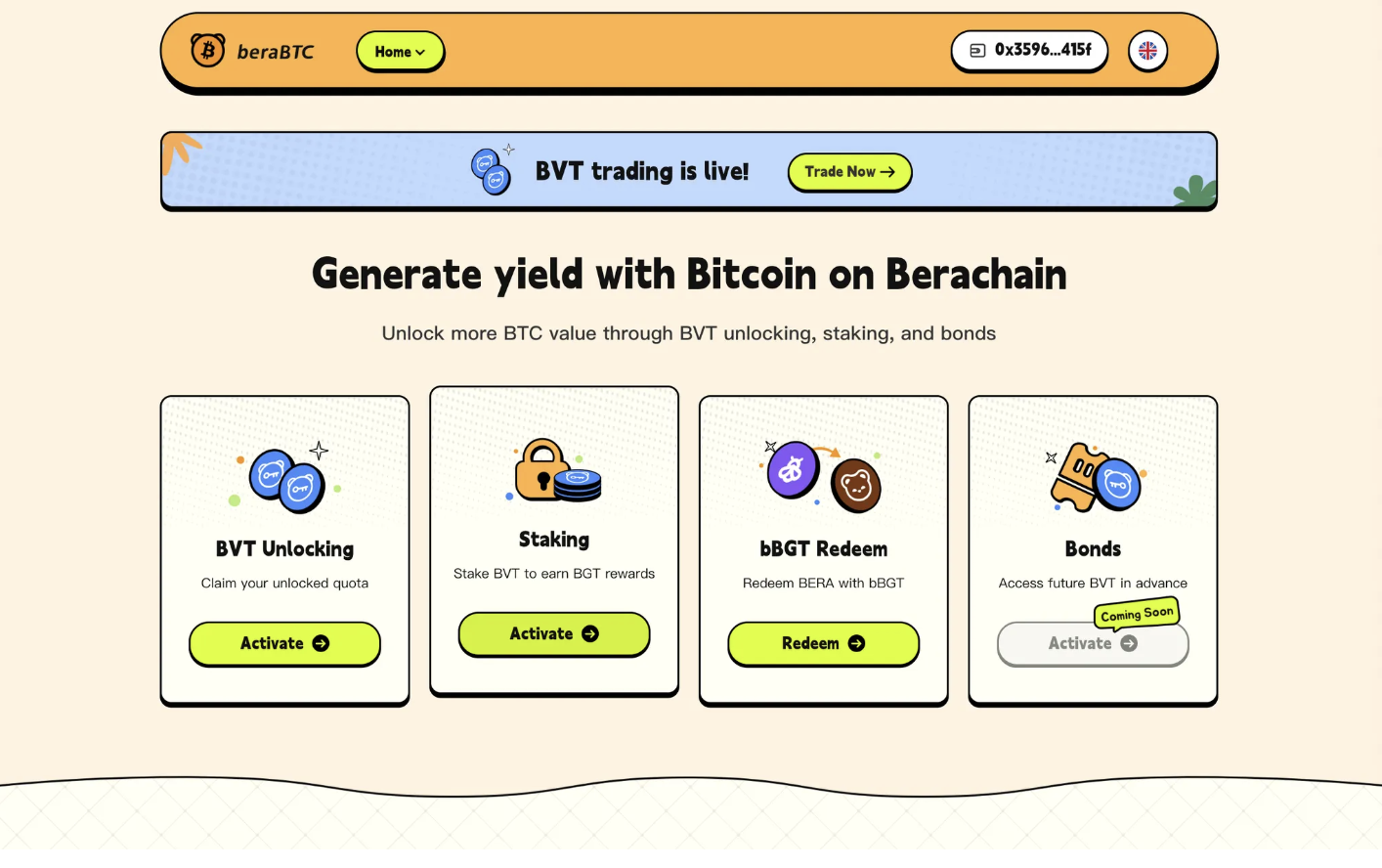
Simply put, Bitcoin (through beraBTC) comes in to work and make money, and a portion of the profits is used to increase the value of BVT; when BVT becomes valuable, it attracts more attention and participation, bringing in more Bitcoin . That's how the flywheel starts spinning.
A recent development is that BVT has been listed on the Gate Alpha exchange, becoming the first Berachain ecosystem project to be listed on this platform. This indicates that it is beginning to enter the mainstream and is being tested by more people.
Looking back, Huang's statement seems to have pointed out most of the substance hidden underwater in the "iceberg" of Bitcoin—it is a coded form of energy. What beraBTC and BVT are doing is building facilities for mining, converting, and distributing this "energy iceberg."
Therefore, the next chapter of BTCFi may no longer be about debating whether it is digital gold, but about studying how to transform it from an "energy storage battery" into a "power station that continuously outputs electricity".
If you're curious about how this "Bitcoin generates its own interest" on-chain approach works, check out their website, berbatc.io . It provides detailed guides on how to exchange Bitcoin for beraBTC and how to participate in BVT staking. See for yourself how this "energy" "flows" on the chain.
🎉Let 's explore everything about beraBTC, BVT, and BearChain together .
Welcome to follow ⭐️ Batoshi