


An investor voluntarily transferred all of his accumulated Bitcoin for his retirement fund to a scammer, losing all his assets after falling into a "pig butchering" trap, despite repeated warnings.
Chia to a Bitcoin asset management advisor, a Bitcoin investor lost their retirement savings to a "pig butchering" scam after ignoring numerous warnings from their advisory firm.
Terence Michael, an advisor and author at The Bitcoin Adviser, stated in an X post that an anonymous client transferred Bitcoin to a scammer posing as a trader and promising to double his assets.
Michael said the scammer also claimed to be a woman in love with the investor — a common tactic in pig butchering scams, which rely on emotional manipulation rather than direct technical attacks.
Despite numerous calls and countless messages, Michael was unable to convince his client to stop transferring Bitcoin to the scammer.
“My client fell for a pig butchering scam,” Michael said on Sunday. “And last night, while I was out for dinner, I received a heartbreaking message from him saying he had lost everything.”
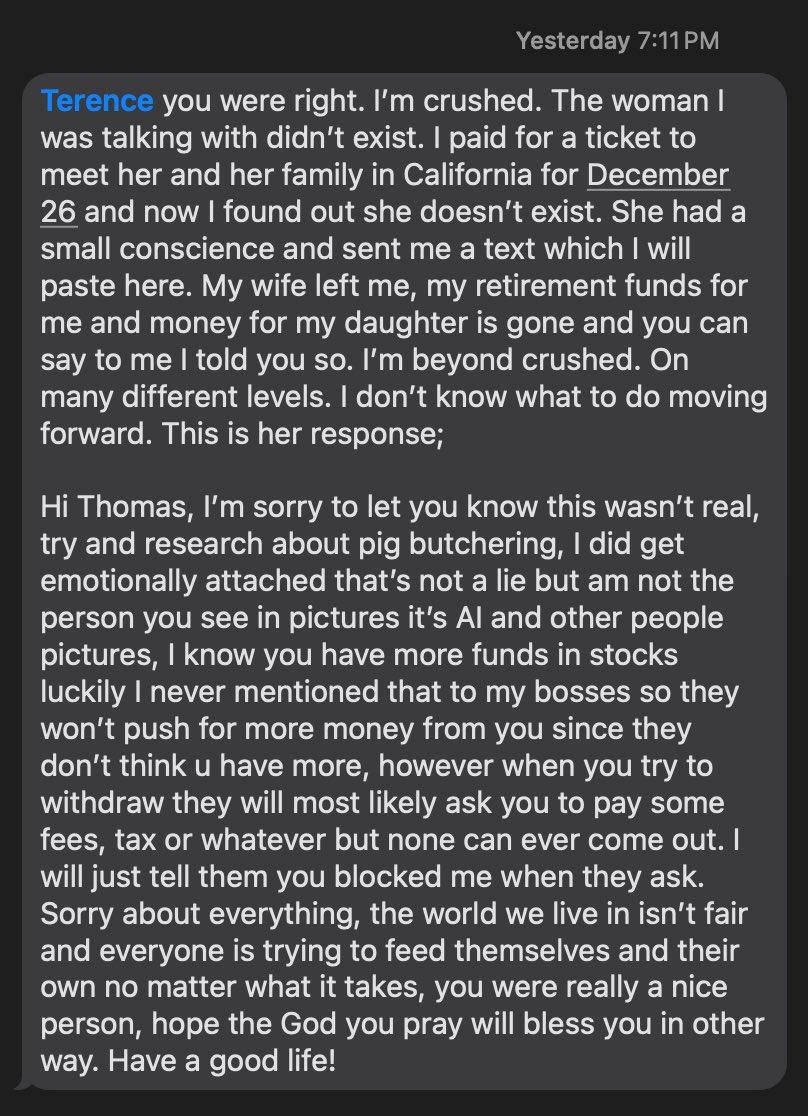
Unlike traditional hacking scams, pig butchering scams rely on emotional manipulation, causing victims to voluntarily send assets to the attacker, often through the promise of a fake romantic relationship.
In addition to losing all of his Bitcoin intended for retirement, the investor—who had recently divorced—also bought a plane ticket for the scammer hoping to meet him. After the money was transferred, the attacker admitted that the photos used to depict the relationship were fake and created using artificial intelligence, according to Michael.
Pig butchering scams are escalating into a national threat, stealing $5.5 billion worth of crypto in 2024.
Pig butchering scams have become a serious problem for cryptocurrency holders, causing total losses of $5.5 billion in 2024, with approximately 200,000 individual cases.
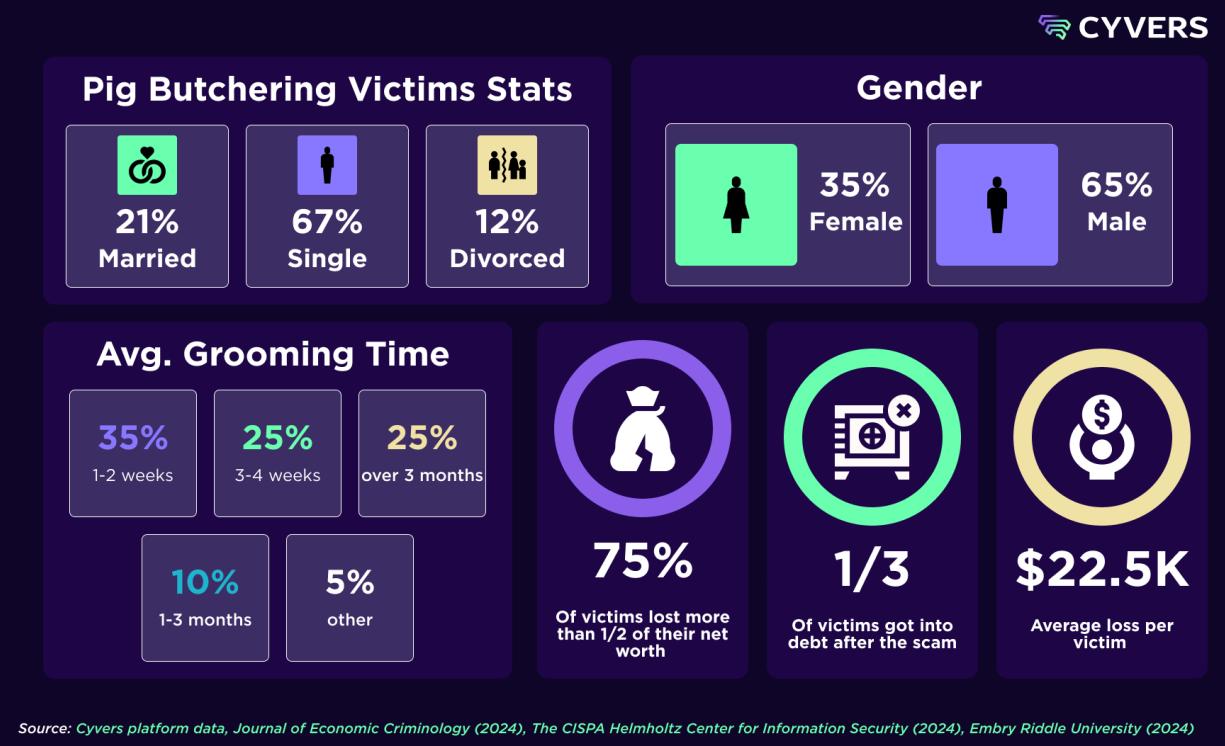
According to blockchain security platform Cyvers, as a form of phishing scam, the Medium victim nurturing period lasts from one to two weeks in 35% of cases, while 10% of scams have a nurturing period of up to three months.
In early November, Chainalysis warned that pig butchering scams were becoming a national security issue.
“When this happens to you, you’re put on a list […] and chances are you’ll be targeted again,” Andrew Fierman, head of national security intelligence at Chainalysis, said in a podcast episode in November 2025.
Last June, the US Department of Justice announced it had seized over $225 million in cryptocurrency related to pig butchering scams.





