



At the start of 2025, the Bitcoin (BTC) market was filled with fervent optimism, with institutions and analysts collectively betting that the price would surge to over $150,000 by the end of the year, or even reach $200,000 or higher. However, reality has played out a dramatic "contrary" scenario: BTC plummeted by over 33% from its early October peak of approximately $126,000, entered a "bloodbath" in November (a 28% drop in a single month), and as of December 10th, the price has stabilized in the $92,000 range.
This collective failure warrants in-depth analysis: Why were the predictions so consistent at the beginning of the year? Why were almost all mainstream institutions wrong?
I. Comparison of Initial Predictions vs. Current Situation
1.1 The Three Pillars of Market Consensus
In early 2025, the Bitcoin market was filled with unprecedented optimism. Almost all mainstream institutions gave year-end price targets of over $150,000, with some aggressive predictions even pointing to $200,000-$250,000. This highly consistent bullish expectation was based on three "certain" logics:
Cyclical factors: the halving curse
Historically, price peaks have occurred multiple times in the 12-18 months following the fourth halving (April 2024). After the 2012 halving, prices rose to $1,150 in 13 months; after the 2016 halving, they surpassed $20,000 in 18 months; and after the 2020 halving, they reached $69,000 in 12 months. The market generally believes that the supply-side contraction effect will be delayed, and 2025 is currently in a "historic window of opportunity."
Funding Expectations: ETF Frenzy
The approval of spot ETFs is seen as the opening of a "gateway for institutional funds." The market expects net inflows to exceed $100 billion in the first year, with traditional funds such as pension funds and sovereign wealth funds allocating on a large scale. The endorsement of Wall Street giants such as BlackRock and Fidelity has solidified the narrative of "Bitcoin mainstreaming."
Favorable policies: Trump card
The Trump administration's favorable stance towards crypto assets, including discussions on a strategic Bitcoin reserve proposal and anticipated SEC personnel changes, is seen as providing long-term policy support. The market believes that regulatory uncertainty will be significantly reduced, clearing obstacles for institutional entry.
Based on these three main factors, the average target price of mainstream institutions at the beginning of the year reached $170,000, implying an expected increase of more than 200% within the year.
1.2 Overview of Institutional Forecasts: Who is the Most Aggressive?
The table below summarizes the year-end forecasts of 11 major institutions and analysts. Comparing these to the current price ($92,000), the discrepancies are readily apparent:
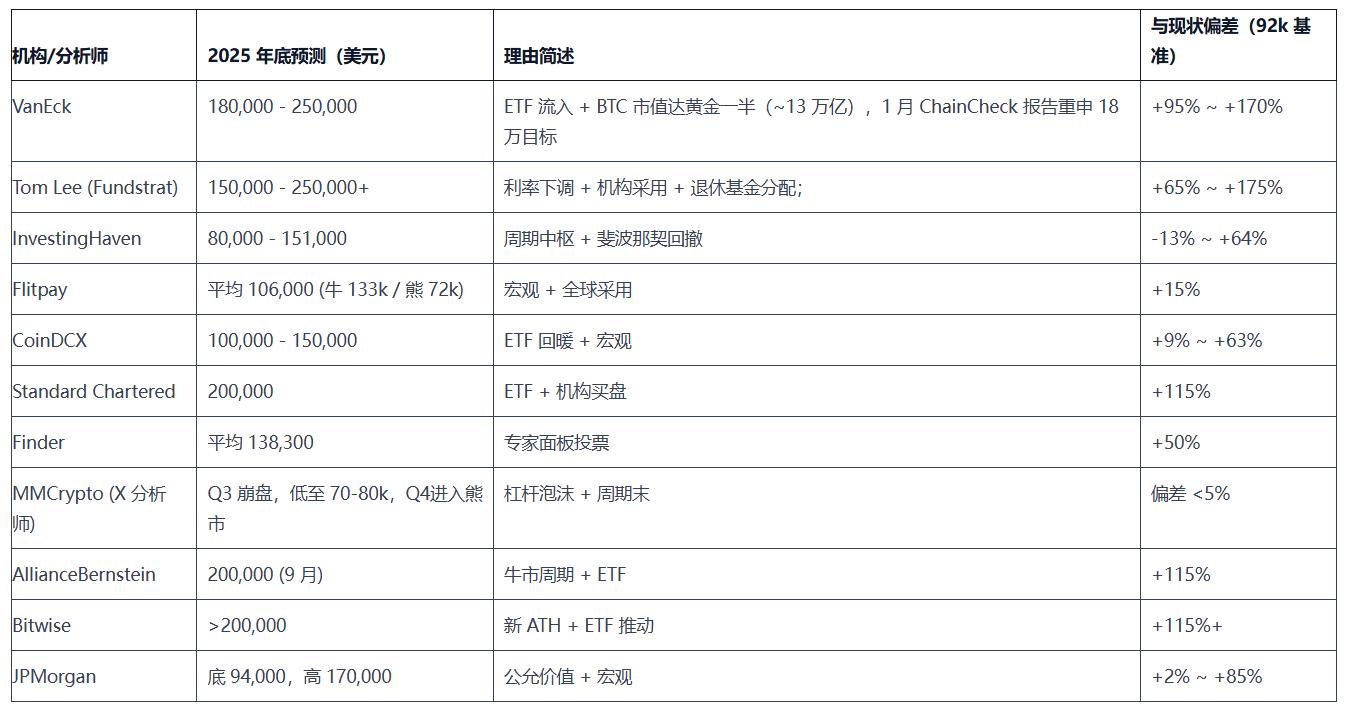
Predicted distribution characteristics :
- Activist (8 firms) : Target price of $150,000+, average deviation exceeding 80%, representative institutions include VanEck, Tom Lee, and Standard Chartered.
- Moderate camp (2 firms) : JPMorgan provides a range forecast, Flitpay offers bull and bear scenarios, preserving downside potential.
- Contrarian Faction (1 company) : Only MMCrypto explicitly warned of the risk of collapse, becoming the only one to accurately predict it.
It is worth noting that the most aggressive predictions come from the most well-known institutions (VanEck, Tom Lee), while accurate predictions come from a relatively small group of technical analysts.
II. Root Causes of Misjudgment: Why Did Institutional Predictions Collectively Fail?
2.1 Consensus Trap: When "Positive News" Loses Its Marginal Effect
Nine institutions have unanimously bet on "ETF inflows," forming a highly homogenized predictive logic.
When a factor is fully recognized by the market and reflected in prices, it loses its marginal driving force. By early 2025, ETF inflow expectations were already fully priced in—every investor knew about this "positive" factor, and prices had already priced it in. What the market needs is "exceeding expectations," not "meeting expectations."
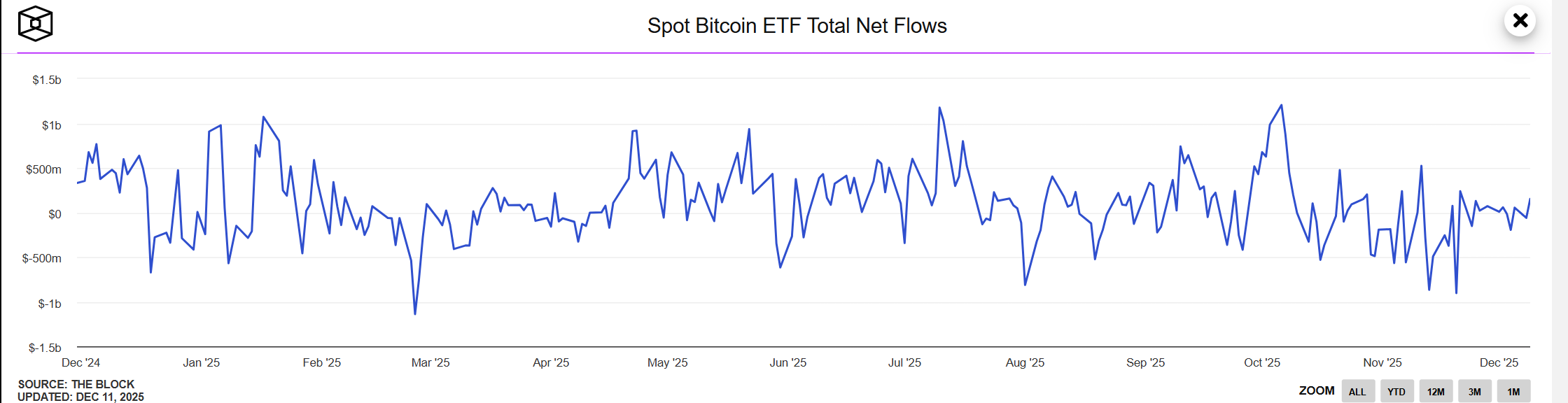
ETF inflows for the year fell short of expectations, with net outflows of $3.48-4.3 billion in November. More importantly, institutions overlooked the fact that ETFs are a two-way channel—in market shifts, they not only fail to provide support but also become a highway for capital flight.
When 90% of analysts are telling the same story, that story has already lost its alpha value.
2.2 Periodic Model Failure: History Does Not Simply Repeat Itself
Institutions such as Tom Lee and VanEck rely heavily on the historical pattern of "price peak 12-18 months after the halving," believing that the cycle will automatically materialize.
Dramatic Environmental Changes : The macroeconomic environment in 2025 differs fundamentally from historical cycles.
- 2017: Low global interest rates and loose liquidity
- 2021: Stimulus from the pandemic and monetary easing by the central bank
- 2025: The aftermath of the most aggressive rate hike cycle in 40 years; the Fed remains hawkish.
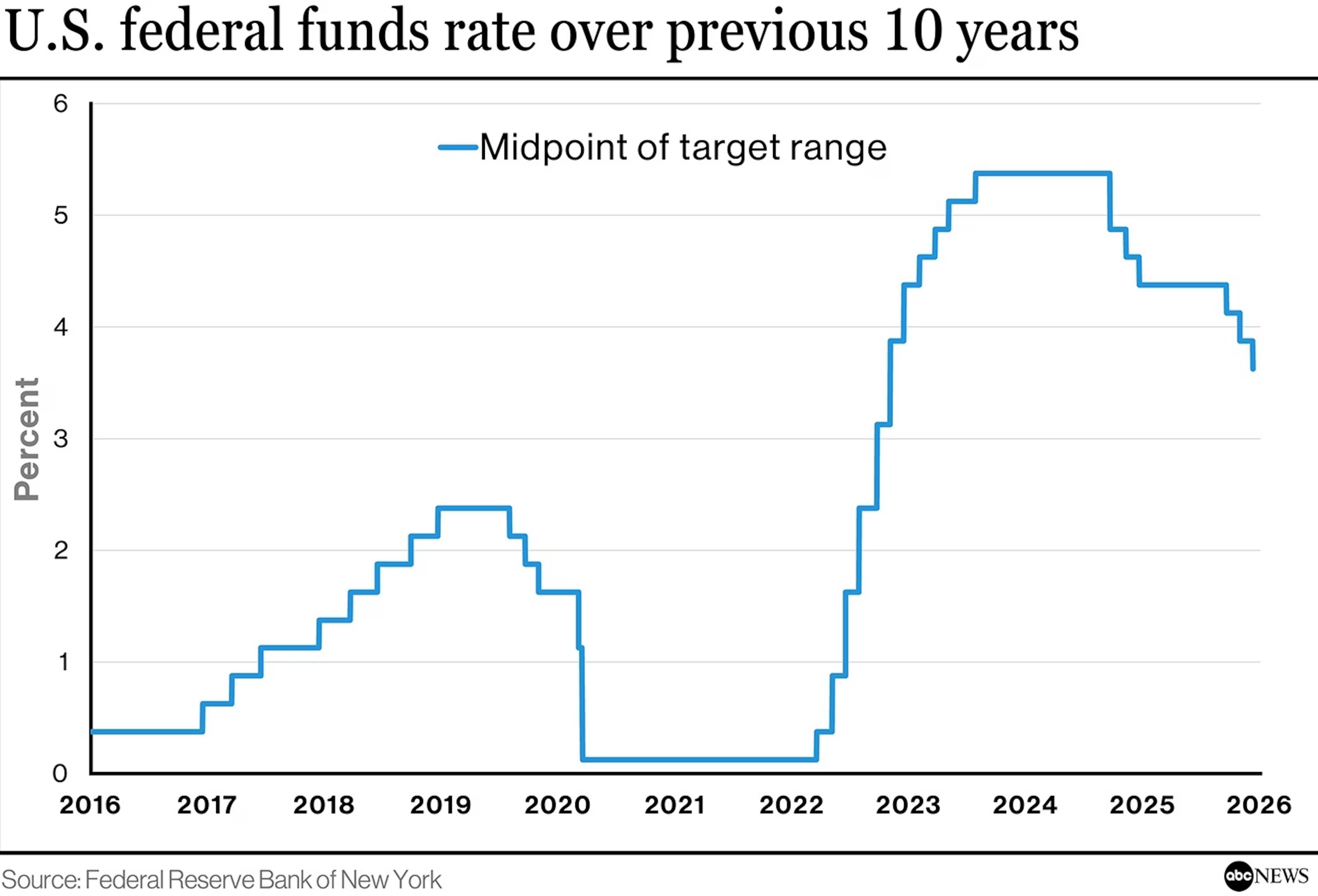
Expectations for a Federal Reserve rate cut plummeted from 93% at the beginning of the year to 38% in November. This abrupt shift in monetary policy is unprecedented in historical halving cycles. Institutions treat "cycles" as deterministic patterns, ignoring the fact that they are essentially probability distributions and highly dependent on the macro liquidity environment.
Historical models inevitably become invalid when environmental variables change fundamentally.
2.3 Conflict of Interest: Structural Bias of Organizations
Top-tier firms like VanEck, Tom Lee, and Standard Chartered have the largest biases (over +100%), while niche firms like Changelly and MMCrypto are the most accurate. Firm size is often negatively correlated with prediction accuracy.
The root cause : These institutions themselves are stakeholders.
- VanEck: Issuing a Bitcoin ETF Product
- Standard Chartered: Provides cryptocurrency custody services
- Fundstrat: Serving clients who hold crypto assets
- Tom Lee: Chairman of the Ethereum Treasury BMNR
Structural stress :
- Being bearish is tantamount to shooting themselves in the foot. If they release a bearish report, it's like telling customers, "Our product isn't worth buying." This conflict of interest is structural and unavoidable.
- Clients need a target price of "$150,000+" to justify their positions. Most of the clients served by these institutions entered the market at mid-bull market highs, with holding costs ranging from $80,000 to $100,000. They need analysts to provide a target price of "$150,000+" to justify their decisions and to provide psychological support for continuing to hold or even adding to their positions.
- Aggressive predictions are more likely to garner media attention. A headline like "Tom Lee predicts Bitcoin will reach $250,000" obviously gets far more clicks and shares than a conservative prediction. The exposure from aggressive predictions directly translates into increased brand influence and business traffic for organizations.
- Renowned analysts often find it difficult to overturn their historical stances. Tom Lee rose to fame for his accurate prediction of the Bitcoin rally in 2023, establishing himself as a "bullish standard-bearer." Even if he harbors reservations about the market in early 2025, it would be difficult for him to publicly refute his optimistic position.
2.4 Liquidity Blind Spot: Misjudging Bitcoin's Asset Attributes
The market has long regarded Bitcoin (BTC) as "digital gold," viewing it as a safe-haven asset to hedge against inflation and currency devaluation. However, in reality, Bitcoin is more like a Nasdaq tech stock, extremely sensitive to liquidity: when the Federal Reserve maintains a hawkish stance and liquidity tightens, BTC performs more like a high-beta tech stock than a safe-haven asset like gold.
The core contradiction lies in the inherent conflict between Bitcoin's asset characteristics and a high-interest-rate environment. When real interest rates remain high, the attractiveness of zero-yield assets systematically decreases. Bitcoin neither generates cash flow nor pays any interest; its value depends entirely on "someone being willing to buy it at a higher price in the future." In a low-interest-rate era, this isn't a problem—money in the bank doesn't yield much return anyway, so why not take a gamble?
However, when the risk-free rate of return reaches 4-5%, the opportunity cost for investors increases significantly, and Bitcoin, as a zero-yield asset, lacks fundamental support.
The most fatal misjudgment was that almost all institutions presupposed that "the Fed's rate-cutting cycle is about to begin." At the beginning of the year, the market priced in 4-6 rate cuts throughout the year, with a cumulative reduction of 100-150 basis points. However, the data in November gave a completely opposite answer: the risk of a rebound in inflation reignited, the expectation of rate cuts completely collapsed, and the market shifted from expecting "rapid rate cuts" to pricing in "maintaining high interest rates for a longer period of time." When this core assumption was broken, all optimistic predictions based on "loose liquidity" lost their foundation.
Conclusion
The collective failure in 2025 tells us that accurate prediction is a false proposition . Bitcoin is influenced by numerous variables, including macroeconomic policies, market sentiment, and technical factors, and no single model can capture this complexity.
Institutional forecasts are not without value—they reveal the prevailing market narrative, funding expectations, and sentiment direction. The problem is that when forecasts become consensus, consensus becomes a trap .
True investment wisdom lies in understanding the market's thinking through institutional research reports, but not letting them dictate your actions. When VanEck, Tom Lee, and others are collectively bullish, your question shouldn't be "Are they right?" but rather "What if they're wrong?" Risk management always takes precedence over profit forecasting.
History repeats itself, but never in a simple, identical fashion. Halving cycles, ETF narratives, policy expectations—all these logics will fail in 2025, not because the logic itself is flawed, but because the environmental variables have fundamentally changed. Next time, the catalysts may have different names, but the market's inherently overly optimistic nature will remain the same.
Remember this lesson: independent thinking is more important than following authority, dissenting voices are more valuable than mainstream consensus, and risk management is more crucial than accurate prediction. This is the true moat for long-term survival in the crypto market.






